
You bought the seeds. You built the raised bed. You spent a Saturday turning compost into it. Three weeks later the basil is bolting because you forgot to pinch it, the lettuce is bitter from missed cuttings, and there are weeds you do not remember letting in. The problem is not your gardening skill. It is that the bed sits in the back corner of the yard where you only walk on weekends.
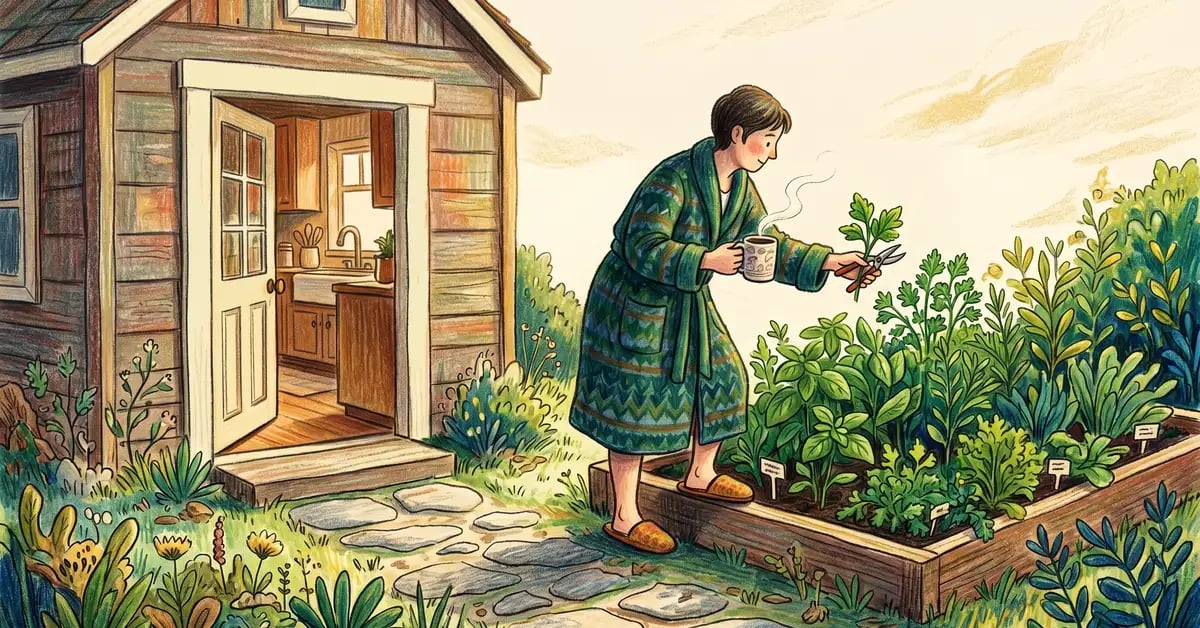
Zone 1 in permaculture solves this problem with a simple rule: the things you need to visit daily should live where you walk daily. This guide explains what a Zone 1 kitchen garden actually is, the size and distance numbers that make it work, what to plant in it, what to keep out, the layout patterns (keyhole beds, herb spirals) that maximize yield in tight spaces, and the realistic cost and time to establish one in a typical US backyard.
What Zone 1 Actually Is
Permaculture organizes a property into five concentric zones radiating from the home, defined by how often a human visits each area. Bill Mollison introduced the framework in the Permaculture Designers Manual and David Holmgren refined it in his later work. According to Oregon State University's permaculture textbook chapter on zones, the rule is mechanical: place each element where the energy cost of reaching it matches the frequency you need to reach it.
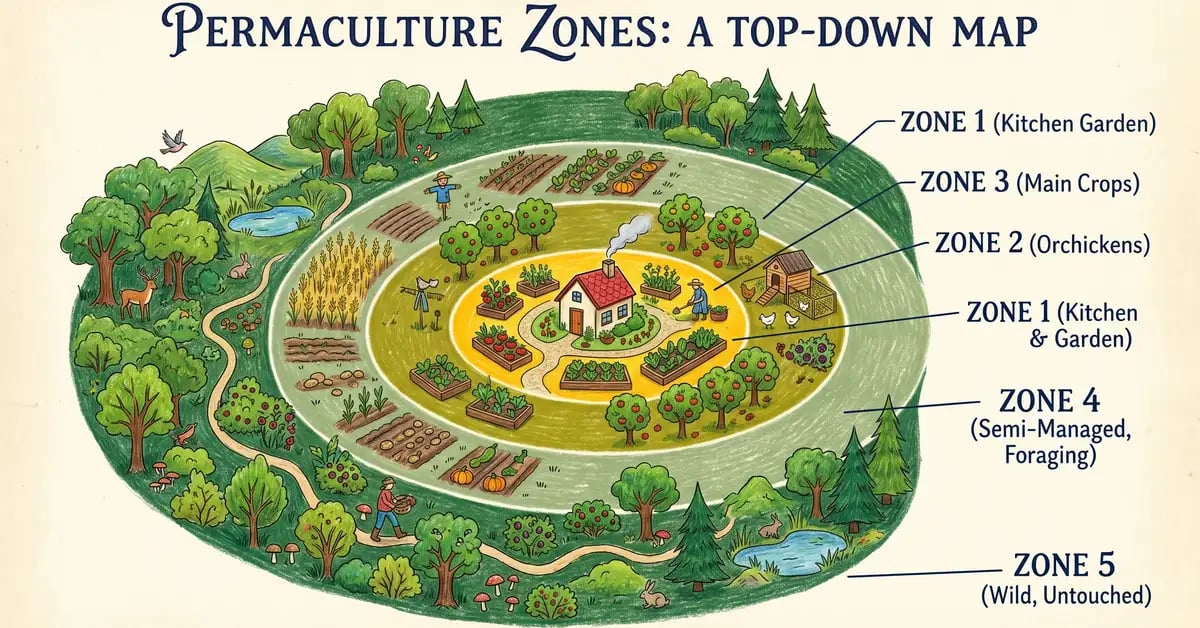
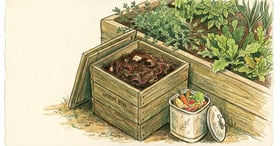
Zone 1 is the innermost ring. It holds anything you need to touch daily: cooking herbs, salad greens, frequently harvested vegetables, the worm bin, the compost bucket. Zone 2 holds weekly-visit items (chickens, soft fruit, kitchen orchard). Zone 3 holds main crops, larger fruit trees, and storage vegetables. Zones 4 and 5 are semi-managed and wild.
The mistake most US home gardeners make is treating the whole yard as Zone 1. You cannot give every square foot daily attention. The solution is to be deliberate about which 200 to 500 sqft gets the daily visit, and to make sure that patch is the right things in the right place.
The Size and Distance Numbers That Actually Matter
The size of your Zone 1 should match the time you actually have. Toby Hemenway's Gaia's Garden, the most widely cited practical permaculture text in the US, recommends roughly 200 to 500 sqft for a family of two to four, sized to what you can weed, water, and harvest in about 15 minutes per visit. The EcoLandscaping excerpt from Gaia's Garden reinforces this scale as the workable upper bound for most households without dedicated garden time.
Distance from the kitchen door is the second number. The Permaculture Assistant zone reference places Zone 1 at 10 to 30 feet from the home, and that range matches working homestead practice. Past 30 feet, visit frequency drops sharply. Past 60 feet, most home gardeners visit only on weekends, which is too rarely for herbs and salad greens that need daily cutting.
| Household | Recommended Zone 1 size | Maximum distance from kitchen |
| 1 to 2 people | 100 to 200 sqft | 20 feet |
| 3 to 4 people | 200 to 500 sqft | 30 feet |
| 5+ people or food-focused | 500 to 800 sqft | 30 feet |
Source: Composite of Toby Hemenway (Gaia's Garden, 2nd ed.) and Oregon State University Permaculture (open.oregonstate.education)
What Belongs in Zone 1
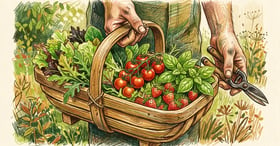
The rule: anything you would cut, pinch, snip, or pick at least twice a week belongs in Zone 1. Anything harvested once at the end of the season can go further out.
Culinary herbs. Basil, parsley, cilantro, chives, thyme, oregano, mint, dill. These need pinching to stay productive and lose flavor quickly when not used fresh.
Salad greens. Lettuce, arugula, spinach, mesclun mix, chard. Cut-and-come-again harvesting requires twice-weekly access.
Heavy-harvest vegetables. Cherry tomatoes, cucumbers, bush beans, peppers, summer squash. All produce continuously and reward frequent picking.
Strawberries. Need daily picking when in season to beat the slugs and birds.
Small fruit on a perennial trellis. A single currant or gooseberry bush works well at the edge of Zone 1 if space allows.
Worm bin and kitchen-scrap composter. The shorter the walk from the kitchen counter to the bin, the more scraps actually get composted. NC State Extension's permaculture appendix emphasizes this closed-loop kitchen-to-garden flow as a Zone 1 principle.
What Does NOT Belong in Zone 1
Resisting this list is harder than building the bed. The temptation is to plant everything close to the house. But Zone 1 space is the most valuable real estate on the property and should not be wasted on crops that do not need daily attention.
Storage crops. Potatoes, winter squash, dried beans, garlic, onions for storage. These are harvested once and sit in the basement. Send them to Zone 2 or 3.
Orchard fruit trees. Apples, pears, plums, full-size cherries. These need visits during dormant pruning (once a year) and harvest (a few weeks). University of Minnesota Extension classifies orchard fruit as a Zone 2 element in home permaculture layouts.
Pasture, chickens, ducks, larger livestock. Even small backyard flocks are Zone 2 for hygiene and access reasons.
Single-harvest grains and corn. Cut once at season end, no daily benefit.
Layout Patterns That Multiply Yield in Small Space
Two classic permaculture layouts maximize the harvest per visit in a tight Zone 1 footprint.
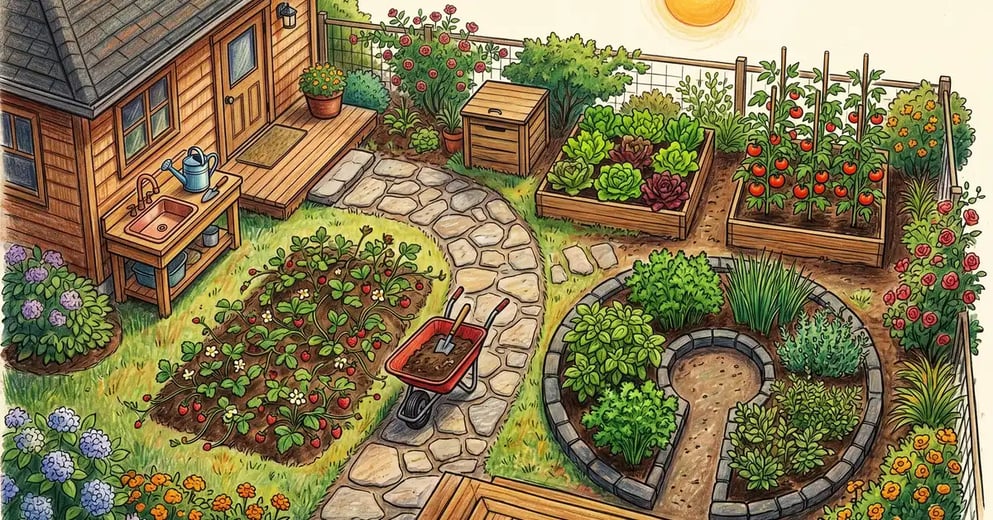
Keyhole beds. Horseshoe-shaped beds where you stand in the center notch and can reach every plant without stepping on the soil. The Interdependent Web review of keyhole and mandala beds documents 30 to 50 percent more growing area per square foot of footprint compared to traditional rectangular rows because paths are minimized.
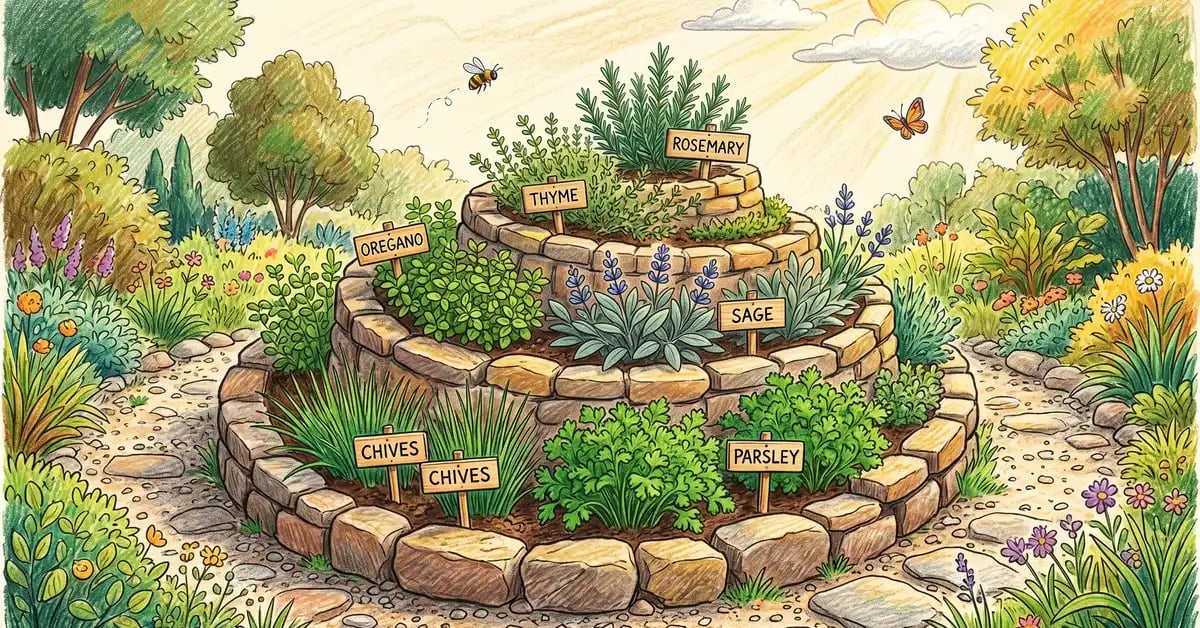
Herb spirals. A vertical spiral of stone or brick about 3 feet tall and 6 feet diameter. The top is dry and sunny (rosemary, thyme, oregano), the bottom is moist and shaded (mint, chives). Modern Farmer's design feature on herb spirals reports that a single spiral can support 6 to 8 culinary herbs in roughly 30 sqft of footprint with built-in microclimate variation.
Path width. Make at least one main path 3 feet wide so a wheelbarrow fits. Secondary paths can be 18 to 24 inches. Skip-stone or mulched paths cost less than brick or concrete and warm faster in spring.
Soil, Sun, and Water Requirements
According to Oregon State Extension's vegetable gardening publication, a productive vegetable garden needs at least 6 hours of direct sun per day, well-drained loam-textured soil, and access to water. For Zone 1, hit all three or relocate.
Soil. Zone 1 gets the heaviest compost applications on the property. Aim for 2 to 4 inches of compost worked into the top 6 inches before planting, then 1 inch of compost mulch on the surface each spring. Utah State University's raised bed research shows that intensively managed raised beds produce 2 to 5 times the yield per square foot of comparable in-ground gardens.
Sun. 6 hours minimum, 8 hours ideal. South-facing is best in the northern US, partial afternoon shade is helpful in the south.
Water. Drip irrigation on a battery timer is the single highest-ROI infrastructure investment in Zone 1. Iowa State Extension's drip irrigation guide documents 30 to 50 percent less water use and better plant health compared to overhead watering. A basic drip kit for 200 sqft runs $40 to $80.
Why This Works
Zone 1 is the practical expression of David Holmgren's permaculture principle, "Use Small and Slow Solutions." Instead of a sprawling vegetable garden that overwhelms your weekend, you build a tight, productive, intensively-fed patch right next to the kitchen door. Tight space is easier to weed. Easier to weed means you actually weed it. Daily visits mean you catch problems early (the cabbage worm before it eats the broccoli, the basil before it bolts). The garden becomes part of your daily walk, not a project you have to schedule. Standard "grow your own food" advice tells you to plant a 1,500 sqft patch with everything. Permaculture's Zone 1 tells you to plant 300 sqft of the right things in the right place and watch what compounds.
Realistic Yield: What 300 Square Feet Can Produce
The Acres USA / Eco Farming Daily review of John Jeavons' Grow Biointensive method documents 200 to 400 lbs of mixed vegetables per 100 sqft per year in well-managed biointensive beds. A 300 sqft Zone 1 garden, managed at biointensive intensity in a long-season climate, can produce 600 to 1,200 lbs of food per year, which is most of a family's salad, herb, and summer vegetable consumption.
For typical (non-biointensive) home gardens managed at moderate intensity, expect 100 to 200 lbs per 100 sqft. A 300 sqft Zone 1 still produces 300 to 600 lbs per year, valued at $1,200 to $2,400 in farmers market produce equivalents.
What It Costs to Establish a 300 sqft US Zone 1
Mid-range US cost estimates assembled from Gardenary's raised bed garden cost analysis and Seed Sheets' raised garden bed cost breakdown:
| Item | Cost range |
| Cedar or wood for 3 raised beds (4 ft x 8 ft x 12 in) | $200 to $450 |
| Soil mix and compost (1 cubic yard) | $80 to $180 |
| Drip irrigation kit and timer | $40 to $90 |
| Path material (gravel, stone, mulch for 50 sqft) | $50 to $150 |
| Worm bin and starter worms | $60 to $120 |
| Seeds and starts (first season) | $30 to $80 |
| Garden tools (snips, trowel, hand fork) | $40 to $100 |
| Total establishment | $500 to $1,170 |
Source: Gardenary and Seed Sheets US raised-bed garden cost analyses, 2024 to 2025
Ongoing annual cost: $50 to $150 in seeds, compost top-up, and replacement plants.
How to Plan Your Zone 1: A 5-Step Process
Step 1: Identify the kitchen door
Stand in your kitchen. Look at the doors. The Zone 1 garden goes outside the one you use to take out the trash, water plants, or grill.
Step 2: Measure 30 feet in every direction
That is your Zone 1 envelope. Anything inside is candidate space. Anything outside is Zone 2 or further.
Step 3: Check sun and drainage
Identify the spots inside the envelope with 6+ hours of sun and no standing water. Mark them.
Step 4: Lay out 3 raised beds and a path
Three 4 ft x 8 ft beds totaling 96 sqft, plus paths and a small worm bin location, fits in roughly 200 sqft. Start here. Expand only after a full season.
Step 5: Plant for daily harvest
Bed 1: herbs and greens. Bed 2: cherry tomatoes, basil, peppers. Bed 3: strawberries plus rotating cut-and-come-again crops. Drip irrigation on a timer. Mulch heavily.
Common Mistakes
- Building too large the first year. 1,000 sqft is not Zone 1, it is a market garden you have not committed to. Start at 200 to 300 sqft and grow only if you keep up.
- Locating the garden where it looks tidy from the street. Looks-driven location moves the garden away from the kitchen door. Visit frequency drops, garden fails.
- Filling Zone 1 with storage crops. Potatoes and winter squash take up valuable Zone 1 space for a single harvest. Send them to Zone 2.
- Skipping drip irrigation. A $50 drip kit is the difference between a thriving July garden and a dead one. Buy the kit.
- Treating compost as optional. Zone 1 soil works hard. Heavy annual compost inputs are not optional.
Get the Weekly Dig
One practical permaculture guide a week, written for gardeners who do this on weekends: permaculture design for real backyards. Free, no spam, unsubscribe any time.
Join the Weekly DigFrequently Asked Questions
What is Zone 1 in permaculture?
Zone 1 is the closest, most intensively managed ring of a permaculture design, immediately outside the home. It holds anything that needs daily attention: cooking herbs, salad greens, frequently harvested vegetables, the worm bin, and the kitchen compost bucket. Visit frequency, not aesthetics, drives the layout.
How big should my Zone 1 kitchen garden be?
For a family of three to four, plan 200 to 500 sqft. The rule of thumb from Gaia's Garden is to size Zone 1 to what you can weed, water, and harvest in about 15 minutes per visit. Larger gardens tend to fall out of regular use and weeds take over.
How close should Zone 1 be to my kitchen door?
Within 30 feet for best results, ideally 10 to 20 feet. Visit frequency drops sharply past 30 feet, and gardens beyond 60 feet from the kitchen typically get weekend-only attention, which is not enough for herbs and cut-and-come-again greens.
What should I plant in my permaculture Zone 1?
Anything that gets cut, pinched, or picked at least twice a week. Herbs (basil, parsley, cilantro, chives), salad greens, cherry tomatoes, peppers, bush beans, strawberries, and small soft-fruit shrubs at the edge. Save storage crops and orchard trees for Zone 2 or further.
What should I NOT plant in Zone 1?
Storage crops (potatoes, winter squash, dried beans, storage onions), orchard fruit trees, single-harvest grains, and corn. These take Zone 1 space without rewarding daily visits. Move them to Zone 2 or 3.
How much does it cost to set up a 300 sqft Zone 1 in the US?
Realistic establishment cost is $500 to $1,170 including raised beds, soil, drip irrigation, worm bin, path material, seeds, and basic tools. Ongoing annual cost is $50 to $150 for seeds, compost, and replacement plants.
How much food can a 300 sqft Zone 1 produce?
Moderately managed Zone 1 produces 300 to 600 lbs of vegetables and herbs per year on 300 sqft. Biointensive techniques (deep dug beds, heavy compost, close spacing) can push that to 600 to 1,200 lbs per year in a long-season climate.
The Takeaway
Zone 1 is the closest, most intensively managed ring of a permaculture design: 200 to 500 sqft of herbs, salads, and cut-and-come-again vegetables planted within 30 feet of the kitchen door. The math is simple. Things you need daily live where you walk daily. Build three 4 ft x 8 ft beds with drip irrigation, heavy compost, a keyhole bed or herb spiral, and a worm bin. Expect $500 to $1,170 in establishment cost, 15 minutes per visit, and 300 to 1,200 lbs of food per year depending on how intensively you manage. The single biggest predictor of success is not what you plant, it is how close to the door you plant it.
Resources
- Oregon State University: Permaculture textbook chapter on Zones
- NC State Extension: Permaculture Design Appendix
- Oregon State Extension: Vegetable Gardening in Oregon (EC 871)
- Utah State University Extension: Raised Bed Gardening Research
- Iowa State Extension: Using Drip Irrigation in the Garden
- University of Minnesota Extension: Growing Apples
- EcoLandscaping: Gaia's Garden excerpt (Toby Hemenway)
- Modern Farmer: The Permaculture Herb Spiral
- Eco Farming Daily: The Biointensive Method (John Jeavons)
- Gardenary: How Much Does a Raised Bed Kitchen Garden Really Cost
- Seed Sheets: Raised Garden Bed System Cost Breakdown
- Permaculture Assistant: Permaculture Zones Reference