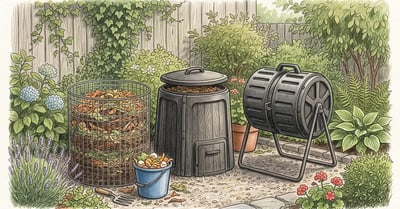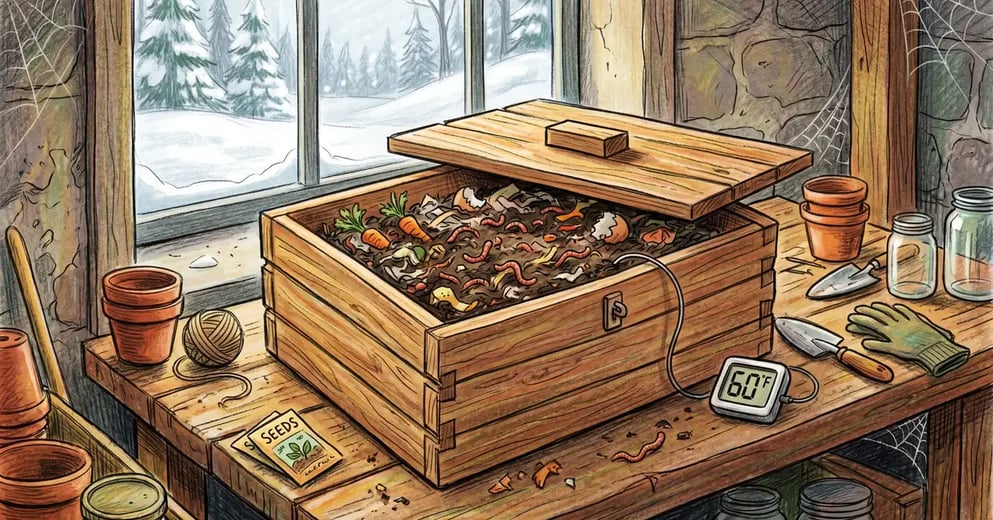

The first hard freeze hits and your worm bin goes silent. By February, an outdoor or unheated-garage bin in zones 3 to 6 can be a frozen block. Red wiggler worms are tropical and subtropical animals; they do not survive freezing solid. The good news is that overwintering a worm bin in the US is a solved problem. insulated worm bins that survive winter Move the bin indoors, insulate it heavily outdoors, or trench-compost in the ground where soil temperatures stay above freezing. This guide gives you the temperatures, the four strategies that actually work, and the feeding and bedding adjustments that keep the colony alive through January.
Quick takeaway
Move your worm bin indoors to a basement, heated garage, or laundry room (target 55 to 70 F / 13 to 21 C). If indoor space is not available, insulate the outdoor bin with 2 inches (5 cm) of rigid foam on all sides, add 12 to 18 inches (30 to 45 cm) of straw mulch on top, and position next to an active hot compost pile for radiant heat. Cut feeding by half once temperatures drop below 50 F (10 C). Add 8 to 12 inches (20 to 30 cm) of dry bedding (shredded cardboard or newspaper) for insulation. Cocoons (egg cases) survive freezing even if adult worms do not, so a frozen bin can repopulate from cocoons when warmth returns.
The temperature science: what kills worms
Red wigglers (Eisenia fetida, the species sold for almost every commercial worm bin) and their close cousin European nightcrawlers (Eisenia hortensis) come from temperate to subtropical climates and prefer 55 to 77 F (13 to 25 C). Cornell Cooperative Extension and NC State Extension both report the same temperature curve: reproduction peaks at 70 to 75 F, slows significantly below 50 F, halts below 40 F, and worms die below 32 F when their tissue freezes.
This is not the same as the field earthworms (Lumbricus terrestris, common nightcrawler) that survive winter in the soil by burrowing 4 to 6 ft (1.2 to 1.8 m) below the frost line. Red wigglers are surface dwellers. They live in the top 6 inches (15 cm) of compost or leaf litter. They have no deep-burrowing strategy. If their habitat freezes, they freeze with it.
The four strategies for keeping worms alive
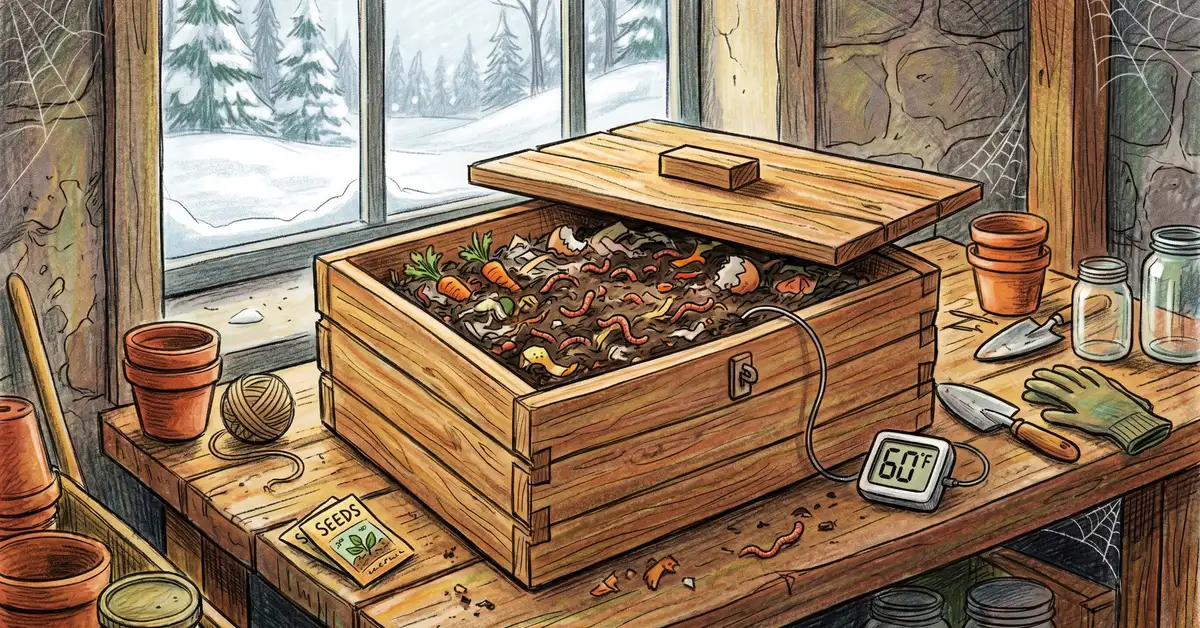
Move the bin indoors (the easiest fix)
Basements average 55 to 65 F (13 to 18 C) year-round in most US homes. Attached garages with a shared wall to a heated house typically stay 40 to 55 F (4 to 13 C). Laundry rooms run 65 to 75 F (18 to 24 C). Pick whichever stays above 45 F (7 C). A 5-gallon (19 L) worm bin barely smells when balanced; properly run bins are odorless.
Insulate the outdoor bin
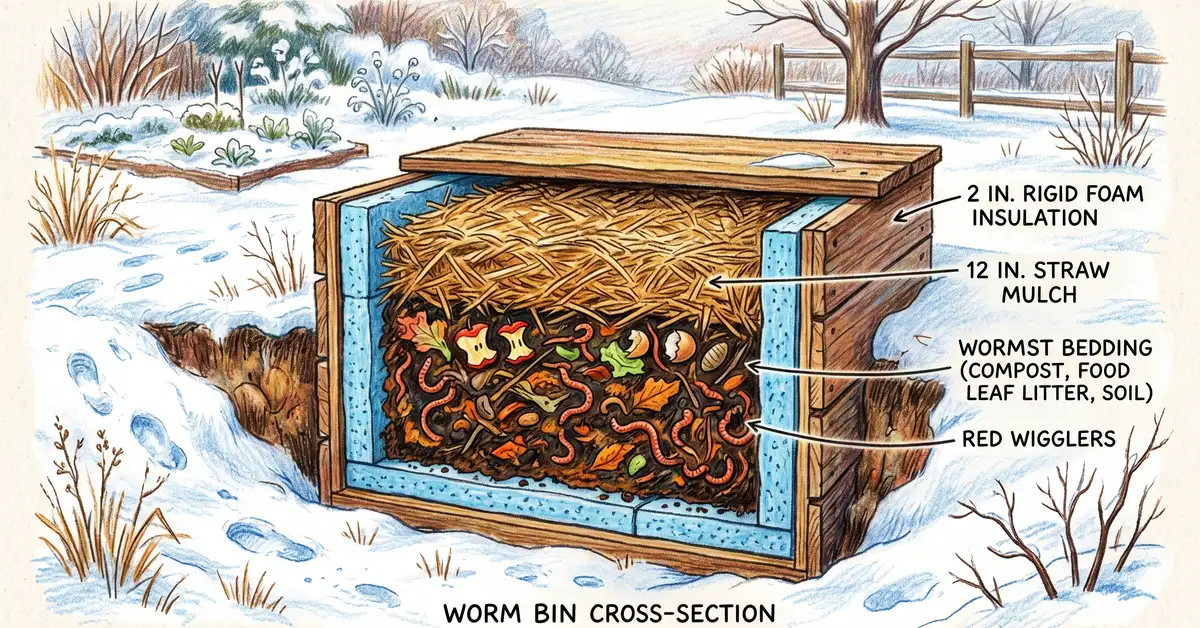
Wrap all four sides plus the top of the bin with 2 inch (5 cm) rigid foam insulation. Pile 12 to 18 inches (30 to 45 cm) of dry straw or autumn leaves on top of the foam. Position bin against the south wall of a house, shed, or garage to capture radiant solar heat. Works in USDA zones 7 to 10. In zones 3 to 6, supplement with method 3 or 4.
Put the worm bin next to a hot compost pile
An active hot compost pile generates 90 to 160 F (32 to 71 C) of internal heat through microbial decomposition. Set your worm bin within 2 ft (60 cm) of the pile or, even better, partially buried in the outer layer of the pile. The radiant heat keeps the worm bin above freezing in zones 5 to 7.
Trench composting (zones 3 to 9)
Dig a trench 18 to 24 inches (45 to 60 cm) deep, fill it with kitchen scraps and bedding, add red wigglers, cover with 6 to 12 inches (15 to 30 cm) of soil topped with 8 inches of straw mulch. Soil temperatures at 18 inches stay 38 to 50 F (3 to 10 C) even in zone 4. Worms survive at minimum metabolic activity. In spring you harvest the castings and the worms have multiplied.
Why this works (the permaculture angle)
Every worm farm in a US winter is a thermal-management problem. Indoor heat, mulch insulation, hot compost radiance, and soil thermal mass are four different ways to keep a small biome above freezing. Each one matches a different climate and yard layout. There is no single right answer; pick the strategy that fits your space and zone.
Insulating the outdoor bin (step by step)
Move the bin to a sheltered south-facing spot
Against the south or west wall of a building. Out of direct wind. Away from snow-drift zones.
Wrap with 2 inch (5 cm) rigid foam insulation
Cut foam panels to fit the four sides and lid. Tape seams. A standard 24 x 36 x 18 inch (60 x 90 x 45 cm) worm bin needs about 25 sq ft (2.3 m2) of foam, roughly $30 to $50.
Add deep dry bedding inside the bin
Pile 8 to 12 inches (20 to 30 cm) of shredded cardboard, shredded newspaper, dried leaves, or peat moss on top of the existing bin contents. Bedding insulates from the inside and provides food for any worms that move up to the warmer top layer.
Top with 12 to 18 inches (30 to 45 cm) of straw or leaf mulch
Loose mulch on top of the foam-wrapped bin creates an air-gap insulation layer. Snow on top of that adds another layer (snow is an excellent insulator).
Add a seedling heat mat (optional, for zones 3 to 5)
A 17 x 17 inch (43 x 43 cm) seedling heat mat under the bin set to 60 to 65 F (16 to 18 C) holds the bin above freezing in deep cold. Cost: $25 to $40. Use a thermostat controller to prevent overheating.
Trench composting in winter (the zone 3 solution)
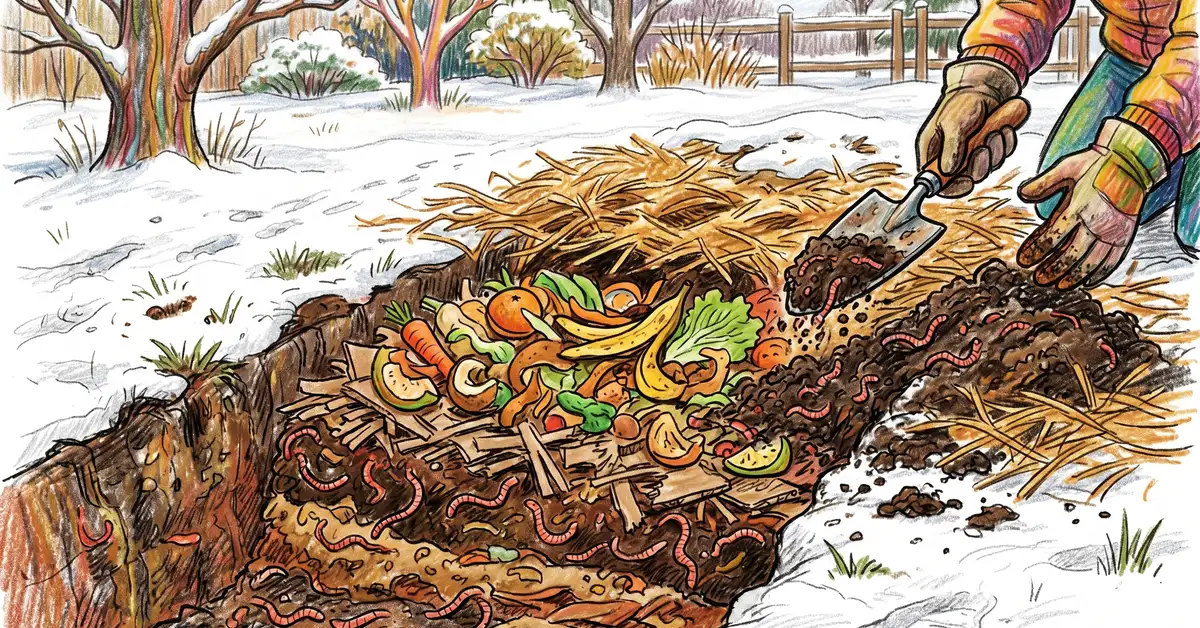
Trench composting works in any USDA zone because deep soil stays warmer than the air. At 18 inches (45 cm) below the surface, soil temperature averages 38 to 50 F (3 to 10 C) even in zone 4 Minnesota winters, well above the freezing threshold that kills worms. Penn State Extension and University of Minnesota Extension both document this approach for cold-climate vermicomposting.
The setup: dig the trench in October or early November before the ground freezes. Fill the bottom 12 inches (30 cm) with a mix of kitchen scraps and shredded cardboard bedding. Add 1 to 2 lb (450 to 900 g) of red wiggler worms (about 1,000 worms). Cover with 6 to 12 inches (15 to 30 cm) of soil. Top with 8 inches (20 cm) of straw mulch as additional insulation. Walk away until April.
In spring, dig up the trench. The worms have multiplied. The castings are concentrated black gold ready for the garden. Move the worms to a new trench in spring or back to an above-ground bin.
Feeding adjustments for winter
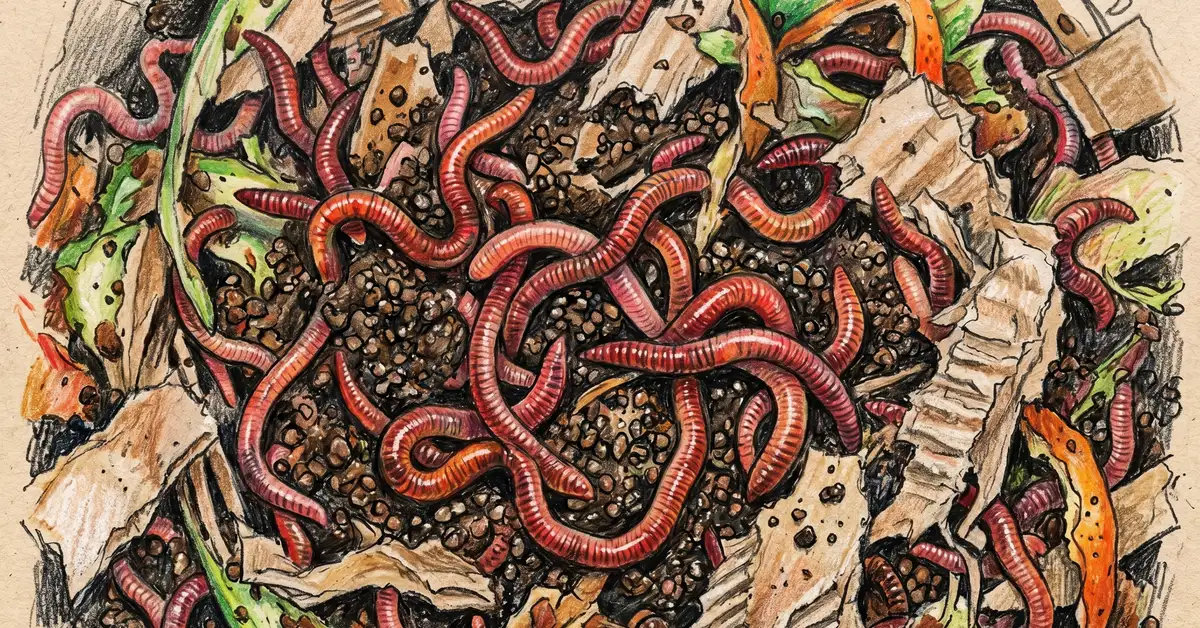
Worms eat 50 to 75 percent less below 50 F (10 C). The single biggest winter mistake is feeding at summer rates. Excess food rots, creates anaerobic conditions, releases ammonia and other toxic compounds, and can kill the colony.
| Bin temperature | Feed rate | Notes |
| 65 to 77 F (18 to 25 C) | 0.5 lb (225 g) per lb of worms per day | Full summer rate |
| 55 to 64 F (13 to 18 C) | 0.25 lb (113 g) per lb of worms per day | Half rate |
| 40 to 54 F (4 to 12 C) | 0.1 lb (45 g) per lb of worms per day | Quarter rate, watch for buildup |
| Below 40 F (4 C) | Stop feeding | Worms reduce activity dramatically |
Sources: Cornell Cooperative Extension, NC State Extension home composting guide, Mary Appelhof "Worms Eat My Garbage".
Indoor bins kept at 65 F or warmer continue full feeding all winter. Outdoor or unheated-garage bins follow the table above. Check uneaten food weekly. If you see food pile up, stop feeding until the worms catch up.
Need the gear for this?
The bins that work, the ones that leak, and a DIY build that costs under $30.
Compare worm bin setupsBedding: the most underrated winter tool
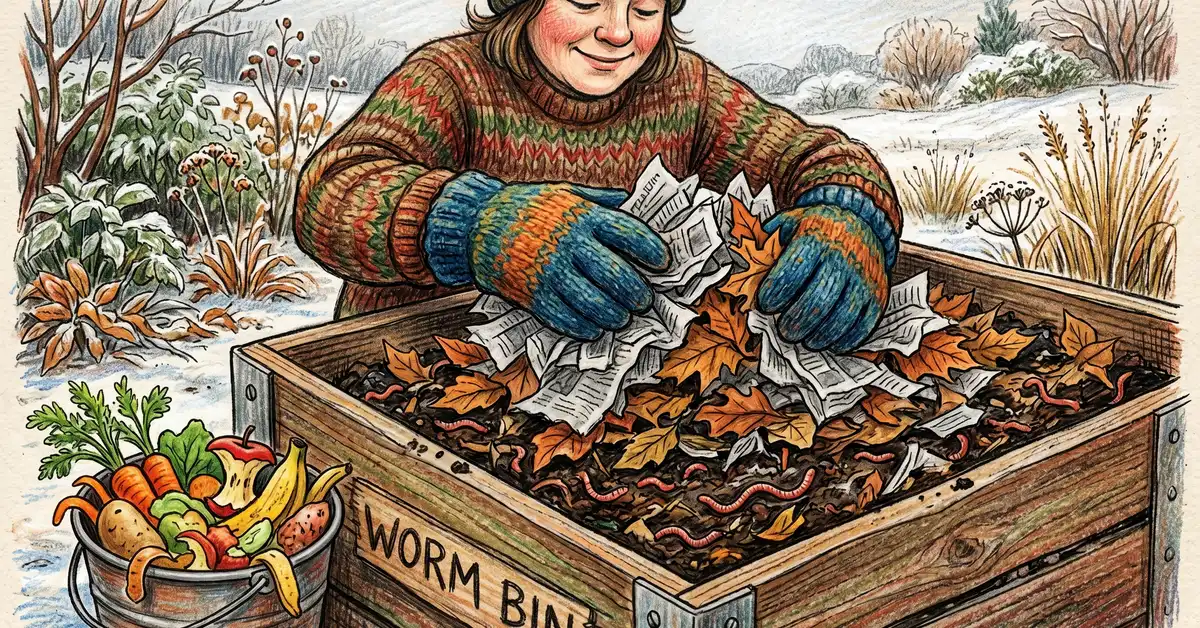
Dry bedding is the worm bin equivalent of a sleeping bag. Pile 8 to 12 inches (20 to 30 cm) of shredded cardboard, newspaper, or dried leaves on top of the existing bin contents before the first frost. The bedding does four jobs at once: insulates the colony, absorbs excess moisture, gives worms a refuge zone when lower layers chill, and slowly decomposes as winter food.
Avoid: glossy magazine paper (clay coatings), newspapers with colored ink (heavy metals in some old presses), bleached white paper bags (chlorine residue). Use kraft cardboard (Amazon shipping boxes), brown paper grocery bags, plain newsprint, and last fall's dried leaves.
Hot compost as a winter heat source
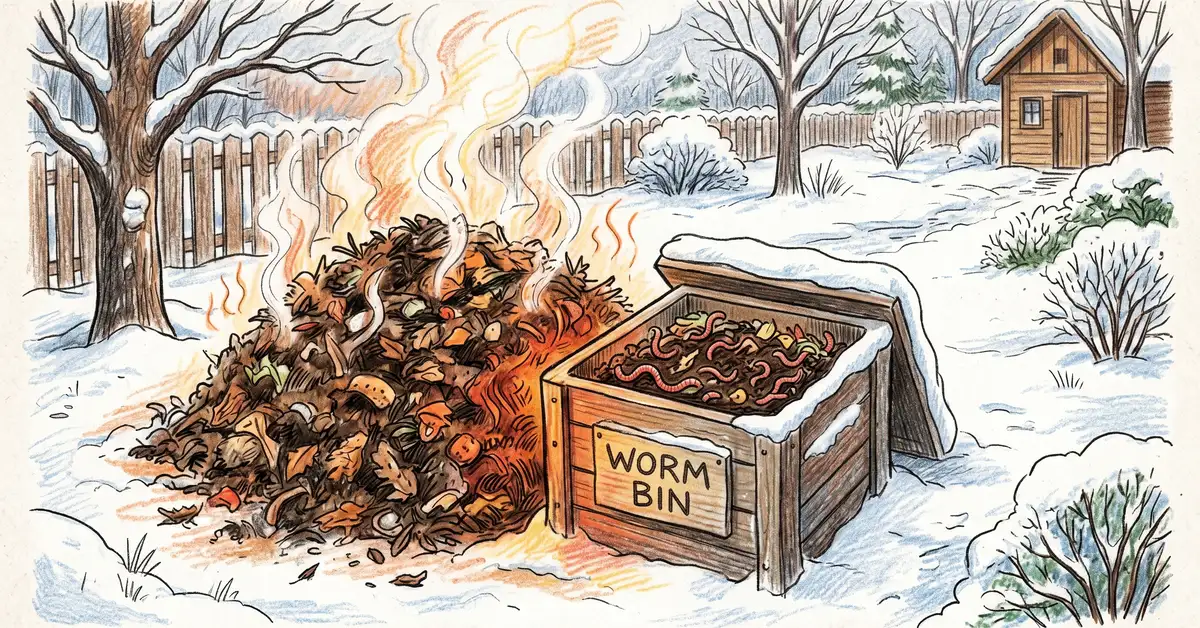
If you run a hot compost pile alongside your worm bin, you have a free heat source. An active hot pile generates 90 to 160 F (32 to 71 C) of internal heat through microbial decomposition. Position the worm bin within 2 ft (60 cm) of the pile to capture radiant warmth, or partially bury the worm bin into the outer cool layer of the pile (where temperatures sit around 50 to 70 F / 10 to 21 C).
Hot piles run warm for 4 to 8 weeks per cycle. Build a new pile every 6 weeks through fall to maintain continuous heat. This pairs naturally with kitchen waste production: hot composting takes the high-volume scraps, the worm bin handles the smaller daily kitchen scraps, and the worms transfer surplus heat from the pile.
Common winter mistakes
Avoid these mistakes
Overfeeding (creates anaerobic toxic conditions because worms cannot eat what cold has slowed them down). Letting the bin dry out from indoor heating (check moisture weekly; bedding should feel like a wrung-out sponge). Leaving the bin in an unheated garage or shed in zone 3 to 6 without insulation (worms will freeze). Adding hot food scraps (worms cannot dissipate heat in a small bin). Forgetting to harvest castings before winter (heavy castings restrict airflow and increase chill).
- Overfeeding. Cut to one-quarter feed rate when bin temperatures drop below 50 F.
- Dry bedding. Indoor heating can desiccate a bin. Mist weekly or add a damp burlap layer on top.
- Frozen bin. If the bin freezes solid, adult worms die but cocoons (egg cases) survive and hatch when temperatures rise above 50 F in spring.
- Pest invasion. Mice and rats are attracted to indoor worm bins. Keep the bin sealed with a tight lid.
- No spring restart plan. Move the bin back outside only after night temperatures consistently stay above 45 F (7 C).
Spring restart
When outdoor temperatures consistently rise above 45 F (7 C) at night and 60 F (16 C) during the day, the bin can move back outside. Most US zones reach this benchmark in late March (zone 7+) through mid-May (zone 4-5). Open the bin, check for live worms, count cocoons (small lemon-shaped pale yellow capsules in the bedding), and resume normal feeding. Cocoons hatch in 11 to 32 days at 55 to 77 F per Mary Appelhof's "Worms Eat My Garbage." Even a frozen bin with all adults dead often repopulates from cocoons within 6 to 10 weeks.
Get the Weekly Dig
One practical permaculture guide a week, written for gardeners who do this on weekends: composting that actually finishes and soil that feeds itself. Free, no spam, unsubscribe any time.
Join the Weekly DigFrequently asked questions
Can red wigglers survive winter?
Adult red wigglers (Eisenia fetida) cannot survive freezing temperatures below 32 F (0 C). They die when their tissue freezes. Their cocoons (egg cases), however, survive freezing and hatch when temperatures rise above 50 F in spring. Worms stay healthy at 55 to 77 F (13 to 25 C) and slow significantly below 50 F (10 C). For winter, move the bin indoors or use heavy insulation, hot-compost radiance, or trench composting.
Do worms freeze in the winter?
Red wigglers in a surface bin will freeze and die if the bin temperature drops below 32 F (0 C). Field earthworms like the common nightcrawler (Lumbricus terrestris) burrow 4 to 6 ft (1.2 to 1.8 m) below the frost line to survive winter, but red wigglers do not have that deep-burrowing capacity. They live in the top 6 inches of compost and freeze with their habitat.
What temperature is too cold for worms?
Anything below 50 F (10 C) significantly slows worm activity and reproduction. Below 40 F (4 C), worms essentially stop eating. At 32 F (0 C), worm tissue freezes and adults die. Target 55 to 77 F (13 to 25 C) for active vermicomposting. Worms can survive 40 to 55 F (4 to 13 C) for extended periods, just at greatly reduced activity.
Can compost worms survive winter outside?
In USDA zones 7 to 10, well-insulated outdoor bins (2 inches rigid foam plus 12 to 18 inches of mulch) survive most winters. In zones 3 to 6, outdoor bins typically need additional heat (seedling mat) or proximity to a hot compost pile, or you need to move the colony into a trench or indoors. Trench composting works in any zone because soil at 18 inches (45 cm) deep stays above 32 F (0 C).
How do you keep worms warm in winter?
Four methods in priority order: (1) move the bin indoors to a basement, attached garage, or laundry room targeting 55 to 70 F (13 to 21 C); (2) insulate an outdoor bin with 2 inches of rigid foam plus 12 to 18 inches of straw mulch; (3) position the bin next to an active hot compost pile for radiant heat; (4) trench compost in the ground where soil temperatures stay above freezing.
How often should I feed worms in winter?
Indoor bins at 65+ F continue at the full summer rate (0.5 lb food per lb of worms per day). Outdoor or unheated bins below 50 F drop to a quarter of that rate or stop feeding entirely. Check uneaten food weekly. If food piles up, stop feeding until the worms catch up. Overfeeding in winter is the most common cause of colony collapse.
Will worm cocoons survive freezing?
Yes. Red wiggler cocoons (small lemon-shaped pale yellow egg capsules in the bedding) tolerate freezing temperatures and hatch when warmth returns in spring. Cocoons need 11 to 32 days to hatch at 55 to 77 F. A bin that loses all adults to a hard freeze can still repopulate from cocoons within 6 to 10 weeks of warming up in spring.
Can I keep a worm bin in the garage in winter?
Yes if the garage stays above 40 F (4 C). Attached garages with a shared wall to a heated house typically meet this threshold. Unattached or unheated detached garages in zones 3 to 6 will freeze. If your garage drops below 40 F, add the same insulation as for outdoor bins (rigid foam plus heavy bedding) plus a seedling heat mat under the bin.
Resources
- Cornell Cooperative Extension: Worm Composting Basics
- NC State Extension: Composting Handbook
- University of Maryland Extension: Vermicomposting
- Penn State Extension: Composting with Worms
- Oregon State Extension: Composting With Worms
- University of Minnesota Extension: Vermicomposting
- Mary Appelhof: Worms Eat My Garbage (classic reference)