
UK permaculture is one of the most influential permaculture traditions in the world. The Permaculture Association (Britain) is the oldest national permaculture body on the planet, founded in 1983. The UK invented the modern forest garden through Robert Hart in Shropshire. The UK has 330,000 allotment plots and a six-figure waiting list. And Britain's wet, mild, temperate maritime climate is closer to most of the populated US than any tropical permaculture demo site.
If you garden in USDA zones 6 to 9 anywhere in North America, UK permaculture is the most directly transferable foreign tradition you can study. This guide walks through the British climate context, the key practitioners, the famous sites, and the techniques that actually transfer to a US backyard.
Sources:.
The British climate context
The UK sits in a temperate oceanic climate, dominated by the North Atlantic Drift that keeps winters mild and summers cool. Average winter lows sit at 35 to 45 F (2 to 7 C). Summer highs rarely exceed 75 F (24 C) outside heatwaves. Annual rainfall ranges from 33 inches (840 mm) in the drier southeast to over 100 inches (2,540 mm) in the western Highlands. Most of England maps to USDA zones 8 and 9.
For US comparison: the UK climate is closest to the Pacific Northwest (Seattle, Portland, coastal Oregon), the lower Great Lakes (mid-spring to mid-fall), and parts of New England. Anyone permaculture-curious in those US regions should treat UK practitioner literature as their primary reference.
Why this works as permaculture
The UK developed forest gardening as a discipline because its native ecosystem was deciduous woodland, the same ecosystem that covered most of the eastern half of North America before colonization. Permaculture in Britain therefore mimics the climax community that wants to exist there anyway. The principle "work with nature, not against it" is more than a slogan in this context. The forest is the goal state. Your garden is just a sped-up version.
The Permaculture Association (Britain)
Founded in 1983 in Hampshire, the Permaculture Association is the oldest national permaculture body globally. Current membership stands at over 1,500 active members. The Association runs the Diploma in Applied Permaculture Design, a 2 to 3 year qualification recognised as the UK's standard permaculture credential, and coordinates LAND (Learning and Network Demonstration), a network of permaculture demonstration sites open for visits and apprenticeships.
For US readers, the Association's Permaculture Magazine, published quarterly by Permanent Publications since 1992, is the longest-running permaculture journal in English. It is the closest equivalent to the early years of Mother Earth News, focused entirely on practical design.
The forest gardening tradition
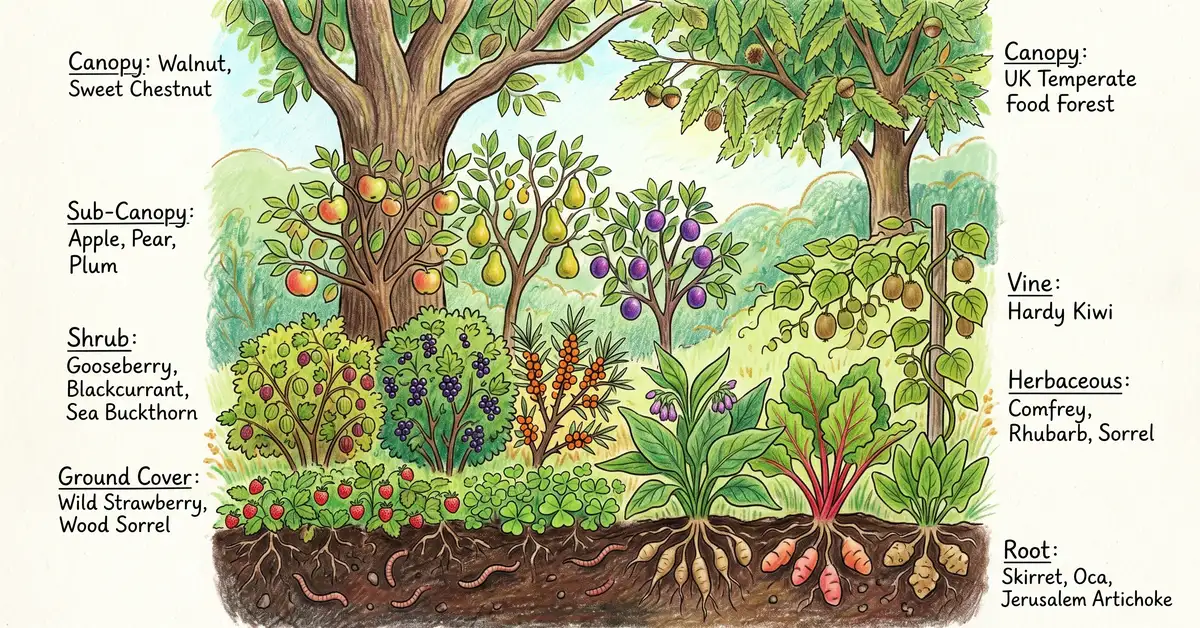
Robert Hart created the world's first modern temperate forest garden on a 0.12 acre (500 sq m) plot in Wenlock Edge, Shropshire, beginning in the 1980s. Hart's seven-layer model (canopy, sub-canopy, shrub, herbaceous, ground cover, root, vine) became the standard structure used by every forest gardener since.
Martin Crawford's Agroforestry Research Trust in Devon is the world's foremost ongoing forest garden research. His 2-acre (0.8 hectare) demonstration garden contains more than 500 species. Crawford has produced the most rigorous yield and ecology data on temperate forest gardens published anywhere. His books Creating a Forest Garden (2010) and How to Grow Perennial Vegetables (2012) are the practical references.
Ken Fern's Plants For A Future database (PFAF) catalogues 7,000+ edible and useful plants, with extensive UK growing notes. Free to use online and an essential reference for any forest garden design at UK or comparable US latitudes.
Patrick Whitefield's Ragmans Lane Farm in Gloucestershire is the UK temperate climate permaculture reference site. His book The Earth Care Manual (2004) and How to Make a Forest Garden (2002) remain the most-cited UK permaculture textbooks. Whitefield died in 2015, and the courses continue under his successors.
Allotments and community gardens
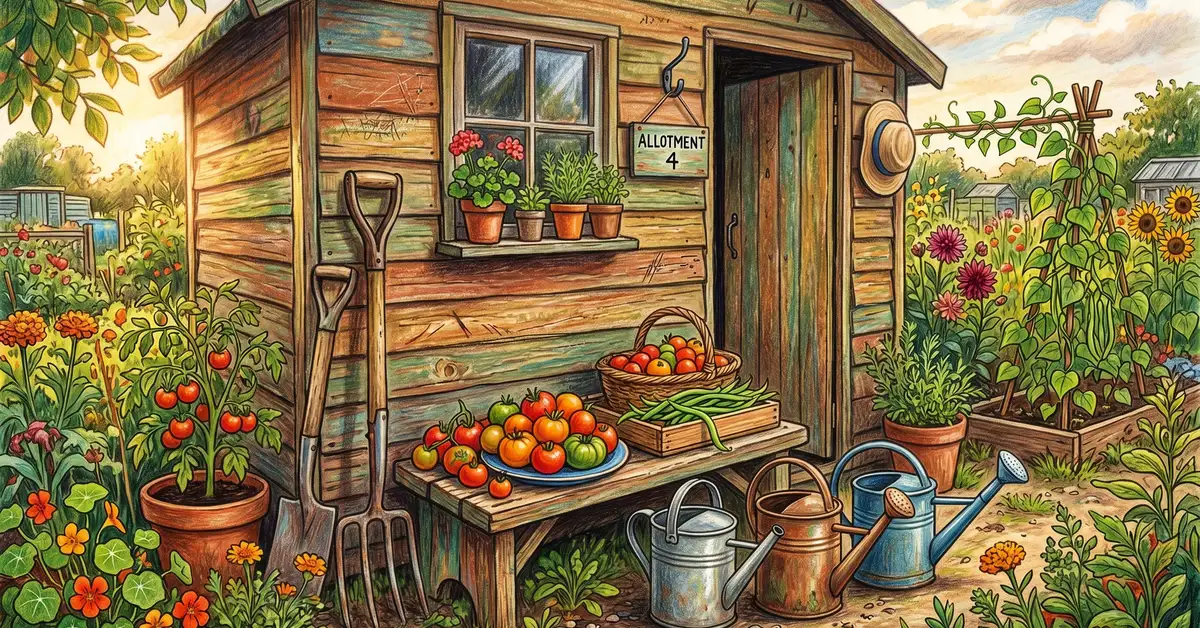
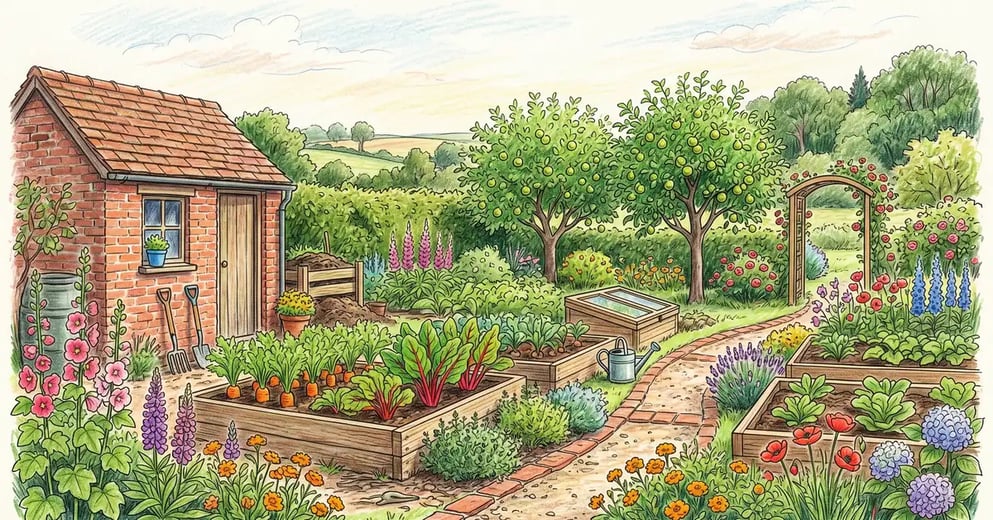
The UK allotment system is one of the most successful urban food production institutions on the planet. The Allotments Act of 1908 obliged local authorities to provide allotment land. Today there are roughly 330,000 plots, each averaging 250 sq yards (210 sq m), with waiting lists exceeding 100,000 people nationally according to the National Society of Allotment and Leisure Gardeners.
An average UK allotment plot produces 300 to 600 lb (135 to 270 kg) of food per year. The allotment culture also functions as a peer-to-peer permaculture training network. Most allotment holders learn from neighbouring plot-holders rather than from books or formal courses.
Incredible Edible Todmorden launched in 2008 in Yorkshire when Pam Warhurst and Mary Clear began planting fruit and vegetables in public spaces with the slogan "if you eat, you're in". The movement spread to over 100 UK towns and 700+ global locations. Public planters of beans, herbs, kale, and fruit trees became civic infrastructure. Anyone can pick the produce.
Capital Growth London grew from 2,012 food growing spaces (the project goal for 2012, the Olympic year) to more than 2,500 sites by 2025, ranging from primary school plots to rooftop farms. The Greater London Authority programme is the largest urban food growing network in Europe.
Crops adapted to the UK climate
The UK's cool summers favour brassicas (cabbage, kale, broccoli, Brussels sprouts), root crops (potatoes, carrots, parsnips, beetroot), peas, broad beans, and runner beans. The cool nights mean lettuce, spinach, and chard produce continuously from spring through autumn rather than bolting like they do in US summers.
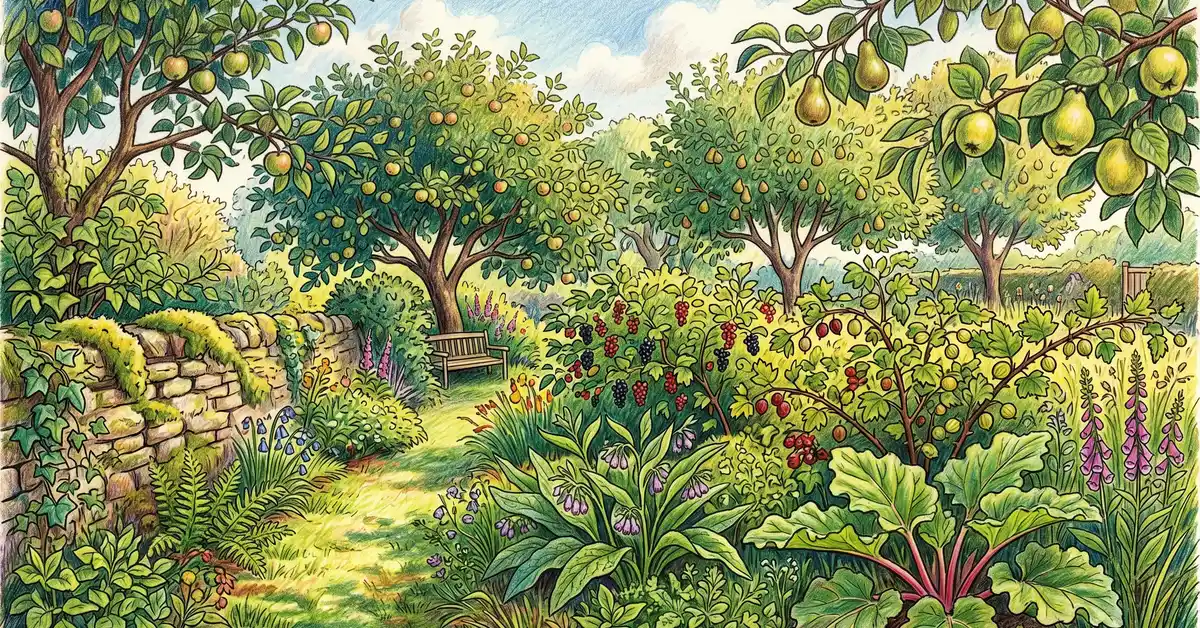
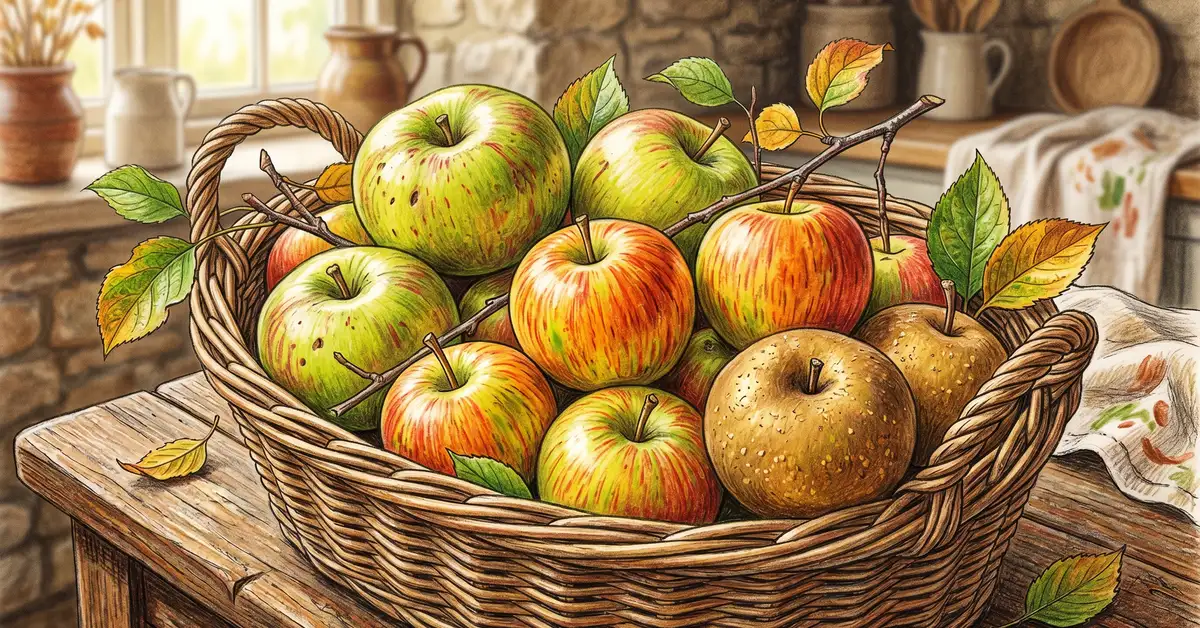
Apple is the British heritage fruit. The Brogdale National Fruit Collection in Kent maintains over 4,000 heritage apple cultivars. Pear, plum, gooseberry, blackcurrant, raspberry, and quince complete the traditional British orchard mix. For forest garden depth, the UK has pioneered planting hardy kiwi (Actinidia arguta), seaberry, sea buckthorn, autumn olive, medlar, walnut, sweet chestnut, oca (Oxalis tuberosa), skirret, and sea kale.
For US permaculture-curious readers in zones 6 to 9: the heritage UK apple varieties (Bramley, Cox's Orange Pippin, Egremont Russet, Discovery, James Grieve) all perform excellently in the US Pacific Northwest, Mid-Atlantic, and Great Lakes regions. UK pear cultivars (Conference, Williams, Doyenné du Comice) transfer just as well.
UK-specific techniques worth borrowing
Hugelkultur on clay amending heavy clay with gypsum. UK practitioners adapted the Austrian hugelkultur method to heavy clay soils by building taller mounds (3 to 5 ft / 0.9 to 1.5 m) with seasoned oak, beech, and hawthorn logs. Works equally well on US clay subsoils from Ohio to Oregon.
Comfrey 'Bocking 14'. The sterile Russian comfrey cultivar (Symphytum x uplandicum 'Bocking 14') was selected at the Henry Doubleday Research Association (now Garden Organic) in the 1950s. It does not set seed, so it stays where you plant it. Cut 4 to 6 times per year as biomass for mulch and liquid fertiliser. Available in the US through specialty nurseries.
Sheet mulching with cardboard and seaweed. Coastal UK access to seaweed produced the standard layered sheet mulch: cardboard, seaweed, straw, finished compost. The exact stack works on US coasts. Inland US gardeners can substitute kelp meal or just use the cardboard plus straw plus compost layering.
Hedge as productive system. The UK hedgerow tradition planted hawthorn, blackthorn (sloe), wild plum, hazel, dog rose, and elder as field boundaries that produce food, firewood, dyes, and pollinator habitat all at once. The closest US equivalent is the Midwestern Osage orange hedge, but the UK version offers far more edible yield.
Incredible Edible: the most copyable UK export

Incredible Edible's model is the easiest UK permaculture export for a US town to copy. Three rules: plant in public, share the harvest, no permission asked. The Todmorden originators called this "propaganda planting". Over 17 years it has launched 700+ sister projects globally, including 50+ in the US (notably Buffalo, NY; Detroit, MI; Asheville, NC; and Berkeley, CA).
The lessons are operational. Start small with one street planter. Use perennial herbs and runner beans (they are visible, productive, and forgive neglect). Photograph everything and put it on a public Facebook page. Three to six months later you will have local volunteers.
Get the Weekly Dig
One practical permaculture guide a week, written for gardeners who do this on weekends: permaculture design for real backyards. Free, no spam, unsubscribe any time.
Join the Weekly DigFrequently asked questions
What is UK permaculture? The British tradition of permaculture design, originating in 1983 with the founding of the Permaculture Association in Hampshire. Distinguished from other national traditions by its focus on temperate maritime climate design, forest gardening (pioneered by Robert Hart and Martin Crawford), the allotment system, and community-scale projects like Incredible Edible Todmorden.
Who started permaculture in the UK? The Permaculture Association (Britain) was founded in 1983 by Andy Langford, Patrick Whitefield, and others. Robert Hart began the first modern temperate forest garden in Shropshire around the same period. Patrick Whitefield, Aranya, Looby Macnamara, and Martin Crawford became the UK movement's foundational teachers through the 1990s and 2000s.
What is a UK forest garden? A multi-layer perennial food production system designed for the UK's temperate climate, typically containing canopy trees (apple, pear, walnut), sub-canopy (medlar, quince), shrub layer (currants, gooseberries), herbaceous perennials (comfrey, sorrel), ground cover (wild strawberry), root crops (skirret, oca), and vines (hardy kiwi). Martin Crawford's 2-acre Devon garden contains 500+ species.
How do I get an allotment in the UK? Apply through your local council's allotment officer. Waiting lists range from 6 months in rural areas to 5+ years in London. The National Society of Allotment and Leisure Gardeners (NSALG) lists every council allotment scheme and waiting list status. Some sites are run privately or by community trusts as alternatives.
Is Incredible Edible UK or US? UK. Pam Warhurst and Mary Clear launched it in Todmorden, West Yorkshire, in 2008. The model has since spread to 700+ towns globally including 50+ US sister projects.
What is the Permaculture Association? The national permaculture body for Britain, founded in 1983 in Hampshire. Now the oldest national permaculture organisation in the world. Runs the Diploma in Applied Permaculture Design, coordinates the LAND demonstration network, hosts annual UK Convergence events, and publishes resources at permaculture.org.uk.
Does UK permaculture work in the US? Yes, directly, for US gardens in USDA zones 6 to 9, especially the Pacific Northwest, Mid-Atlantic, Great Lakes, and New England. The UK climate maps onto these regions far better than Australian or Mediterranean permaculture sources. The main adjustment: US summers are hotter, so add summer heat shading and irrigation for crops that the UK can grow unaided.
Resources
- Permaculture Association Britain
- Martin Crawford's Agroforestry Research Trust, Devon
- Plants For A Future Database (Ken Fern)
- Permaculture Magazine (Permanent Publications)
- National Society of Allotment and Leisure Gardeners
- Incredible Edible UK
- Capital Growth London
- Garden Organic (formerly Henry Doubleday Research Association)
- Brogdale National Fruit Collection, Kent
hazelnut nut production in cold climates