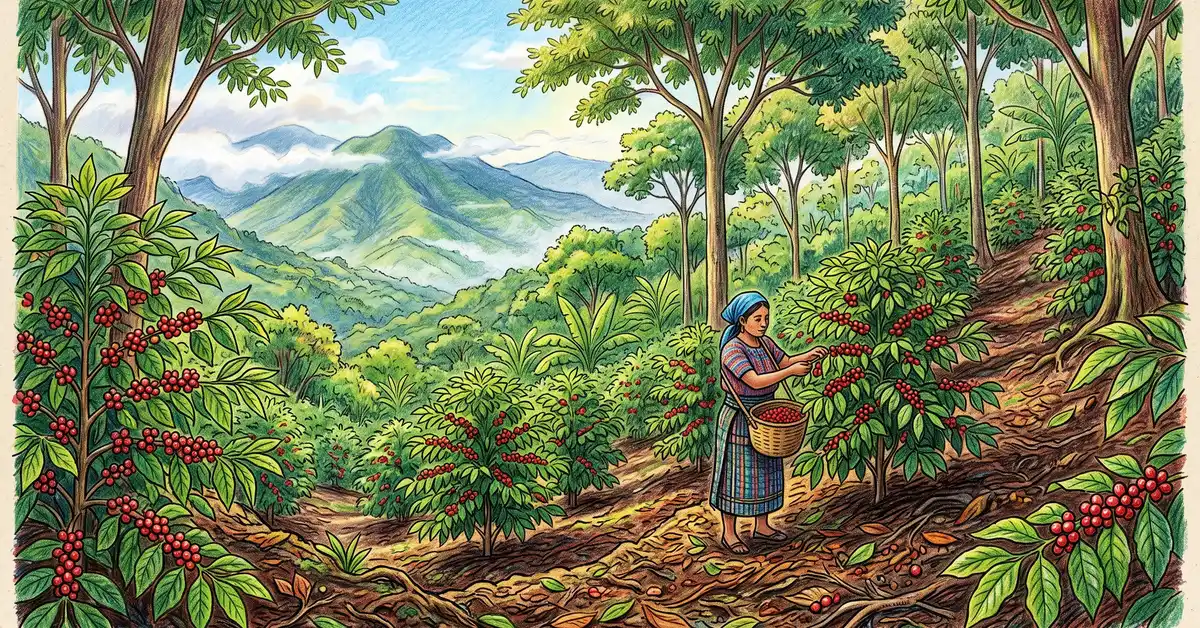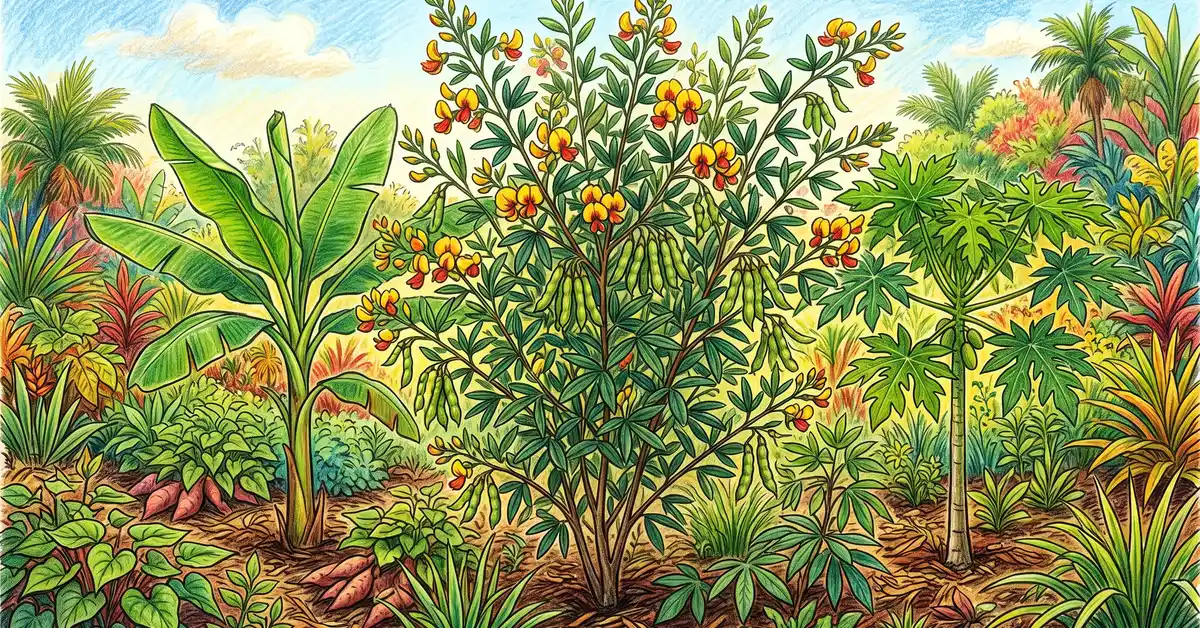

Syntropic agriculture was worked out in the Atlantic forest belt of Bahia, where rain falls most months and a pruned tree is back in leaf before you have finished stacking the brash. Biomass is close to free there.
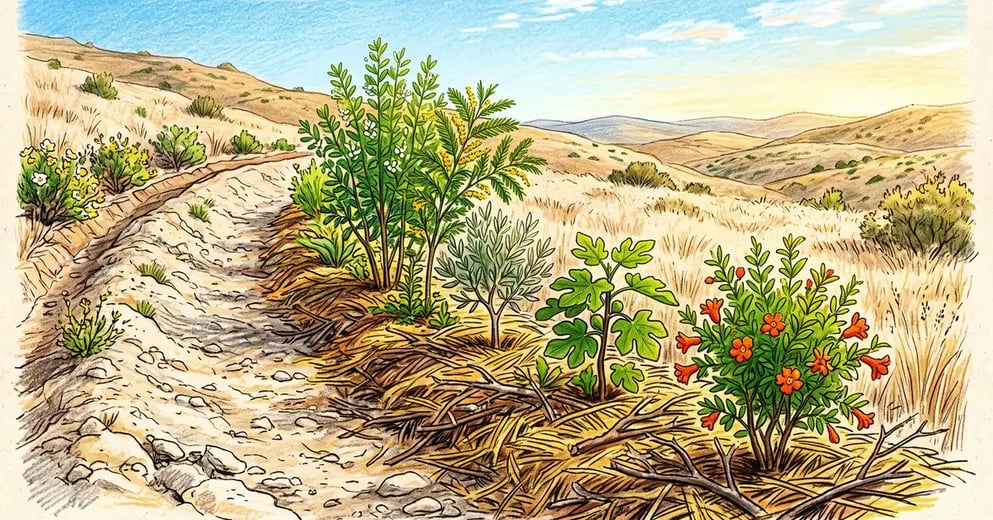
Now move that system to the Alentejo, Andalusia or inland California, where nothing falls between May and October. Every principle still holds. The arithmetic does not, and the arithmetic is what decides whether your planting survives its third summer.
Why Does the Tropical Model Not Transfer Directly?
Because the whole method is a biomass loop, and Mediterranean climates produce a fraction of the biomass. Götsch's system feeds soil through constant pruning and mulching, keeping the ground covered year-round with material the system grows itself.
The FAO's technical manual chapter on syntropic agriculture is explicit that the practice depends on producing high quantities of biomass yearly in order to work without external inputs. Multistrata tropical agroforestry commonly puts on 5 to 10 tonnes of dry matter per hectare per year. Rainfed Mediterranean pasture and scrub sits closer to 1 to 2. That is the gap you are designing around.
Here is what this guide covers:
- Why biomass, not water, is the first constraint to design around
- The species that actually make mulch under 10 to 30 in. of rain
- Water-harvesting earthworks and where the measured evidence stops
- Why you plant in autumn and prune in spring, not the reverse
- The fire problem nobody in the tropics has to think about
Key Takeaway
In a summer-dry climate you will almost certainly have to import biomass for the first few years while your own pioneers get established. Practitioners who refuse to do this, on the grounds that a closed system should feed itself, tend to end up with thin mulch, bare soil and dead trees.
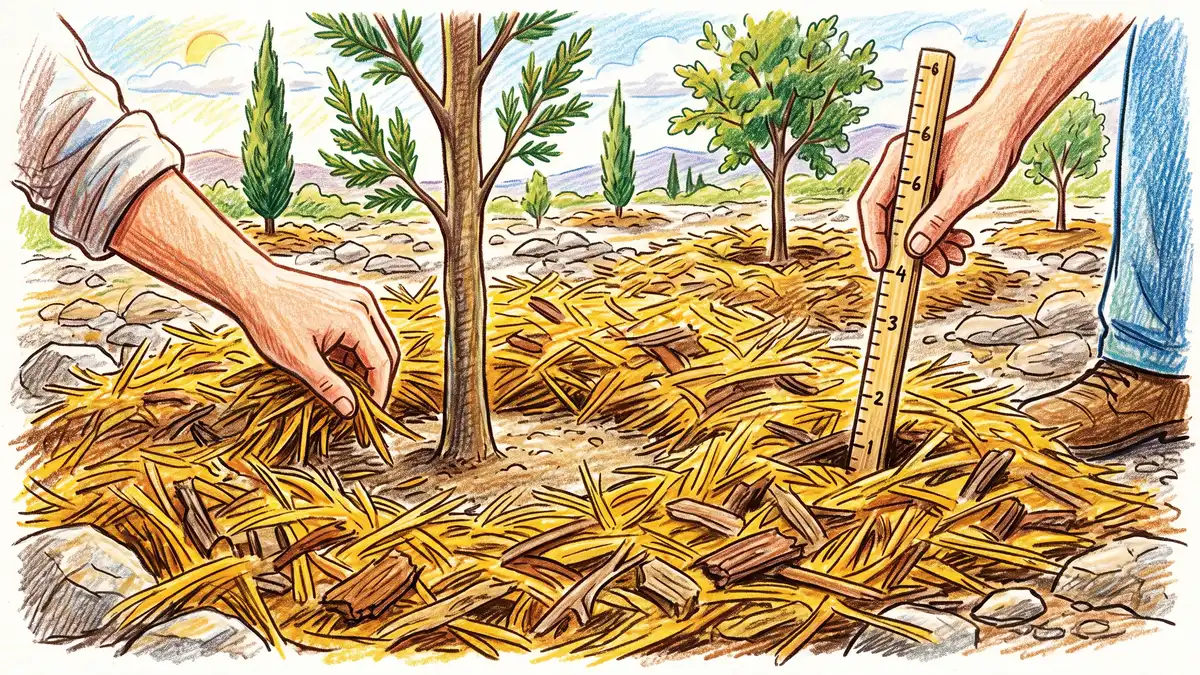
What Actually Makes Biomass in a Dry Climate?
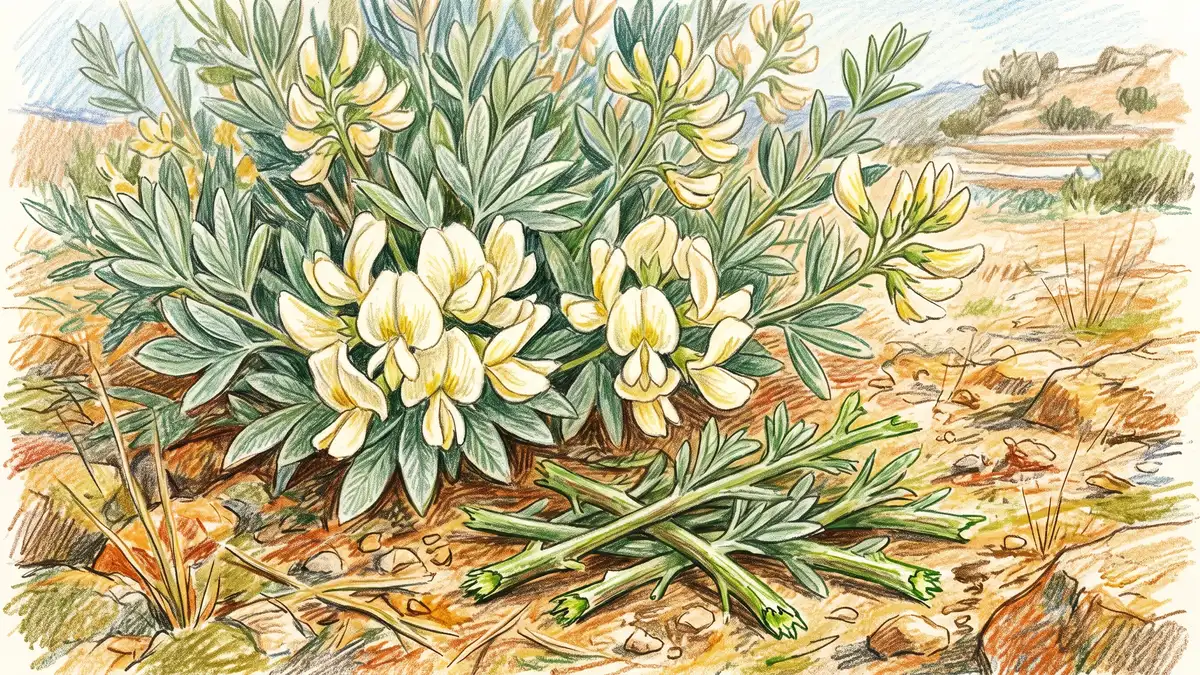
Deep-rooted woody legumes, not annual green manures. The placenta species that carry a tropical system are mostly fast soft-tissue annuals. Under a Mediterranean summer they die in June and give you one thin flush.
| Stratum | Mediterranean and Californian options |
| Emergent | Cork oak, holm oak, stone pine, walnut, poplar on wetter ground |
| High | Carob, olive, almond, mulberry, fig |
| Medium | Pomegranate, elder, bay, quince, Cistus |
| Low | Rosemary, lavender, artichoke, brassicas in winter |
| Placenta, biomass | Tagasaste (tree lucerne), tree medick, acacia, broom, giant reed on damp ground |
Sources: FAO, Recarbonizing Global Soils: Syntropic Agriculture, La Loma Viva, Andalusia, Vale da Esteva, Portugal.
Tagasaste is the workhorse. It is a nitrogen-fixing woody legume, it holds green leaf through summer once rooted, and it takes hard cutting. Carob does similar duty at a larger scale over a much longer timeframe. The FAO chapter is also useful here for a correction most people get wrong: Götsch's strata are defined by sunlight demand and shade tolerance, not by height. A corn plant is emergent within a placenta consortium. A cork oak is emergent within a climax consortium. They are not competing for the same slot.
How Do You Get Water Into the Ground?
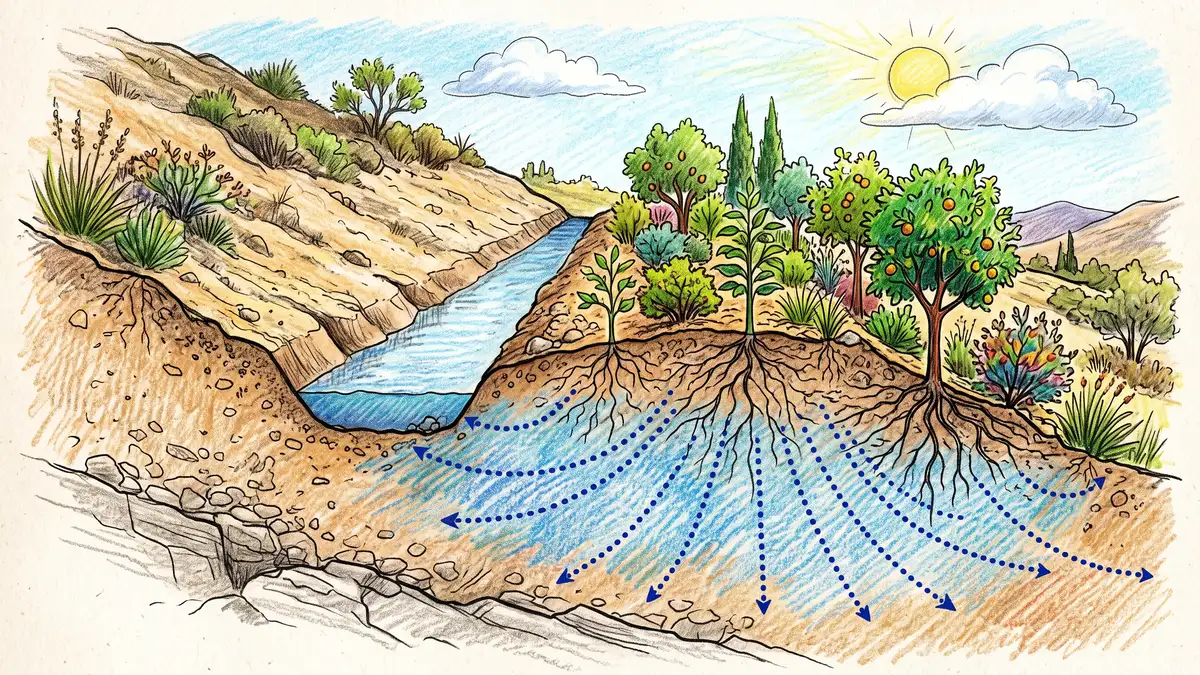
Earthworks first, planting second. The single most documented Mediterranean example is Tamera in southern Portugal, where a Water Retention Landscape of dams, swales, terraces, keyline ploughing and reforestation was built to rebuild the water cycle.
The European Environment Agency's Climate-ADAPT case study describes rainwater infiltrating into soil and aquifers, with outflow becoming spring water that supplies the site through long rainless periods. Be aware of what that case study does not contain: published infiltration rates, water table measurements or plant survival figures. The qualitative evidence is strong and the numbers are largely missing, which is the honest state of this field.
When Do You Plant and When Do You Prune?
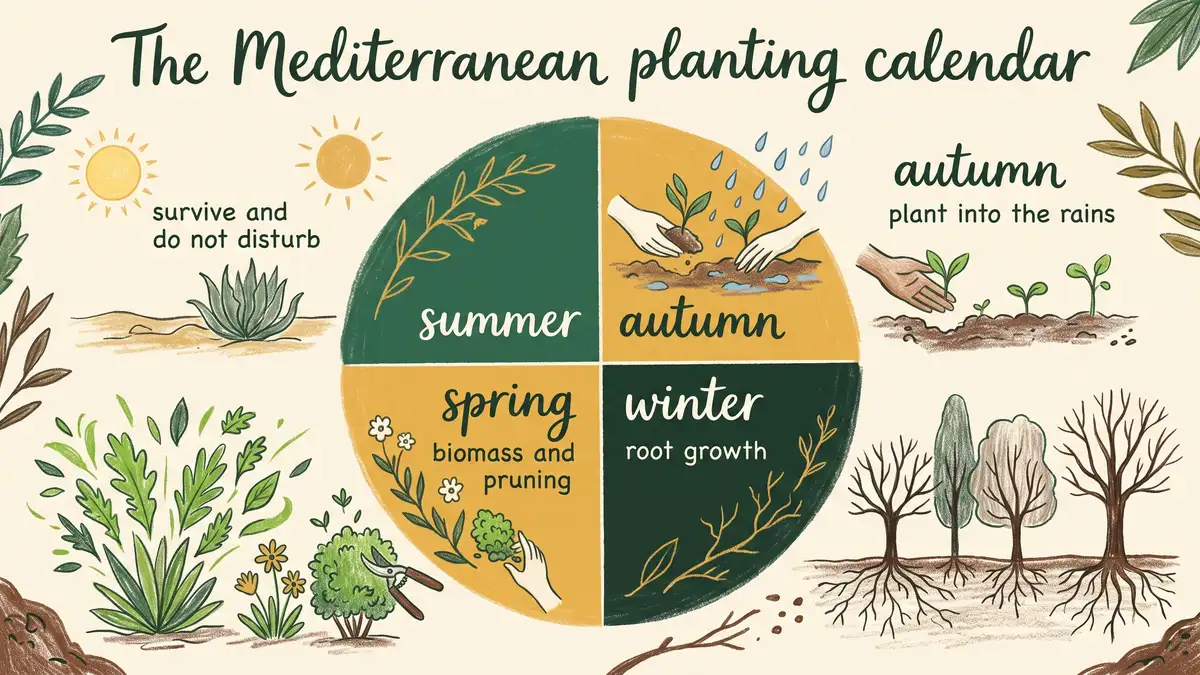
The calendar inverts. This is the adjustment that trips up people arriving from temperate or tropical practice, and getting it wrong costs you trees.
Build earthworks in late summer, on dry ground
Swales, basins and terraces go in while the soil is workable and before the rains. Every tree you plant later should sit where water will collect.
Plant in autumn, into the first rains
Not spring. Autumn planting gives roots the entire wet season to establish before the first summer tests them. Spring planting means a seedling meets 100 F (38 C) with weeks of root growth behind it.
Mulch deeply, and keep the collar clear
Thin mulch is worse than useless here, because it wicks and dries. Go deep, and pull it back from every trunk to avoid rot and rodent shelter.
Prune in spring, never heading into drought
Cutting hard in late spring strips leaf area exactly when the plant needs it to manage water. Take your biomass while there is still soil moisture to fuel regrowth.
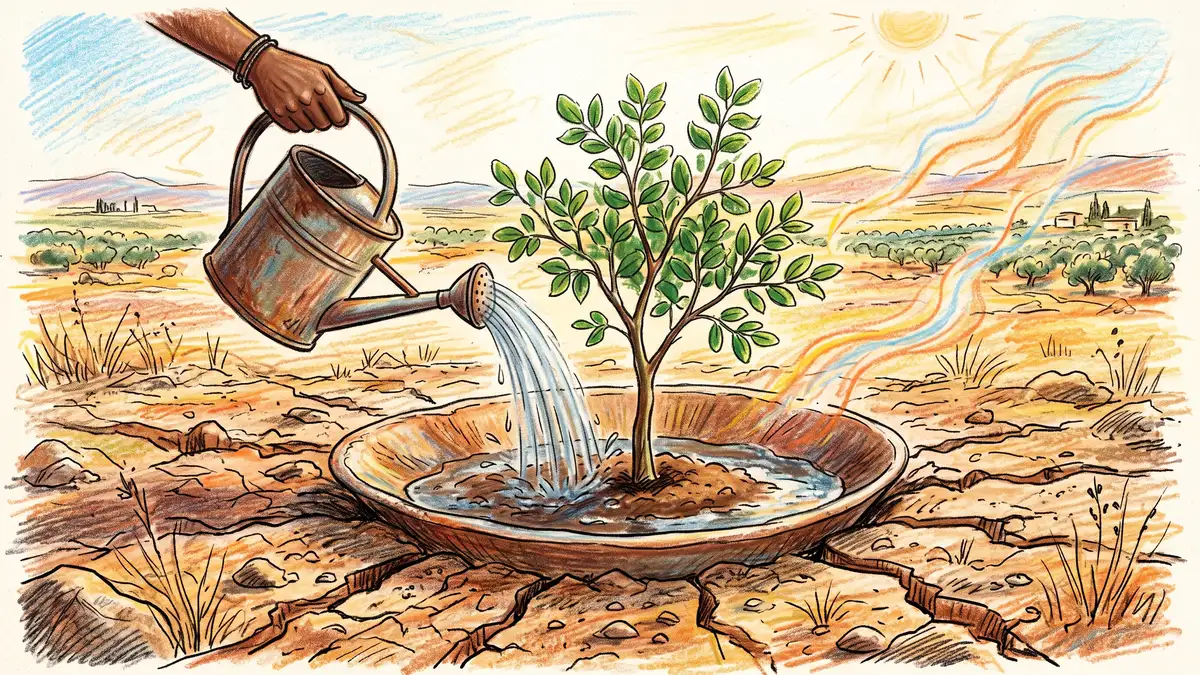
Water through the first two summers, and mean it
Establishment mortality is the commonest failure reported across Iberian projects. Supplementary water for two to three summers is not a failure of principle, it is the cost of getting to a self-sustaining system.
The Fire Problem
Nobody designing syntropic systems in humid Brazil has to think about this. In Portugal, Spain, Greece and California you do. Research on neo-rural permaculture settlers in Portugal found that added vegetation and biomass can cut fire risk through moisture and shading or raise it through fuel load, depending entirely on management. Deep dry mulch and dense shrub layers are fine fuels and ladder fuels in August. Keep green, high-moisture species near structures, break up continuous fuel with mown or grazed strips, and expect fire regulations to constrain how much standing biomass you may hold.
Does Any of This Actually Work in a Dry Climate?
The best dryland evidence comes from Brazil, not Europe. In Brazil's semi-arid zone, the Policultura no Semi-Árido project moved 750 families from castor-oil monoculture into successional agroforestry, combining castor with beans, corn, watermelon and sesame alongside fruit trees, prickly pear and timber. Regional average castor yield was 800 kg per hectare. Some project farmers reached 2,100 kg per hectare, and finished with a fruit and timber plantation rather than bare soil.
Why This Works: Stacking in Time, Not Just Space
The castor result is the clearest demonstration of the actual mechanism. Nothing was subtracted from the cash crop. Species were stacked in time, so short-cycle crops paid the bills while slow perennials built structure underneath. That is Götsch's placenta stage doing its job, and the FAO chapter notes it can run up to 24 months before the secondary consortium takes over. In a dry climate the sequence stretches out, but the logic is identical to what happens in year one of any syntropic planting: fast things fund slow things.
Soil evidence exists too, though it is thin and mostly tropical. Sampling on a 12-year-old system at Götsch's Bahia farm found roughly seven times more available phosphorus than an adjacent unmanaged site. For the Mediterranean specifically, the FAO manual lists exactly one related case study, "Syntropic Agriculture in a Mediterranean Context", running two years. Two years.
So plant it with clear eyes. The principles are sound and the dryland adaptation is coherent, but the measured Mediterranean evidence base is close to nonexistent. If you want the broader system first, start with what syntropic agriculture is, then the temperate assessment. For species and layout in a dry garden, our Mediterranean food forest guide covers the palette in more depth, and swales and berms covers the earthworks.
Frequently Asked Questions
Can syntropic agriculture work in a Mediterranean climate?
The principles transfer, the biomass budget does not. Syntropic agriculture runs on constant pruning and mulching using material the system grows itself, and multistrata tropical systems can put on 5 to 10 tonnes of dry matter per hectare per year against roughly 1 to 2 for rainfed Mediterranean vegetation. That means slower succession, lower planting densities than the tropical model, and almost certainly imported biomass during establishment. Practitioners across Portugal, Spain, Greece and California are doing it, but the FAO technical manual lists only one Mediterranean case study, running two years.
What biomass species work under summer drought?
Deep-rooted woody legumes rather than the soft annuals used in the tropics. Tagasaste, also called tree lucerne, is the standout: it fixes nitrogen, holds green leaf through summer once established, and regrows hard after cutting. Tree medick, acacia and broom fill similar roles, with carob working at larger scale over a longer timeframe. Giant reed produces heavily on damp ground but spreads aggressively and should be sited carefully. Annual green manures still have a place in the wet season, but they cannot carry the mulch load alone.
When should you plant a syntropic system in a dry climate?
Autumn, into the first reliable rains, so roots get the whole wet season before their first summer. Spring planting is the single most common cause of establishment mortality in Mediterranean projects, because a seedling meets extreme heat with only weeks of root growth behind it. Build your earthworks in late summer while the ground is workable, plant as the rains arrive, mulch deeply straight away, and plan on supplementary water through the first two to three summers regardless of how self-sufficient the design is meant to be.
When do you prune in a Mediterranean syntropic system?
In spring, while soil moisture is still available to fuel regrowth. Hard pruning immediately before the dry season strips leaf area at the moment the plant most needs it to regulate water transport, which raises stress and mortality. This is a real departure from tropical practice, where a pruned tree recovers quickly in almost any month. Follow the tropical pruning calendar in a summer-dry climate and you will weaken exactly the pioneer species you are relying on for biomass.
Is fire risk a problem with syntropic mulching?
It can be, and it is the failure mode with no tropical equivalent. Research on neo-rural permaculture settlers in Portugal found that increased vegetation and biomass either reduces fire risk through moisture and shading or increases it through fuel load, depending on management. Deep dry mulch and dense shrub layers act as fine fuels and ladder fuels in high summer, and species such as broom burn readily. Break up continuous fuel with mown or grazed strips, keep high-moisture species near buildings, and check local fire regulations before you build standing biomass.
Get the Weekly Dig
One practical permaculture guide a week, written for gardeners who do this on weekends: food forest and guild designs that produce. Free, no spam, unsubscribe any time.
Join the Weekly DigResources
- FAO, Recarbonizing Global Soils: Syntropic Agriculture chapter: strata ratios, consortium timing, the Brazilian semi-arid castor results
- EEA Climate-ADAPT: Tamera Water Retention Landscape: the most documented Mediterranean water-retention case study
- Tamera: Water Retention Landscape: design detail on dams, swales, terraces and keyline
- Agenda Gotsch: Large-Scale Syntropic Farming, Results and Challenges: planting densities and candid constraint reporting
- La Loma Viva: Syntropic Farming in Andalusia: dryland practitioner account and species choices
- Vale da Esteva, Portugal: Iberian syntropic and regenerative project
- Quinta Vale da Lama, Portugal: Algarve regeneration site with water-harvesting integration
- FAO: Agroforestry for Landscape Restoration: restoration context for dryland agroforestry