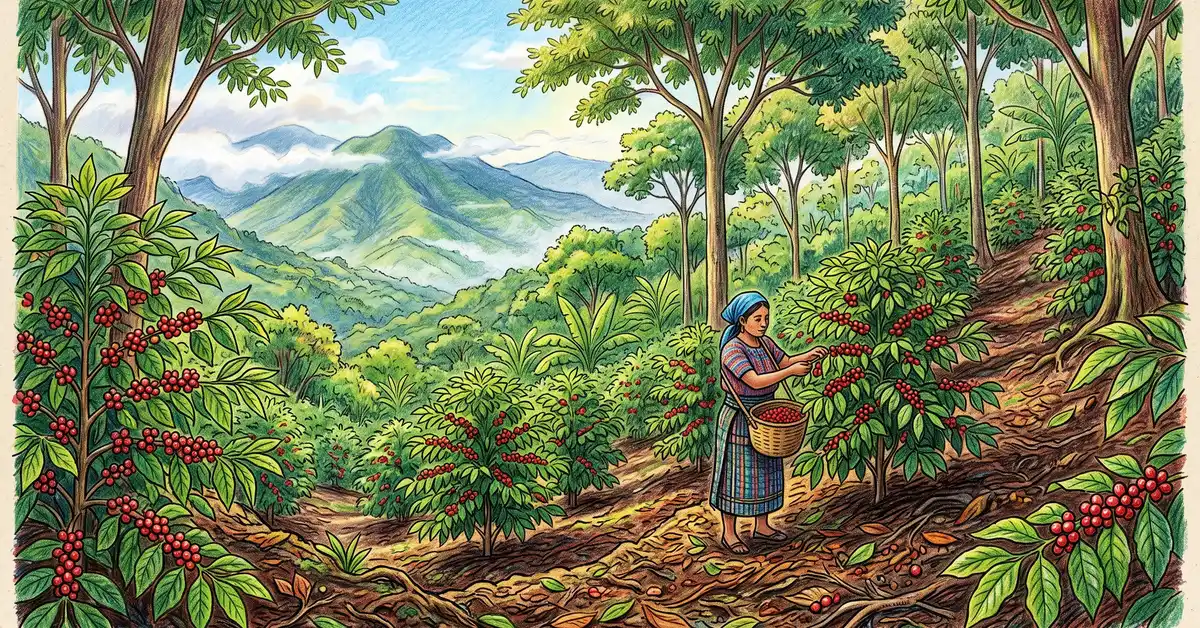

You read the case studies. Ernst Gotsch turned bare Bahia pasture into a profitable cacao operation. Propagate Ag has temperate clients producing chestnuts, currants, and timber on a single acre. The yield numbers look real. But you have a mortgage, a family, and a job that pays the bills, and "wait seven years for cash flow" sounds like advice from someone who never had to make a tractor payment.
Fair concern. This guide walks through the actual economics of syntropic agriculture for US small farmers and homesteaders: what it costs to establish, how the cash flow stacks year by year, where the income streams come from, what subsidies and ecosystem-service payments actually exist, and the failure modes that turn good ecology into bad accounting. Numbers are sourced to peer-reviewed studies, USDA economic data, and working farm case studies.
Establishment Costs: What Year One Actually Looks Like
A 5-acre syntropic establishment in the US runs $40,000 to $75,000 total, or roughly $8,000 to $15,000 per acre. This is much higher than the annual monoculture comparable. According to the USDA Economic Research Service farm income data, average production expenses for US crop farms run roughly $400 to $1,200 per acre per year for annual row crops. Syntropic systems front-load the spending into year one and reduce it heavily from year four onward.
Source: USDA Economic Research Service, Farming and Farm Income data (accessed 2026)
The dominant line items for a 5-acre US syntropic project, based on Mountain Time Farm's published syntropic economics and Propagate Ag's cold-climate cost analysis:
| Cost item | Per-acre range | Notes |
| Site preparation and earthworks | $1,000 to $3,500 | Higher if swales or terraces are needed |
| Plant material (trees, shrubs, perennials) | $2,500 to $5,500 | 200 to 500 plants per acre at high density |
| Mulch and amendments | $800 to $1,800 | 3-inch initial mulch layer over full footprint |
| Labor for planting and design | $2,500 to $4,000 | Skilled labor at $25 to $40 per hour |
| Irrigation infrastructure | $700 to $1,500 | Drip lines and storage where rainfall is marginal |
Source: Mountain Time Farm and Propagate Ag cost analyses, 2024 to 2025
The Cash-Flow Curve: When Does Money Come Back?
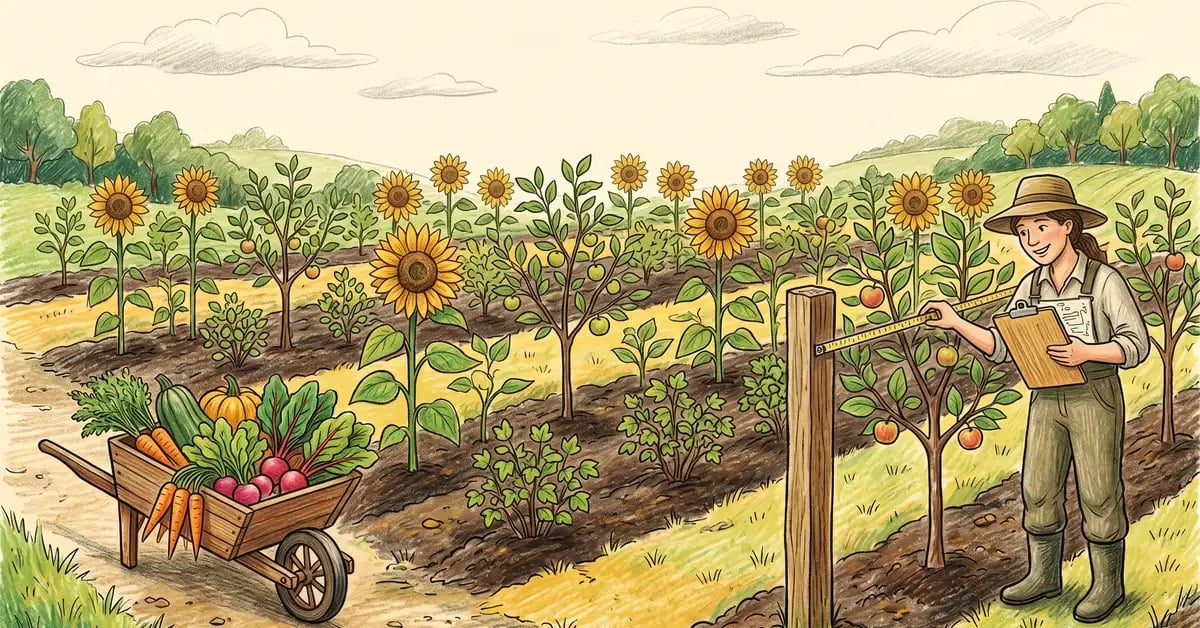
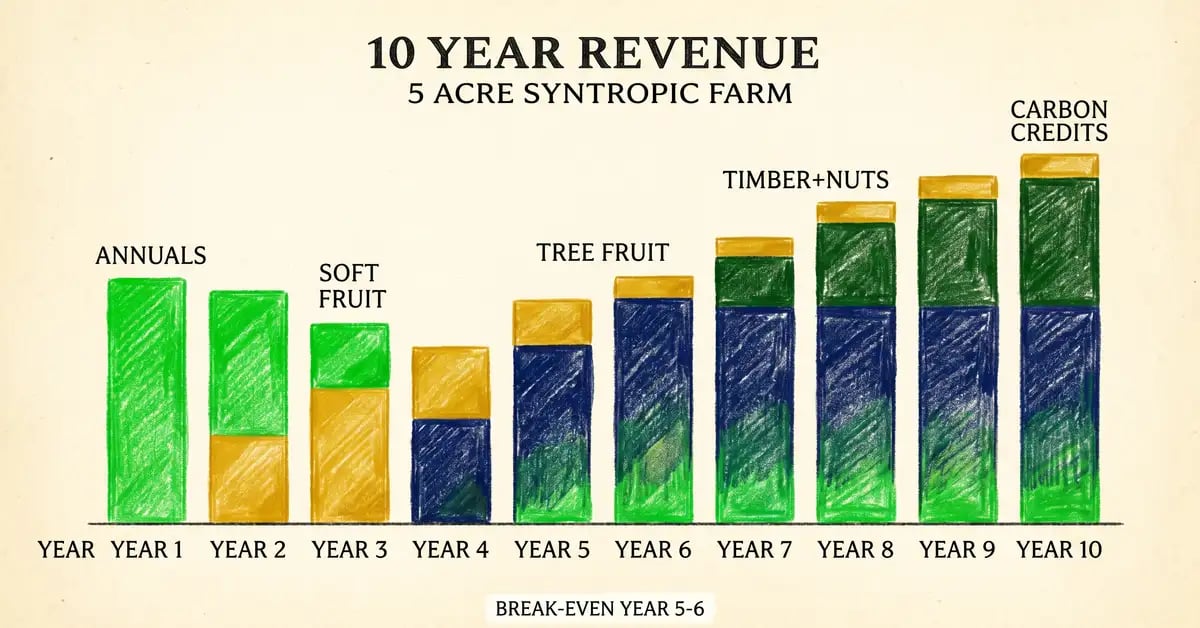
Multiple peer-reviewed agroforestry economic analyses converge on the same broad pattern: short-cycle annual crops generate revenue in year 1, soft fruit and berries kick in year 2 to 3, tree fruits become productive in year 4 to 6, and timber or nut crops carry the system from year 7 onward.
A long-term Bolivia cocoa agroforestry trial in Experimental Agriculture tracked organic cocoa agroforestry, conventional agroforestry, and monoculture cocoa over more than 10 years. Total system yield (cocoa plus the bananas, plantains, and timber growing in the same plot) was substantially higher in agroforestry, especially during dry years when monoculture suffered. Net economic returns favored agroforestry once the secondary crops were valued, and the gap widened with system age.
For US temperate systems, a 2024 paper in Elementa: Science of the Anthropocene reviewed commercial temperate agroforestry operations and found median break-even years of 5 to 7, with the most successful operators achieving positive net cash flow by year 4 when they had a strong direct-to-consumer channel for year-one and year-two annual crops.
The Propagate Ag chestnut unit economics analysis documents a single-product example: chestnut production reaches commercial yields in year 7 and full production around year 12, after which a well-managed acre nets $4,000 to $7,000 per year for 50+ years.
The Six Income Streams That Make Syntropic Math Work
A syntropic farm is not betting on one crop. The economics work because multiple revenue streams overlap on the same acre.
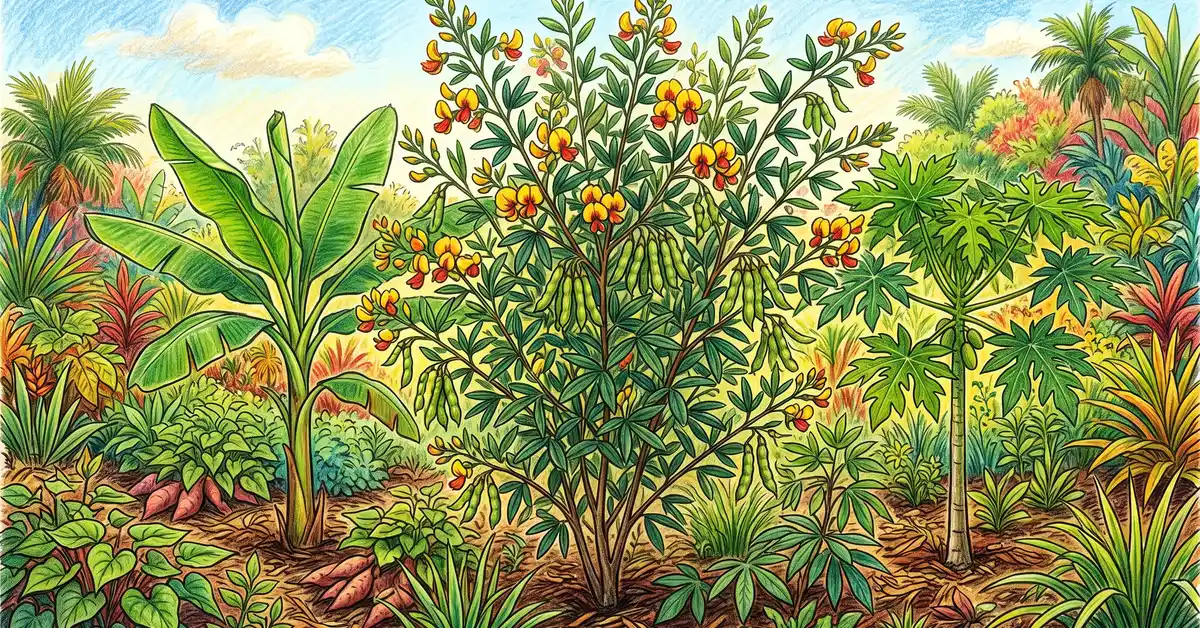
Annual vegetables and grains (year 1 to ongoing). Sunflowers, beans, sorghum, daikon, squash, sweet corn. Direct-to-market revenue while the perennials establish. Plus the residue mulches the system.
Soft fruit and berries (year 2 to 30). Currants, raspberries, blackberries, gooseberries. The Savanna Institute resource library documents Midwest growers netting $5,000 to $12,000 per acre from u-pick or farm-stand berry sales by year 4.
Tree fruit (year 4 to 40). Apples, pears, plums, persimmons, mulberries. Standard small-orchard economics apply.
Nuts and timber (year 7 to 80). Chestnuts, hazelnuts, walnut, paulownia for biomass and lumber.
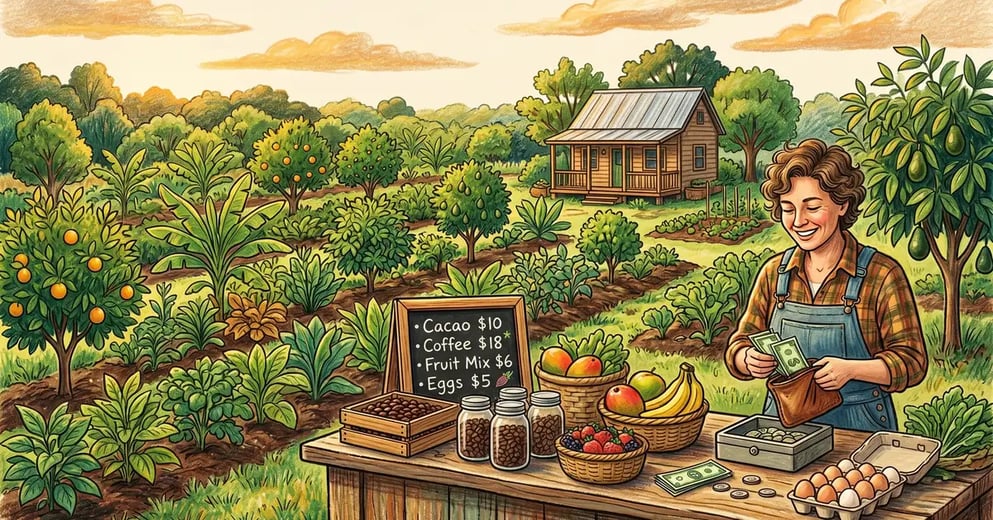
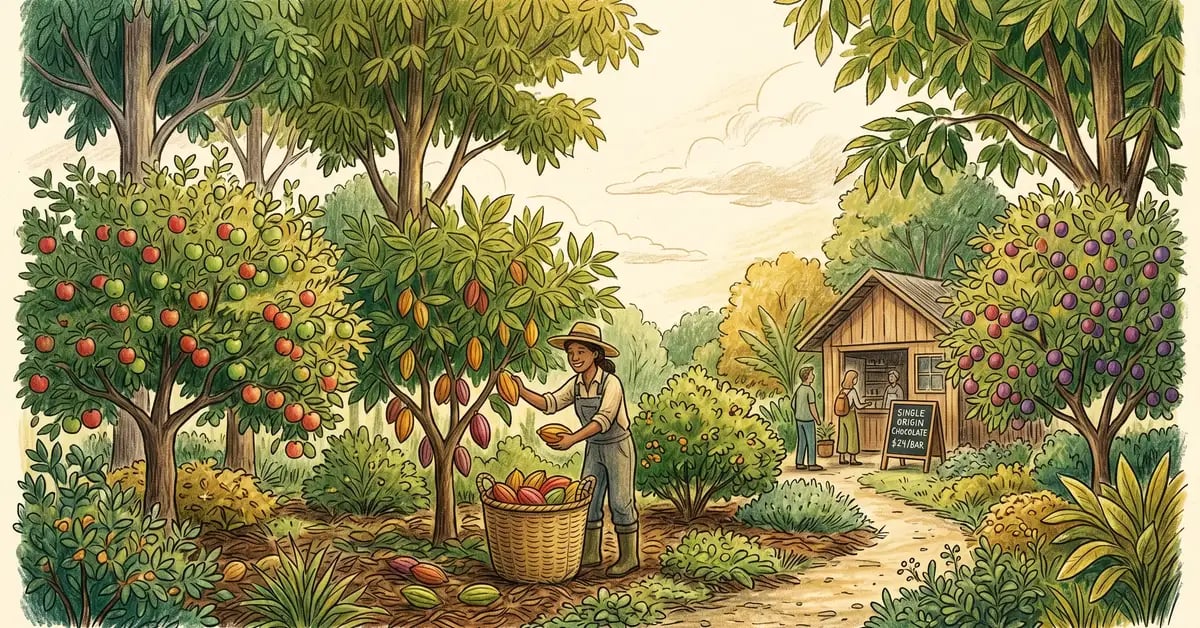
Premium pricing on processed products. Ernst Gotsch's own cacao sells at multiples of commodity price. Agenda Gotsch's product line shows single-origin syntropic cacao priced at the high end of the artisan market. The Chocolate Life reports that premium single-origin chocolate retails at 4 to 8 times the price of commodity chocolate.
Ecosystem service revenue. Soil carbon credits, water-quality payments, and biodiversity programs. According to Sylvera's 2025 carbon offset price review, voluntary soil carbon credits trade at roughly $15 to $40 per ton of CO2 equivalent in current US markets, with agroforestry systems sequestering 1 to 3 tons per acre per year (see Penn State research). That works out to $15 to $120 per acre per year in carbon revenue alone, on top of the food sales.
Labor: The Honest Number
Syntropic systems are not labor-light. They are labor-skilled. Establishment requires 80 to 150 hours of skilled labor per acre in year one. Mature systems (year 5+) drop to roughly 30 to 60 hours per acre per year for chopping, harvesting, and minor pruning. By comparison, a mechanized monoculture row crop runs 1 to 5 hours per acre per year.
That labor gap is the single biggest economic risk factor. If you cannot do most of the work yourself or have access to interns, WWOOF volunteers, or a regenerative agriculture apprentice program, the labor math gets brutal. Trellis Network coverage of US agroforestry adoption barriers consistently flags labor availability as the top constraint.
Why This Works
Syntropic economics are the practical expression of David Holmgren's permaculture principle, "Obtain a Yield." Each plant in the system is paying back in some way: the sunflower pays in year-one cash and biomass, the currant pays in year-three fruit, the apple pays in year-five fruit, the chestnut pays in year-ten nuts and year-forty timber. Standard agriculture maximizes one crop and treats everything else as cost. Syntropic systems convert every plant, every prune, every fallen leaf into either food, mulch, or future infrastructure. The cash-flow penalty in years 1 to 4 is real. The cash-flow advantage from year 5 onward, compounded across multiple income streams that diversify your market risk, is also real.
US Subsidy and Grant Stack: Real Money on the Table

Most syntropic-curious US farmers under-use these. The dollars are not trivial.
USDA NRCS EQIP (Environmental Quality Incentives Program). Pays cost-share for tree planting, windbreaks, riparian buffers, and silvopasture establishment. According to the NRCS EQIP page, practice payments commonly cover 50 to 75 percent of establishment costs. Beginning farmer, veteran, and socially disadvantaged producer rates are higher.
USDA NRCS CSP (Conservation Stewardship Program). Annual per-acre payments for adopting and maintaining conservation practices. The CSP overview notes payments typically range from $18 to $50+ per acre per year over a 5-year contract, scaling with enhancement activities.
Conservation Innovation Grants. The CIG program funds on-farm trials of innovative practices including agroforestry, with grants from $75,000 to $2 million.
State-level programs. Vermont, Minnesota, California, and Washington all have state agroforestry incentive programs that stack on top of federal payments.
A Realistic 10-Year Profit Forecast for a 5-Acre US Syntropic Farm
Assuming a mid-Atlantic site, owner-operator labor, 5 acres, and a strong direct-to-consumer channel:
| Year | Revenue | Expenses | Net |
| 1 | $8,000 (annuals) | $55,000 (establishment) | -$47,000 |
| 2 | $14,000 (annuals, first berries) | $9,000 | +$5,000 |
| 3 | $22,000 (berries, herbs, first chestnut) | $10,500 | +$11,500 |
| 4 | $31,000 (berries, tree fruit start) | $11,000 | +$20,000 |
| 5 | $41,000 (full berries + fruit) | $12,000 | +$29,000 |
| 6 | $50,000 (mature mix + ecosystem services) | $13,000 | +$37,000 |
| 7-10 avg | $60,000 to $85,000 (full system) | $14,000 to $16,000 | +$44,000 to $70,000 |
Source: Composite of Mountain Time Farm, Propagate Ag, Savanna Institute, and Elementa 2024 agroforestry economic models. Numbers vary widely by region, market access, and operator skill.
Cumulative year 1 to 10 net (with 50% EQIP cost-share on year-one establishment): roughly $200,000 to $300,000. That is one full-time owner-operator salary equivalent, on 5 acres, after the front-loaded investment is amortized.
Common Failure Modes
- Undercapitalization. Year-one cash is the hardest. Plan for $40,000 to $75,000 in capital that you can live without seeing returns from for 4 to 5 years.
- No direct-to-consumer channel. Selling chestnuts wholesale gets you commodity prices. Selling single-origin chestnut flour at the farmer's market gets you 5x. Build the buyer relationships before year 1.
- Scaling too fast. Start with 1 to 2 acres, prove the system, then expand. Going to 10 acres in year one with no track record is the most common failure.
- Underestimating labor. Solo operators routinely burn out at year 3. Build the labor pool (apprentices, WWOOF, family) into the plan.
- Ignoring subsidies. EQIP cost-share can cut establishment costs in half. Apply before you plant, not after.
Get the Weekly Dig
One practical permaculture guide a week, written for gardeners who do this on weekends: food forest and guild designs that produce. Free, no spam, unsubscribe any time.
Join the Weekly DigFrequently Asked Questions
How long until a syntropic farm becomes profitable in the US?
Peer-reviewed temperate-climate agroforestry studies typically place break-even at year 5 to 7, with the best-managed direct-to-consumer operations reaching positive cash flow as early as year 3 to 4 thanks to strong year-one and year-two annual crop revenue.
What does it cost to establish a syntropic farm per acre?
US small-scale syntropic establishment runs roughly $8,000 to $15,000 per acre including site prep, plant material, mulch, labor, and basic irrigation. EQIP cost-share through USDA NRCS can cover 50 to 75 percent of qualifying practices, dropping the out-of-pocket figure substantially.
Can you make a full-time living from a syntropic farm?
Yes, but typically not before year 6 or 7. A 5-acre US system in good direct-to-consumer markets can generate $60,000 to $85,000 in annual revenue and $44,000 to $70,000 in net profit by year 7 to 10, equivalent to one owner-operator salary. Larger operations scale this proportionally.
What ecosystem service payments are available in the US?
Soil carbon credits trade at roughly $15 to $40 per ton of CO2 equivalent in voluntary markets, with agroforestry systems sequestering 1 to 3 tons per acre per year. USDA CSP pays $18 to $50+ per acre per year for conservation practices. Some state programs add water-quality and biodiversity payments.
How does syntropic profit compare to conventional row-crop farming?
Conventional small-acreage row crops in the US average $200 to $600 in net profit per acre per year. Mature syntropic systems commonly net $5,000 to $15,000+ per acre per year by year 7+, but the upfront capital and labor are 5 to 10 times higher and the wait is 5 to 7 years. The tradeoff is steep early cash flow for steep long-term return.
What is the biggest economic risk?
Labor availability. Skilled labor for pruning, harvesting, and processing is the single largest cost line and the single largest constraint. Operators who cannot source apprentices, family help, or affordable seasonal labor consistently underperform the projections.
Do I need to grow cacao or coffee for syntropic to be profitable?
No. Tropical-only species like cacao and coffee are not viable in most of the US. Temperate adaptations using chestnuts, hazelnuts, apples, paulownia, mulberry, and currants produce comparable economic outcomes when paired with direct-to-consumer marketing.
The Takeaway
Syntropic agriculture is profitable in the US, just not on the same timeline as annual row cropping. Expect to invest $8,000 to $15,000 per acre upfront, see positive cash flow in years 2 to 4 from annual crops, hit break-even around year 5 to 7, and earn $5,000 to $15,000+ per acre per year in net profit once the system matures. The economics work when you stack 4 to 6 income streams (annuals, berries, tree fruit, nuts, premium processed products, ecosystem services) and use USDA NRCS cost-share to offset establishment. The economics fail when farmers undercapitalize year one, ignore subsidies, skip direct-to-consumer channels, or underestimate skilled labor. Start with 1 to 2 acres, prove the model, then scale.
Resources
- USDA Economic Research Service: Farming and Farm Income
- Experimental Agriculture: Cocoa Agroforestry vs Monoculture Long-Term Trial (Bolivia)
- Elementa (2024): Temperate Climate Agroforestry Commercial Operations
- Propagate Ag: Chestnut Production Unit Economics
- Propagate Ag: Cold Climate Syntropic Agroforestry
- Mountain Time Farm: The Economics of Syntropic Agroforestry
- USDA NRCS: Environmental Quality Incentives Program (EQIP)
- USDA NRCS: Conservation Stewardship Program (CSP)
- USDA NRCS: Conservation Innovation Grants
- Savanna Institute: Resources Library
- Sylvera: Carbon Offset Price Review (2025)
- Penn State: Agroforestry Systems and Climate Mitigation
- Agenda Gotsch: Ernst Gotsch official site