
Rock dust gets sold as the thing your soil has been missing: grind up volcanic rock, sprinkle it on the beds, and decades of mineral depletion reverse themselves. It is one of the most confidently marketed amendments in the permaculture world, and one of the least supported by garden-scale evidence. reading the CEC on your soil test greensand fertilizer
That does not make it useless. It makes it specific. Rock dust works in particular soils, at particular rates, on particular timescales, and the honest version of the story is more useful than the sales pitch. Here is what the research supports and what it does not.
Does Rock Dust Actually Work in a Home Garden?
The short answer: probably not much, in an average American backyard with decent organic matter. Controlled trials in temperate regions and in already-fertile garden soils repeatedly show small or no yield response. The clearest positive results come from strongly weathered, acidic tropical and subtropical soils, where rock dust functions partly as a slow liming agent.
What this guide covers:
- What the six common rock dusts actually contain
- What controlled trials found, including the null results
- Why weathering rate is the whole ballgame
- The three soil types where rock dust genuinely earns its keep
- Application rates that match the research, not the label
- The silica dust risk nobody mentions on the bag
Key Takeaway
Get a soil test before you buy a bag. If your soil is sandy, acidic and heavily leached, basalt dust is a reasonable long-play amendment. If you have loam with 4 percent organic matter and a balanced soil health program, the same money spent on compost will do more, faster.
What Is Rock Dust, and Which Type Are You Buying?
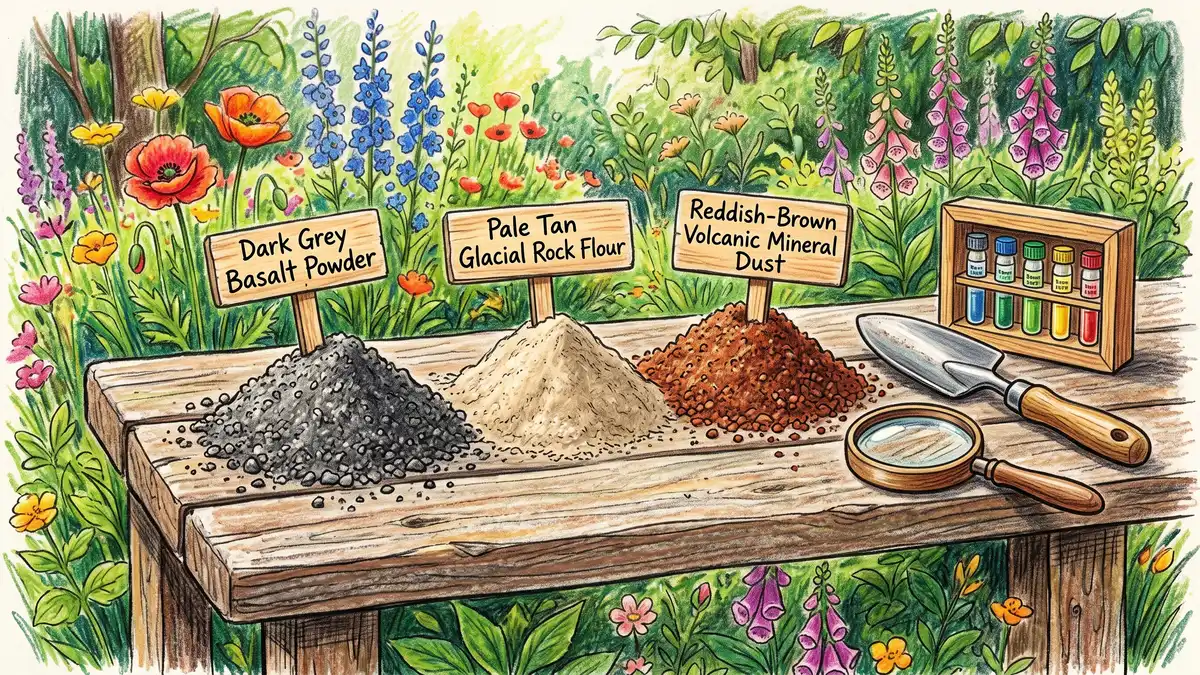
Rock dust is just finely milled rock. Cornell's soil amendment guide lists the six you will actually find on a shelf: Azomite, basalt, glacial rock dust, greensand, limestone and zeolite. They behave very differently, because their parent rock differs.
| Type | Parent Rock | Notable Minerals | Practical Read |
| Basalt dust | Mafic volcanic | Calcium, magnesium, iron, some phosphorus | The best-studied option. Weathers fastest of the silicates. |
| Granite dust | Felsic intrusive | Silica, potassium; low calcium and magnesium | Quartz and K-feldspar weather very slowly. Limited near-term value. |
| Glacial rock flour | Mixed glacial sediment | Variable; often phosphorus and potassium | Composition varies by source. Ask for an analysis. |
| Greensand | Glauconitic sandstone | Potassium, iron, magnesium | Slow potassium release. Traditional, modest. |
| Azomite | Utah volcanic ash deposit | Broad trace element suite | Marketed on trace minerals. Get a soil test first. |
Sources: Cornell University soil amendment guide, Washington State University Garden Professors
Chemically, all of them are dominated by silicon and aluminium. The Garden Professors group at Washington State University puts it plainly: rock dusts contain large amounts of silicon, aluminium and sometimes iron, with lesser amounts of calcium, copper, magnesium, manganese, potassium, sulfur and zinc. The same review notes they may also contain potentially toxic levels of aluminium, arsenic, cadmium, chromium, copper, lead, nickel and sodium, which is a good argument for buying from a supplier who will show you a laboratory analysis.
What Does the Research Actually Show?
The positive evidence is real and mostly comes from degraded tropical soils. Conceição and colleagues, in a 2022 review, found that basalt dust increased available phosphorus, potassium, calcium and magnesium and improved crop yields, particularly in strongly weathered tropical soils where it supplies base cations and eases acidity. Richardson's 2024 study in Agriculture examined basalt quarry byproduct as a soil health amendment in organic systems. A meta-analysis of silicate rock powder trials published by Embrapa pulls the agronomic results together and finds benefits are strongly conditional on soil type and rate.
Notice the pattern. Every strong result comes from acidic, heavily leached soil at agricultural application rates. A UK hay meadow trial applied 50 tonnes per hectare, roughly 22 US tons per acre. That is more than 1,000 pounds on a 1,000 square foot garden. Nobody is spreading that from a $40 bag.
The Rate Gap Is the Whole Problem
Published trials that show yield responses use tens of tons per acre. Garden labels typically suggest a few pounds per 100 square feet, which is one or two orders of magnitude lower. Any benefit at label rates is extrapolation, not measurement. This is the single most important thing to understand before you spend money.
Why Does Rock Dust Take So Long to Do Anything?
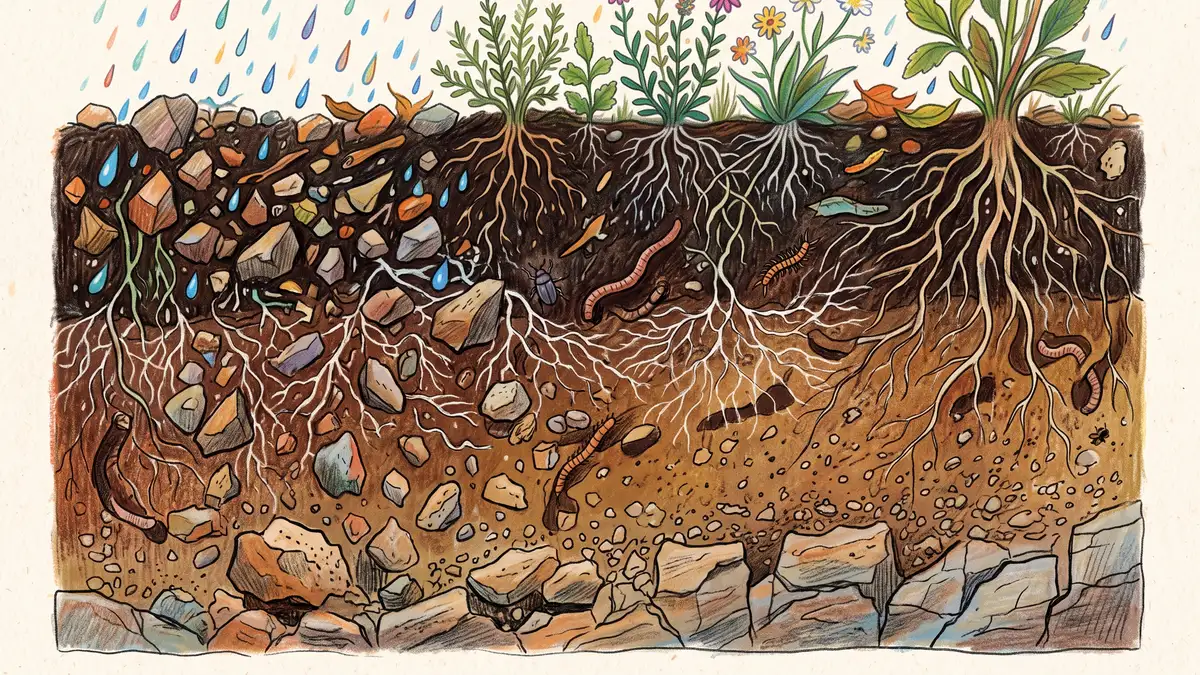
Silicate minerals dissolve slowly. That is what makes rock, rock. Release rate depends on three things: mineral composition, particle surface area, and soil pH.
Basalt weathers relatively quickly because plagioclase feldspar and pyroxene are reactive minerals. Granite is mostly quartz and potassium feldspar, which are stubborn. Fine grinding helps enormously because dissolution happens at the particle surface, which is why "rock dust" and not "rock gravel" is what gets sold. And low pH accelerates everything, which is exactly why acidic soils respond and near-neutral garden soils largely do not.
Why This Works: Working With Geological Time
The permaculture principles ask you to match an intervention to its natural timescale rather than fight it. Rock weathering is a decades-to-centuries process, so treating rock dust as a season-long fertilizer misreads what it is. Applied once at establishment in a perennial system, where you are already thinking in ten-year horizons, slow mineral release is a feature. Applied to an annual vegetable bed expecting results by August, it is simply the wrong tool. Same material, different design context.
When Is Rock Dust Actually Worth It?
Three situations justify it, and they share a theme: the mineral reserve is genuinely gone.
Sandy soils with low cation exchange capacity
Coarse sand holds almost no nutrients. Adding a slowly weathering mineral source alongside organic matter gives the system something to draw from long term.
Acidic, heavily leached soils
The Southeast, the Pacific Northwest's wettest zones, and old cleared forest ground. Here basalt acts partly as a slow liming agent. Research on rock dust for restoring acidified forest soils found it raises pH and increases exchangeable calcium.
Long-horizon perennial systems with no ongoing inputs
A food forest you intend to stop amending. One heavy application at planting is a plausible mineral endowment for a system measured in decades.
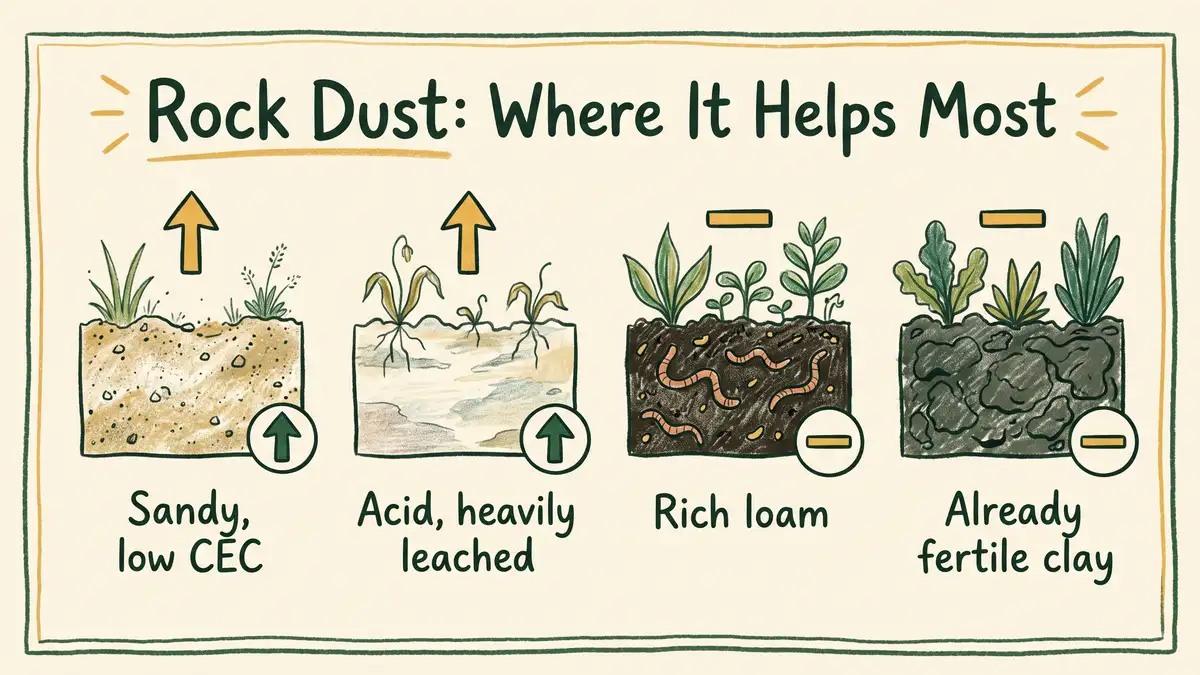
Notice what is not on that list: fertile loam, well-composted raised beds, and anything you have been feeding for years. If your soil pH sits between 6.0 and 7.0 and your organic matter is above 3 percent, the honest expectation is no measurable change.
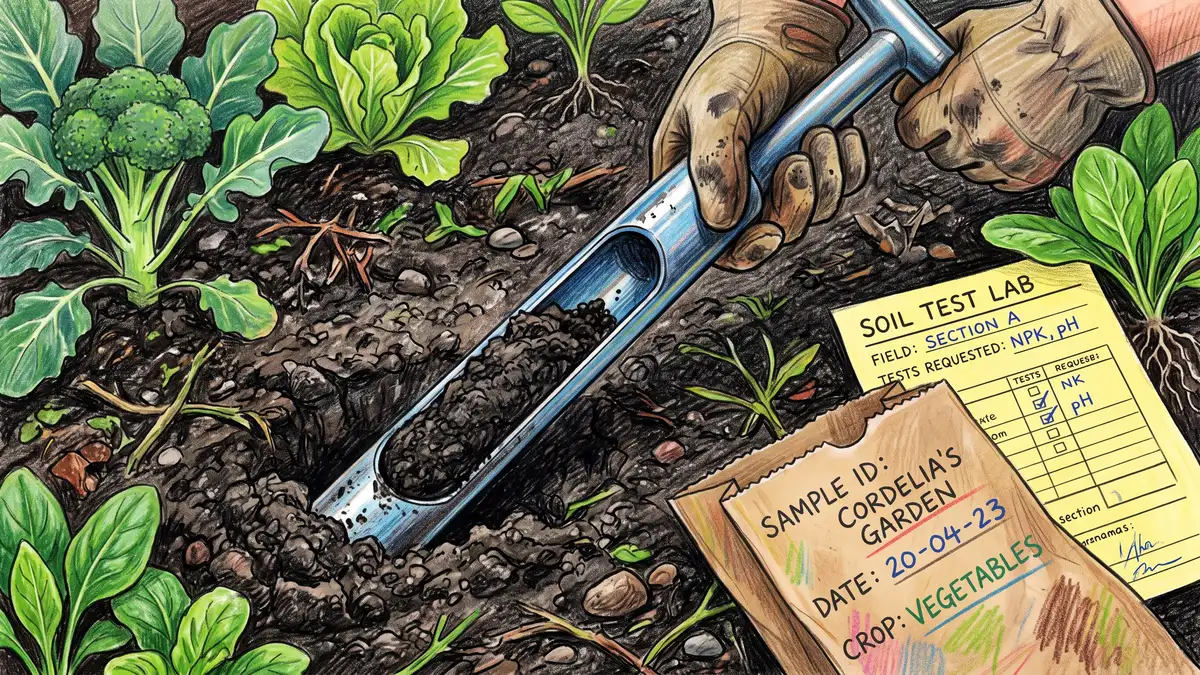
Before buying anything, run a soil test. Oregon State University Extension advises testing for micronutrients beyond boron and zinc only when a deficiency is actually suspected, which is a useful reminder that "more minerals" is not a diagnosis.
How Do You Apply Rock Dust Safely?
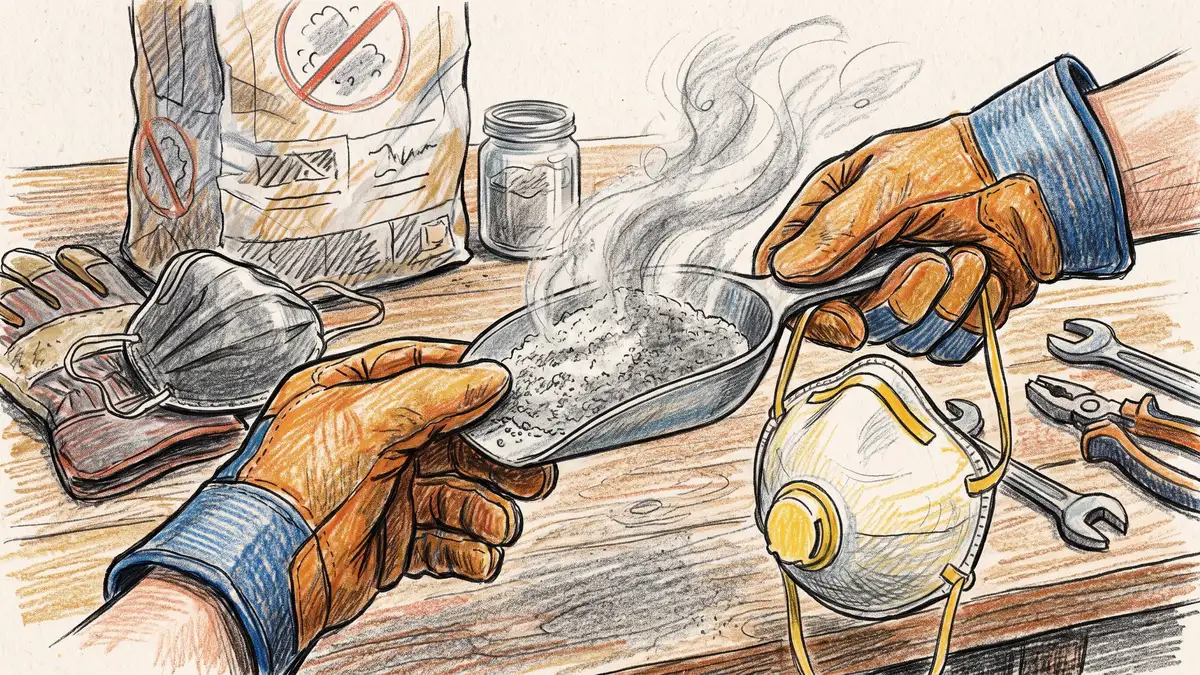
This part gets skipped constantly. Rock dust is fine mineral powder, and much of it contains crystalline silica. Respirable crystalline silica causes silicosis and is a recognised lung carcinogen, which is why OSHA regulates workplace exposure with specific permissible limits.
Wear a fitted N95 or better when opening and spreading a bag. Work on a still day. Wet the surface after application to settle the dust. Do not use a leaf blower, and do not let children help spread it. None of this is alarmist: it is the same precaution you would take with dry cement.
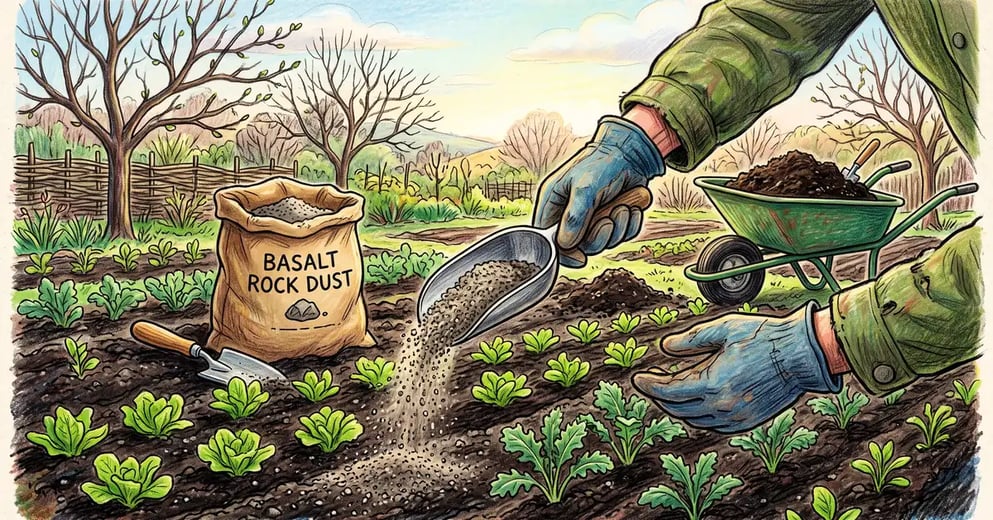
On rate, if you have decided your soil qualifies, a defensible garden approach is 5 to 10 pounds per 100 square feet (roughly 2.5 to 5 kg per 9 sq m) of basalt dust, worked into the top few inches once, then left alone. Repeat no more often than every three to five years. That is toward the upper end of label guidance and still far below research rates, but it respects both budget and the heavy metal caveat.
Key Takeaway
Rock dust is a slow mineral endowment, not a fertilizer. Apply once, in the right soil, with a mask on, then spend the rest of your budget on compost and mulch, which improve structure, biology and nutrient supply on a timescale you will actually notice.
Frequently Asked Questions
What is rock dust used for in the garden?
Rock dust is used as a slow-release mineral amendment, mainly to supply calcium, magnesium, potassium, iron and trace elements, and in acidic soils to raise pH gradually. Unlike compost, it adds no organic matter and does not feed soil biology directly. The realistic use case is topping up mineral reserves in soils that have genuinely lost them, meaning sandy, heavily leached or long-cropped ground. In fertile garden soil with regular compost additions, it is largely redundant.
Why does rock dust not work for some gardeners?
Usually because the soil did not have a mineral deficiency to begin with, or because the application rate was far below what published trials used, or because the release rate is measured in years rather than weeks. Field studies showing clear yield gains typically apply tens of tons per acre to acidic, weathered soil. A few pounds sprinkled on a well-composted bed at near-neutral pH is unlikely to produce anything measurable in one season, or in five.
Is basalt rock dust better than Azomite or glacial rock dust?
Basalt has the strongest research base and the most reactive mineral suite, so it releases calcium and magnesium faster than granite-derived products. Glacial rock flour varies enormously depending on the bedrock the glacier ground up, so ask for an analysis. Azomite is a specific mined Utah volcanic deposit marketed on its broad trace element profile. All three are worth considering only after a soil test shows a deficiency worth correcting.
Does rock dust help capture carbon?
At agricultural scale, potentially yes. Enhanced rock weathering spreads crushed basalt on farmland so the weathering reaction consumes atmospheric carbon dioxide, and research summarised by Edwards and colleagues in 2017 estimates roughly 35 percent of present-day carbon dioxide consumption from silicate weathering is attributable to basaltic rocks. Programs like the Working Lands Innovation Center are testing it on working farms. At backyard scale, the quantities are too small to matter climatically.
How much rock dust should I use per 100 square feet?
If a soil test supports it, 5 to 10 pounds per 100 square feet of basalt dust worked into the top few inches is a reasonable one-time application, repeated no more than every three to five years. Going heavier raises both cost and the risk of shifting pH or adding unwanted trace metals. Spread it on a still day wearing a fitted dust mask, and water it in afterward to settle airborne particles.
Get the Weekly Dig
One practical permaculture guide a week, written for gardeners who do this on weekends: building living soil without buying it in bags. Free, no spam, unsubscribe any time.
Join the Weekly DigResources
- Washington State University Garden Professors — The Dirt on Rock Dust
- Cornell University — Rock Dust Soil Amendment Guide
- Oregon State University Extension EC 1478 — Soil Test Interpretation Guide
- Conceição et al., 2022 — Potential of Basalt Dust to Improve Soil Fertility and Crop Nutrition
- Richardson, 2024 — Basalt Rock Dust Amendment on Soil Health Properties
- Embrapa — Meta-Analysis of the Agronomic Benefits of Silicate Rock Powder
- Edwards et al., 2017 — Benefits and Pitfalls of Enhanced Rock Weathering
- OSHA — Respirable Crystalline Silica Standard