
Is Regenerative Gardening the Same as Permaculture?
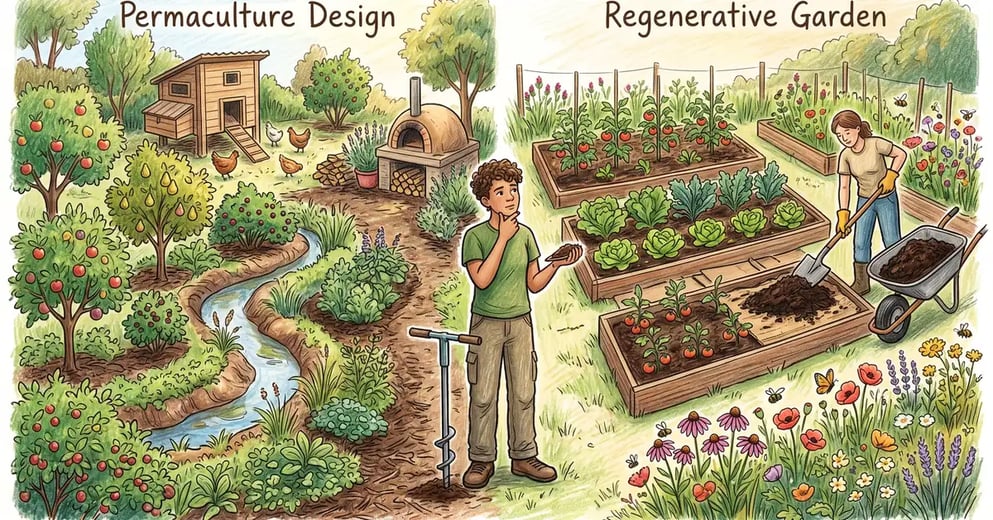
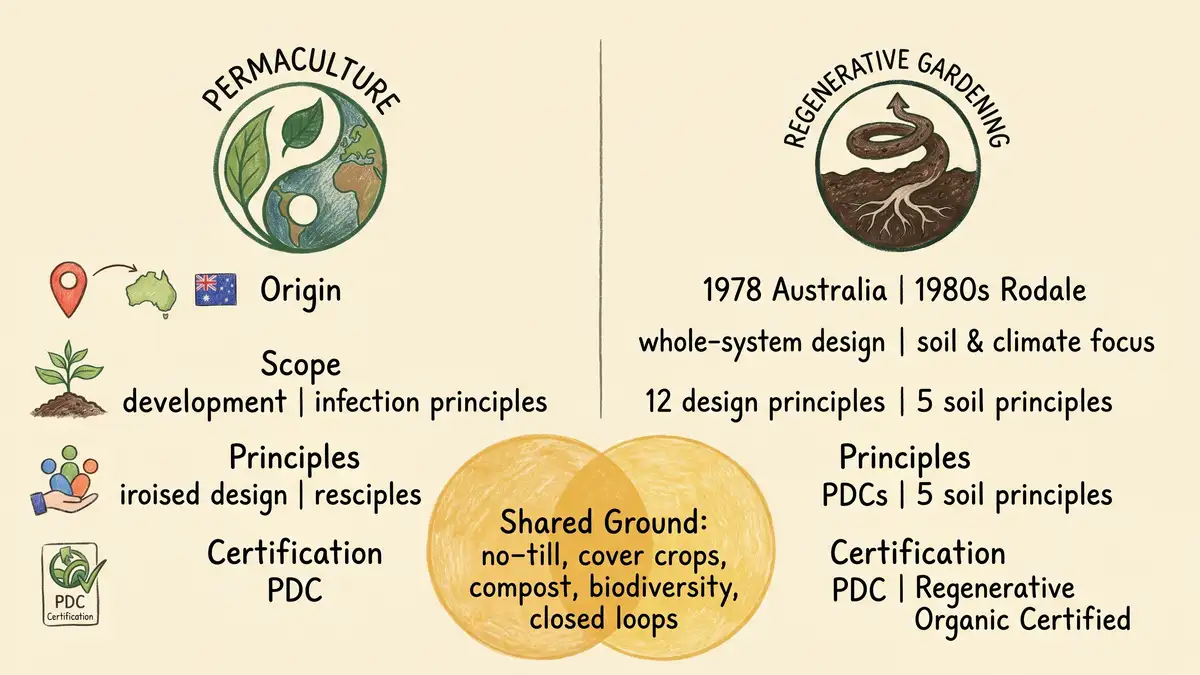
Short answer: no — but they share more DNA than the internet sometimes suggests. Regenerative gardening is a practice-based movement focused on rebuilding soil health and pulling carbon out of the atmosphere. Permaculture is a whole-system design framework that places soil-building inside a much larger circle of water, energy, animals, buildings, and community. Both reject the till-and-spray model of conventional growing. Both put cover crops, compost, and biodiversity at the center. But they answer different questions: regenerative asks "how do we heal the soil?" while permaculture asks "how do we design the entire site so it heals itself?" criticisms of syntropic agriculture
If you've watched Kiss the Ground on Netflix, scrolled #regenerativegardening on TikTok, or stumbled onto Bill Mollison's 1978 lectures on YouTube, you've already met both worlds. This guide untangles the overlap, names the real differences, and shows you how to apply both in a backyard bed this weekend — even if you've got 200 square feet (about 19 m²) and a single afternoon.
What you'll learn in this guide:
- Where regenerative gardening and permaculture come from — and why both rejected the word "sustainable"
- The five USDA soil health principles vs Holmgren's twelve permaculture design principles, side by side
- Which practices both movements share (more than you'd think) and where they actually diverge
- An honest read on the carbon-sequestration claims you've seen on Instagram
- A weekend starter plan for a 200 sq ft (about 19 m²) regenerative-permaculture hybrid bed
Key Takeaway
Regenerative gardening and permaculture are complementary, not competing. Regenerative is the soil-and-carbon engine; permaculture is the system-design map that tells you where to put the engine, the rain barrel, the chickens, and the apple tree. Most home gardens benefit from running both at once — the techniques overlap by roughly 70%.
Where Did Regenerative Gardening Come From?
The word "regenerative" entered the agricultural lexicon in the 1980s thanks to Robert Rodale at the Rodale Institute in Pennsylvania, who wanted a stronger word than "sustainable." His argument: sustaining a degraded system isn't enough — we need to actively rebuild it. As Regeneration International puts it, regenerative practices "reverse climate change by rebuilding soil organic matter and restoring degraded soil biodiversity."
The movement stayed quiet for two decades, then exploded after 2014. The trigger stack: Gabe Brown's 2018 book Dirt to Soil, geologist David R. Montgomery's Growing a Revolution (2019), the Kiss the Ground Netflix documentary in 2020, and the launch of the Regenerative Organic Certified (ROC) standard in 2017, which combined USDA Organic with regenerative soil practices and Fair Trade labor standards. Project Drawdown now ranks regenerative agriculture among the top five global climate solutions.
Today the framework is anchored by the USDA NRCS Five Soil Health Principles: minimize disturbance, keep the soil covered, maximize biodiversity, keep living roots in the ground year-round, and integrate animals. These five rules translate cleanly to a backyard bed.
Where Did Permaculture Come From?
Permaculture is older and broader. In 1978, Australian researchers Bill Mollison and David Holmgren published Permaculture One in Tasmania, coining a word that fused "permanent" with "agriculture" (and later "culture"). Their goal was bigger than soil. They wanted a design science for whole human settlements: water harvesting, building placement, animal integration, food forests, social structures, the lot.
Mollison built the system around three ethics — earth care, people care, fair share — and Holmgren later codified the 12 design principles in his 2002 book Principles and Pathways Beyond Sustainability. The training pathway is the 72-hour Permaculture Design Certificate (PDC), with an estimated 50,000+ graduates worldwide.
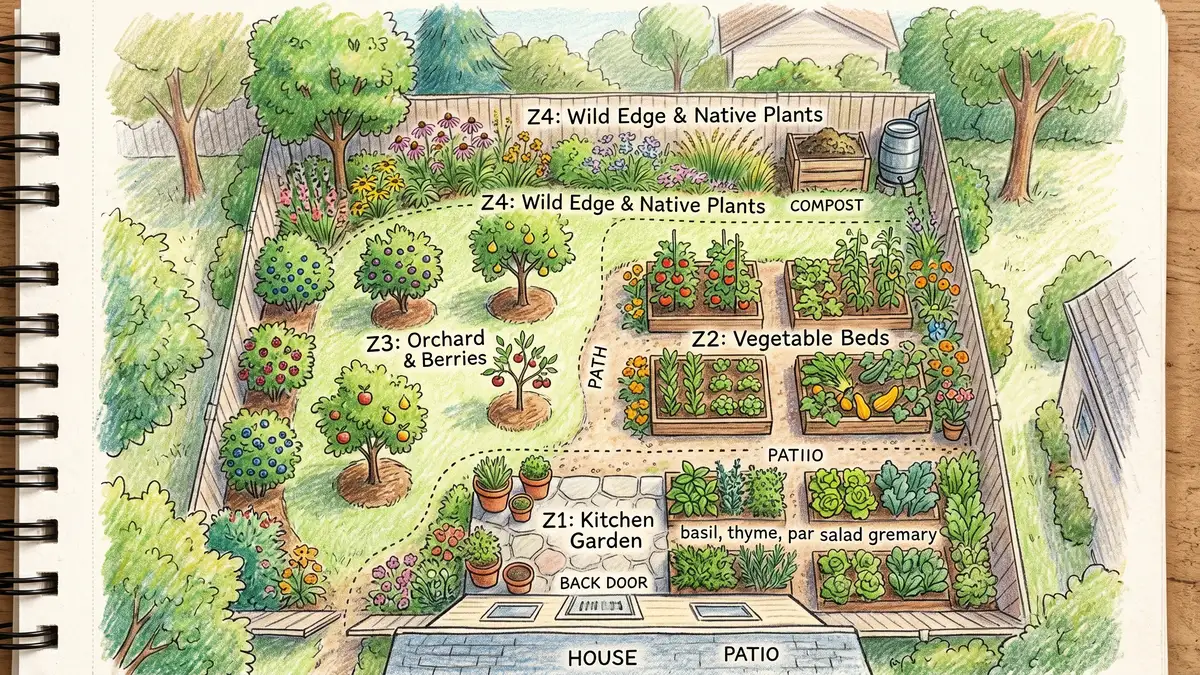
The clearest practical fingerprint of permaculture is zone planning: arrange elements by how often you visit them. Zone 1 (herbs, salad greens) sits next to your back door. Zone 5 (wild edge, foraged food, habitat) sits at the far boundary. This is something permaculture garden design handles natively but most regenerative gardening guides skip entirely.
Why This Works: Designing With Patterns, Not Recipes
Holmgren's 7th principle is "design from patterns to details." Instead of starting with "where does the tomato go?", you start with "where does water flow, where does sun fall, where do I actually walk every morning?" The plants come last. Regenerative gardening tends to do the opposite — it starts at soil level. Use both lenses and you skip a lot of trial and error.
What Do the Two Frameworks Actually Share?
If you stripped both movements down to their kitchen-table advice, you'd find the same eight practices on both lists. This is why the line between them blurs — and why most thoughtful gardeners just borrow from both.
| Practice | Why Regenerative Loves It | Why Permaculture Loves It |
| No-dig / no-till beds | Preserves fungal networks; stops carbon oxidizing out of the soil | Honors Principle #1 — minimize disturbance to a living system |
| Cover cropping (clover, vetch, rye) | Living roots feed microbes year-round; fixes nitrogen for free | "Use and value renewable resources" — green manure replaces synthetic fertilizer |
| Sheet mulching with compost | Builds soil organic matter at 0.1–0.3% per year | Mimics the forest floor — a closed nutrient loop |
| Polycultures and companion planting | Increases beneficial-insect populations 3–4× | "Integrate rather than segregate" — guilds beat monocultures |
| Pollinator habitat (native flowers) | Yields rise; pesticide use drops | Edge effects, beauty, "fair share" with non-human neighbors |
| Rainwater catchment | Cuts irrigation carbon footprint and drought risk | "Catch and store energy" — water is energy |
| On-site composting | Builds soil organic matter from kitchen "waste" | "Produce no waste" — outputs become inputs |
| Perennials and woody plants | Long-term carbon storage in roots and biomass | Lower maintenance, higher yield over decades |
Sources:.
So Where Do They Actually Diverge?
Scope. Regenerative gardening typically focuses on a bed, a yard, or a farm field. Permaculture starts with the whole property — house, water flows, microclimate, social context — and zooms in to the bed last. A regenerative gardener might say "this 400 sq ft (37 m²) plot is sequestering carbon." A permaculture designer would also ask where the rain barrel goes, how the chickens cycle through the orchard, and whether the bedroom window faces the morning sun.
Metrics. Regenerative loves numbers — tonnes of CO2 per acre, percent soil organic matter, soil respiration rates. Permaculture is more design-thinking — observe, prototype, iterate, accept feedback. Neither approach is wrong; they answer different questions.
Certification. Permaculture has the PDC (a teaching credential, not a product label). Regenerative has the Regenerative Organic Certified standard, launched in 2017, which lets you find food in the grocery aisle that's been third-party verified.
Timeframe to payoff. Regenerative practices show measurable soil-carbon and yield gains in 3–5 years. A full permaculture redesign — with food forests, swales, and integrated livestock — runs 10–20 years before everything sings. For a Gen Z gardener with renter constraints, this matters: you can run the regenerative playbook in a season. You probably won't dig a swale.
Key Takeaway
Regenerative is the engine. Permaculture is the chassis. Pick regenerative when you need fast soil results in an existing bed. Pick permaculture when you're designing (or redesigning) a whole site. Most gardens benefit from running both — and that's exactly what we'll plan in the section below.
The Carbon Question: How Much Does Soil Actually Sequester?
You've probably seen the headlines: "regenerative agriculture can reverse climate change." Take a breath. The evidence is real but messier than the social posts suggest. Here's what peer-reviewed research actually shows.
| System Type | Carbon Sequestration | Confidence |
| Conventional tillage (baseline) | −0.5 tons CO2/acre/year (loses carbon) | High |
| Rodale 40-year organic trial | +0.57 tons CO2e/acre/year | High (peer-reviewed) |
| Regenerative farms (LaCanne & Lundgren) | +1.06 tons CO2/acre/year | Medium |
| High-management regenerative + grazing | +1.5–3 tons CO2/acre/year | Low–Medium |
| Home regenerative gardens (estimated) | +0.2–0.8 tons CO2/acre/year | Low–Medium |
Sources:.
A Climate-Honest Caveat
The 2023 White House Office of Science and Technology Policy flagged that carbon-sequestration estimates in regenerative systems can vary by 500% across studies, and many lack long-term field verification. The honest framing: treat carbon drawdown as a co-benefit of soil health, not the headline. The yield gains, water resilience, and biodiversity wins are far easier to verify in your own backyard.
What you can measure at home: soil organic matter (SOM). Most US suburban garden beds start at 2–3% SOM. With consistent regenerative practice, Cornell Soil Health Lab data shows home gardeners can add 0.2–0.3% per year, reaching 4–5% (the "healthy" benchmark) in 7–10 years. Every 1% gain stores roughly 25,000 extra gallons of water per acre (about 95,000 L/acre, or 23 L/m²). For a 400 sq ft bed (37 m²), that's roughly 230 extra gallons of stored water in the soil — meaningful drought insurance.
Why This Works: The Soil Food Web
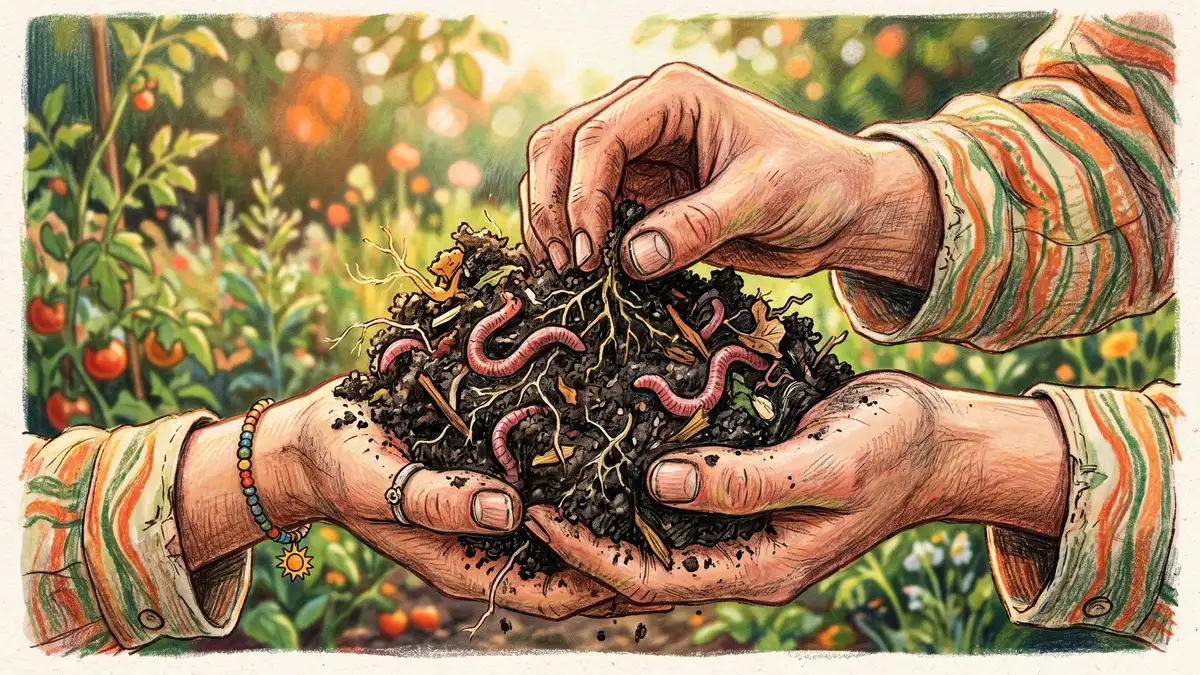
Living roots leak sugars into the soil to feed bacteria and fungi. Those microbes glue mineral particles into crumb structure, which holds water and air. When you till, you snap the fungal threads and oxidize the carbon you just stored. No-dig isn't a trick — it's letting the soil's own engineers stay employed.
How Do You Apply Both in a 200 sq ft (19 m²) Backyard Bed?
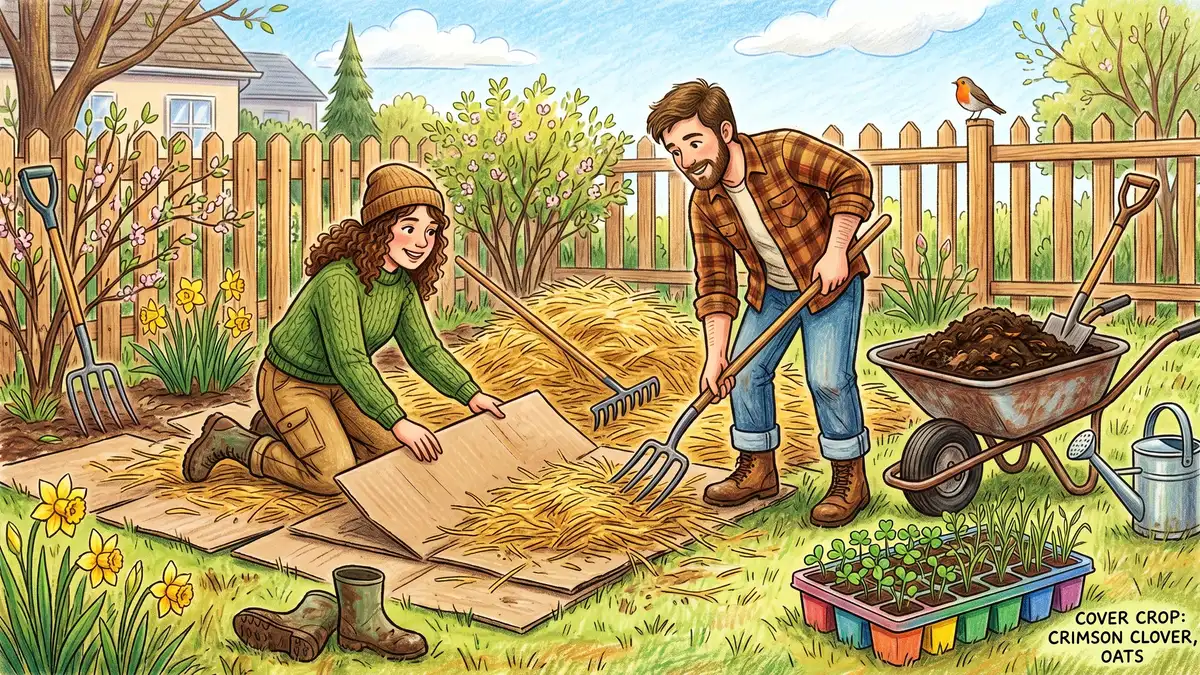
Here's a single-weekend setup that runs the regenerative playbook (no-till, cover crops, compost, biodiversity) on top of a permaculture site read (zones, sun, water, observation). Cost: roughly $200–$500 in materials. Time: one weekend for setup, then 4–5 hours per month.
Before you spend a dollar, walk the site for 20 minutes. Note where water pools after rain, which corner gets 6+ hours of sun, and which side of the yard your back door opens to. That's permaculture's first principle: observe and interact.
Pick the Zone 1 Spot — Saturday Morning
Choose a 10 ft × 20 ft (3 m × 6 m) patch that gets 6+ hours of sun and is within 30 ft (9 m) of your back door. Permaculture calls this Zone 1. Skip slopes that lose water and frost pockets that kill seedlings early.
Lay the No-Dig Foundation — Saturday Afternoon
Cover the existing grass with a single layer of plain (non-glossy) cardboard. Wet it down. Top with 3–4 inches (8–10 cm) of aged compost and 1–2 inches (2.5–5 cm) of straw mulch. No digging. No tilling. The grass will smother and become food for earthworms within 8–12 weeks. No-dig gardening is the single most impactful regenerative practice for a small bed.
Plant a Polyculture — Sunday Morning
Aim for 15–20 species, not 3–4. Mix 3 tomato varieties with basil and borage, beans climbing a stake, lettuce in the shade of taller plants, and a strip of native pollinator plants (coneflower, yarrow, bee balm) along one edge. Diversity is doing two jobs at once: it's regenerative (more insect species, deeper root mix) and it's permaculture (a guild that supports itself).
Sow a Cover Crop in the Gaps — Sunday Afternoon
Broadcast crimson clover or hairy vetch between vegetables. They'll fix nitrogen in their roots, feed soil microbes through fall, and you'll chop them down (don't pull) before next spring. Nitrogen-fixing plants replace synthetic fertilizer for free.
Set Up the Compost Loop — Anytime That Week
A 3 ft × 3 ft × 3 ft bin (about 1 m cube) made from pallets is enough for a household. Add kitchen scraps, fall leaves, coffee grounds, and grass clippings. Turn weekly for hot compost (ready in 6–8 weeks) or monthly for cold compost (3–4 months). This is permaculture's "produce no waste" and regenerative's "feed the soil food web" doing the same job.
What Should You Expect After 3 Years?
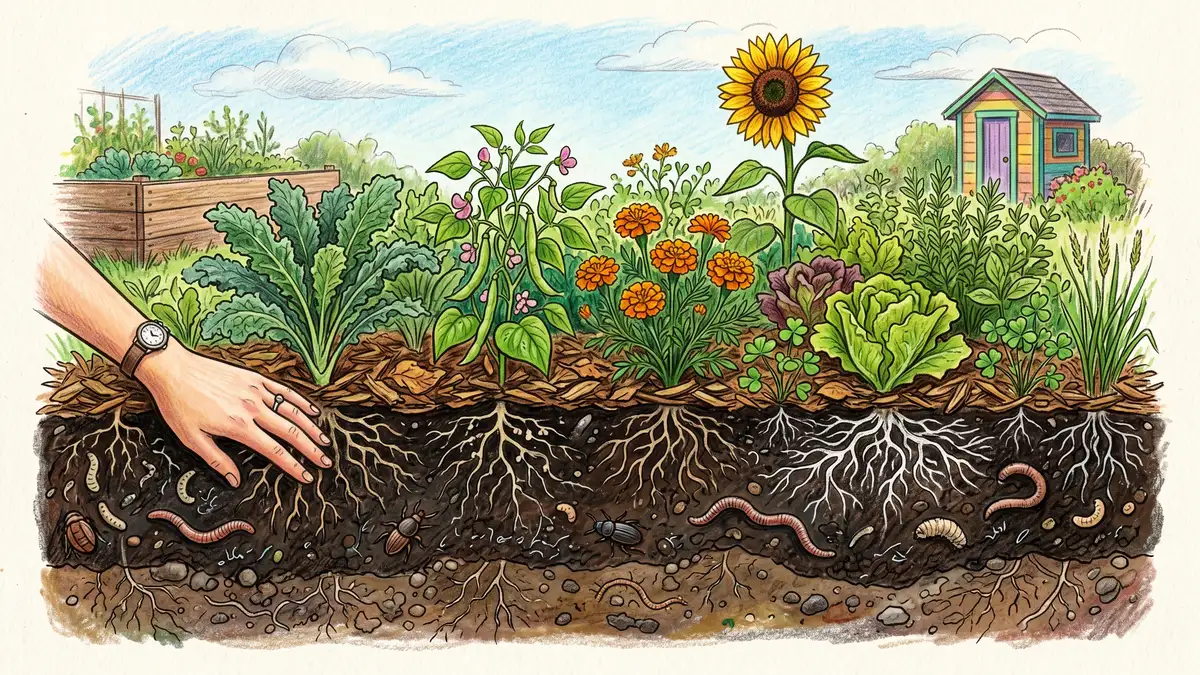
Run this hybrid playbook consistently and the results are measurable. Cornell Soil Health and the Rodale FST both project the same trajectory for home-scale gardens: SOM rises from 2–2.5% baseline to roughly 3–3.5% by year three. Earthworm counts climb from 5 per spadeful to 15–25. Xerces Society data suggests pollinator visits per flower roughly double after two seasons of polyculture. Yields tend to climb 30–50% as soil structure improves and pest pressure drops.
A few things will surprise you. The bed needs less water (you'll skip irrigation in mild summers). Pest outbreaks fade as predator insects move in — 10× fewer outbreaks on regenerative plots, in the LaCanne & Lundgren study. Weeding drops sharply once mulch is established. And — the part Gen Z gardeners often don't expect — the bed becomes a place you actually want to spend time. Diversity is beautiful in a way monoculture never is.
Get the Weekly Dig
One practical permaculture guide a week, written for gardeners who do this on weekends: permaculture design for real backyards. Free, no spam, unsubscribe any time.
Join the Weekly DigFrequently Asked Questions
Is regenerative gardening just permaculture rebranded?
No. Permaculture predates regenerative gardening by about 30 years (1978 vs late 2000s) and operates as a whole-system design framework, not a soil protocol. Regenerative gardening is narrower and more recent, focused on rebuilding soil health and sequestering carbon. The reason they look similar is that both reject industrial agriculture — but the questions they answer are different. Permaculture asks "how do I design this site to thrive?" Regenerative asks "how do I rebuild this soil?" If you read the complete permaculture guide and a regenerative one back-to-back, the difference becomes obvious.
Which is better for a small backyard or rental?
For a 200–400 sq ft (19–37 m²) bed in a yard you may not own forever, regenerative gardening is the practical entry point. You can start no-dig beds, polycultures, and cover cropping in a single weekend without redesigning the whole property. Permaculture's deeper tools — zone planning, water swales, food forests, livestock integration — pay off most when you own the land long enough to see decade-scale results. Many renters use regenerative practices in their plot and borrow permaculture's "observe before you act" mindset without redesigning anything structural.
Can a regenerative garden actually offset my carbon footprint?
Not meaningfully on its own — and that's okay. A well-managed 400 sq ft (37 m²) backyard bed sequesters roughly 80–320 lbs of CO2 per year (estimate based on home-garden data extrapolated from Cornell Soil Health Lab). That's a small slice of an average US per-person carbon footprint of about 16 tons per year. The strongest climate case for home regenerative gardening isn't the carbon math — it's the systemic effect: less synthetic fertilizer, less plastic packaging, less food transport, more pollinator habitat, and a working knowledge of where food actually comes from.
Do I need a Permaculture Design Certificate (PDC) to garden this way?
No. A PDC is valuable if you want to design for clients, teach, or run a permaculture education site, but it isn't required to garden well. The 12 principles are freely available online. For most home gardeners, our 12 permaculture principles guide plus a season of practice teaches more than a weekend course. The PDC matters most if you want to do whole-property design with swales, ponds, and food forests at scale.
How is regenerative organic certification different from USDA Organic?
USDA Organic certifies what you didn't use (no synthetic pesticides, no GMOs, no synthetic fertilizers). Regenerative Organic Certified (ROC), launched in 2017, certifies what you actively did to improve the soil, treat workers fairly, and steward animals well. ROC builds on top of USDA Organic — you can't be ROC without being Organic first. For home gardeners, neither matters at the legal level (you can't sell labeled food without commercial certification). They matter as shopping signals when you're buying produce, coffee, or chocolate at the grocery store.
Can I run regenerative practices and still keep my existing lawn or shrubs?
Yes — and this is where regenerative gardening is more flexible than full permaculture. You can convert one bed to no-dig, plant a cover crop in fall, and stop synthetic fertilizer without touching the rest of your yard. A full permaculture redesign typically reshapes lawns into food forests and walking paths into harvest zones. Permaculture wants the whole site rethought; regenerative gardening is happier to layer in. If you start small with one regenerative bed and like the results, you can expand season by season — that's permaculture's "small and slow solutions" principle in disguise.
Resources
- Holmgren's 12 Permaculture Design Principles — the canonical interactive guide from David Holmgren's site
- USDA NRCS Soil Health Management — official five-principle framework with state extension links
- Rodale Institute Farming Systems Trial — 40-year peer-reviewed dataset comparing organic, regenerative, and conventional systems
- Project Drawdown — Regenerative Agriculture — climate-solution analysis and global scenarios
- Cornell Soil Health Assessment Manual (CASH) — comprehensive soil testing protocol used by extension labs nationwide
- LaCanne & Lundgren (2018), PeerJ — open-access peer-reviewed comparison of regenerative vs conventional Midwest farms
- Regeneration International — definitions, global movement updates, and farmer profiles
- Xerces Society — Pollinator Conservation in Yards and Gardens — habitat guides and regional native plant lists