
What Is Loam Soil, Exactly?
Loam is a measurement, not a compliment. It is one of twelve USDA soil texture classes, defined purely by the percentages of sand, silt and clay in a sample. Nothing about the definition says the soil is fertile, well drained or full of life.
The USDA-based classification puts loam at roughly 23 to 52 percent sand, 28 to 50 percent silt and 7 to 27 percent clay. That is it. A compacted, exhausted, lifeless soil can be textbook loam. A superb garden bed full of worms and structure can be a clay loam or a sandy loam. Structure is the part you can change, and the cheapest way to open a tight profile without turning it over is a broadfork sized to your beds.
This distinction matters because of what most people actually want when they search for loam. They want soil that drains but holds moisture, that crumbles instead of clodding, that roots go through easily. Texture contributes to that. Structure and organic matter deliver it, and only one of those is something you can change.
What this guide covers:
- The exact percentage ranges that define loam and the classes people confuse with it
- Two ways to test your own soil texture in a kitchen, and where each one fails
- What loam actually does better, in inches of water per foot
- Why adding sand to clay usually makes it worse, and what to do instead
Key Takeaway
You cannot meaningfully change your soil's texture at garden scale. Particle-size distribution is close to permanent. What you can change, and change fast, is structure: how those particles clump together. A well-structured clay loam outperforms a structureless loam every time.
How Do the Texture Classes Actually Differ?
By particle size, and the sizes are tiny. The USDA system splits the fine earth fraction, everything under 2 mm, into three groups. Penn State Extension gives the thresholds: clay is anything below 0.002 mm, silt runs 0.002 to 0.05 mm, and sand runs 0.05 to 2.0 mm. Above 2 mm you are into gravel and it stops counting as soil texture.
Because the three percentages must add to 100, any sample plots as a single point on the textural triangle, and that point gets a class name. The NRCS Soil Texture Calculator does the plotting for you if you type in three numbers.
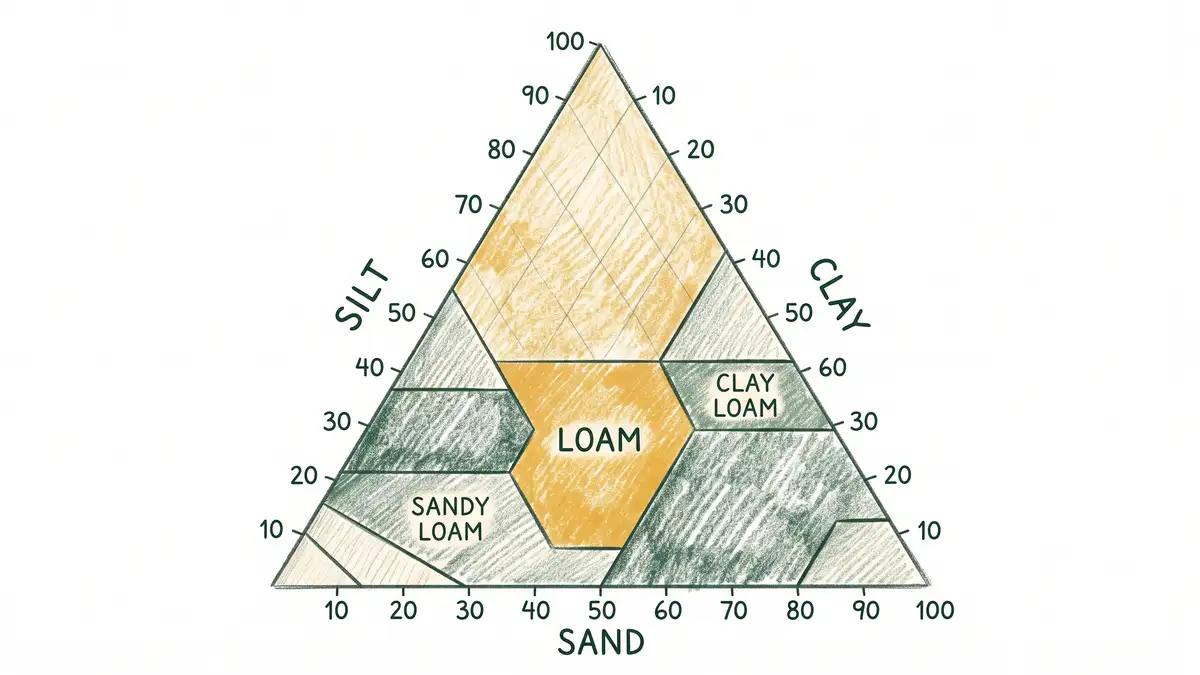
| Texture class | Sand | Silt | Clay |
| Loam | 23-52% | 28-50% | 7-27% |
| Sandy loam | 50-70% | 0-50% | 0-20% |
| Silt loam | 20-50% | 74-88% | 0-27% |
| Clay loam | 20-45% | 15-52% | 27-40% |
| Loamy sand | 70-86% | 0-30% | 0-15% |
Sources: FAO soil texture reference, USDA classification, USDA NRCS Soil Texture Calculator
Notice how little clay it takes to change the class. Colorado State Extension observes that a soil with as little as 20 percent clay behaves like a clayey soil in the hand. Clay particles are so small and their surface area so large that they dominate the behaviour of the whole mixture well before they dominate the mass.
How Do You Test Your Own Soil Texture?
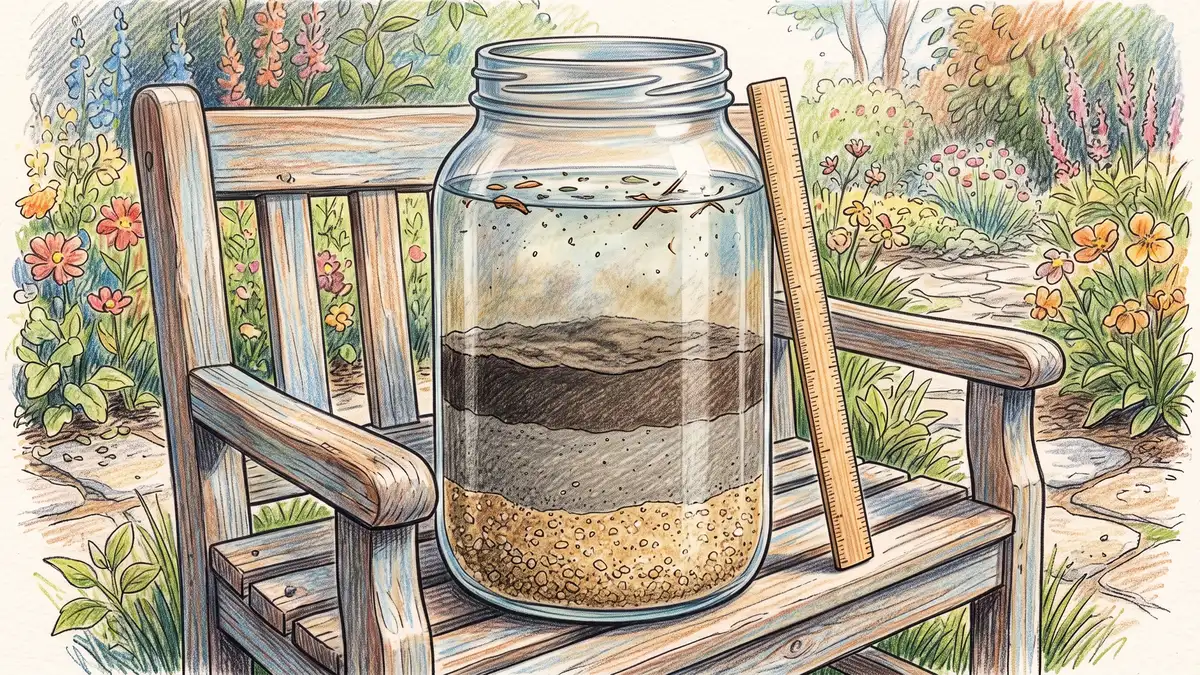
A jar of water and your fingers will get you close enough. Two methods, and it is worth doing both because they fail in different ways.
Fill a quart jar one quarter with soil
Take samples from several spots in the bed, mixed together. Pick out stones, roots and mulch. Colorado State Extension specifies a tall, slender jar so the layers are easier to read.
Add water and a teaspoon of dish soap
Fill nearly to the top. The soap is a dispersing agent that stops clay particles clumping and settling as if they were silt.
Shake hard, then mark the layers by time
Virginia Tech gives roughly 1 minute for sand to settle out and about 2 hours for silt. Clay takes a day or more. Mark the jar with tape at each stage.
Convert the layers to percentages
Measure each band and the total sediment depth, divide, multiply by 100. Feed those three numbers into the NRCS calculator to get your class name.
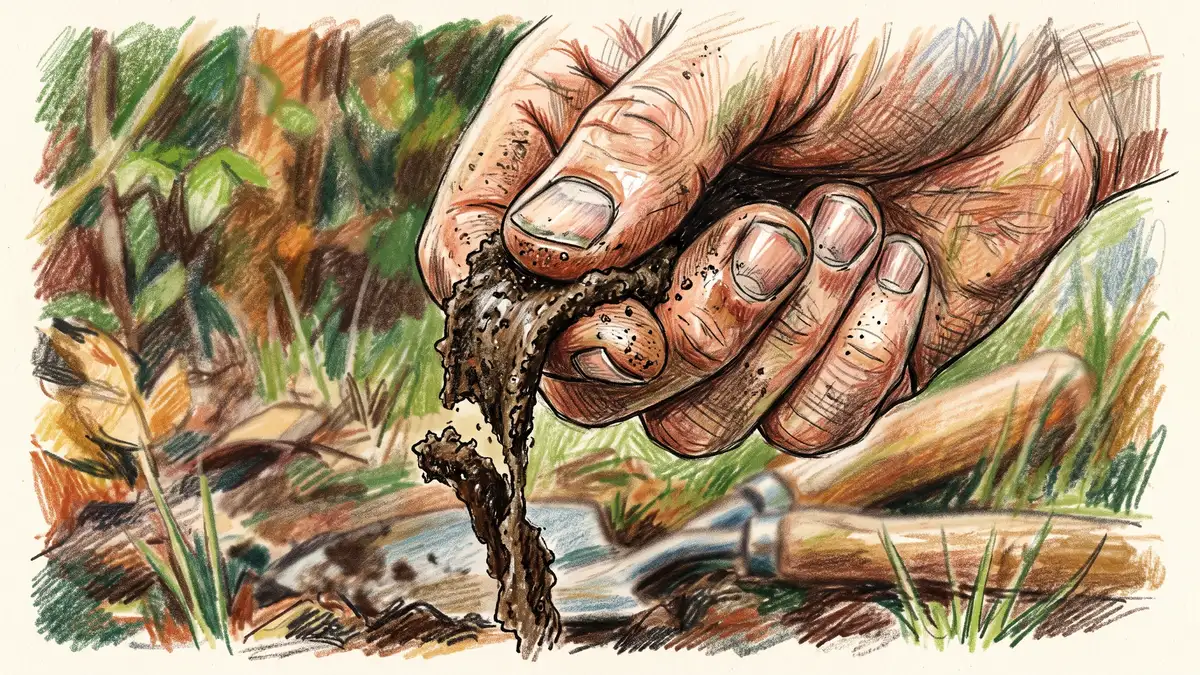
The ribbon test is faster and needs no equipment. Moisten a walnut of soil to putty consistency, then press it out between thumb and forefinger until the ribbon breaks under its own weight. Colorado State's decision points: a ribbon under 1 inch that feels gritty means a sandy soil, under 1 inch and not gritty means a silt-heavy medium soil, and 1 to 2 inches puts you in loam territory, with grittiness pointing to sandy loam and smoothness to silt loam. Anything ribboning past 2 inches is clay-dominated.
Common Mistake to Avoid
Reading the jar test too soon. Clay can take more than 24 hours to settle, and if you measure at 6 hours you will read your clay fraction as far lower than it is and conclude you have a lovely loam. Wait a full day, and if the water is still cloudy, wait another.
Both methods are estimates. A laboratory particle-size analysis is the accurate version, and most state extension soil labs will run one alongside a standard nutrient test. If you are making a decision that costs money, such as buying in soil or planting an orchard, pay for the lab result and use a proper soil test rather than a jar.
What Does Loam Actually Do Better?
It holds a useful amount of water without drowning roots. This is the real advantage, and it is measurable. USDA NRCS Program Aid 1619 gives available water capacity in inches of water per foot of soil depth, and the pattern is clear.
| Texture group | Available water | What that means in the garden |
| Fine sand, loamy sand | 0.6-1.2 in/ft | Dries out in days, needs frequent watering |
| Sandy loam | 1.3-1.7 in/ft | Warms early, forgiving of overwatering |
| Loam, silt loam | 1.5-2.1 in/ft | Good reserve, still drains freely |
| Clay, clay loam | 1.6-2.4 in/ft | Holds most, but much is hard for roots to extract |
Sources: Texas A&M AgriLife, Estimating Soil Moisture by Feel, USDA NRCS Soil Health
Look closely at the clay row. Clay holds the most water on paper but a large share of it is bound so tightly to particle surfaces that roots cannot pull it free. Loam's advantage is not maximum storage, it is that most of what it stores is actually available.
Texture also drives cation exchange capacity, the soil's ability to hold onto nutrients rather than let them wash through. NRCS technical guidance on CEC shows the same ordering: sandy soils hold little, clay and organic matter hold a lot, and loams land in a workable middle.
Key Takeaway
Clay holds the most water and gives up the least. Loam's real advantage is availability, not capacity. Judge a soil by what roots can pull out of it, not by how long it stays damp.
Need the gear for this?
Which broadfork holds up in clay, which one suits a small bed, and what to skip.
See the broadfork picks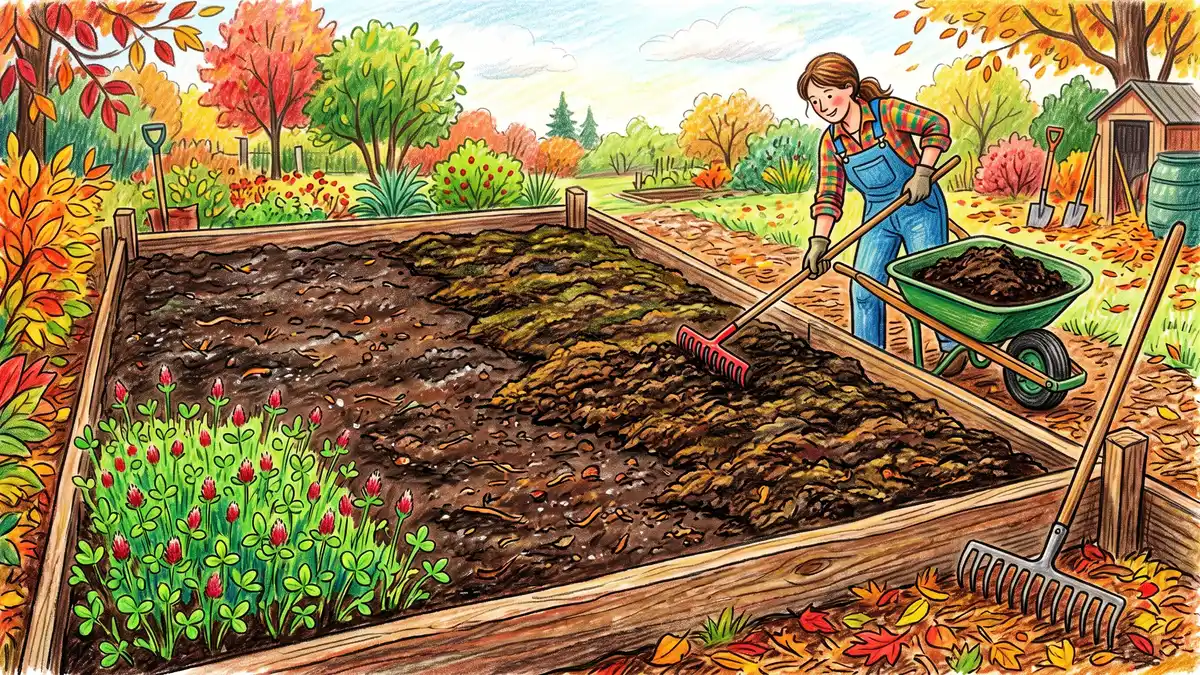
Can You Turn Your Soil Into Loam?
No, and chasing it is the wrong goal. To shift a clay soil at 35 percent clay down into the loam range you would need to physically dilute it with an enormous volume of sand and silt, mixed uniformly to full rooting depth. On a farm field that is impossible. On a 4 by 8 bed it is technically possible and financially absurd.
Worse, the halfway measure actively backfires. Adding a few bags of sand to a clay bed produces a denser mixture, not a looser one, because the clay simply fills the spaces between the sand grains. You end up with something closer to a packed subgrade than a seedbed. Colorado State's observation that 20 percent clay still feels clayey explains why: you would need the sand to become the dominant packing structure before anything improves, and a few bags does not come close. Our piece on whether gypsum works on clay soil covers a related shortcut with a similar answer.
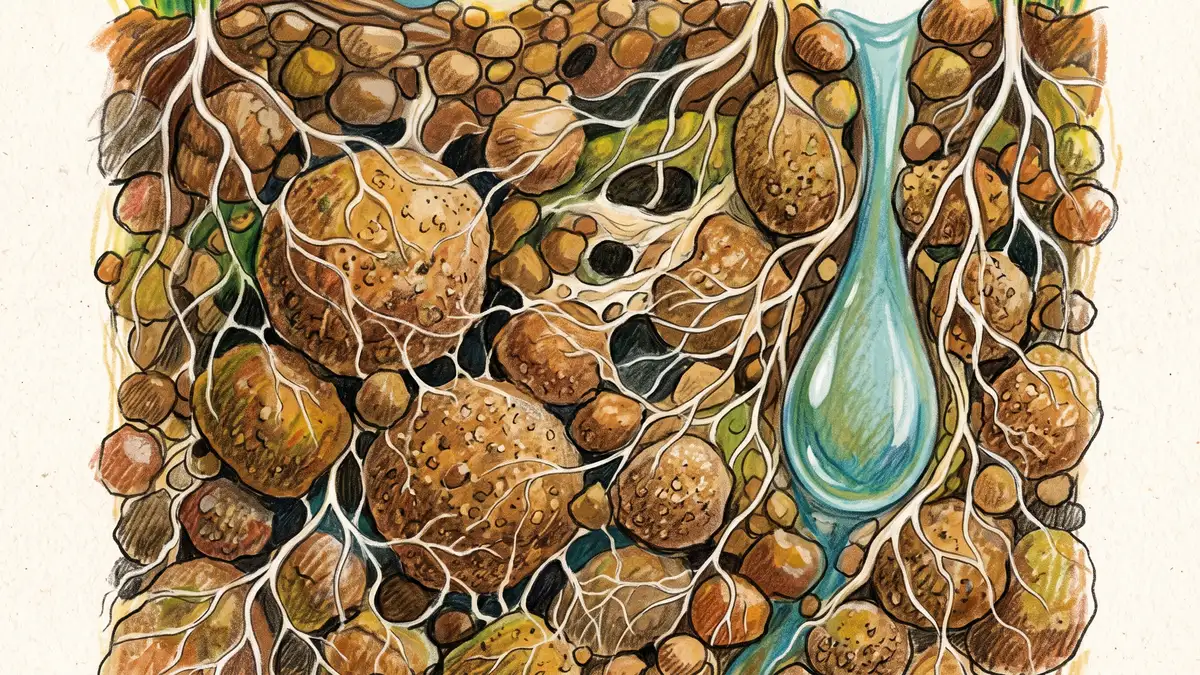
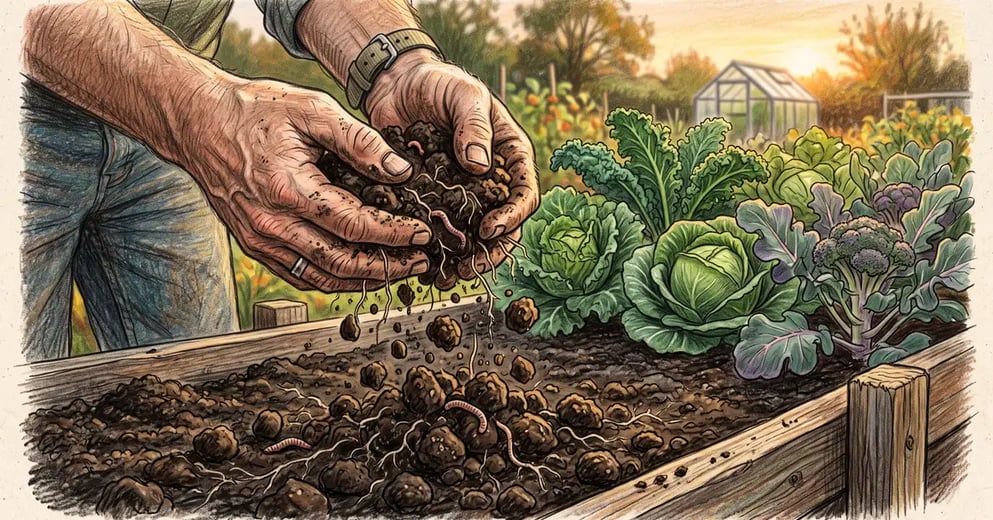
Structure is the lever that actually moves. Roots, fungi and soil animals bind particles into crumbs using glomalin and polysaccharides, and those crumbs create the pore network that gives good soil its drainage and its water reserve at the same time. NRCS soil health guidance is consistent on how you get there: add organic matter, keep the soil covered, and minimise disturbance.
Why This Works: Building Soil From the Top Down
Nothing in nature tills. Woodland soil gets its structure from litter falling on the surface and organisms dragging it down, year after year, which is why forest topsoil crumbles in your hand. Compost on the surface, permanent cover and a broadfork instead of a rotavator reproduce that process deliberately. You are not manufacturing loam. You are building the structure that made you want loam in the first place.
The timescale is honest work rather than a weekend. SARE's cover crop research found farmers averaged a 3 percent corn yield increase and a 4.9 percent soybean increase after five consecutive years of cover cropping, with larger gains in drought years. Home gardens usually respond faster than field scale because the inputs per square foot are far higher, but the direction is the same: consistent additions beat one heroic effort.
Frequently Asked Questions
Where can I buy loam soil?
You can, and bulk suppliers sell "screened loam" by the cubic yard, but check what you are getting. There is no legal standard behind the word on a landscape supplier's sign, so the material may or may not fall in the USDA loam class, and it may be low in organic matter regardless. Ask for a texture analysis if the quantity is significant. For filling raised beds, a blend of topsoil and compost usually performs better than bought loam alone, and it is generally cheaper.
Is loam the same as topsoil?
No. Loam describes particle-size proportions. Topsoil describes position in the profile, the upper horizon where organic matter and biological activity concentrate. A topsoil can be any texture, and plenty of stripped, stockpiled "topsoil" sold in bulk has lost the structure and biology that made it valuable. Our guide to building topsoil covers what actually regenerates that layer.
How do I know if I have loam soil?
Run both tests. The ribbon test takes two minutes: moisten a lump, press it into a ribbon, and if it breaks between 1 and 2 inches you are likely in the loam family. Then confirm with a jar test left to settle for a full day and plug the three percentages into the NRCS texture calculator. If the answer matters financially, send a sample to your state extension soil lab for a particle-size analysis alongside the nutrient panel.
Should I add sand to my clay soil?
Almost certainly not. Small sand additions to clay produce a denser, harder mixture rather than a looser one, because clay fills the pore space between sand grains. The extension consensus is to add organic matter and manage structure instead. Compost, mulch, cover crops and reduced digging will improve how a clay soil behaves within one or two seasons, and our guide to improving clay soil sets out the sequence.
Does good soil texture mean I do not need compost?
Texture is fixed and organic matter is not, so a loam still runs down without inputs. Organic matter drives aggregate stability, water retention, biological activity and nutrient holding, and it is consumed continuously by soil organisms. A loam with 1 percent organic matter behaves poorly. The same loam at 4 percent behaves like the soil people imagine when they say loam. Start with our soil health guide and keep a compost system running.
What plants grow best in loam?
Nearly everything, which is the point. Loam suits most vegetables, fruit and ornamentals without special measures. Where texture starts to dictate plant choice is at the extremes: deep-rooted brassicas and squash tolerate heavy ground, root crops and Mediterranean herbs want it lighter. If you garden on clay and want to work with it rather than against it, clay-tolerant planting combinations beat trying to change the soil.
Get the Weekly Dig
One practical permaculture guide a week, written for gardeners who do this on weekends: building living soil without buying it in bags. Free, no spam, unsubscribe any time.
Join the Weekly DigResources
- USDA NRCS Soil Texture Calculator
- FAO: Soil Texture Classes and USDA Percentage Ranges
- Penn State Extension: Soil Quality Information
- Colorado State Extension: Estimating Soil Texture
- Virginia Tech CSES-162: Understanding the Texture of Your Soil
- Texas A&M AgriLife: Estimating Soil Moisture by Feel
- USDA NRCS Tech Note 15A: Cation Exchange Capacity
- USDA NRCS: Soil Health Assessment
- SARE: Cover Crops for Sustainable Crop Rotations
- UC Master Gardeners: Soil Tests to Evaluate Your Soil