
Why Ferment Your Garden Harvest?
It is late summer, the cabbages are all ready at once, the cucumbers will not stop, and you have more radishes than any household could eat fresh. You could give it all away, or you could turn it into tangy, crunchy, gut-friendly food that keeps for months. That is fermentation, and it is one of the oldest and simplest ways to preserve a garden glut.
Lacto-fermentation needs almost nothing: vegetables, salt, a jar, and time. No canner, no special equipment, barely any energy. From the same basic method you can make German-style sauerkraut and Korean kimchi, two of the world's great fermented foods. Let us walk through how it works, why it is safe, and exactly how to make both.
Key Takeaway
Fermenting is the lowest-effort way to preserve a harvest. Salt the vegetables at about 2 to 2.5% of their weight, keep them submerged under their own brine, and let friendly bacteria do the rest. The result keeps for months and is genuinely good for you.
How Does Lacto-Fermentation Actually Work?
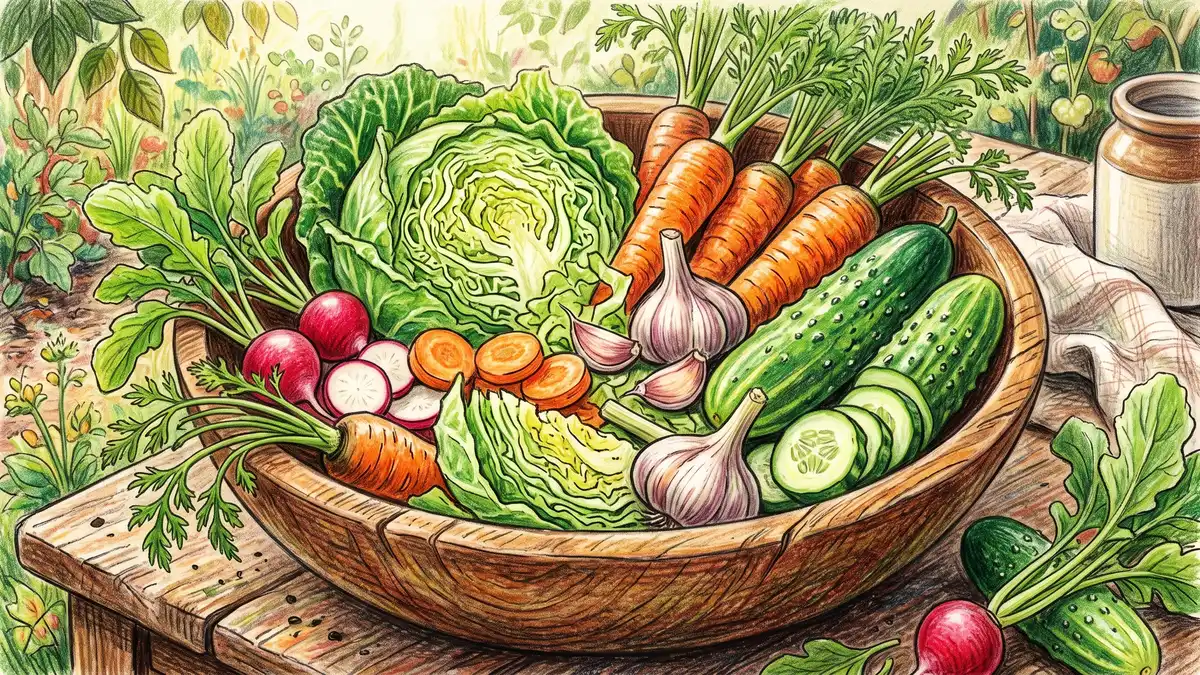
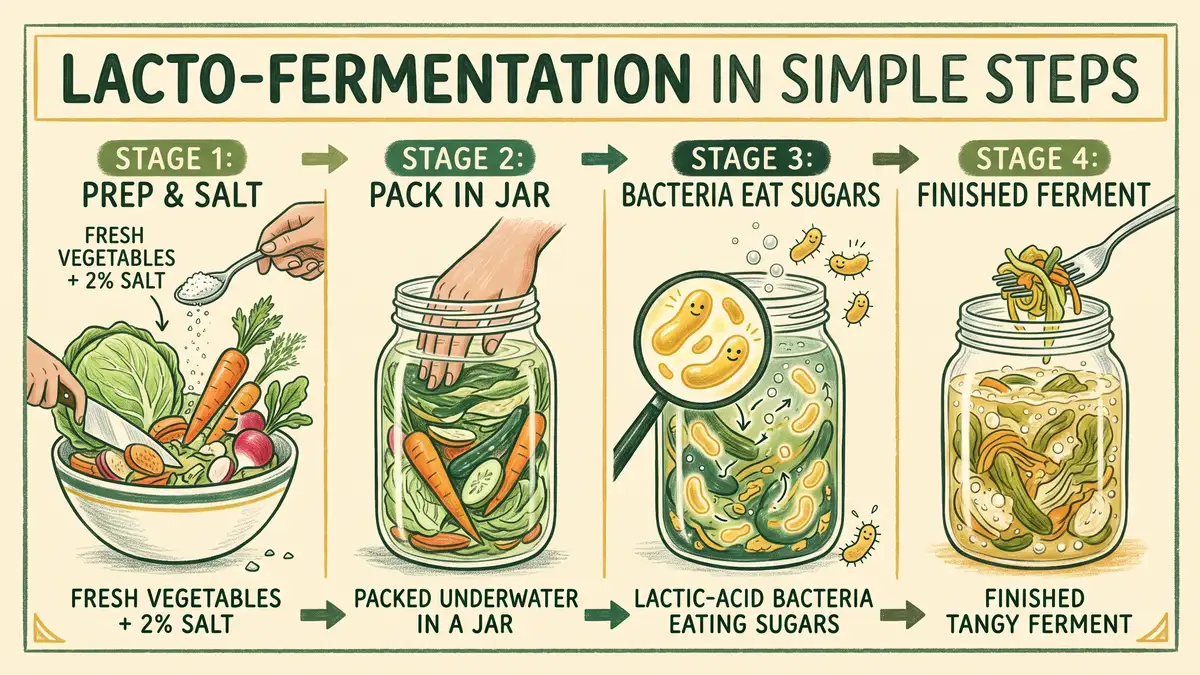
Your vegetables are already covered in the bacteria that do the work. Lactic acid bacteria, mostly Lactobacillus and its relatives, live on the surface of fresh produce. When you submerge salted vegetables in an oxygen-free brine, these bacteria feast on the natural sugars and produce lactic acid, according to the National Academies review of lactic acid fermentations.
That lactic acid is the whole point. It sours the vegetables, gives them their tang, and drops the pH to around 3.5 or below, an environment where spoilage organisms simply cannot survive. Salt does two jobs: it pulls water out of the vegetables to make the brine, and it gives the lactic acid bacteria a head start over less desirable microbes, as the National Center for Home Food Preservation explains.
Why This Works: Preserve the Harvest
Permaculture design does not stop at the garden bed. Storing and using what you grow, so nothing is wasted in a glut, follows the same permaculture principles that guide the garden. Fermentation is the classic example: it turns a two-week wall of cabbages into food you can eat all winter, using nothing but microbes that were already there. It is preservation that costs almost no energy and creates no waste.
Is Homemade Fermented Food Safe?
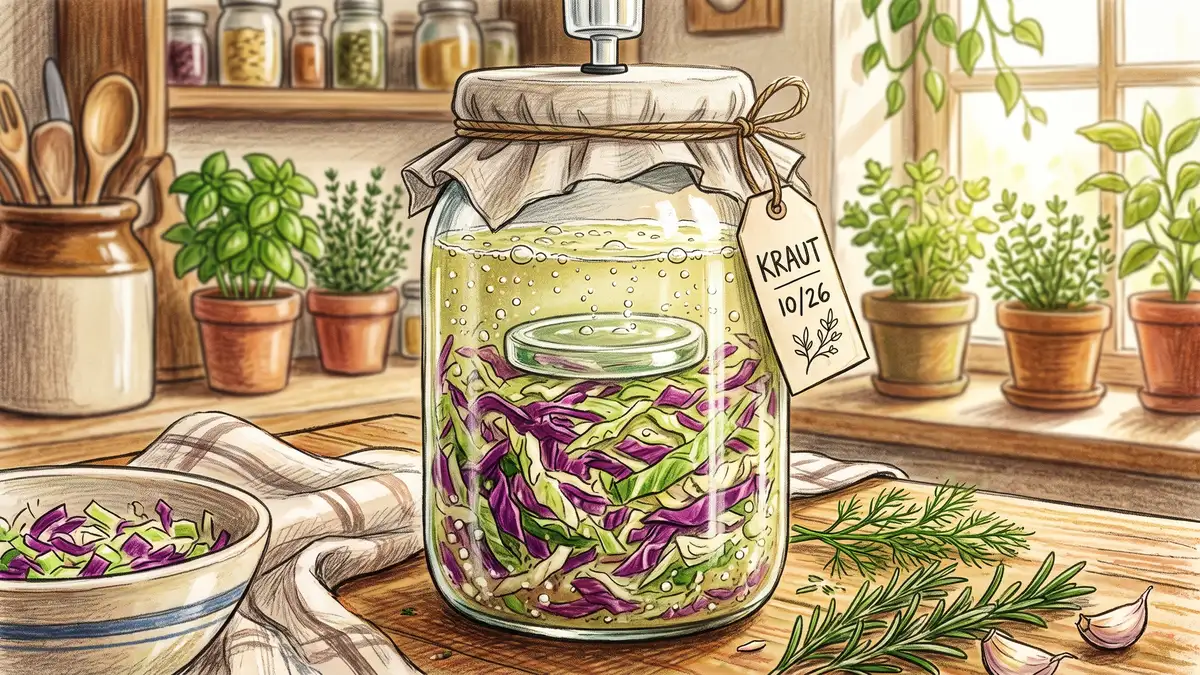
Yes, and the science of why is reassuring. The bacterium behind botulism, Clostridium botulinum, cannot grow in an acidic environment. Because a proper vegetable ferment quickly becomes highly acidic, well below the safety threshold, University of Minnesota Extension notes that correctly fermented and acidified foods do not support botulism growth. This is different from low-acid home canning, which carries real botulism risk if done wrong.
The main rule is simple: keep everything under the brine. Vegetables exposed to air can grow mold or a harmless-but-unpleasant film called kahm yeast. Use a weight to hold them down, follow a tested salt ratio, and trust your senses. A good ferment smells pleasantly sour; anything slimy, fuzzy, or foul-smelling should be tossed. Extension food-safety programs like NC State's back this common-sense approach.
Common Mistake to Avoid
Confusing mold with kahm yeast, and confusing either with failure. A thin, white, sometimes wrinkly film on the surface is usually kahm yeast, harmless, just skim it off. Fuzzy blue, green, black, or pink growth is mold, and that batch should go to the compost. The way to avoid both is to keep every scrap of vegetable pressed below the brine line, where oxygen cannot reach it.
How Do You Make Sauerkraut?
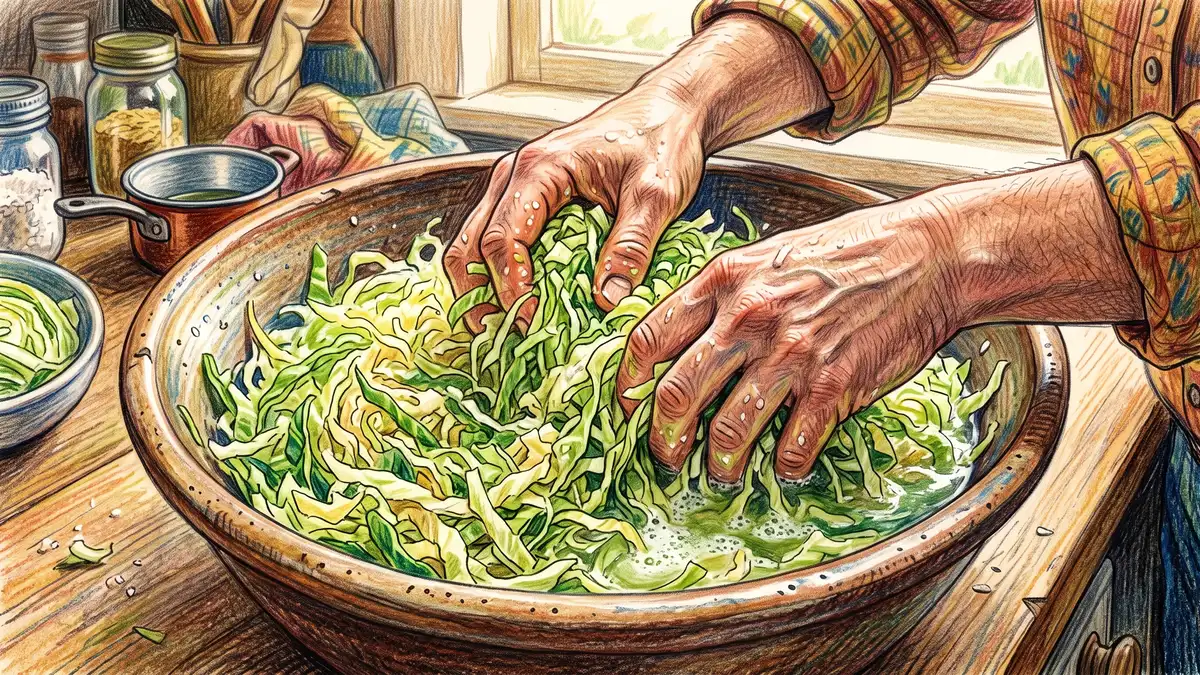
Sauerkraut is the perfect first ferment: one vegetable, one seasoning, and it practically makes itself. This takes about 30 minutes of hands-on work and costs under $5 for a big jar.
Weigh and shred
Weigh your cabbage, then shred it finely. Knowing the weight lets you calculate the salt: aim for 2% of the cabbage's weight (about 1 tablespoon of salt per 2 lb / 900 g).
Salt and massage
Sprinkle the salt over the cabbage and massage it with clean hands for 5 to 10 minutes. It will wilt and release its own liquid, that is your brine.
Pack it down
Press the cabbage firmly into a clean jar so the brine rises above it. Add a weight to keep everything submerged.
Ferment and wait
Loosely cover and leave at 68-72°F (20-22°C). Taste after a week. It is usually ready in 3 to 4 weeks; cooler rooms take 5 to 6.
Chill to keep
Once it tastes right, seal it and move it to the fridge. It keeps for many months, slowly mellowing as it goes.
These proportions and timings follow tested guidance from Colorado State University Extension and the National Center for Home Food Preservation.
How Is Kimchi Different?
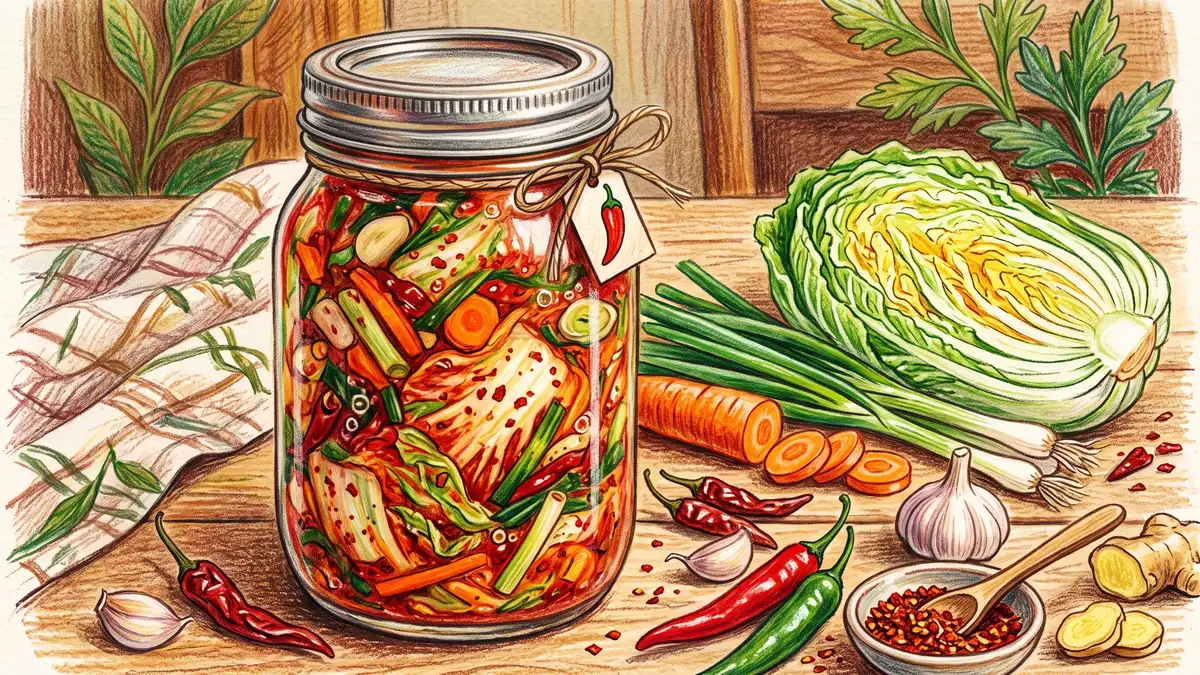
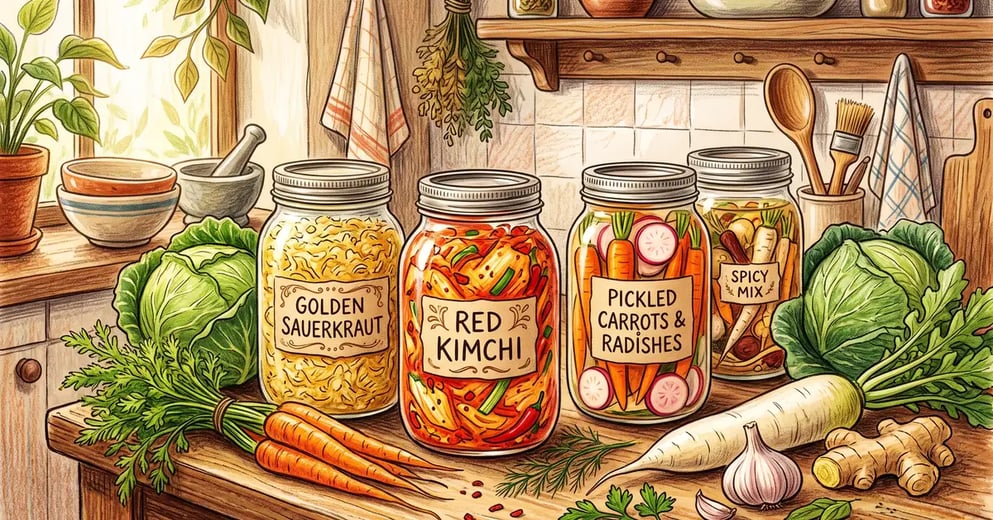
Kimchi uses the same lacto-fermentation science, but with a bolder cast of ingredients and a faster timeline. The classic version starts with napa cabbage salted in a brine, then rinsed and coated in a paste of Korean chili flakes (gochugaru), garlic, ginger, and scallions. Because it ferments at room temperature for just a few days before moving to the fridge, the flavor is fresher and more pungent than a long-aged kraut.
Kimchi is also a nutritional standout. A review in the Journal of Medicinal Food catalogs its documented health-associated compounds and probiotic bacteria. For a full walkthrough, the University of Arizona Cooperative Extension's kimchi guide is an excellent, food-safe recipe.
| Sauerkraut | Kimchi | |
| Main vegetable | Green cabbage | Napa cabbage + radish, carrot |
| Salt | ~2% by weight, mixed in | Brine-soak, then rinse |
| Seasoning | Minimal (caraway optional) | Gochugaru, garlic, ginger, scallion |
| Ferment time | 3-6 weeks | 1-5 days, then fridge |
Sources: National Center for Home Food Preservation, University of Arizona Cooperative Extension.
Almost any firm vegetable from the garden can be fermented this way: carrots, radishes, green beans, peppers, cauliflower, and cucumbers all work beautifully. It is a fitting end for a productive harvest, and the trimmings you do not use go straight to the compost pile, closing the loop.
Key Takeaway
Master one 2% salt ferment and you can make dozens. Sauerkraut teaches the method; kimchi shows how far you can push the flavor. Both connect back to a core idea in our permaculture foundations: grow it, use all of it, and waste nothing.
Frequently Asked Questions
Is homemade fermented food safe to eat?
Yes, when you follow a tested method. Lacto-fermentation quickly makes vegetables highly acidic, which prevents the growth of dangerous bacteria including the one that causes botulism. This is why extension food-safety programs consider properly fermented vegetables safe, unlike low-acid home canning, which is riskier. The key rules are using the right salt ratio, keeping everything submerged under the brine, and trusting your senses: a good ferment smells clean and sour, while anything slimy, fuzzy, or foul should be discarded. Millions of people have safely fermented food this way for thousands of years.
How much salt do you need to ferment vegetables?
The standard is about 2 to 2.5 percent salt by the weight of the vegetables. For sauerkraut, that works out to roughly one tablespoon of salt per two pounds of cabbage. Weighing your produce and calculating the salt is far more reliable than guessing, and it is the single most important step for both safety and flavor. Too little salt can let the ferment go soft or spoil; too much slows the bacteria down and makes it unpleasantly salty. Use non-iodized salt without anti-caking additives, which can cloud the brine or inhibit fermentation.
How long does sauerkraut take to ferment?
At a comfortable room temperature of 68 to 72 degrees Fahrenheit, sauerkraut is usually ready in about three to four weeks. In a cooler spot around 60 to 65 degrees it may take five to six weeks, and cooler still is slower again. Warmer is faster but can produce softer, less crisp kraut, so cool and slow generally gives better texture and flavor. Start tasting after the first week and let it ferment until the sourness suits you, then move it to the fridge, where it will keep mellowing for months.
Which vegetables can you ferment?
Most firm vegetables ferment well. Cabbage is the classic for sauerkraut and kimchi, but carrots, radishes, daikon, green beans, cauliflower, peppers, garlic, and cucumbers all make excellent ferments. Firmer vegetables hold their crunch best, while softer produce like tomatoes or zucchini can turn mushy. Many people combine vegetables and add spices, herbs, or aromatics like ginger and garlic. The same 2 percent salt principle applies across the board, which is what makes fermentation such a flexible way to preserve whatever your garden produces in abundance.
Are fermented vegetables actually good for your gut?
The evidence is encouraging. Fermented vegetables deliver live lactic acid bacteria along with the nutrients of the original produce, and sauerkraut has been valued for centuries as a source of vitamin C, famously helping prevent scurvy on long sea voyages. A widely cited 2021 Stanford study published in the journal Cell found that a diet high in fermented foods increased gut microbiome diversity and lowered markers of inflammation. As with any food, benefits come from regular, moderate inclusion in a varied diet rather than from any single large serving, and people with specific health conditions should check with a doctor.
Get the Weekly Dig
One practical permaculture guide a week, written for gardeners who do this on weekends: permaculture design for real backyards. Free, no spam, unsubscribe any time.
Join the Weekly DigResources
- National Center for Home Food Preservation: General Information on Fermenting
- National Center for Home Food Preservation: Sauerkraut Recipe
- Colorado State University Extension: Understanding and Making Sauerkraut
- University of Wisconsin Extension: Make Your Own Sauerkraut (B2087)
- NC State Extension: Fermentation Food Safety
- University of Minnesota Extension: Botulism
- University of Arizona Cooperative Extension: Taste of Korea, Kimchi
- National Academies: Lactic Acid Fermentations
- Journal of Medicinal Food: Health Benefits of Kimchi
- USDA ARS: Processed, Acidified, and Fermented Vegetable Products