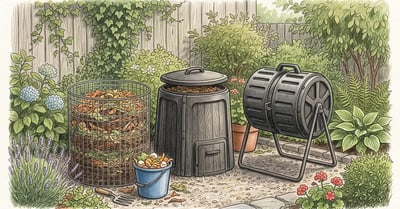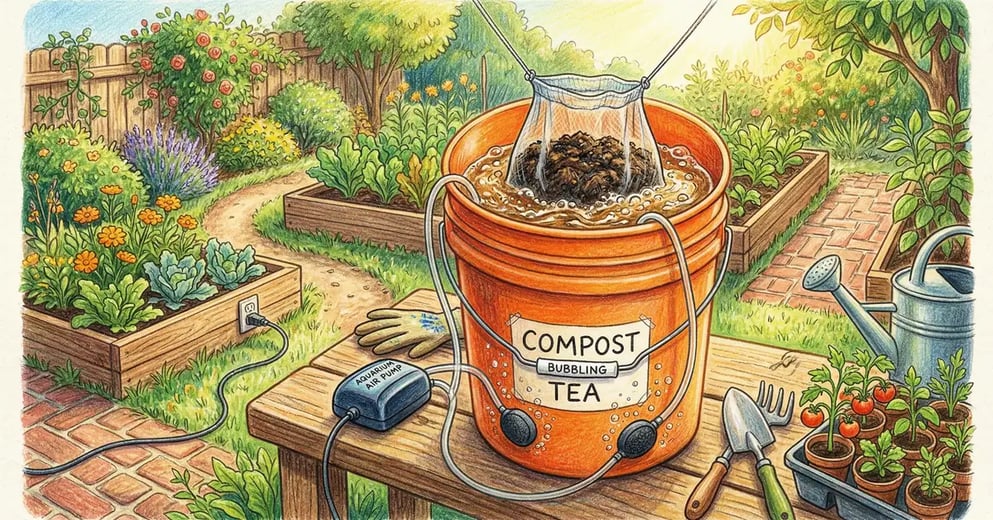

Your tomatoes look tired. The leaves are pale, growth has slowed, and you know your soil could be more alive — but bagged fertilizer feels like the wrong answer. Compost tea is the bridge: a 24-hour brew that takes the microbes already living in finished compost and multiplies them into a liquid you can pour at the base of plants or spray on their leaves. the right compost carbon and nitrogen balance liquid seaweed and kelp extracts
This guide walks you through what compost tea actually does, the recipe US extension services recommend, how to apply it without wasting your time, and the food-safety rules every gardener should know before spraying anything on edible crops.
What Is Compost Tea?
Compost tea is a liquid extract made by steeping finished compost in water — usually with a small amount of food source like molasses — to pull beneficial microbes out of the compost and grow their populations. The result is a brown, slightly foamy liquid you apply to soil or plants to inoculate them with bacteria, fungi, protozoa, and nematodes.
The concept goes back decades but was formalized in the 1990s by soil microbiologist Dr. Elaine Ingham, whose Soil Foodweb framework treats soil as a hierarchy of organisms — bacteria, fungi, protozoa, nematodes, arthropods — that cycle nutrients and outcompete plant pathogens. Compost tea is one way to deliver that food web in concentrated, mobile form.
It is not the same thing as compost leachate (the dark water that drips from a compost pile, which can contain pathogens) or manure tea (made from raw animal manure, which carries serious food-safety risk). When this article says "compost tea," it means an actively aerated brew made from finished, properly composted material — what extension services call aerated compost tea (ACT).
If you want the broader context for why feeding soil microbes matters more than feeding plants directly, our composting for beginners guide walks through how the underlying composting process works — and our introduction to permaculture explains the soil-first philosophy that compost tea fits inside.
Aerated vs Non-Aerated Compost Tea
This is the most important distinction in the entire topic, because it determines both how well the tea works and whether it is safe to spray on food crops.
Aerated compost tea (ACT) bubbles air through the brew with an aquarium pump and air stone for 24 to 36 hours. The high oxygen environment favors aerobic bacteria, beneficial fungi like Trichoderma, and protozoa — and it suppresses the anaerobic organisms (including human pathogens) that would otherwise multiply.
Non-aerated compost tea (NCT) is what most "old-school" gardeners describe: dump compost in a bucket of water, stir occasionally, wait a couple of days. Within four hours of starting an unaerated brew, dissolved oxygen drops below 1 ppm. That anaerobic environment favors a very different set of microbes — including E. coli, Salmonella, and Listeria if any of those organisms made it into the source compost.
The 2004 USDA National Organic Standards Board Compost Tea Task Force reviewed the evidence and recommended significant restrictions on non-aerated and additive-amended teas applied to edible crops. The short version: stick with actively aerated tea, made from clean compost, and you avoid most of the food-safety landmines.
| Tea Type | Bacteria (CFU/mL) | Fungal Hyphae | Pathogen Risk |
| Aerated (ACT) | 10⁸–10⁹ | 2–5 m / mL | Low (clean compost) |
| Non-aerated (NCT) | 10⁶–10⁷ | 0.2–0.5 m / mL | High |
| Compost leachate | 10⁵–10⁶ | Minimal | Moderate–high |
| Manure tea | 10⁶–10⁸ | Variable | Very high |
Sources:.
Common Mistake to Avoid
Brewing a "passive" tea by dropping compost in a bucket and forgetting it for three days does not save you work — it produces a low-microbe, potentially pathogenic liquid that you should not spray on lettuce, strawberries, or any edible crop. If you do not have an air pump, soil-drench application of properly finished compost is a safer option than non-aerated tea.
How to Brew Compost Tea: The Standard Recipe
The recipe below is adapted from the Oregon State Extension Compost Tea 101 guide, with quantities and equipment specs cross-checked against the SARE Compost Tea Manual and the University of Arizona Compost Tea 101 publication. It makes about 5 gallons — enough to side-dress a 200 sq ft (19 m²) bed or foliar-spray a backyard worth of plants.
What You Need
| Ingredient | Quantity | Why It Matters |
| Dechlorinated water | 5 gallons (19 L) | Chlorine kills the microbes you are trying to grow |
| Finished compost or worm castings | 1 quart (1 lb / 0.5 kg) | Source of microbial inoculum |
| Unsulfured blackstrap molasses | 1–2 tbsp (15–30 mL) | Bacterial food source |
| Liquid kelp kelp meal as a slow-release feed (optional) | 1 tsp (5 mL) | Trace minerals; supports fungi |
| Fish hydrolysate (optional) | 1 tbsp (15 mL) | Nitrogen source for bacteria |
Sources:.
Equipment
A 5-gallon (19 L) bucket, an aquarium air pump rated for at least 5 gallons (one with two outlets is ideal), 3–4 feet (about 1 m) of airline tubing, and one or two air stones. A fine mesh strainer bag for the compost makes cleanup easier but is optional. Total equipment cost is typically $25–$60 — well under the price of a single bag of liquid organic fertilizer.
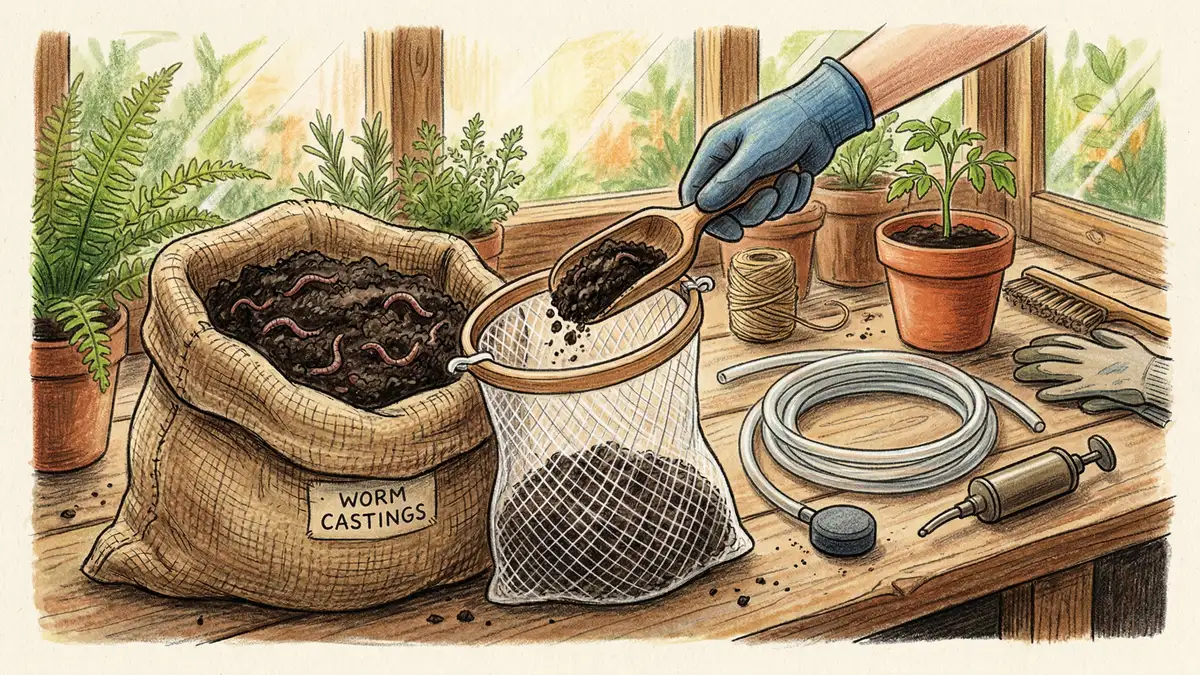
The compost itself is the most important variable. Use mature, finished compost that smells earthy — never sour, ammonia-like, or sulfurous. Worm castings (vermicompost) are an excellent choice because they are consistently aerobic and microbially diverse. If you bought bagged compost, look for OMRI-listed products from reputable suppliers, and let it rest in the bag for a few weeks if it has any "off" smell.
The Brewing Steps
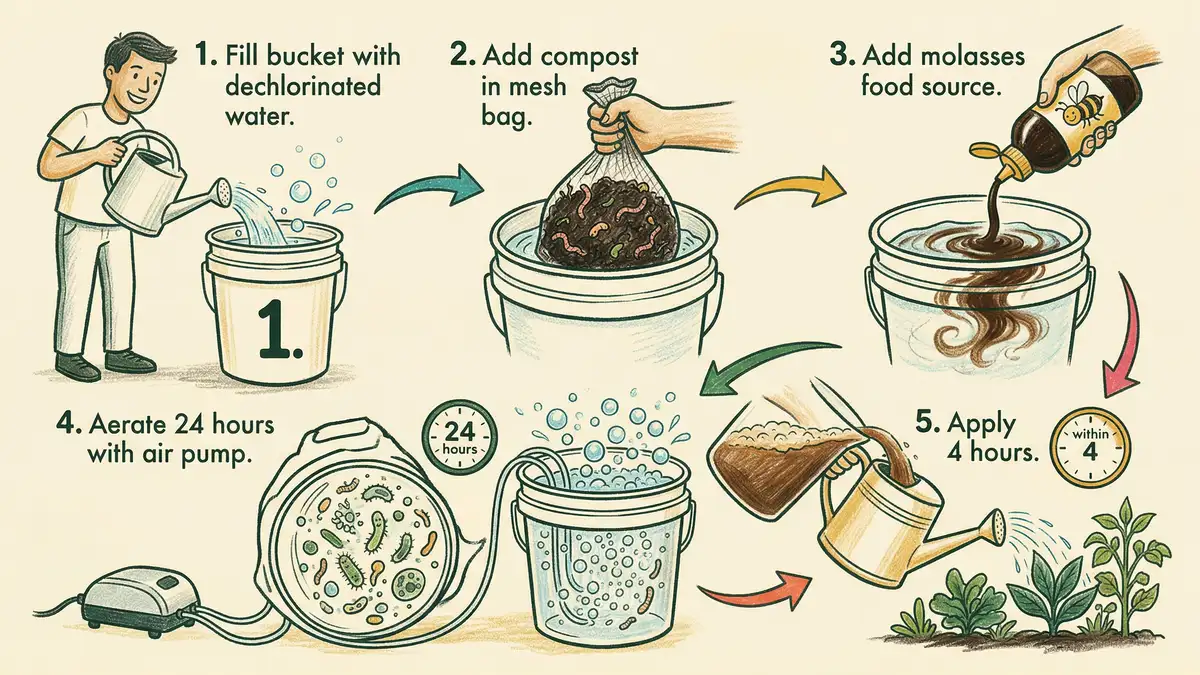
Dechlorinate the Water
Fill the bucket with tap water and let it sit uncovered for at least 24 hours, or run an air pump in it for 30 minutes. Both methods drive off chlorine. If your municipal water uses chloramine (most do), the air-pump method is more reliable — chloramine does not off-gas. Rainwater and well water are ready to use as-is.
Add the Compost
Place the compost loose in the bucket or in a fine mesh bag tied at the top. The mesh bag keeps brewed solids out of your sprayer but slightly reduces microbial extraction; loose-and-strain works better for fungi but means filtering twice.
Add the Food Source
Stir in the molasses (and kelp/fish hydrolysate if using). Resist the urge to add more — too much sugar produces a bacterial overgrowth that can crash and turn anaerobic before the brew is done.
Aerate for 24–36 Hours
Connect the air pump and drop the air stones into the bucket. You want vigorous, continuous bubbling for the entire brew. Maintain a temperature between 65 and 75°F (18–24°C); cooler than 60°F or warmer than 80°F slows microbial growth and may push the brew toward 48 hours.
Apply Within 4 Hours
The moment aeration stops, dissolved oxygen starts dropping and microbial populations begin to die off. Strain the tea through a fine mesh and apply within 4 hours. Do not store leftover tea — it loses 80–95% of viable microbes within 4–6 hours of aeration ending.
Why This Works: The Soil Food Web
Permaculture treats soil as a living system, not a chemistry set. Compost tea is one of the few amendments that respects that distinction — instead of dumping nitrogen on the soil and hoping plants grab it before it leaches, you are seeding the underground ecosystem that already cycles nitrogen for free. Bacteria and protozoa eat each other; fungi build mineral pathways to roots; nematodes graze and release plant-available nutrients. The "fertilizer" effect is a side product of a working food web.
How to Apply Compost Tea
There are two main application methods, and they do different jobs.
Soil Drench
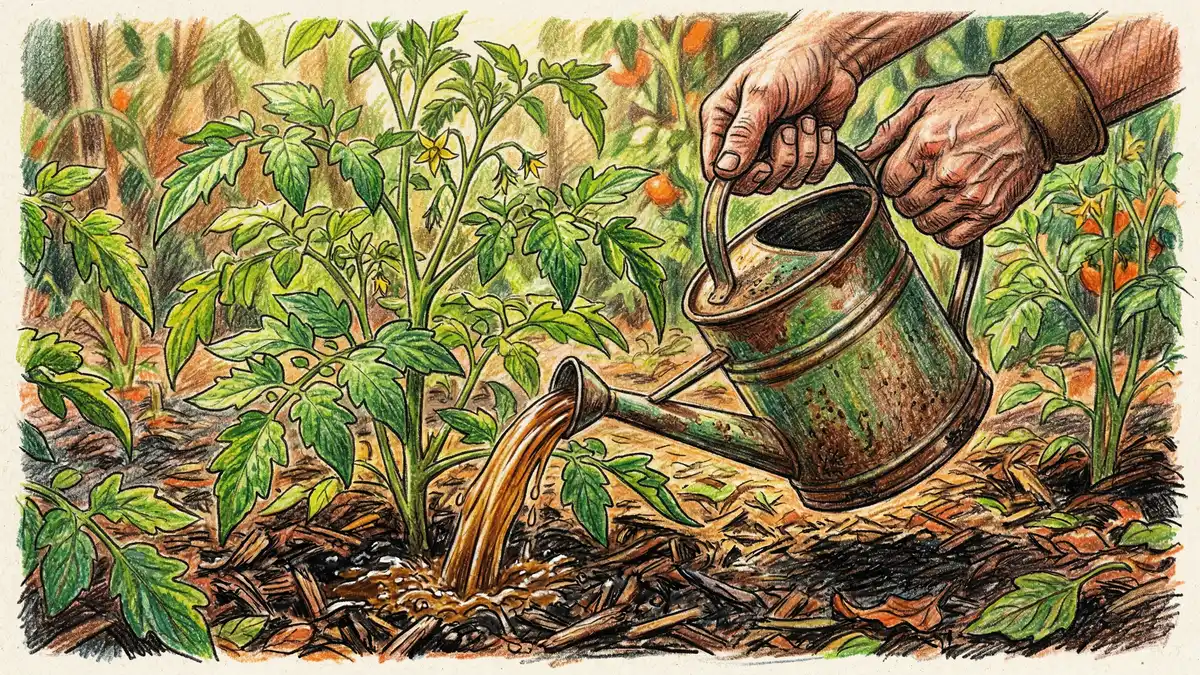
Pour the strained tea directly at the base of plants or across a bed using a watering can. Use the tea undiluted or dilute it 1:1 with dechlorinated water if you want to stretch it further — both work. The goal is to inoculate the rhizosphere (the soil immediately around the roots) with active microbes. Apply 1–2 cups (240–475 mL) per plant or about 1 gallon per 50 sq ft (4.6 m²).
Soil drench is the safest application because it avoids any contact with the parts of the plant you are going to eat. It is also where the science is strongest — improvements in nutrient cycling and root colonization are easier to demonstrate in the soil than on leaves.
Foliar Spray
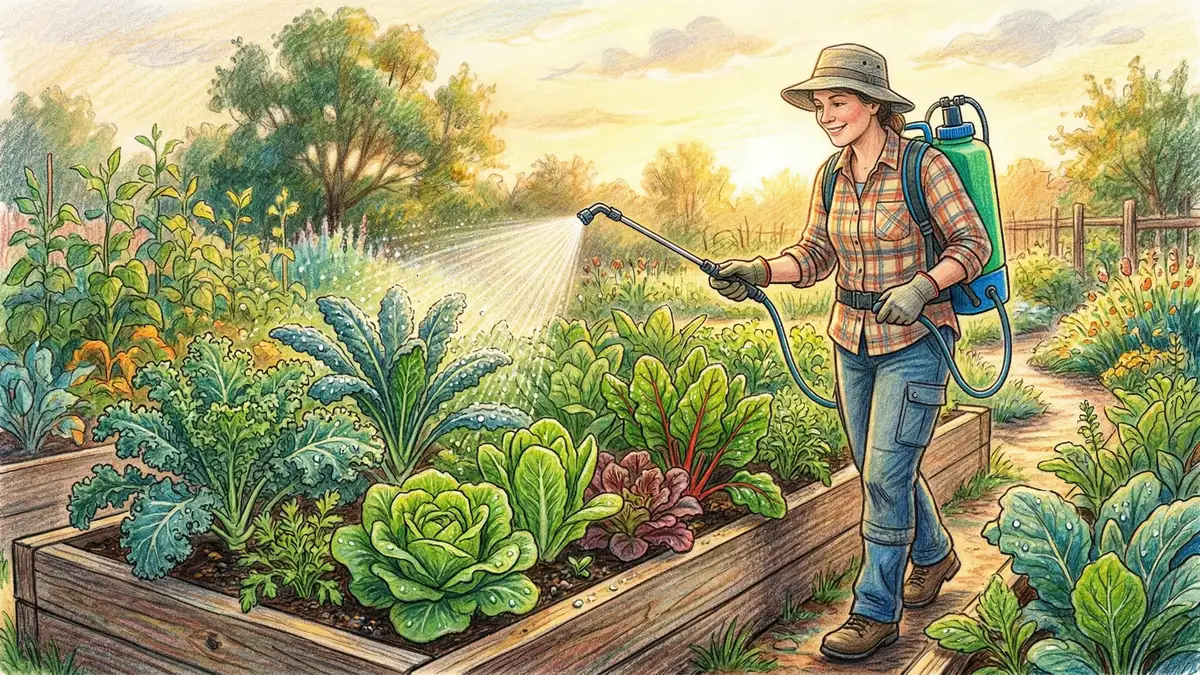
Filter the tea through a finer mesh (around 400 microns or a paint strainer bag) and apply it through a clean garden sprayer. The idea is to coat leaves with beneficial microbes that occupy space pathogens would otherwise colonize. Spray in early morning or evening when leaves stay wet long enough for microbes to settle in but the sun will not burn them.
Foliar application has more food-safety considerations and weaker scientific evidence. Do not foliar-spray within 90 to 120 days of harvesting any crop where you eat the leaves or fruit raw — this is the standard "compost rule" the USDA NOP applies to raw manure and is the most conservative interpretation of the Compost Tea Task Force recommendations. The University of Arizona Extension explicitly references this 90/120-day rule in its Compost Tea 101 publication.
For ornamentals, fruit trees before fruit set, and woody plants, foliar spray has no edible-safety concerns and may help suppress fungal leaf diseases.
Does Compost Tea Actually Work? What the Research Says
This is the part most compost tea articles skip. The honest answer is: the evidence is mixed, and being clear about that is more useful than either evangelism or dismissal.
On the positive side, several controlled trials at Oregon State University and UC Davis have shown 40–70% reductions in powdery mildew on grapes and squash when foliar compost tea is applied weekly during disease pressure. Disease suppression of Pythium and Phytophthora in greenhouse tomato trials correlates with fungal hyphae density above 1 m/mL in the brewed tea. A 2025 peer-reviewed study published in PMC characterized the microbial communities of chemically and microbiologically enriched compost teas and found genuine, measurable shifts in plant-associated microbiomes after application.
On the negative side, a 2021 controlled study published in PMC applied fresh compost tea to vegetable rhizospheres and found no significant change in bacterial diversity or community structure, and no measurable improvement in plant growth or yield. The authors concluded that the soil's existing microbial community was robust enough to absorb the inoculum without showing measurable benefits.
The Piedmont Master Gardeners review of the literature reaches a similar conclusion: compost tea is not a miracle, but it is a reasonable tool when made correctly and applied to soils that are biologically depleted (compacted, sterile-looking, or recovering from heavy chemical use).
Bottom Line
Compost tea is most useful as one input among many in a soil-building strategy — not as a stand-alone fix. If your soil is already alive, mulched, and full of finished compost, the tea will probably show modest gains. If your soil is depleted or you are recovering a bed, it can be a genuine accelerant. It is never a substitute for the compost itself.
Food Safety: What You Must Know Before Spraying
The biggest risk in compost tea is not whether it works — it is whether it makes someone sick. Pathogens like E. coli O157:H7, Salmonella, and Listeria can survive in compost that was not held at high enough temperatures during composting, and they can multiply rapidly in non-aerated brews. The UConn Soil Nutrient Analysis Laboratory food-safety briefing is direct about this: pathogens that survive composting "can live happily in a pile of unmanaged compost," and warm, sugar-fed brewing conditions are exactly the environment they thrive in.
To stay on the safe side of the line, follow these rules:
| Rule | Why |
| Use only fully finished, hot-composted material | Pathogens are killed at 131°F (55°C) sustained for 3+ days |
| Never use raw manure or manure-based teas on edible crops | Manure tea is restricted by USDA NOP for edible foliage |
| Aerate continuously — no shortcuts | Anaerobic conditions favor human pathogens |
| Do not add sugar without aeration | Sugar + low oxygen = pathogen growth medium |
| Apply within 4 hours of brewing | Beneficial microbes die; opportunistic pathogens can grow |
| Foliar spray: observe a 90–120 day pre-harvest interval on raw-eaten crops | Mirrors USDA NOP raw-manure rule |
| Wash hands and equipment after every batch | Standard food-safety hygiene |
Sources:.
Common Mistakes That Ruin a Batch
Most failed compost tea brews trace back to one of a small handful of errors. Avoiding these gets you 90% of the way to a good tea.
Using chlorinated water without dechlorinating. Municipal tap water with 2 ppm of chlorine can knock down 40–60% of bacterial populations and inhibit fungal colonization. Always let water sit 24 hours uncovered or aerate it for 30 minutes before adding compost.
Brewing in the wrong temperature range. Below 60°F (15°C), microbial reproduction slows to a crawl. Above 80°F (27°C), some beneficial fungi start to die off. Brew in a shaded garage or basement, not on a sunny patio.
Adding too much molasses. The instinct is "if a little is good, more is better." With sugar in compost tea, more is worse. Excessive food source produces a bacterial spike that crashes the brew into anaerobic territory before you can use it.
Storing leftover tea. A jar of "compost tea concentrate" sitting on a shelf for two weeks is mostly dead microbes and fermenting sugar. Brew what you need, apply it, and brew again next time.
Applying in midday sun. UV kills bacteria on contact. Apply soil drench any time, but always foliar-spray in early morning or evening.
Skipping the source compost quality check. If your compost smells bad, the tea will too. Garbage in, garbage out — and in this case, "garbage" might mean live pathogens.
Compost Tea vs Other Liquid Amendments
Compost tea is not the only way to feed plants liquid nutrition. Here is how it stacks up against the alternatives a backyard gardener actually uses.
| Amendment | Best For | Cost | Microbes? |
| Aerated compost tea | Inoculating soil biology | $ (DIY) | Yes — main point |
| Fish emulsion / hydrolysate | Fast nitrogen boost | $$ | No — provides nutrients |
| Liquid kelp / seaweed | Trace minerals, growth hormones | $$ | No |
| Worm casting "leachate" | Soil drench (not foliar) | $ (with worm bin) | Some, variable |
| Compost top-dress | Long-term soil building | $ (DIY) | Yes — but slower release |
Source: Maine Organic Farmers and Gardeners Association — Compost Tea.
The honest framing: if you only have time for one thing, just spread finished compost on your beds. Compost tea is a useful supplement on top of that practice, especially when you want to inoculate a new bed, recover a depleted area, or push disease suppression on ornamentals. For complementary approaches, see our organic fertilizer guide and the deeper background in our soil health guide.
Frequently Asked Questions
How do you make compost tea?
Fill a 5-gallon bucket with dechlorinated water, add 1 quart of finished compost or worm castings, stir in 1–2 tablespoons of unsulfured molasses, and aerate continuously with an aquarium air pump for 24 to 36 hours at 65–75°F (18–24°C). Strain through a fine mesh and apply within 4 hours of stopping aeration.
What is compost tea made of?
Compost tea is made of finished compost (or worm castings), dechlorinated water, and a small food source like unsulfured blackstrap molasses. Optional additions include liquid kelp for trace minerals and fish hydrolysate for nitrogen. The "tea" effect comes from extracting and multiplying the microbes already present in the compost.
How do you use compost tea?
Apply compost tea two ways: as a soil drench at the base of plants (1–2 cups per plant or 1 gallon per 50 sq ft / 4.6 m²) or as a foliar spray through a clean garden sprayer in early morning or evening. Soil drench has stronger evidence and fewer food-safety concerns than foliar application on edible crops.
How long does compost tea last?
Once you stop aerating, compost tea loses 80–95% of its viable microbes within 4 to 6 hours. Plan to apply your batch within 4 hours of stopping the air pump. Compost tea is not designed to be stored — brew what you need and apply it fresh each time.
Does compost tea actually work?
The evidence is mixed. Controlled trials have shown disease suppression of 40–70% for powdery mildew and other fungal diseases when applied to ornamentals and grapes. Other studies have shown no measurable change in soil bacterial communities or plant yields. Compost tea is most useful as one input among many in a soil-building strategy, especially for biologically depleted soils — not as a stand-alone fertilizer.
Can compost tea kill plants?
A properly brewed aerated compost tea is unlikely to harm plants. Problems arise when the tea has gone anaerobic (smells sour or sulfurous), when too much fertilizer has been added, or when undiluted fish hydrolysate concentrations burn leaves. If your tea smells bad, do not apply it — pour it on a non-edible part of the garden or compost it back into the pile.
Is compost tea safe to use on vegetables?
Aerated compost tea made from fully finished, hot-composted material is generally considered safe as a soil drench on vegetables. For foliar application on raw-eaten crops (lettuce, strawberries, herbs), follow the USDA NOP-style 90 to 120 day pre-harvest interval. Never use non-aerated tea or manure tea on edible crops — both carry documented food-safety risks.
Get the Weekly Dig
One practical permaculture guide a week, written for gardeners who do this on weekends: composting that actually finishes and soil that feeds itself. Free, no spam, unsubscribe any time.
Join the Weekly DigResources
- Oregon State University Extension — Compost Tea 101 (2025 PDF)
- Oregon State Extension — What Does Aeration Do to Compost Tea?
- USDA NOP — Compost Tea Task Force Final Recommendations (PDF)
- University of Arizona Extension — Compost Tea 101: What Every Organic Gardener Should Know (PDF)
- SARE — Tea Time: A Compost Tea Manual (PDF)
- UConn Soil Lab — Compost, Compost Tea and Manure: Food Safety Implications
- Piedmont Master Gardeners — The Truth About Compost Tea
- PMC — Fresh Compost Tea Application Does Not Change Rhizosphere Bacterial Communities (2021)
- PMC — Agronomic Impacts of Chemically and Microbiologically Enriched Compost Teas (2025)
- Texas State University — Identification of Microbial Populations in Compost Tea (PDF)
- Maine Organic Farmers and Gardeners Association — Compost Tea