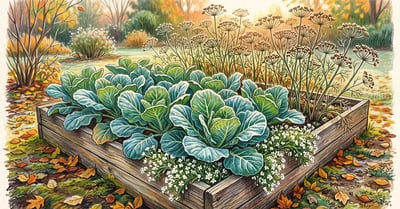

Cauliflower is the brassica that punishes carelessness. Cabbage forgives a rough transplant, broccoli shrugs off a cold snap, kale barely notices either. Cauliflower responds by producing a curd the size of a coin and stopping. That failure has a name, buttoning, and it wrecks more crops than any companion planting decision. good neighbors for Brussels sprouts companion plants for kohlrabi
So this guide does two things. It gives you the companion plan for a brassica bed, graded honestly by evidence, and puts that plan in its place: useful, but second to getting temperature, spacing and nitrogen right. One technique here has real peer-reviewed support, and most gardeners have never heard of it.
What this guide covers:
- The companions that earn their place in a brassica bed, and which are folklore
- Undersowing with clover, the one technique with field-trial evidence behind it
- What actually causes buttoning, with the specific temperature and timing triggers
- Why brassica-after-brassica is the mistake that outlasts a single season
- A four-year rotation you can mark out once and reuse
Key Takeaway
Cauliflower needs steady conditions more than good neighbors. Space plants 18 inches apart in rows 2 to 3 feet apart, transplant before starts are six weeks old, avoid any spell below 50 F once they are in the ground, and keep water consistent. Companions then add pest suppression on top of a crop that is already going to succeed.
What Does Cauliflower Need From Its Bed?
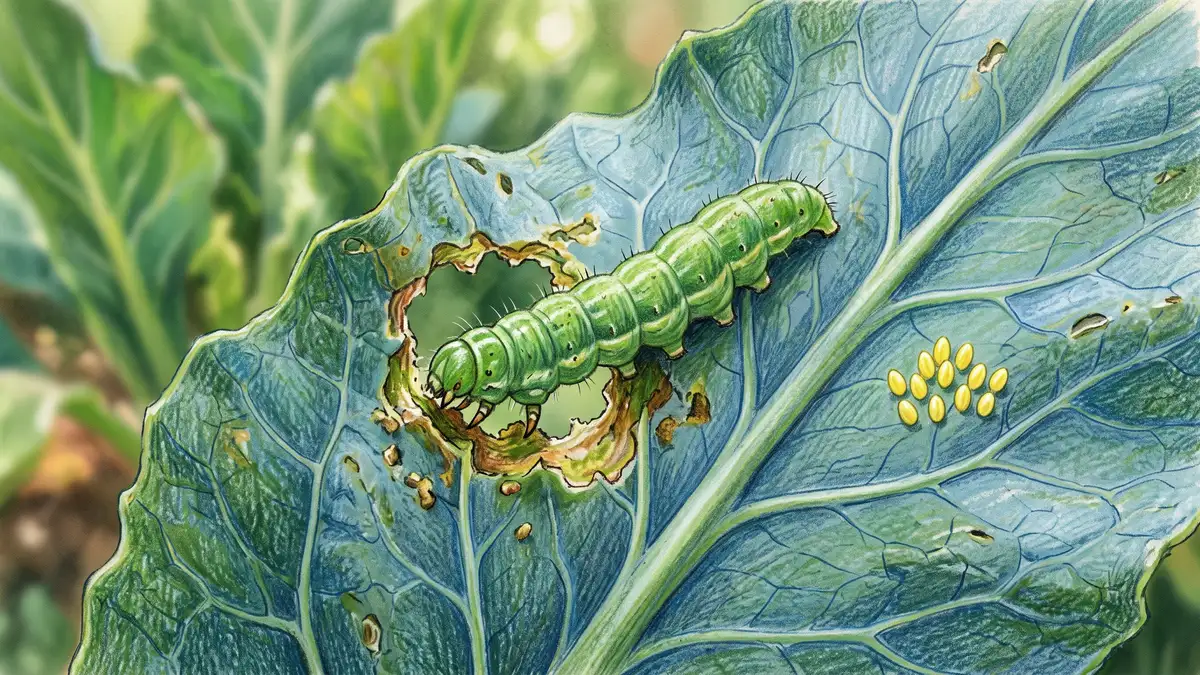
Cauliflower takes 50 to 80 days from transplanting, and it holds that ground the entire time for a single harvest. In a small garden that is a real cost, and it is worth being clear-eyed about it before you commit a bed.
Extension guidance puts spacing at 12 to 18 inches between plants with rows 2 to 3 feet apart, and some sources go wider still at 18 to 24 inches in row. The wider end is better for cauliflower specifically, because the plant needs to build a large leaf frame before it will make a large curd. Crowd it and you get small heads, whatever else you do right.
The nutrient story has one wrinkle. Cauliflower is a heavy nitrogen feeder but also unusually sensitive to boron deficiency, which shows as brown water-soaked spots on the curd or as hollow stem, sometimes with a blackened internal cavity and no external signs. Utah State Extension links prevention to correct soil pH, consistent irrigation, and sufficient but not excessive NPK. If curds keep browning internally, look at boron first.
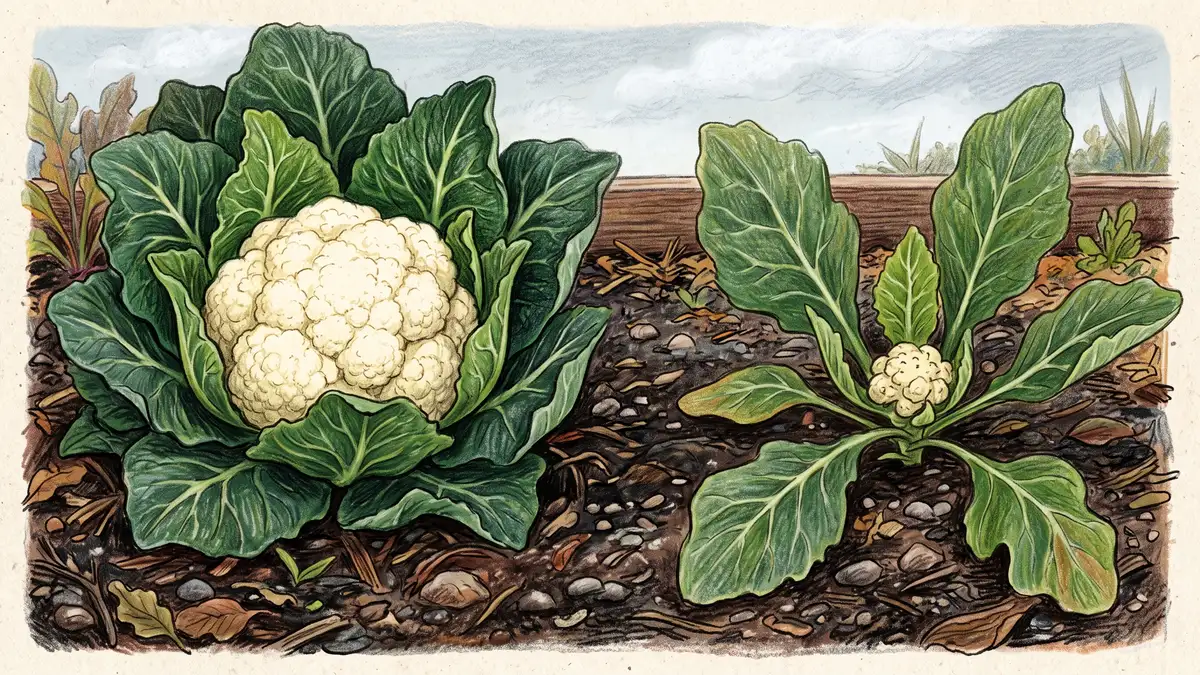
Why Cauliflower Buttons, and How to Prevent It
Buttoning is when the head stops enlarging at an inch or less across and simply never develops further. Extension guidance identifies a specific and useful list of triggers, which is unusually actionable for a physiological disorder:
| Trigger | Threshold | How to Avoid It |
| Frost on young transplants | 4 or more hours | Delay transplanting or use row cover |
| Cold spell after planting out | Below 50 F for 5+ consecutive days | Watch the ten-day forecast before you plant |
| Overgrown transplants | Older than 6 weeks, or rootbound | Sow on a schedule, plant out on time |
| Wet or dry extremes | Especially right after transplanting | Mulch and water consistently |
| Inadequate nitrogen | Any stall in vegetative growth | Side-dress during leaf development |
| Pest, disease or weed pressure | Anything that checks growth | Undersow or mulch, keep the bed clean |
Sources: Utah State University Extension, Brassica Production Problems, University of Minnesota Extension, Growing Cauliflower
Read that table again and notice the pattern. Every trigger is a check to growth. Cauliflower banks on uninterrupted vegetative development to build the leaf area that supports a curd, and anything that stalls it, cold, drought, root binding, hunger or pests, reads as a signal to finish early. That framing beats memorising six rules.
Which Cauliflower Companions Are Backed by Evidence?
Most brassica companion advice is tradition, and we are going to say which is which.
| Companion | Claimed Mechanism | Evidence | Verdict |
| Clover, undersown | Disrupts pest landing and egg-laying | Peer-reviewed field trials | The strongest option on this list |
| Onions and garlic | Scent masking, pest deterrence | Tradition, no brassica-specific trials | Harmless and space-efficient, plant them |
| Lettuce and spinach | Interplant harvested before cauliflower fills out | Timing, not interaction | Genuinely useful use of the gap |
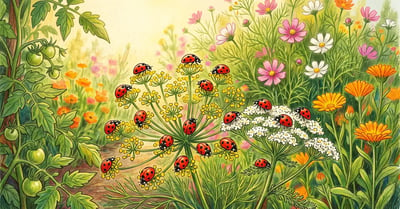
| Dill and other umbellifers | Attract parasitoid wasps that attack caterpillars | Mechanism real, effect size inconsistent | Worth planting, do not rely on it alone |
| Nasturtium, mustard as trap crops | Draw egg-laying away from the crop | Some trial support for brassica trap crops | Works only if you destroy what it catches |
| Marigold | General pest repellence | Nematode effect only, not brassica pests | Plant for looks, not for cabbageworms |
Sources: Seimandi-Corda et al., Pest Management Science (2024), Environmental Entomology, Cover Crop Mulch and Arthropod Communities in Strip-Tilled Cabbage
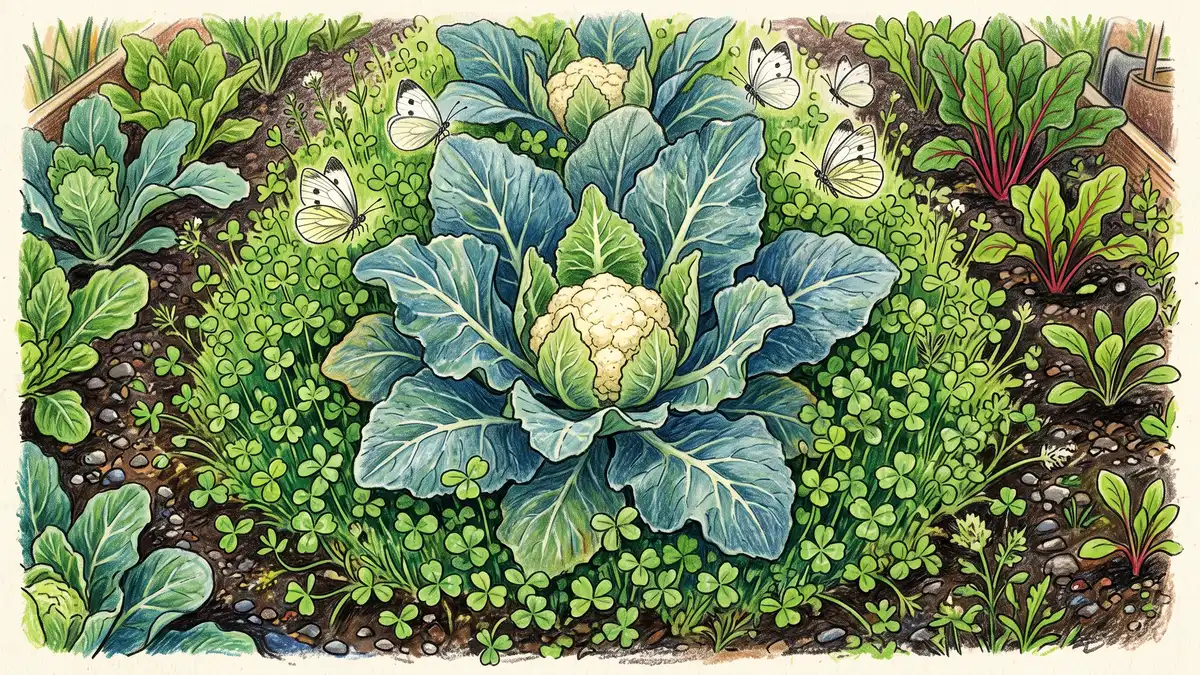
Undersowing deserves the attention. Field research intercropping cabbage with white and subterranean clover found meaningful reductions in pest infestation, particularly cabbage moth and cabbage aphid. Clover competition reduced individual head weight, but the overall result beat the monocropped control once quality was counted. More recent 2024 work found companion plants and straw mulch together reduced flea beetle damage on a related brassica.
Why This Works: Appropriate and Inappropriate Landings
The mechanism has a name in entomology. A cabbage butterfly hunting for a host plant makes a series of test landings. On bare soil, almost every landing near a brassica is a hit. Add a green carpet of clover and most landings are on the wrong plant, so the insect leaves before laying eggs. You are not repelling anything, you are raising the search cost. It is the same visual-confusion principle that makes a polyculture bed harder for pests than a monoculture row, and one of the few companion claims with real trial data behind it.
Common Mistake to Avoid
Do not undersow at transplanting. The clover will out-compete young cauliflower for water and nitrogen at exactly the moment a growth check causes buttoning. Wait three to four weeks until the cauliflower is well established, then sow the clover between plants. And keep a strip of clear mulched soil right around each stem so the crop keeps its own root zone.
What Not to Plant, and the Rotation That Matters More
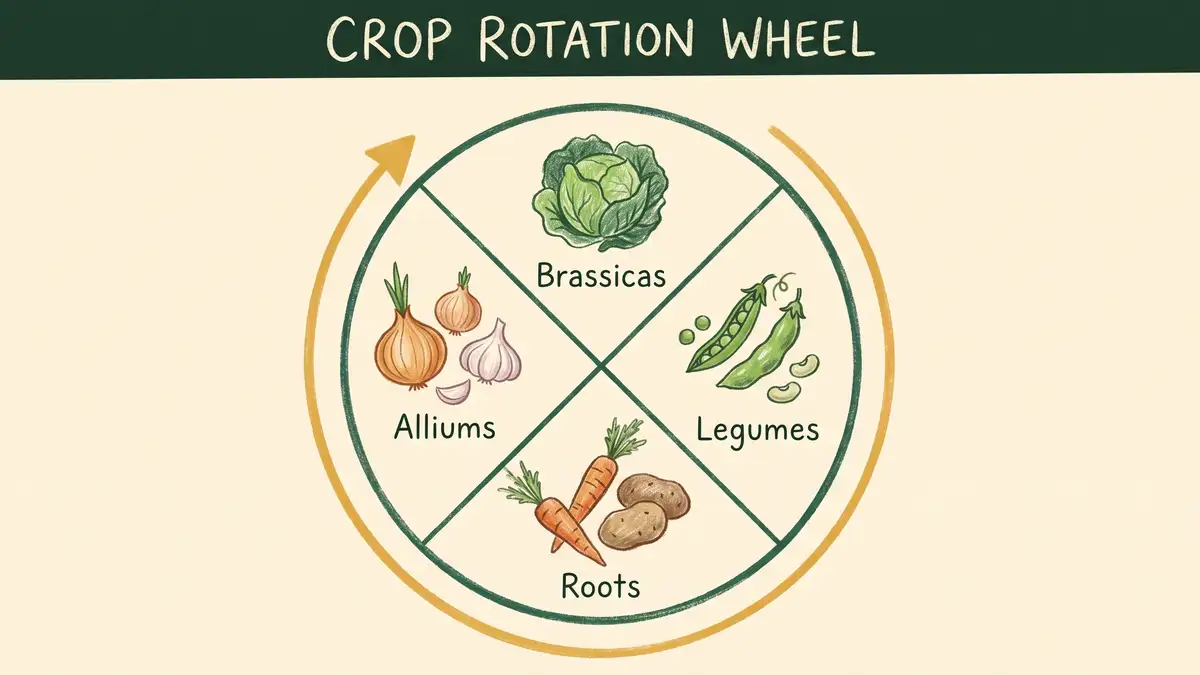
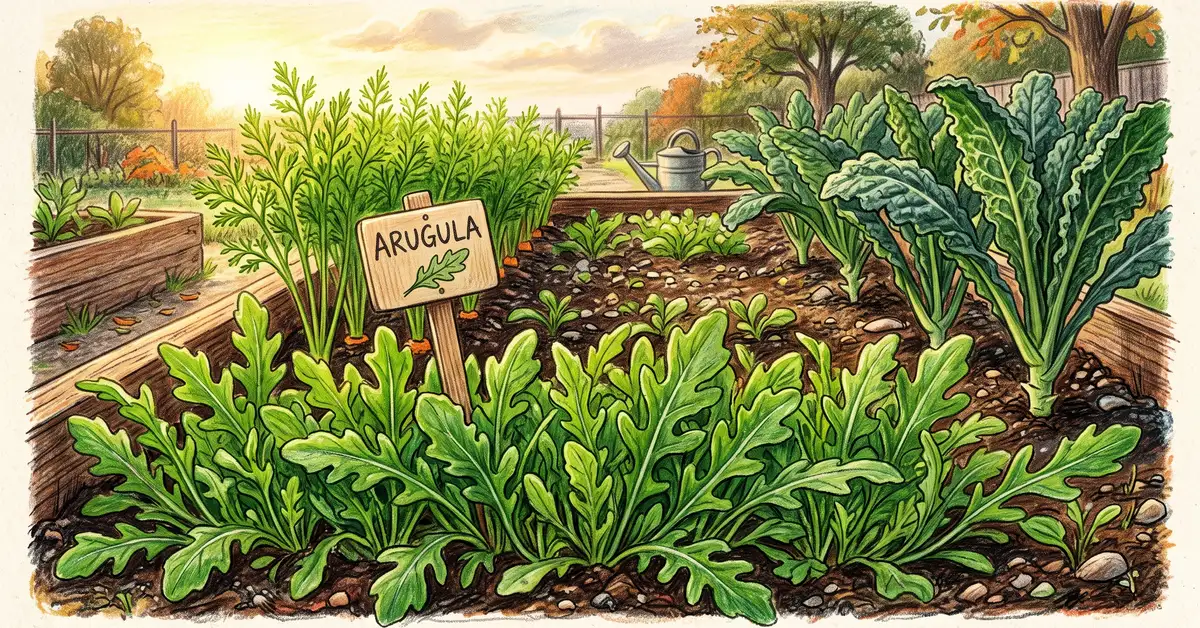
The most damaging thing you can plant near cauliflower is another brassica, and the damage arrives a year later. Clubroot persists in soil for many years once established, and every brassica you grow in that ground feeds it. Broccoli, cabbage, kale, kohlrabi, turnips, radishes, mustard and arugula are all the same family for rotation purposes, which surprises people who think of radishes as a root crop.
Keep brassicas out of the same ground for at least three years, and four is safer. A simple four-bed rotation of brassicas, legumes, roots and alliums handles this without any planning effort after the first year. Pole beans and tomatoes are the usual named antagonists in companion charts; the tomato conflict is really about competing nutrient demands and shading rather than any documented chemical interaction.
Building the Bed, Step by Step
Start transplants on a calendar, not a whim
Count back so plants go out at four to six weeks old. An overgrown, rootbound start is one of the most reliable ways to guarantee a buttoned crop, and it is entirely preventable.
Check the ten-day forecast before planting out
If you see five consecutive days below 50 F, wait, or have row cover ready. This single check prevents the most common cause of failure in spring plantings.
Space at 18 inches, rows 2 to 3 feet
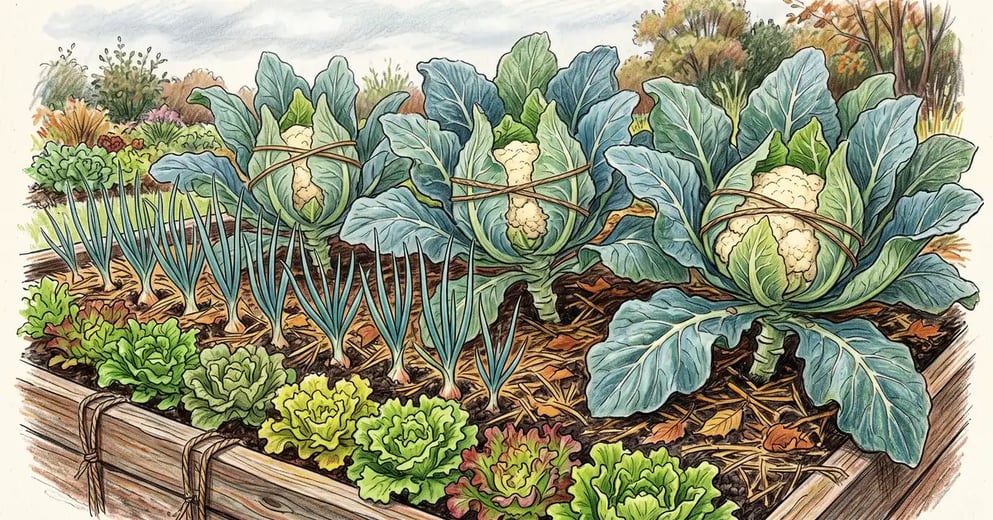
Set onions in the row gaps and lettuce along the front edge, both of which come out before the cauliflower reaches full spread. Keep everything 12 inches clear of the cauliflower stems.
Undersow clover at week three or four
Once the crop is clearly established and growing, broadcast clover between the plants. Leave a mulched ring of clear soil at each stem. This is the pest-suppression step, and its timing is what makes it work rather than backfire.
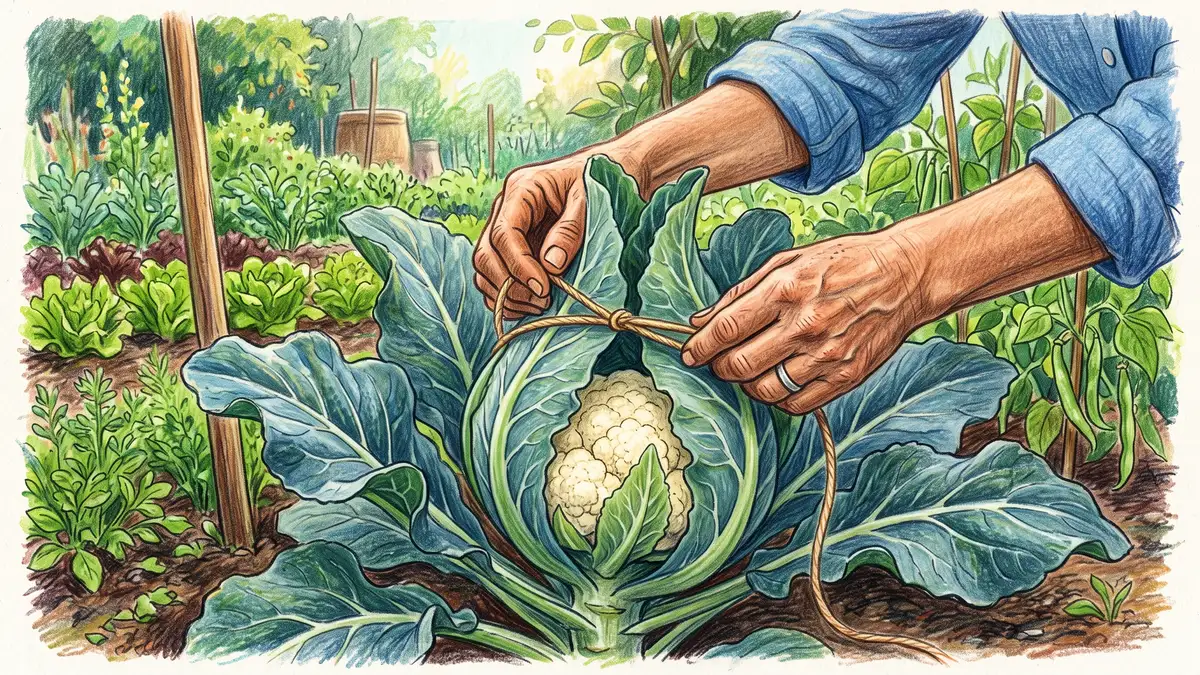
Blanch when the curd is about egg-sized
Fold the outer leaves up over the head and tie them loosely. It takes a minute per plant and keeps white varieties white. Purple and orange types do not need it.
Key Takeaway
Companions handle pests. Rotation handles disease, and rotation is the one you cannot fix later. Three years minimum before brassicas return to the same ground, and count radishes and arugula as brassicas when you plan it.
Why This Works: Counting the Real Cost of a Crop
Cauliflower occupies a bed for up to eighty days, feeds heavily, needs steady water, and yields once. Permaculture thinking asks what a plant returns for what it demands, and by that measure cauliflower is an expensive guest. It is worth growing because you want it, not because it is efficient. If you want brassica flavour with a fraction of the input, perennial options like sea kale sit much better in a food forest or a low-maintenance perennial vegetable bed.
Frequently Asked Questions
What should you not plant next to cauliflower?
Other brassicas are the real answer, and the reason is soil-borne rather than immediate. Clubroot builds up in ground planted repeatedly to the cabbage family, so grouping cauliflower with broccoli, cabbage, kale, kohlrabi, radishes, turnips and mustard concentrates the risk in one place year after year. Beyond that, avoid tomatoes and pole beans in the same root zone, because of competing nutrient demands rather than any documented chemical antagonism. Strawberries are commonly listed too, though the evidence is thin.
How far apart do you plant broccoli and cauliflower?
Both take similar spacing, 12 to 18 inches between plants with rows 2 to 3 feet apart, and cauliflower does better at the wider end of that range because it needs a bigger leaf frame to support a full curd. You can grow them in the same bed since their requirements match closely. Bear in mind that doing so concentrates brassica pest pressure and clubroot risk, so it makes the rotation discipline more important rather than less.
Does undersowing with clover really reduce pests?
The field evidence says yes, with a caveat. Trials intercropping cabbage with white and subterranean clover recorded meaningful reductions in cabbage moth and cabbage aphid infestation, and the mechanism is well understood: a green background makes it harder for egg-laying insects to find the host plant. The caveat is competition. Clover sown too early takes water and nitrogen the cauliflower needs, and individual head size can drop. Sow it three to four weeks after transplanting and keep the stem zone clear.
Why is my cauliflower head so small?
Almost certainly buttoning, and almost certainly caused by a growth check early on. The usual culprits are transplants older than six weeks, four or more hours of frost on young plants, five or more consecutive days below 50 F after planting out, or a sharp swing between wet and dry right after transplanting. Once a plant has buttoned it will not recover, so the fix is entirely in next season's timing. Check your planting dates against your forecast rather than your calendar.
Can I plant onions with cauliflower?
Yes, and it is a sensible use of the row gaps. Onions are shallow-rooted, upright and harvested before cauliflower reaches full spread, so there is no meaningful competition. The traditional claim is that their scent confuses brassica pests, which has never been demonstrated in a controlled trial on cauliflower specifically, so treat that as a bonus rather than a plan. The space efficiency alone justifies the pairing. Our guide to companion planting onions covers where they help most.
Is cauliflower worth growing in a small garden?
Honestly, often not. It holds a bed for up to eighty days, demands consistent water and nitrogen, is the fussiest brassica about temperature, and produces one head per plant. Broccoli gives side shoots for weeks after the main head, and kale crops for months from the same footprint. Grow cauliflower because you want it; for efficiency, use that space for a longer harvest window. Our companion planting chart can help you plan what goes there instead.
Get the Weekly Dig
One practical permaculture guide a week, written for gardeners who do this on weekends: companion pairings that hold up under scrutiny, and the ones that do not. Free, no spam, unsubscribe any time.
Join the Weekly DigResources
- University of Minnesota Extension, Growing Cauliflower in Home Gardens
- University of Maryland Extension, Growing Cauliflower in a Home Garden
- Utah State University Extension, How to Grow Cauliflower in Your Garden
- Utah State University Extension, Brassica Production Problems
- Michigan State University Extension, How to Grow Cauliflower
- Seimandi-Corda et al. (2024), Companion Plants and Straw Mulch Reduce Flea Beetle Damage, Pest Management Science
- Environmental Entomology, Cover Crop Mulch and Arthropod Communities in Strip-Tilled Cabbage
- University of Maryland Extension, Cole Crops Production Guide