
The internet has settled on an answer to this question: cedar, because it is naturally rot resistant, and never pressure treated because chemicals. Both halves of that are shakier than they look.
Most retail cedar is sapwood, which is not meaningfully more durable than pine. And the extension services that actually study this have largely concluded that modern pressure treated lumber is fine for vegetable beds, with one of them recommending it outright. This guide gives you the durability numbers, the copper evidence, and an honest answer about whether the wood you choose matters as much as you think.
What this guide covers:
- Realistic service life for each timber species in soil contact
- Why the heartwood and sapwood distinction matters more than the species name
- What extension services actually found about copper from modern treated lumber
- Whole-life cost of wood against a metal bed over twenty years
- Whether liners, oils and charring are worth the effort
Key Takeaway
The board you buy matters less than two things you are probably not thinking about: whether it is heartwood or sapwood, and how thick it is. A two inch untreated pine board often outlasts a half inch cedar one.
This is one part of our complete guide to raised bed gardening, which covers sizing, filling and planting.
How Long Does Each Type of Wood Actually Last in Soil?
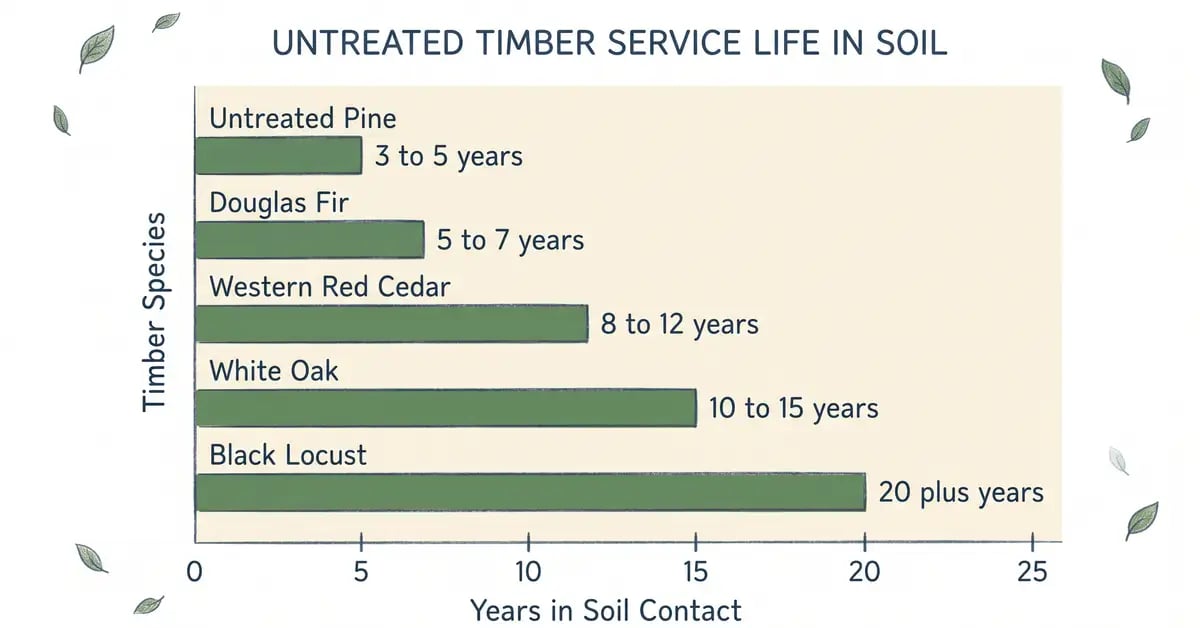
Service life in soil contact is far shorter than above-ground life, because the soil line is where moisture, oxygen and fungi meet. That is where every wooden bed fails first.
| Species | Soil contact life | Notes |
| Untreated pine or spruce | 3 to 5 years | Cheapest. Plan on replacing. |
| Douglas fir, untreated | 5 to 8 years | Moderately durable per extension guidance |
| Western red cedar, heartwood | 8 to 12 years | Retail boards often sapwood, far less |
| White oak | 10 to 15 years | Heavy, hard to work, high shrinkage |
| Modern treated lumber (ACQ/MCA) | 15 years or more | Manufacturer warranty basis |
| Black locust | 20 to 40 years | Exceptional, but hard to source and work |
Sources: durability classifications from the USDA Forest Products Laboratory; Douglas fir and treated lumber figures from Penn State Extension raised bed construction guidance. Real-world life varies widely with climate, drainage and board thickness.
Why Is Most Retail Cedar Not as Durable as You Expect?
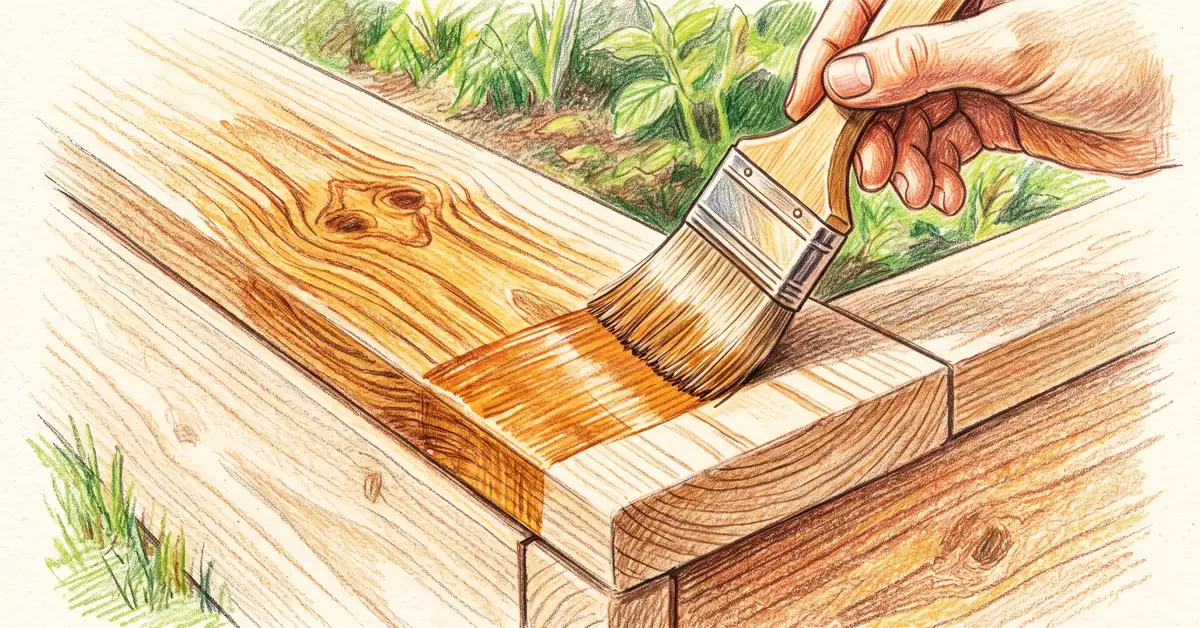
This is the single most useful thing on this page. Decay resistance in cedar comes from extractive compounds, principally thujaplicins, that the tree deposits in its heartwood, the dead inner wood. The sapwood, the living outer ring, contains almost none of them and rots at roughly the rate of pine.
The USDA Forest Products Laboratory rates western red cedar heartwood as resistant to decay. That rating does not transfer to a board sawn from sapwood, and cheap dimensional cedar at a big-box store is frequently sapwood or a mix. You can usually tell by colour: heartwood is a deeper reddish brown, sapwood is pale, almost cream.
So "I used cedar" is not the guarantee people take it for. If you are paying a premium for cedar and getting pale boards, you are paying for a name.
Why This Works: The Tree Already Solved This
Heartwood exists because the tree stops moving sap through its oldest wood and fills it with defensive compounds instead, turning structural deadwood into a pest and rot barrier. When you choose heartwood you are borrowing a defence the tree spent decades building. It is the same logic as choosing disease-resistant varieties rather than spraying: let the organism do the work.
Is Pressure Treated Wood Safe for Vegetable Beds?
Start with what changed. The arsenic-based CCA treatment that generated the original alarm was phased out of US residential lumber in 2003. Anything you buy today is treated with copper-based chemistry: ACQ (alkaline copper quaternary), MCA (micronized copper azole) or CA-B. Different chemical, different question.
The most useful quantified finding comes from University of Maryland Extension, which reports that MCA treated lumber raises soil copper concentrations by a minor amount, and only within about one inch of the bed edge. In a 4 foot wide bed, that is a narrow strip at the perimeter and nothing in the growing area.
UF IFAS Extension goes further and actively recommends it, advising modern ACQ lumber for longevity and cost effectiveness in raised beds. Oregon State University Extension publishes a dedicated bulletin (EM 9879) on pressure-treated wood for raised bed construction, and UMD Extension maintains a full guide to the safety of raised bed materials.
Copper is also a plant micronutrient, not an accumulative toxin in the mould of lead or arsenic, though it can build up and become a problem at high concentrations, which is a live issue in some organic systems that use copper fungicides.
Where We Would Still Be Cautious
Extension services are not unanimous, and the evidence base is smaller than the confidence of internet argument suggests. If you are growing for young children, gardening on already copper-loaded soil, or you simply do not want the question in your head, use untreated wood or metal. That is a legitimate call. What is not legitimate is repeating the arsenic warning, which stopped applying to new lumber over twenty years ago.
Does Wood Actually Work Out Cheaper Than Metal?
Over one build, usually yes. Over twenty years, usually not.
Take a 4 by 8 foot bed. Untreated pine is the cheapest possible build and will need replacing perhaps four or five times across twenty years. Retail cedar might need two or three replacements. A coated steel bed is a single purchase across the same period, and the better coatings are rated well beyond twenty years in service.
The hidden costs are the ones nobody prices: emptying and refilling a bed to replace rotten boards is a day's work, and it disturbs the soil life you spent years building. On a bed filled by the layered method, that disturbance is the real expense, not the timber.
| Material | Replacements in 20 yrs | Soil disturbance | Verdict |
| Untreated pine | 4 to 5 | Every rebuild | Cheapest per build, dearest overall |
| Retail cedar (sapwood) | 2 to 3 | Every rebuild | Pays a premium for a name |
| Cedar heartwood, 1 in plus | 1 to 2 | Occasional | Reasonable if you can source it |
| Treated lumber | 1 | Rare | Best value in wood |
| Coated steel bed | 0 | None | Lowest whole-life cost |
Replacement cycles derived from the service life figures above. Costs vary by region and timber market, so treat the ranking as more reliable than any absolute figure.
Decided against wood?
Our buyer's guide ranks metal beds on soil depth, coating life and whether they suit layered filling, rather than on assembly speed.
See the metal bed picksDo Liners, Oils and Charring Extend the Life of a Wooden Bed?
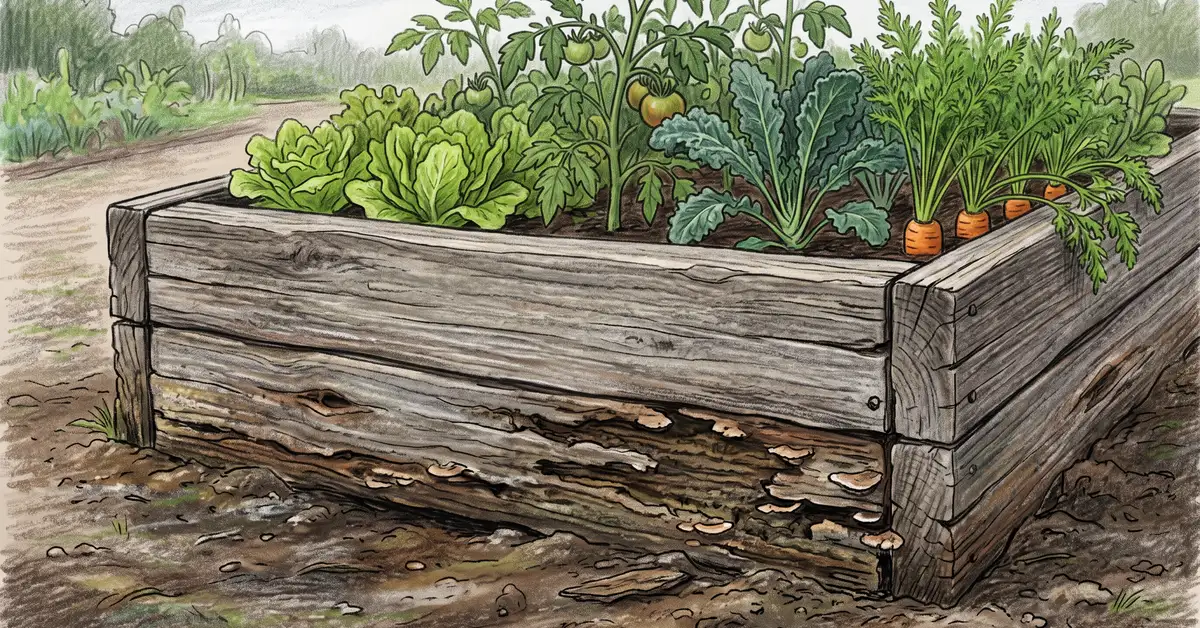
Plastic and pond liners. They do slow rot by keeping soil moisture off the timber, and they create two new problems: drainage is impeded where the liner wraps the base, and a fully lined bed is cut off from the soil below. If you line, line the inner faces only and leave the bottom open.
Landscape fabric. Not worth it inside a bed. It clogs, it blocks root and worm movement, and it does very little for the timber.
Raw linseed and tung oil. Food safe and pleasant to use. Realistically they slow surface weathering rather than preventing rot at the soil line, which is where beds actually fail. Expect to reapply annually, and expect modest gains.
Charring, shou sugi ban. The traditional Japanese technique of charring the surface does create a genuinely more decay and insect resistant layer, and unlike an oil it does not wash out. It is also the most labour intensive option here. If you enjoy the process, it is real. If you are looking for the efficient answer, it is not.
Key Takeaway
None of these treatments changes the outcome much. Board thickness and heartwood content do the heavy lifting. Two inch stock lasts far longer than half inch stock in the same species, and no coating closes that gap.
So Which Wood Should You Actually Use?
Here is the position, and it is not the consensus one.
For most people building a bed they will fill with good soil and top up annually, the wood choice is close to irrelevant, and the honest recommendation is thick untreated softwood, replaced when it fails. You will rebuild in six or seven years, the boards cost very little, and in the meantime the soil inside has been getting better every season. That soil, not the frame, is the asset.
If you want the bed to outlive that, do not upgrade the timber. Buy metal. The gap between good wood and coated steel is far wider than the gap between cheap wood and expensive wood.
Choose real cedar heartwood or black locust only if you want a wooden bed that lasts and you can actually source proper stock. Choose modern treated lumber if longevity matters and the copper evidence reassures you, which for most growing situations it reasonably should.
Whatever you choose, get the depth right, and let what you intend to plant decide it. Our guide to companion planting for raised beds covers how densely you can actually plant once the frame is built. An 11 inch bed in beautiful cedar still will not grow decent carrots, and our guide to filling a raised bed explains why depth also decides what the fill costs you.
Frequently Asked Questions
Is pressure treated wood safe for garden beds?
Modern pressure treated lumber uses copper-based preservatives such as ACQ and MCA, not the arsenic-based CCA that was phased out of US residential lumber in 2003. University of Maryland Extension reports that MCA lumber raises soil copper only slightly and only within about an inch of the bed edge. UF IFAS Extension recommends modern ACQ lumber for raised beds on longevity and cost grounds. If you would rather avoid the question, untreated wood and metal are both fine alternatives.
What is the best wood for raised garden beds?
If you can source genuine heartwood, western red cedar or black locust last longest untreated, with black locust running decades in soil contact. For most gardeners, thick untreated softwood replaced every six or seven years is the sensible economic choice, because the soil inside the bed is the real asset rather than the frame. Modern treated lumber is the best value if you want longevity in wood. Board thickness matters more than species: two inch stock far outlasts half inch stock.
Why does my cedar raised bed rot so fast?
Almost certainly because it is sapwood rather than heartwood. Cedar's decay resistance comes from extractive compounds concentrated in the dead inner heartwood, and the pale outer sapwood has very little of it, rotting at roughly the rate of pine. Retail dimensional cedar is often sapwood or mixed. Heartwood is a deeper reddish brown, sapwood is pale cream. Thin boards also fail much faster than thick ones regardless of species.
Can you use pressure treated wood for raised garden beds?
Yes, and at least one US extension service actively recommends it. The chemistry changed in 2003 from arsenic-based CCA to copper-based ACQ, MCA and CA-B. Measured copper migration is minor and confined to roughly an inch from the board. Extension services are not unanimous, so if you are growing for small children or gardening on soil already high in copper, use untreated wood or metal instead. The old arsenic warning no longer applies to new lumber.
Should I line a wooden raised bed with plastic?
Line the inner side faces if you want, but never the bottom. A side liner keeps soil moisture off the timber and slows rot. Lining the base seals the bed off from the ground below, blocks drainage, and cuts the soil off from worms and fungal networks. If burrowing pests are the concern, galvanised hardware cloth across the base solves that without sealing the bed.
How thick should raised bed boards be?
Thicker than you think. Half inch boards are a false economy and bow outward under the pressure of wet soil. Three-quarter inch is a workable minimum, one inch is comfortable, and two inch stock will outlast a thinner board of a more durable species. If you are choosing between thin cedar and thick pine at similar prices, take the thick pine.
Get the Weekly Dig
One practical permaculture guide a week, written for gardeners who do this on weekends: raised beds, from fill to first harvest. Free, no spam, unsubscribe any time.
Join the Weekly DigResources
- University of Maryland Extension: Growing Vegetables in Raised Beds, MCA copper findings
- UF IFAS Extension: Gardening in Raised Beds (ENH1211/EP472)
- USDA Forest Products Laboratory: wood durability and preservation research
- Penn State Extension: How to Construct a Raised Bed in the Garden
- Oregon State University Extension EM 9879: Pressure-Treated Wood for Raised Bed Construction
- University of Maryland Extension: The Safety of Materials Used for Building Raised Beds
- Oklahoma State University Extension: Hugelkultur for gardening