
What Is a Bare Root Fruit Tree, and Why Buy One?
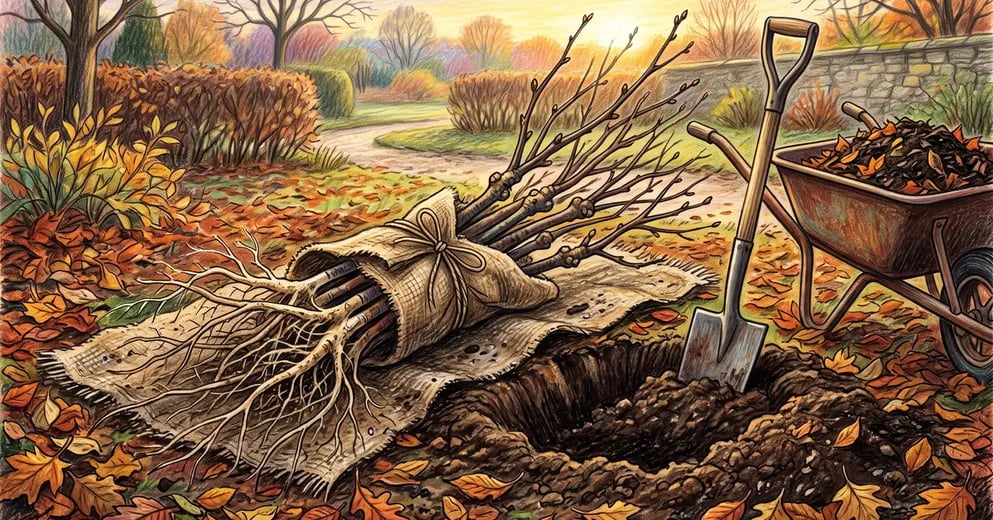
A bare root tree is a dormant tree lifted from the nursery field with no soil around its roots, shipped in a bag or box, and planted while it is still asleep. It looks like a dead stick. It is not, and it will usually outgrow the potted tree beside it.
Three reasons to buy bare root. It costs less than the same tree in a container. You can see the entire root system before you plant, which is impossible with a pot. And the roots arrive uncoiled and spread out rather than wound into a spiral.
That last point matters more than most gardeners realise. The Arnold Arboretum's work on circling roots in container stock describes what happens: roots hit the pot wall, deflect sideways, follow the contour, and lignify in that shape. The deformity is then permanent, and years later a girdling root can strangle the trunk it belongs to.
What this guide covers:
- When to plant bare root by climate, and when fall is the wrong call
- The exact planting measurements extension services publish
- Why grass around the trunk costs you a year of growth
- The four things that actually kill a first-year tree
Key Takeaway
Bare root planting is not harder than container planting. It is less forgiving of timing and less forgiving of dry roots. Get the tree in the ground while dormant, keep the roots wet until they are covered, and the rest is straightforward.
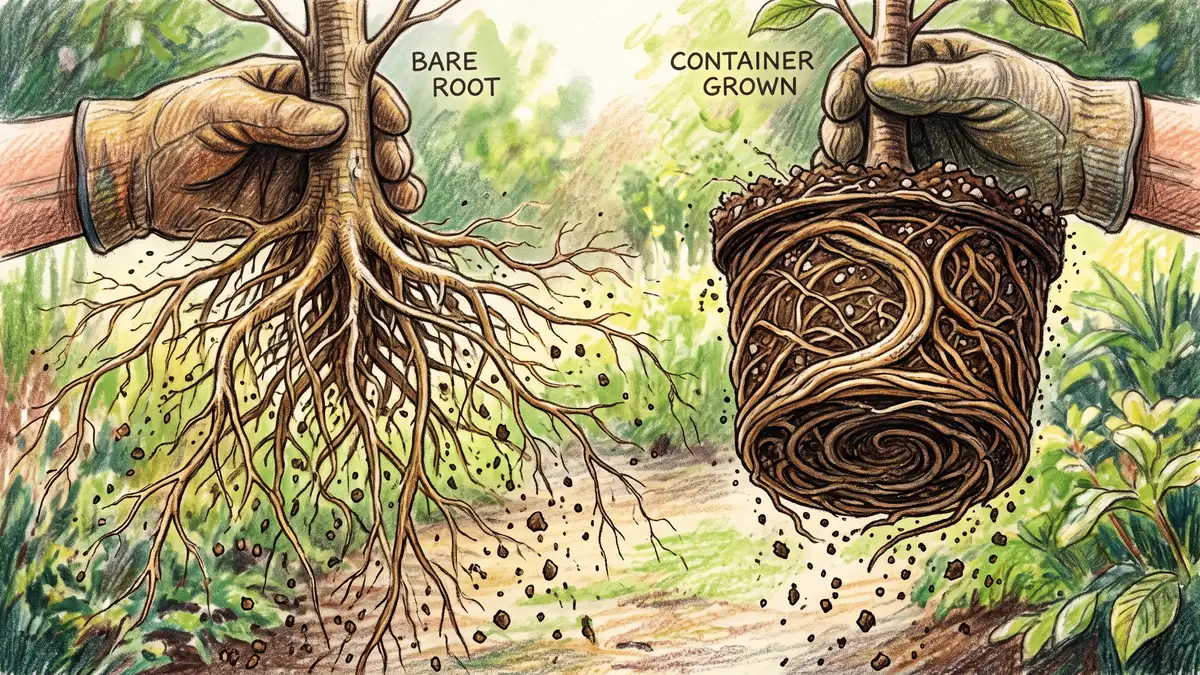
If you do buy container stock, correct the roots before planting rather than dropping the ball in whole. Research summarised by the Arnold Arboretum found that shaving off the outer circling roots and the dense mat at the base of the pot stimulated new outward growth and improved stability, at no cost to the tree. Teasing them apart by hand beats nothing.
When Should You Plant a Bare Root Tree?
During dormancy, and which end of dormancy depends on your winters. Bare root stock ships from roughly November to March because that is when the tree can survive having its roots stripped.
Oregon State's extension answer to whether to plant fruit trees in fall or spring is the clearest published guidance. Fall works once the weather has cooled, around October, and only once the tree has dropped its leaves, because a dormant tree carries higher carbohydrate reserves for spring. But early spring, February or March, is the ideal window for bare root, and spring is explicitly preferred in colder inland regions.
| USDA zone | Better window | Why |
| Zones 4-5 | Early spring | Frost heaving and hard freezes before roots establish |
| Zone 6 | Early spring, fall possible | Spring safer inland, fall workable in milder pockets |
| Zones 7-8 | Late fall or winter | Roots grow through mild winters, ahead of spring drought |
| Zone 9 | Winter | Dormancy is short, plant during it |
Sources: OSU Extension on fall versus spring planting, Penn State on spring bare root planting
Penn State is direct about the cold end: plant in early spring, once frost has left the ground and before bud break. In zone 4 and 5 winters, a newly planted tree can be heaved out of the ground by repeated freeze and thaw before it anchors, and rodents working under snow will find a young trunk.
Variety choice interacts with this. Every fruit variety has a chilling hour requirement, the hours below about 45°F it needs to break dormancy, and Mississippi State's chilling hour tables are the standard reference. Buy a high-chill variety in a mild zone and it will never fruit reliably, whatever you do at planting.
How Do You Plant One Correctly?
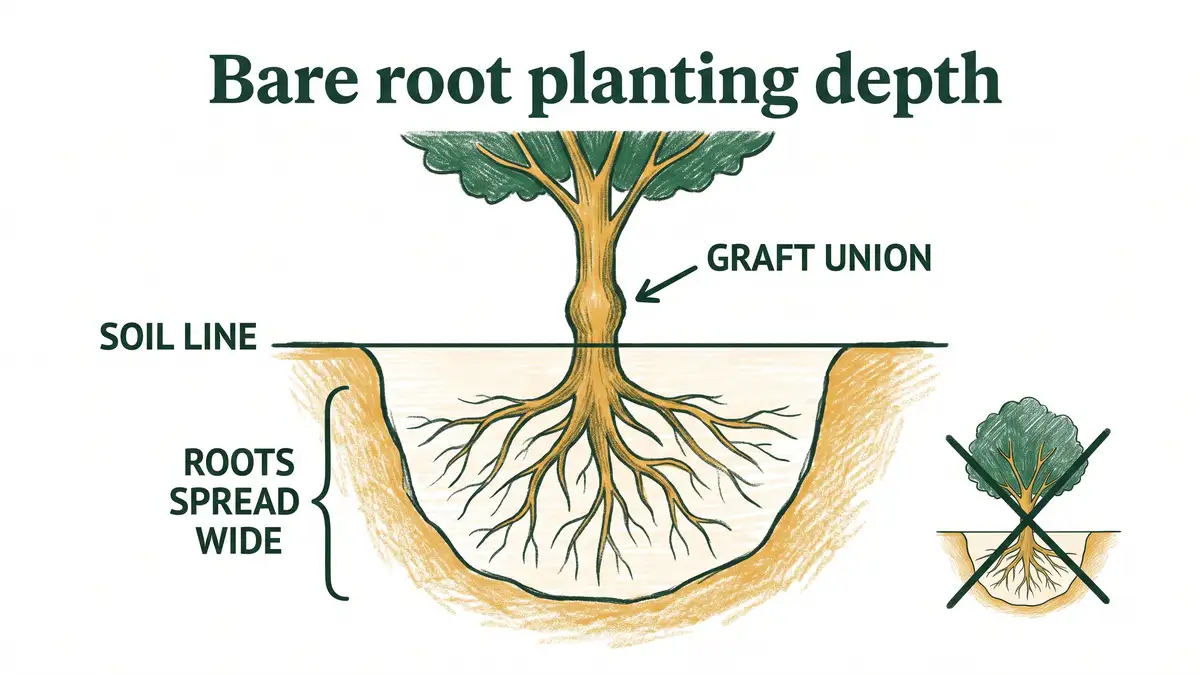
Wide and shallow, with the graft union proud of the soil. Almost every published failure traces back to a hole that was too deep and too narrow.
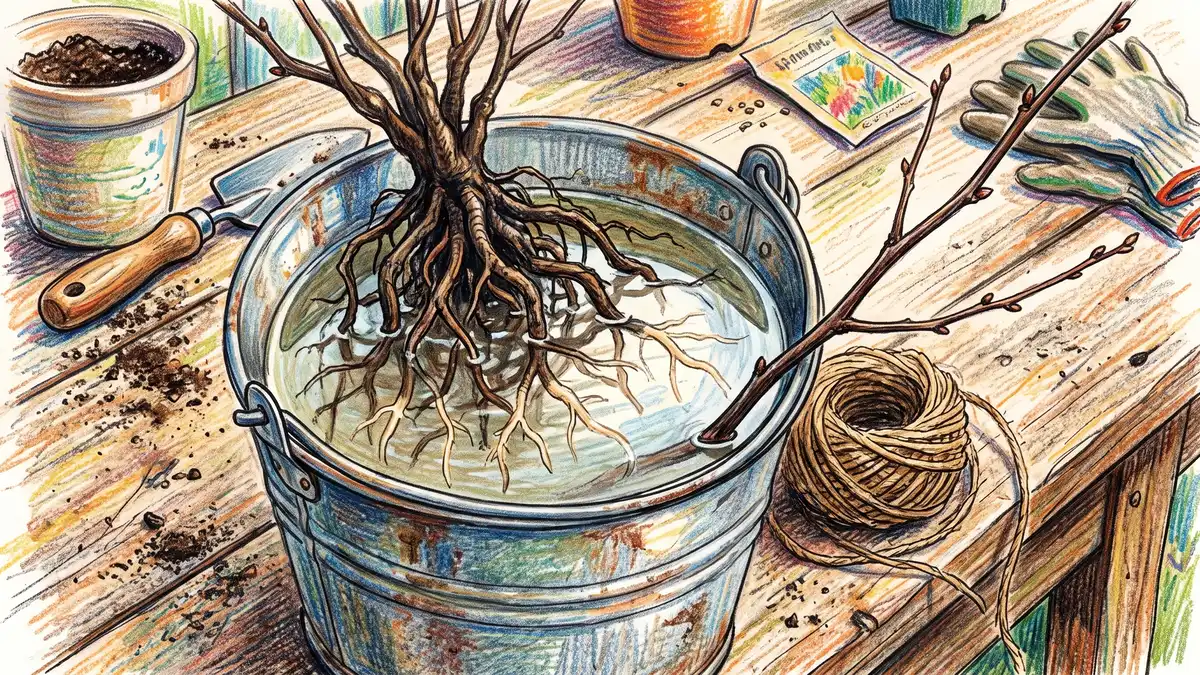
Soak the roots, 1 to 24 hours
UC Master Gardeners give this window. Trim any broken, kinked or diseased roots while they are in the bucket. Do not leave the tree standing in water for days.
Test drainage, then dig wide
Fill the hole with water first: it should drain within 3 to 4 hours. Then dig 2 to 3 times as wide as the roots spread, and only as deep as the longest root. Never deeper.
Build a cone and drape the roots over it
Firm a mound of native soil in the centre, spread the roots down and outward over it, and check the height. The tree should finish sitting 1 to 2 inches above the surrounding grade.
Backfill with what came out, and no fertilizer
Native soil only. NC State is blunt: do not add fertilizer to the hole, because it burns young roots. Water in stages to collapse air pockets rather than stamping the soil down.
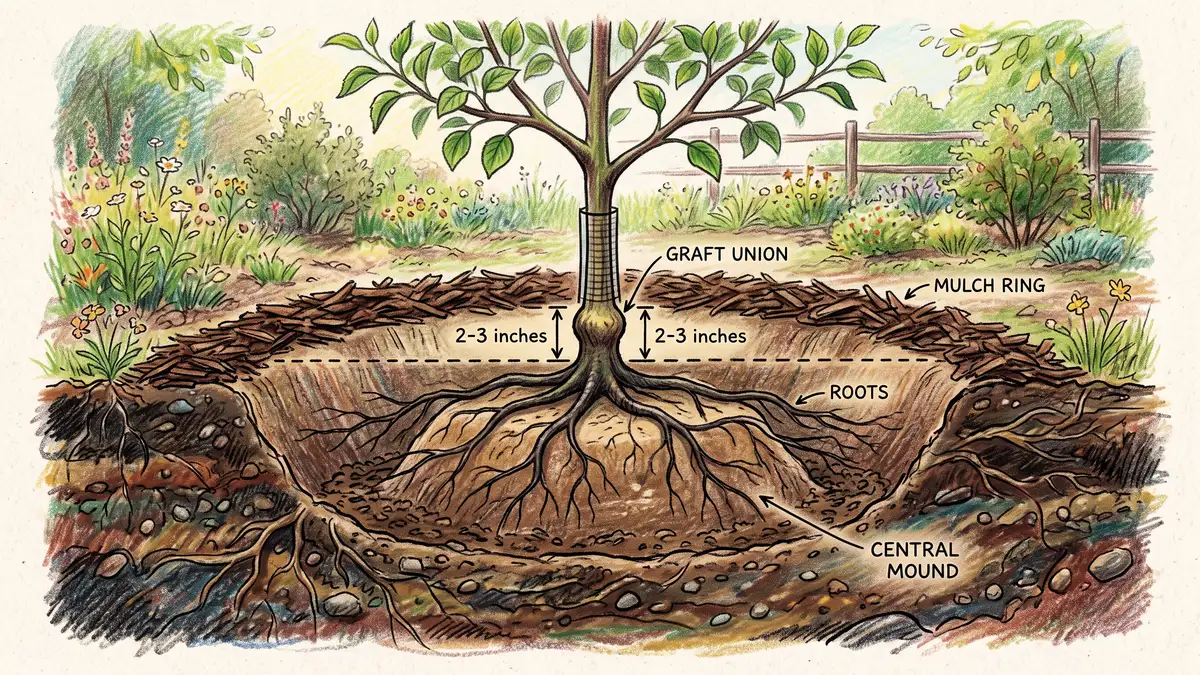
Graft height is the number to get right. NC State specifies the union at least 2 to 3 inches above soil after settling, UC Master Gardeners in Alameda County say 2 to 4 inches, and Washington State's commercial guidance goes to 4 to 6 inches above the mound. Bury the union and the scion roots into the soil, which cancels the rootstock. Your dwarf apple quietly becomes a full-size tree.
Common Mistake to Avoid
Amending the backfill with compost or potting mix. It creates a rich pocket the roots circle inside rather than leaving, producing the same girdling problem you bought bare root to avoid. Backfill with the soil you dug out. Put the compost on top as mulch where it belongs.
Get Our Free Companion Planting Chart
Join 10,000+ gardeners getting weekly tips on what to plant together, soil health, and permaculture techniques.
Send Me the ChartWhat Does the First Year Actually Require?
Water, a mulch donut, and keeping grass away from the trunk. The grass part is the one people skip, and it is the one with the hardest numbers behind it.
Utah State Extension reports trials in which grass growing near apple trunks delayed the onset of fruiting and cut vegetative growth compared with trees kept in a clear zone. Grasses outcompeted broadleaf weeds, and adding more nitrogen did not fix it. The research-backed answer is a vegetation-free radius of 2 to 3 feet, with no measurable benefit from going wider.
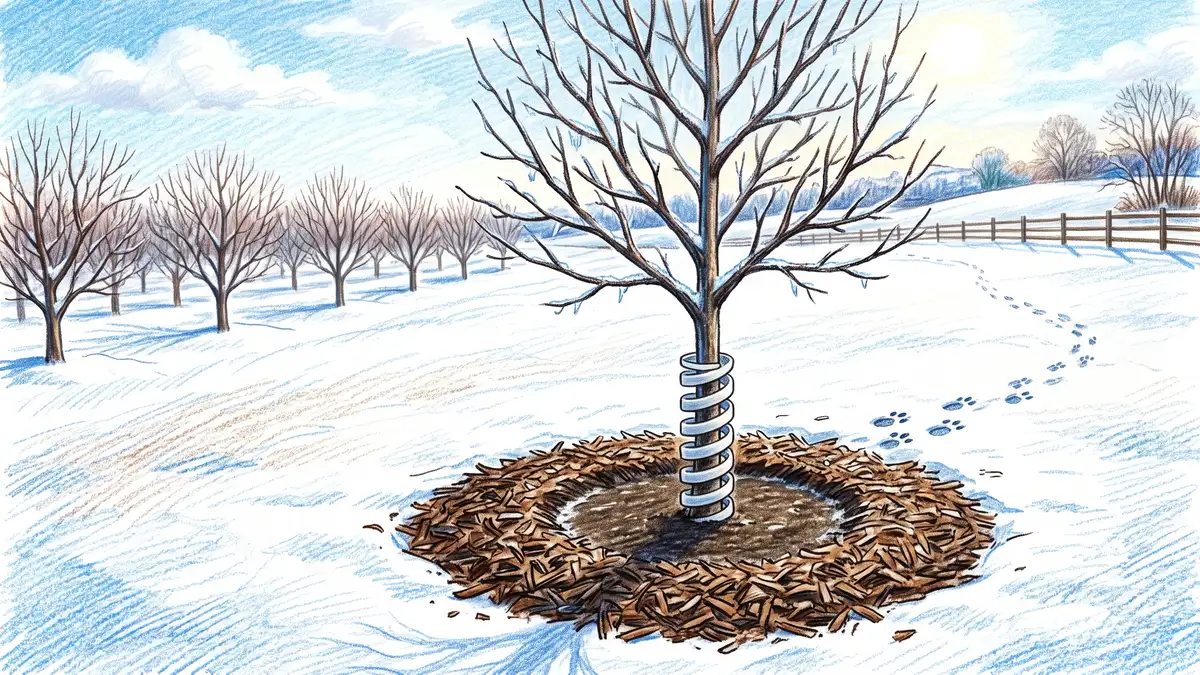
Mulch is the easiest way to hold that zone. UC Master Gardeners specify 3 to 4 inches of compost or wood chips, with a 4 to 6 inch gap left bare around the trunk so the crown does not rot. Utah State adds a warning specific to dwarf apples: mulch piled against the trunk can trigger scion rooting and you lose the dwarfing. Our guide to wood chip mulch covers sourcing, and the general fall mulching depths and timing apply here too.
For watering, scoop a shallow moat 8 to 12 inches out from the trunk, or as far as the root tips reach, and fill that rather than pouring at the stem. It puts water where the new fibrous roots are.
Why This Works: Feeding the Edge, Not the Trunk
A tree does not absorb water at the trunk. It absorbs at the fine root tips, which are already at the edge of the old root spread and moving outward. Watering and mulching in a ring rather than a heap follows the roots instead of the stem. This is the same reasoning behind guild planting in a food forest: place the supporting plants where the tree's roots and the guild's roots actually meet, out at the drip line, not crowded against the trunk.
What Kills a First-Year Tree?
Four things, in roughly this order.
Dry roots. Washington State calls desiccation the primary cause of early die-off in newly arrived nursery trees, and recommends keeping stock under sprinklers for 24 hours before planting, or up to 7 to 10 days if planting is delayed. Being straight about the evidence: no extension source publishes a survival time for exposed roots, because it depends on wind, sun and humidity. Treat the roots as if they cannot tolerate a single dry hour and you will not go wrong.
Planting too deep. Buried unions and buried root collars cause crown rot and cancel the rootstock. If the tree sinks after backfilling, lift it and rebuild the cone.
Rodents and deer. A spiral trunk guard costs a few dollars and stops voles and rabbits ring-barking the tree under snow. Fit it at planting, not after the damage.
Grass, and impatience. Keep the clear zone. And strip the fruit in the first year or two: a young tree putting energy into a handful of apples is not putting it into roots.
Key Takeaway
The extension consensus on the first year is almost entirely about restraint. No fertilizer, no soil amendments in the hole, no fruit, no deep planting. What you add is water, mulch and a trunk guard. Everything else is the tree's job.
Frequently Asked Questions
When should I plant fruit trees in zone 5 or zone 6?
Early spring in both, once the frost has left the ground and before the buds break. Penn State's guidance for bare root stock is exactly that window. Fall planting is riskier in these zones because repeated freeze and thaw can heave a poorly anchored tree out of the ground, and voles working under snow cover will find a young trunk. In zone 6 a mild, sheltered site can take a late-fall planting, but spring is the safer default. In zones 7 and warmer, late fall and winter planting is the better option.
How long can bare root trees stay out of the ground?
Not long, and the roots must never dry. Oregon State advises planting within one to three days of arrival, or storing the tree in loose damp soil or sawdust if you cannot. NC State recommends heeling the tree into a shallow trench of soil for up to a month if planting is genuinely delayed, and warns specifically against parking it in a bucket of water for long periods. Washington State keeps commercial stock under sprinklers for 24 hours before planting and up to 7 to 10 days if needed.
Should I soak bare root trees before planting?
Yes. UC Master Gardeners give a window of 1 hour to 24 hours in a container of water immediately before planting, and that is the time to trim off any broken, kinked or diseased roots with clean secateurs. Do not extend this into days of storage, because roots sitting in still water go anaerobic. Soak, trim, plant, in one session.
How deep should the graft union sit?
Above the soil, always, and by a margin that survives settling. NC State specifies at least 2 to 3 inches above the final soil level, UC Master Gardeners in Alameda County say 2 to 4 inches, and Washington State's orchard guidance goes to 4 to 6 inches above the mound. Bury it and the scion sends out its own roots, which overrides the rootstock's size control and disease resistance. That is how a dwarf tree becomes a 25-foot problem.
Should I put compost in the planting hole?
No. Backfill with the soil you dug out. Amended backfill creates a soft, rich pocket that roots prefer to circle inside rather than pushing into the surrounding ground, which recreates the girdling problem. NC State is explicit that fertilizer in the hole burns young roots. Add organic matter on the surface as mulch instead, where it feeds the soil the roots are growing into. Check drainage before you dig rather than trying to fix it with amendments.
Can I plant bare root trees into a food forest guild straight away?
Plant the tree first and keep a 2 to 3 foot clear radius for the first two seasons. Utah State's research shows grass and herbaceous competition delays fruiting and slows growth, and a young whip loses that contest. Bring the guild in from year three outward as the canopy widens. Our guides to the seven food forest layers and to chestnut spacing and yield cover how to sequence that without crowding the tree you just planted.
Ready to Grow Smarter?
Get our free 20-page beginner's guide to backyard food forests. Two printable worksheets, a year-by-month food-forest calendar, and a curated reading path.
Read the Free GuideResources
- UC Master Gardeners Sonoma: Planting Bare-Root Fruit Trees
- UC Master Gardeners Alameda County: Planting Fruit Trees
- NC State Extension: Production Guide for Smaller Orchard Plantings
- WSU Tree Fruit: Orchard Establishment
- OSU Extension: Should I Plant Fruit Trees in Fall or Spring?
- OSU Extension EC 1438: Selecting, Planting and Caring for a New Tree
- Penn State Extension: Planting Bare-Root Tree Seedlings in Spring
- Utah State Extension: Managing Vegetation Around Fruit Trees
- Mississippi State Extension: Chilling Hour Requirements of Fruit Crops
- Arnold Arboretum: Untangling the Issue of Circling Roots