
What Is an Edible Hedgerow?
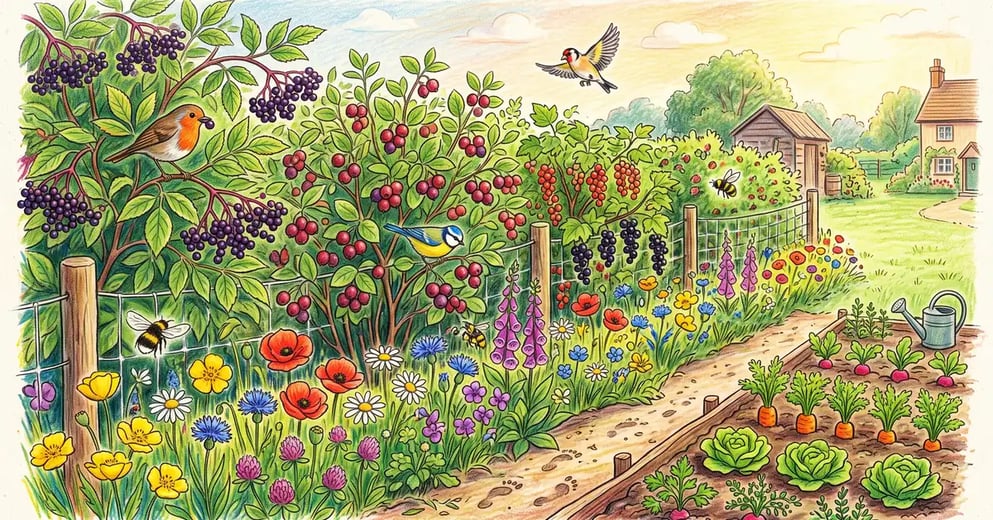
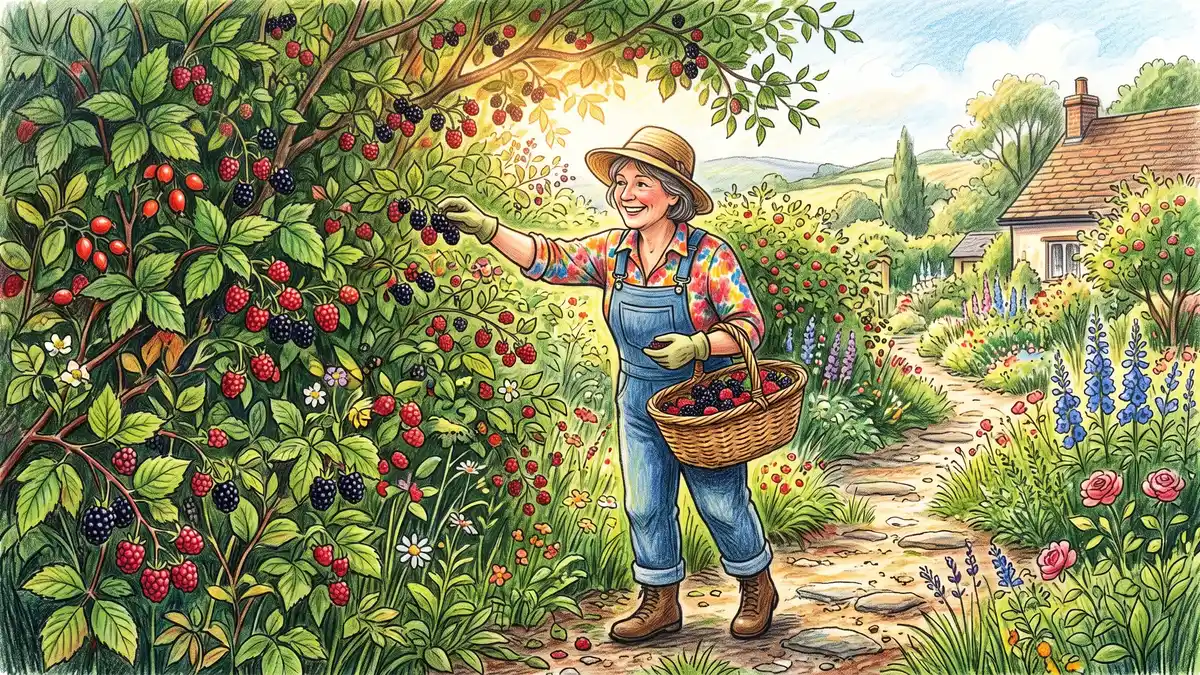
Think of an edible hedgerow as companion planting stretched into a line. Instead of pairing two plants in a bed, you build a dense, mixed row of shrubs and small trees along a garden edge, and every plant pulls double or triple duty. You get berries and nuts for the kitchen, flowers for pollinators, shelter for birds, a windbreak for your vegetables, and healthier soil, all from the same strip of ground. how to plant a hedgerow
The Xerces Society and USDA define a hedgerow as dense perennial vegetation planted in a line for conservation benefits. An edible hedgerow just adds one rule: choose species that also feed you. It's one of the highest-return things a weekend gardener can plant, because a boundary that would otherwise be lawn or fence becomes a working ecosystem. Let's break down why it works and how to plant one.
Here's what this guide covers:
- Why a hedgerow works like companion planting for your whole garden
- The best edible hedgerow plants for US gardens
- How to design the layers and space the plants
- The wind, wildlife, and carbon bonuses, plus which plants to avoid
Key Takeaway
An edible hedgerow is a living guild in a line. Mix berry shrubs, a nut tree or two, and flowering ground plants, and the row will feed you while it pulls pollinators and pest-eating insects toward your vegetable beds. It's the most productive fence you'll ever plant.
Why a Hedgerow Is Companion Planting in a Line
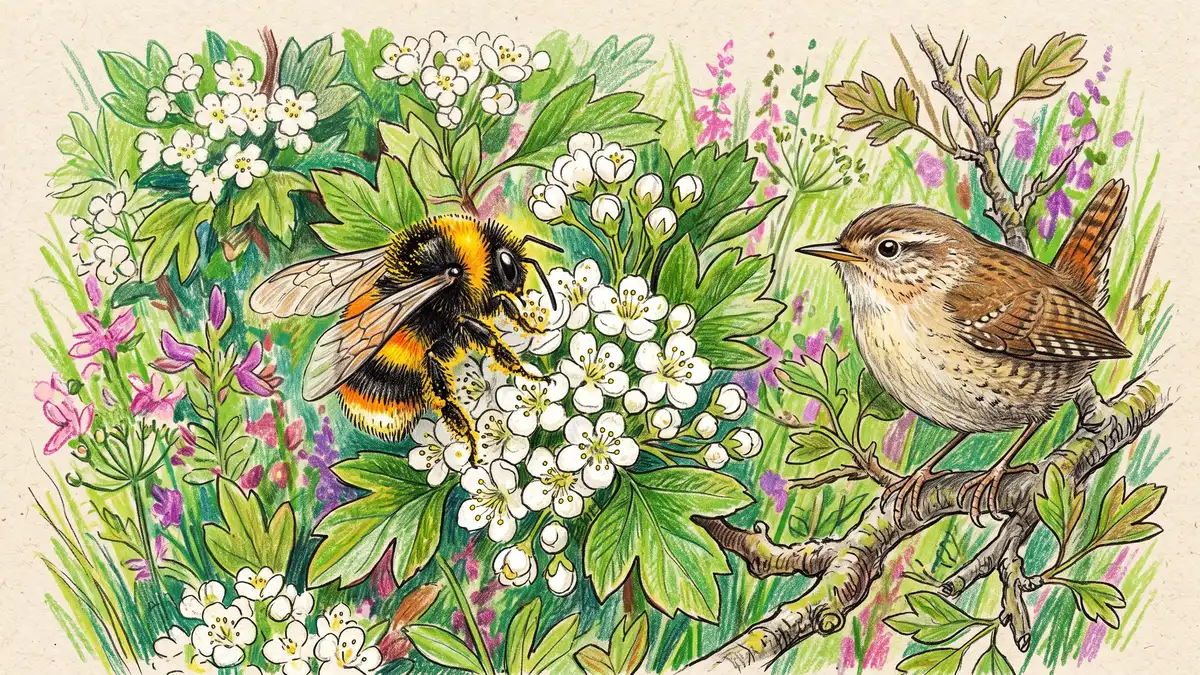
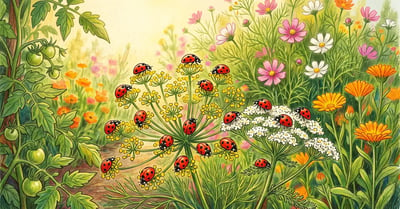
The magic is that a hedgerow doesn't just help itself; it helps the garden next to it. A landmark study in California's Central Valley found that restored hedgerows had far more native bees than weedy field edges, with uncommon bee species roughly seven times more abundant on hedgerow flowers. Crucially, the hedgerows acted as net exporters, pushing native bees out into the adjacent crop fields rather than just concentrating them.
That's the companion-planting effect at landscape scale. Plant a flowering, fruiting hedge on your garden's edge and you're subsidizing pollination and pest control for everything growing nearby. UC ANR research notes that hedgerows attract more beneficial insects than pests, reduce aphid pressure, and lower how often fields hit spray thresholds. It's the same logic behind a good companion planting plan, just perennial and permanent.
Why This Works: The Edge Effect
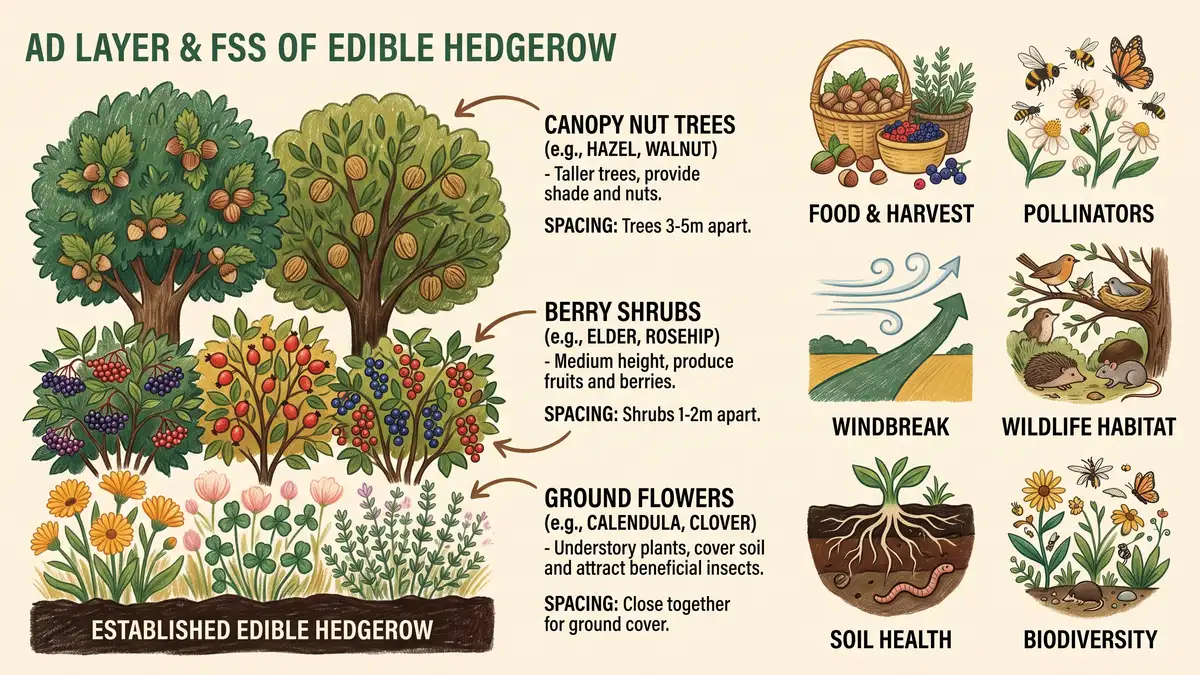
In permaculture, the boundary between two systems, called the edge, is the most productive zone. A hedgerow deliberately maximizes edge: it creates a tall, dense, flowering wall next to open garden, and life concentrates along that seam. Sunlight, shelter, nectar, and nesting sites all stack in one narrow band, which is why a single strip of hedge can out-produce and out-support the same area of lawn many times over.
What Are the Best Edible Hedgerow Plants?
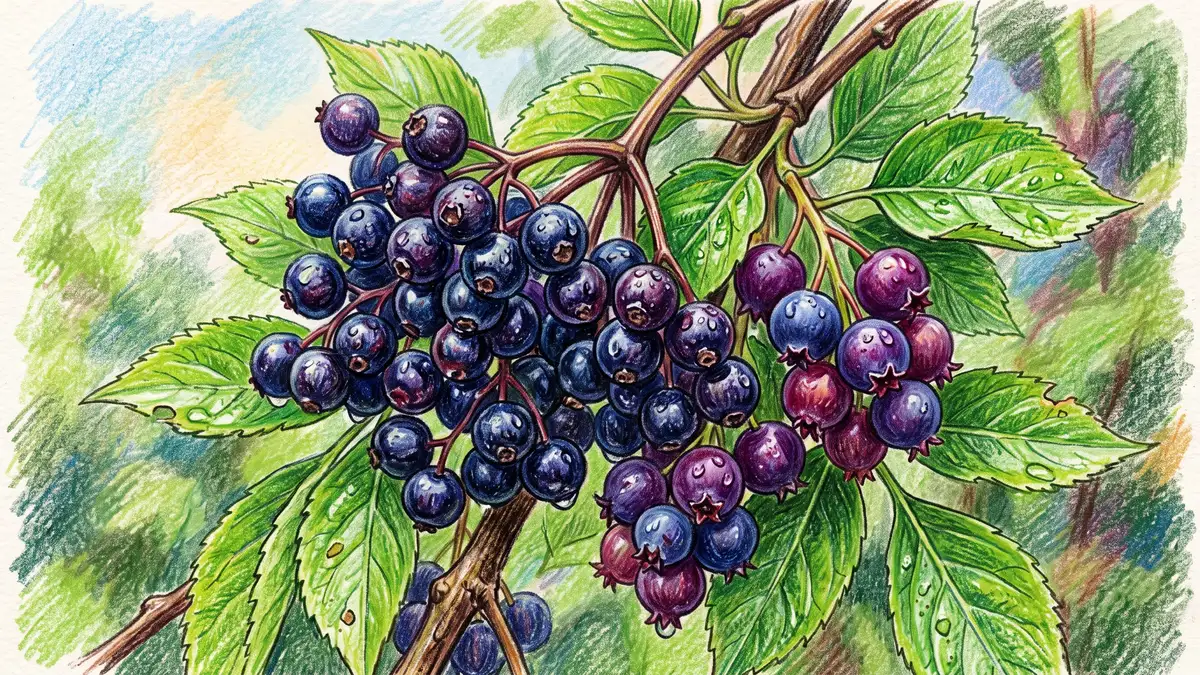
Great hedgerow plants earn their place three times over: food for you, food for wildlife, and structure for the hedge. Native and well-adapted shrubs are ideal because they thrive with little care and feed local pollinators and birds. Extension favorites like common elderberry and red chokeberry deliver berries for the kitchen and nectar and fruit for wildlife at the same time.
| Plant | Edible Yield | Hedge Role |
| Elderberry (Sambucus) | Berries for syrup, flowers for cordial | Fast, tall, big nectar source |
| Serviceberry (Amelanchier) | Sweet early-summer berries | Spring bloom, bird magnet |
| Aronia / chokeberry | Antioxidant-rich berries | Tough, native, four-season interest |
| Hazelnut (Corylus) | Nuts | Tall backbone, coppices well |
| Currants & gooseberries (Ribes) | Berries fresh or for jam | Shade-tolerant mid layer |
| Rugosa rose | Vitamin-C-rich rose hips | Dense, thorny, salt-tolerant |
Sources: Missouri Dept. of Conservation, University of Maryland Extension, Oregon State Extension (EM8721).
How Do You Design and Plant a Hedgerow?
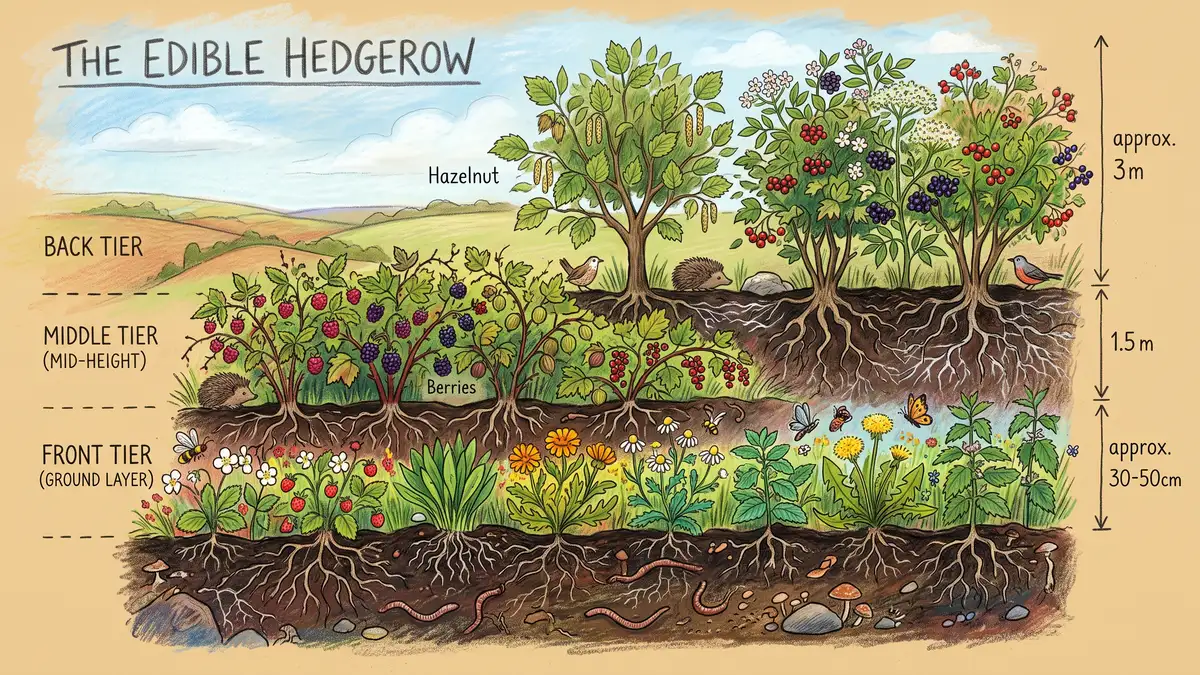
The key to a productive hedge is layering, just like a food forest. Stack a tall backbone (a nut tree or big shrub like elderberry), a middle tier of berry bushes, and a flowering ground layer. Different bloom and fruit times mean nectar and harvest spread across the whole season, and the varied heights create the dense structure wildlife needs. For more on vertical layering, see our guide to the food forest.
Pick your line and mix
Choose a sunny edge and select 4 to 8 species suited to your region. Aim for a mix of heights and staggered bloom and fruit times so something is always flowering.
Space and stagger
Plant shrubs roughly 3 to 6 feet apart, and for a fuller hedge use a staggered double row. Give nut trees more room. Denser planting fills in faster.
Plant bare-root in the dormant season
Set out bare-root or potted plants in late fall to early spring while they're dormant. It's cheaper, and roots establish before the first summer.
Mulch and water the first years
Mulch each plant to suppress weeds and hold moisture, and give about 1 inch of water per week through the first two to three growing seasons. After that, the hedge is largely self-sufficient.
Beyond Food: Wind, Wildlife, and Carbon
The harvest might be the reason you plant a hedge, but the side benefits are what make it a genuine upgrade to your whole property. As a windbreak, a hedge shelters the ground downwind for roughly 8 to 12 times its height, and Penn State Extension notes a well-designed one can cut wind speed by as much as 75%. That means less wind stress on your vegetables, less soil drying, and a warmer microclimate on the sheltered side.
On biodiversity, hedgerows are heavyweights. UK research links them to at least 130 priority species, including birds, mammals, and dozens of invertebrates, and the Woodland Trust estimates hedgerows shelter millions of breeding birds. They also bank carbon: research on hedgerow soils found about 31% more soil organic carbon beneath hedges than in adjacent open fields.
Common Mistake to Avoid
Planting an aggressive invasive by accident. Some plants once pushed for hedges, like autumn olive, multiflora rose, and certain privets, now escape and choke out native habitat across much of the US. Skip them. Choose regionally native or well-behaved species instead, and check your local extension's recommended and prohibited plant lists before you buy. The whole point of a hedge is to add life, not spread a problem.
Key Takeaway
Design your hedge in layers, space shrubs 3 to 6 feet apart, plant bare-root in the dormant season, and choose native edibles over invasives. Within a few years you'll have a low-maintenance, food-producing, pollinator-exporting permaculture edge doing the work of a fence, a feeder, and a windbreak at once.
Frequently Asked Questions
What is an edible hedgerow?
An edible hedgerow is a dense, mixed row of shrubs and small trees planted along a boundary, chosen so that many of the plants produce food, berries, nuts, hips, or edible flowers, while also supporting wildlife. It's essentially companion planting stretched into a line: instead of one boundary function, the hedge delivers food, pollinator habitat, a windbreak, wildlife shelter, and soil-building all at once. Conservation groups like the Xerces Society and USDA promote hedgerows for their ecological benefits, and the edible version simply adds species that feed the gardener too.
What plants make a good edible hedge?
Look for tough, regionally adapted shrubs that fruit well and support wildlife. Reliable choices in much of the US include elderberry, serviceberry, aronia (chokeberry), hazelnut, currants and gooseberries, rugosa rose for hips, and highbush blueberry where the soil is acidic. Mix heights and bloom times so the hedge flowers and fruits across the season. Favor native or well-behaved species, and avoid invasives like autumn olive and multiflora rose. Your local cooperative extension can tell you which of these thrive, and which to avoid, in your specific region.
How far apart should I space hedgerow plants?
For a dense, fast-filling hedge, plant most shrubs about 3 to 6 feet apart, and give larger species like hazelnut more room. Many gardeners use a staggered double row to create a wider, thicker screen with better wildlife habitat and wind protection. Closer spacing knits together sooner but needs more plants; wider spacing is cheaper but takes longer to fill in. Whatever spacing you choose, plan for the mature width of each species so the hedge doesn't overwhelm the beds or path beside it.
When is the best time to plant a hedgerow?
Plant during the dormant season, from late fall through early spring, depending on your climate. Dormant bare-root plants are much cheaper than potted stock and establish roots before their first summer, which improves survival. Mulch each plant well to suppress weeds and hold moisture, and provide about an inch of water per week through the first two to three growing seasons while roots develop. After establishment, a hedgerow of well-chosen species needs very little supplemental water or care.
Will a hedgerow actually help my vegetable garden?
Yes, and that's the best part. Research shows hedgerows act as net exporters of native bees into adjacent fields, meaning the pollinators the hedge attracts spill over to visit your vegetable and fruit crops. Hedgerows also host beneficial insects that prey on garden pests like aphids, and they buffer wind, which reduces plant stress and soil drying nearby. Positioned along the edge of your garden, an edible hedge functions like a permanent companion planting that quietly boosts pollination, pest control, and microclimate for everything growing beside it.
Get the Weekly Dig
One practical permaculture guide a week, written for gardeners who do this on weekends: food forest and guild designs that produce. Free, no spam, unsubscribe any time.
Join the Weekly DigResources
- Xerces Society: Hedgerow Planting for Pollinators
- USDA NRCS: Hedgerow Planting Conservation Practice Standard 422
- Ecological Applications: Hedgerows Export Native Bees to Adjacent Fields
- UC ANR: Hedgerows and Pollinators
- Penn State Extension: Windbreaks and Shade Trees
- Oregon State University Extension: Hedgerows (EM8721)
- Soil Carbon Sequestration Potential of Hedgerows
- Hedgelink: Hedgerow Biodiversity
- University of Maryland Extension: Red Chokeberry