
Sage is a quiet workhorse. It looks like a sleepy gray-green shrub at the edge of the bed, but the volatile oils baked into every leaf are what cabbage moths, carrot rust flies, and spider mites refuse to fly through. Plant sage beside the right crops and you get pest protection plus a pollinator magnet plus a kitchen herb that lasts 5 to 10 years. Plant it beside the wrong crops and the same chemistry stunts your cucumbers.
The chemistry behind sage as a pest repellent
Sage produces essential oils that volatilize from the leaf surface and saturate the air immediately around the plant. The dominant compounds are alpha-thujone, beta-thujone, camphor, 1,8-cineole, and borneol. Penn State Extension and UC ANR reference peer-reviewed studies showing these monoterpenes interfere with the olfactory cues that female cabbage moths (Pieris rapae) and carrot rust flies (Psila rosae) use to locate egg-laying sites. The same compounds repel spider mites, slugs, and some aphid species.
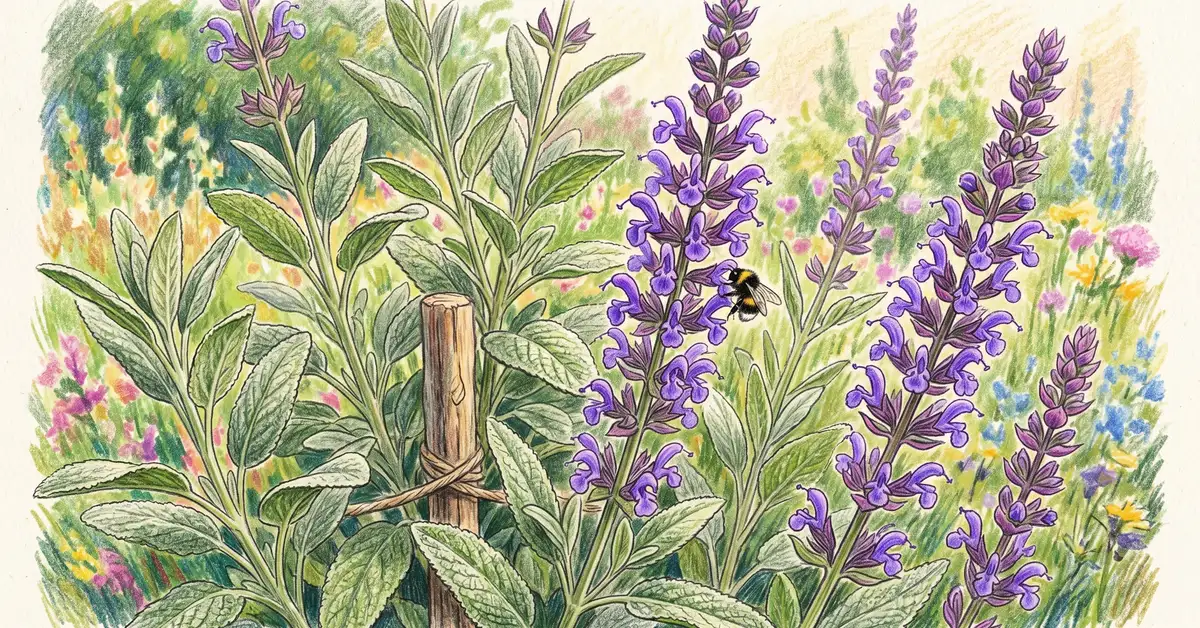
Effective range is small. The pest-repellent zone extends roughly 12 to 24 in around an established sage plant. This is why sage works as a border or as scattered single plants rather than a single sage at the bed corner doing all the work. Two or three sage plants per 4 by 8 ft bed get the job done. The repellent effect is also stronger in the warm sunny conditions that release the oils most readily; cool damp weather reduces the effect.
The same chemistry also makes sage slightly allelopathic. The root exudates and the volatile oils that protect sage from pests can suppress germination and growth of certain neighbors, which is why bed design matters.
The 5 best companions for garden sage
Why this works (the permaculture principle)
Permaculture treats every plant as a function in a polyculture. Sage's primary functions are pest deterrence and pollinator support. Pair it with crops that benefit from those services and that share sage's preference for full sun and sharp drainage, and the polyculture writes itself. The same logic underpins our broader companion planting framework.
Brassicas (cabbage, broccoli, cauliflower, kale, Brussels sprouts)
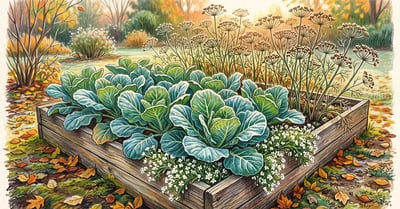
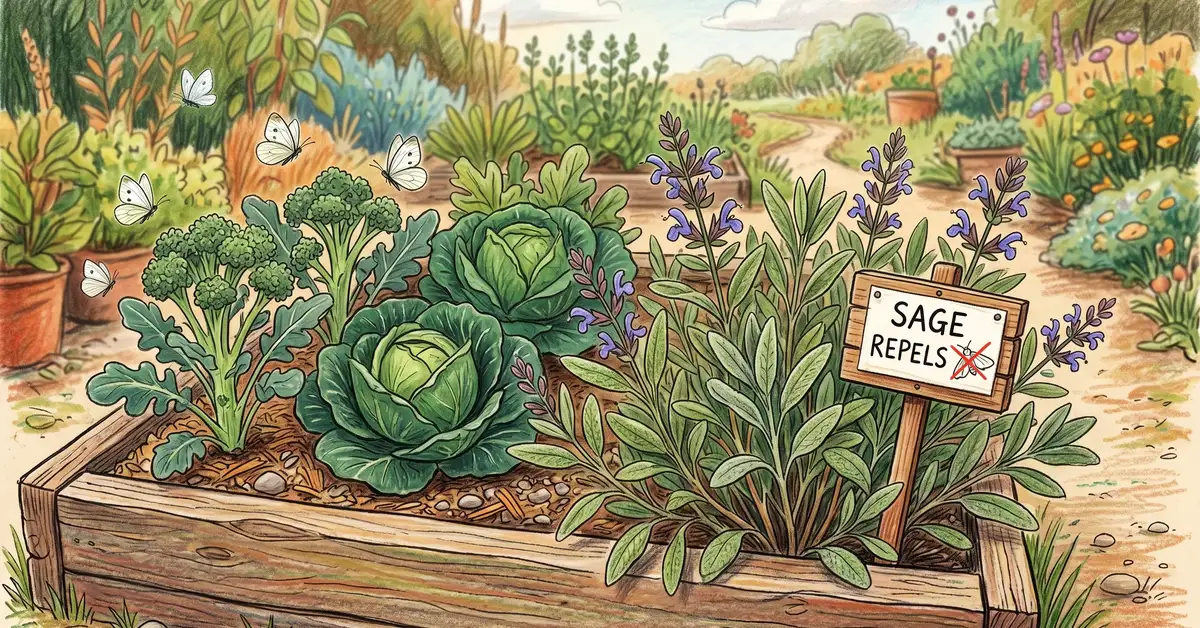
The classic sage pairing, documented in US extension literature since at least the 1970s. The cabbage moth is the major brassica pest across the US, and sage volatiles disrupt its egg-laying behavior. Plant 1 sage per 4 to 6 brassica plants, ideally at the ends of rows or interplanted every 5 to 6 ft. Sage is a perennial; brassicas rotate annually, so leave the sage in place and shift the brassica row as needed.
Carrots (Daucus carota)
The carrot rust fly is the primary carrot pest in the northern US, and sage volatiles deter the adult fly from finding the carrot row. Plant sage at the ends of carrot rows or alternate sage every 4 to 6 ft along the row edge. The carrot taproot reaches well below the sage root zone, so the two crops do not compete.
Rosemary and other Mediterranean herbs
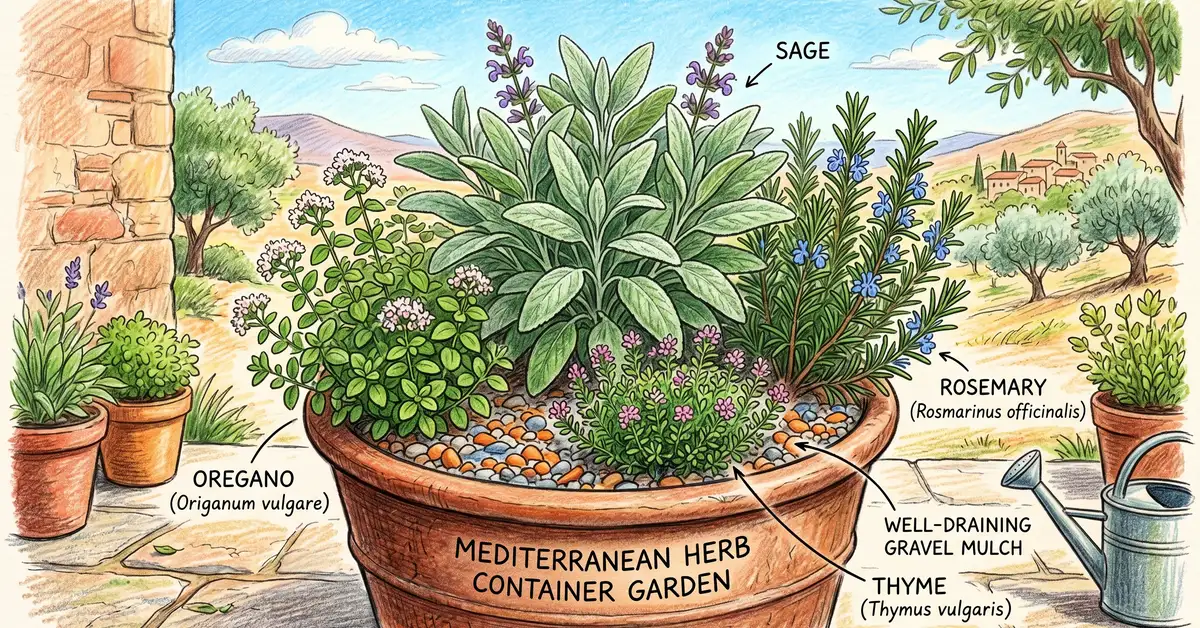
Sage and rosemary evolved on the same Mediterranean hillsides. Both want full sun, sharp drainage, pH 6.0 to 7.0, and minimal water. Plant the two in a Mediterranean herb bed or container with thyme and oregano. Spacing 18 to 24 in apart. The shared cultural preferences eliminate most management conflicts.
Strawberries
Sage at the edge of strawberry beds deters slug and snail traffic. The plants share a tolerance for sunny dry conditions, and sage flowers attract the pollinators that strawberry blossoms need for full fruit set. Plant 1 sage per 4 to 6 strawberry plants on the sunny edge of the bed.
Beans (pole and bush)
Bean flowers need pollinator visits for good pod set. Sage flowers attract bees and bumblebees aggressively during the same window that beans bloom. Plant a few sage plants at the ends of bean rows or as a perennial border. Sage will not compete with bean roots, and the beans contribute small amounts of nitrogen to the surrounding soil.
Five more useful sage companions
Tomatoes. Share the same sunny location and benefit from pollinator attraction during bloom. Keep sage at the row edge rather than between tomato plants; the tomato canopy can shade out the smaller sage.
Peppers. Same logic as tomatoes. Sage at the bed edge deters some pepper pests and supports flowering.
Marjoram and oregano. Two more Mediterranean herbs that pair naturally with sage in beds and containers.
Lavender. A flowering Mediterranean perennial that complements sage in dry pollinator borders.
Yarrow. Native or naturalized US plant with similar Mediterranean tolerance. Attracts beneficial insects that hunt aphids and caterpillars.
Plants to AVOID near sage
Basil. Basil prefers warm, consistently moist soil with regular fertilization. Sage prefers dry sunny conditions with no fertilizer. The water and nutrient regimes conflict. Grow basil in the vegetable bed and sage in a separate herb bed.
Fennel. Fennel is allelopathic to almost every garden plant and especially bad next to herbs. Read our allelopathy in the garden guide for the full picture.
Onions and other alliums. Alliums prefer slightly different pH (6.5 to 7.5) and respond strongly to nitrogen feeding. Sage tolerates poor soil but dislikes nitrogen excess. Different management calendars.
Rue. Rue is the only major herb that consistently fails next to sage. Both produce strong volatile compounds and the two seem to interfere with each other.
Sage varieties for the US garden
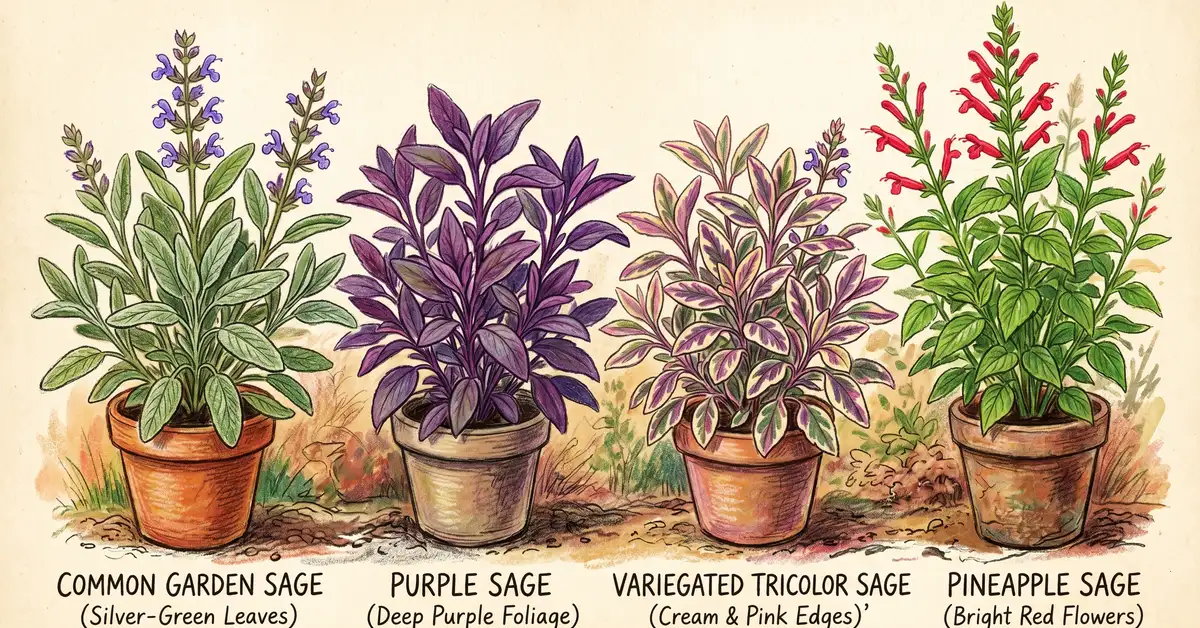
| Variety | Botanical name | Hardiness | Best use |
| Common garden sage | Salvia officinalis | Zones 4-10 | Culinary, pest repellent, pollinator support |
| Purple sage | Salvia officinalis Purpurascens | Zones 5-9 | Ornamental edible, less vigorous than common sage |
| Tricolor sage | Salvia officinalis Tricolor | Zones 6-9 | Ornamental herb with cream and pink variegation |
| Berggarten sage | Salvia officinalis Berggarten | Zones 4-10 | Large round leaves, top culinary choice |
| Pineapple sage | Salvia elegans | Zones 8-11 (annual in colder zones) | Hummingbird magnet, citrus aroma, late summer red flowers |
| Russian sage | Perovskia atriplicifolia (different genus) | Zones 4-9 | Drought-tolerant ornamental, not culinary |
Source:.
Pollinator value of flowering sage
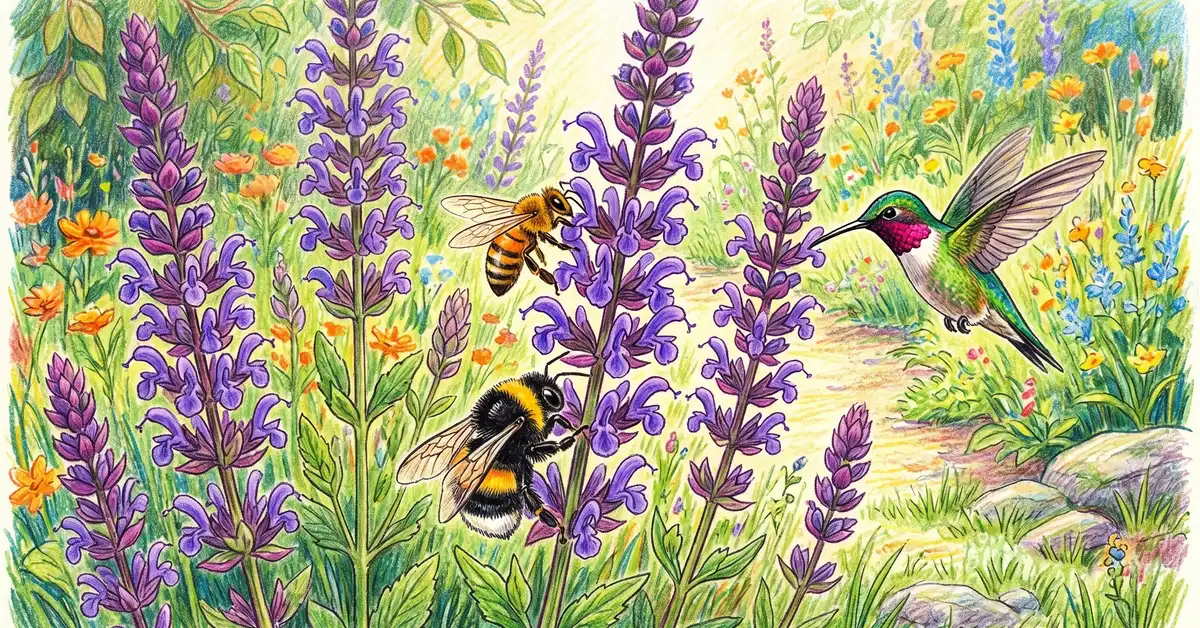
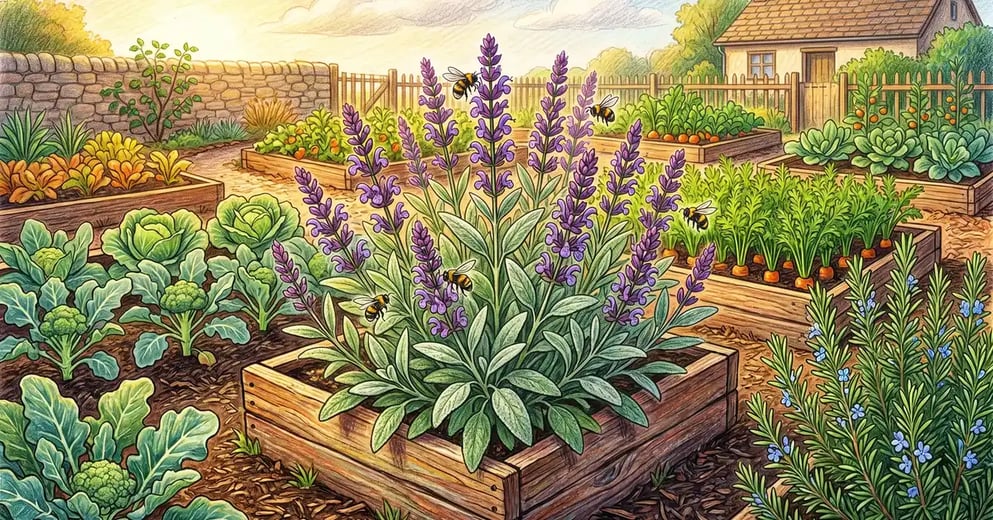
Sage flowers from June through July in most US zones, producing tall purple flower spikes that are among the most reliable mid-season pollinator attractors in the perennial herb world. Penn State Extension classifies sage as a high-value bee plant for honeybees, bumblebees, native solitary bees, and butterflies. Pineapple sage extends the bloom into late summer and attracts hummingbirds.
If you grow sage primarily for culinary use, you can still allow some plants to flower for the pollinator benefit. Harvest leaves heavily before bloom for cooking, then leave the late-season growth for the bees. Trim spent flowers to encourage a second smaller bloom in late summer.
The Mediterranean herb container
Sage thrives in a large container with rosemary, thyme, and oregano. Use a 12 to 16 in diameter pot with at least 4 drainage holes, a sandy potting mix (mix standard potting soil with 1/3 to 1/2 perlite or pumice), and a top dressing of small gravel. Plant sage in the center as the largest plant, surrounded by 2 to 3 rosemary or thyme around the edge. Water sparingly. Overwinter inside a cool bright window in zones 4 to 6.
Layout: where to put sage in the garden
Two layouts cover most US backyard situations:
Border layout. Plant sage every 18 to 24 in along the sunny south or west edge of a vegetable bed. The repellent effect projects 12 to 24 in into the bed, covering one full row of brassicas, carrots, or strawberries.
Cluster layout. Plant 2 to 3 sage in a small herb cluster at one or both ends of a long vegetable row. The cluster generates a stronger volatile zone, which is helpful in larger plantings. Combine with rosemary and thyme for a permanent herb island.
Get the Weekly Dig
One practical permaculture guide a week, written for gardeners who do this on weekends: companion pairings that hold up under scrutiny, and the ones that do not. Free, no spam, unsubscribe any time.
Join the newsletterFrequently asked questions
What are the best companion plants for sage?
The 5 strongest companions are brassicas (cabbage, broccoli, kale, cauliflower, Brussels sprouts), carrots, rosemary and other Mediterranean herbs, strawberries, and beans. All share sage's preference for sun and sharp drainage, and most benefit from sage's pest-repellent volatiles or its pollinator attraction.
What should you not plant with sage?
Avoid cucumbers and other Cucurbitaceae (allelopathic suppression), basil and other moisture-loving herbs (water and nutrient conflicts), fennel (broadly allelopathic), onions and other alliums (different pH preference), and rue (the two herbs interfere with each other).
Does sage repel pests?
Yes. Sage volatile oils (thujone, camphor, 1,8-cineole) repel cabbage moth, carrot rust fly, spider mites, slugs, and several soft-bodied insects. The effective range is about 12 to 24 in around each plant. Two or three sage plants per 4 by 8 ft bed give meaningful protection.
Can I plant sage with tomatoes?
Yes. Tomatoes and sage share sunny well-drained conditions. Plant sage at the bed edge rather than between tomato plants because the tomato canopy can shade smaller sage. Sage attracts pollinators that help tomato fruit set.
Can I plant sage with rosemary?
Yes. Sage and rosemary are both Mediterranean perennials with the same cultural preferences (sun, sharp drainage, low water, pH 6.0 to 7.0). They are arguably the most reliable herb pairing in the US backyard. Plant 18 to 24 in apart.
How long does a sage plant live?
5 to 10 years for a productive culinary plant. After 5 years, sage becomes woody at the base, the leaf quality declines, and the plant becomes more sprawling. Replace plants by stem cuttings (rooted in summer) or direct division when productivity drops.
Is pineapple sage edible?
Yes. Pineapple sage (Salvia elegans) leaves and red flowers are edible. The leaves have a strong citrus-pineapple aroma used in herbal teas, fruit salads, and savory dishes with poultry or pork. The plant is also a top hummingbird attractor in zones 8 to 11.
Where can I buy sage plants?
Local nurseries carry garden sage starts in spring and early summer. Mail-order specialty herb nurseries (Mountain Valley Growers, Richters, Strictly Medicinal) offer rare varieties including purple sage, tricolor sage, Berggarten sage, and pineapple sage. Sage also grows readily from seed (start indoors 6 to 8 weeks before last frost) or from cuttings taken in summer.