
A citrus tree alone is a fruit producer. A citrus tree surrounded by the right companions becomes a small ecosystem that feeds itself nitrogen, attracts pollinators to its blossoms, repels its worst pests, and shades its own roots through a Florida or California summer. Plant the wrong companions and you compete the tree to death or invite the disease that has wiped out commercial groves across three states.
What citrus actually wants from a companion
Citrus is a heavy nitrogen feeder and a heavy micronutrient feeder. Iron, zinc, and manganese deficiencies are the most common nutrient problems in backyard trees across all four US warm-climate regions, well documented by UC ANR and UF IFAS. The tree pulls these from the top 24 inches of soil through a wide, shallow, fibrous root network. That root system is the design constraint for everything else.
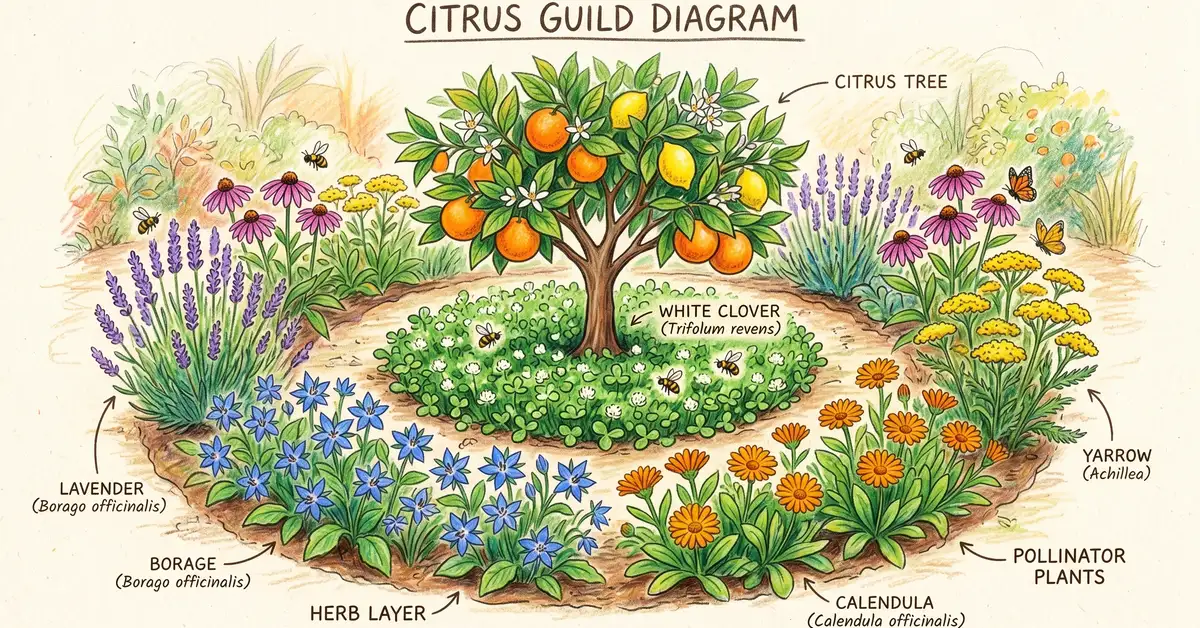
A good citrus companion does at least one of four jobs:
1. Add nitrogen. Legumes fix atmospheric nitrogen through their root nodule bacteria and release it slowly to surrounding plants. White clover, crimson clover, cowpeas, peanuts, lupines, and hairy vetch are all backyard-friendly.
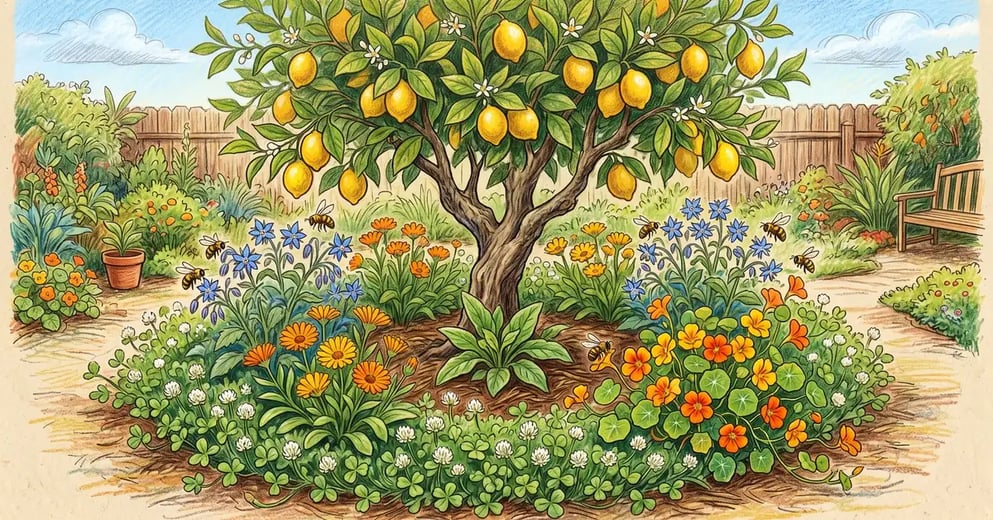
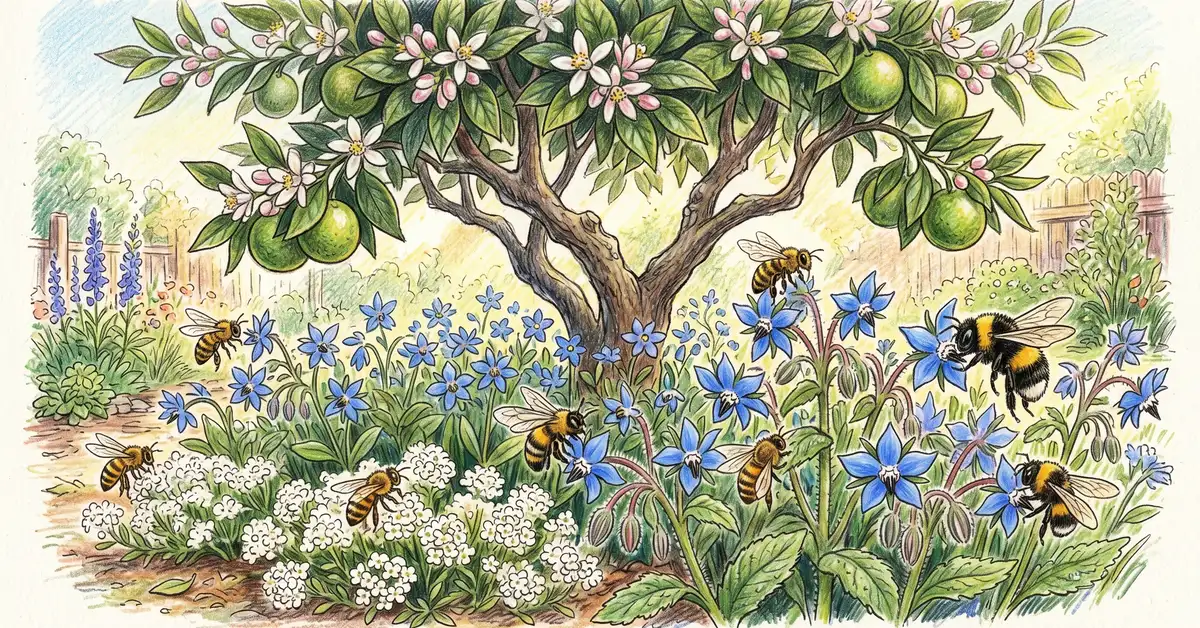
2. Attract pollinators. Citrus mostly self-pollinates, but bee visitation increases fruit set 5 to 15 percent in most cultivars. Borage, calendula, sweet alyssum, salvia, lavender, and basil bring constant pollinator traffic to the blossom period.
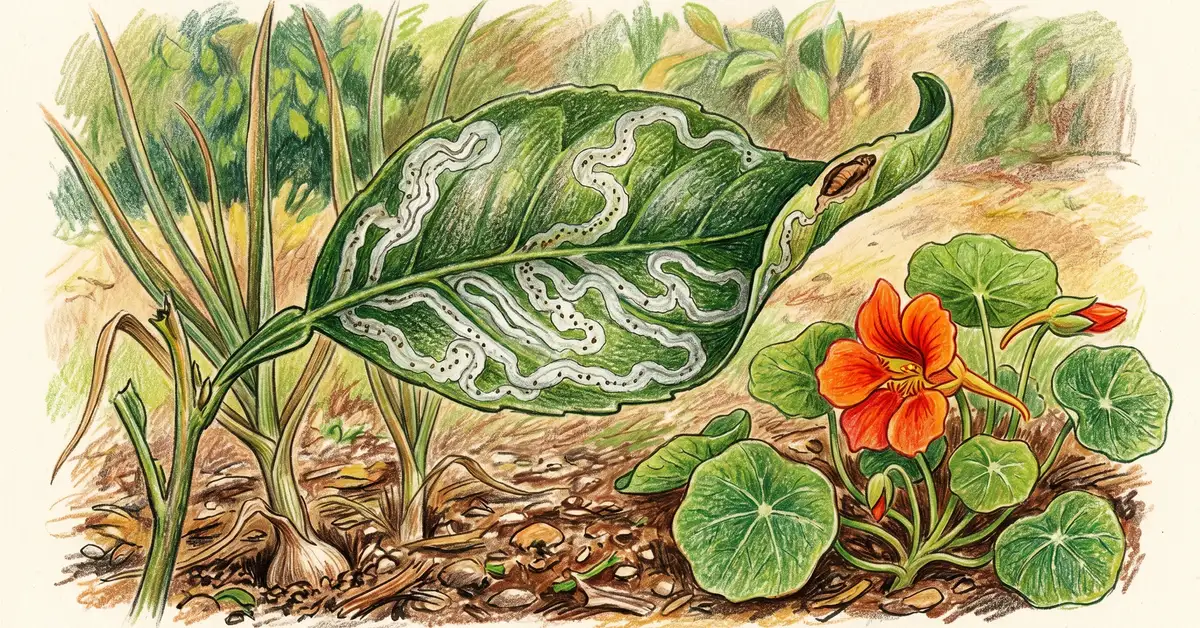
3. Repel or trap pests. Aphids, citrus leafminer, scale, and ants are the main backyard problems. Nasturtiums work as an aphid trap crop. Garlic and chives deter leafminer moths with their volatile compounds. Marigolds suppress soil-borne nematodes that damage citrus roots.
4. Build soil without disturbance. Comfrey (Bocking 14 cultivar, sterile so it does not seed everywhere), white clover ground cover, and chopped herb mulch feed the soil microbiome without requiring you to dig anywhere near sensitive citrus roots.
The 5 best companions for a US backyard citrus tree
Why this works (the permaculture principle)
Permaculture calls this a guild: a small community of plants assembled around a central producer so each plant feeds at least one need of another. The famous Geoff Lawton citrus guild from the Permaculture Research Institute pairs every citrus with a nitrogen fixer, a deep-rooted accumulator, a pollinator attractor, and a pest deterrent, and treats the four jobs as the design brief. This is the same logic behind GrowPerma's broader companion planting approach: identify the function, then choose the species.
White clover (Trifolium repens) as living mulch
Low-growing perennial that fixes 75 to 150 pounds of nitrogen per acre per year, suppresses weeds, holds moisture, and tolerates light foot traffic. Sow 1/4 lb per 1,000 sq ft under the canopy after the tree is established. UC ANR cites white clover as the most reliable living mulch under California backyard citrus.
Borage (Borago officinalis) for pollinators
Annual herb with bright blue star flowers that refill nectar every 2 minutes after a bee visit (UC Davis Honey Bee Lab). Plant 1 borage per 3 to 5 citrus blossoms during the bloom window. Self-seeds reliably, comes back year after year. Doubles as a culinary herb (cucumber-flavored leaves and edible flowers).
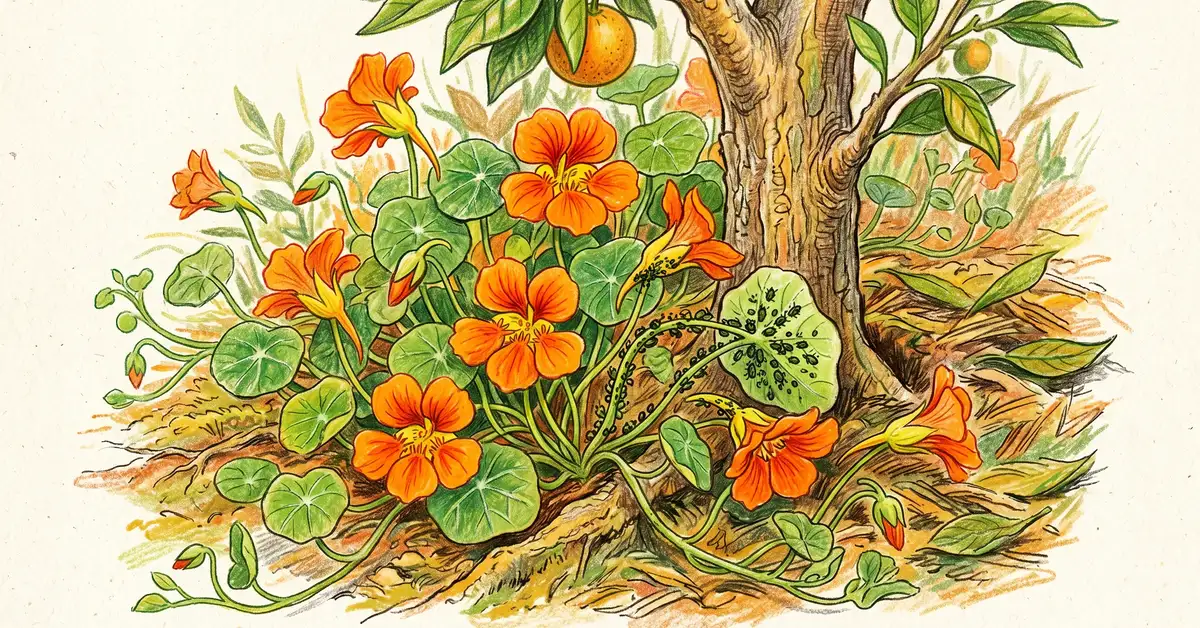
Nasturtium (Tropaeolum majus) as aphid trap crop
Trailing or climbing annual that draws aphids preferentially away from citrus foliage. UC IPM identifies nasturtium as one of the most reliable aphid trap crops for citrus in California backyards. Plant a ring of nasturtium at the drip line. Pull and compost heavily aphid-infested plants every 2 to 3 weeks during pest season. Edible peppery flowers and leaves are a bonus.
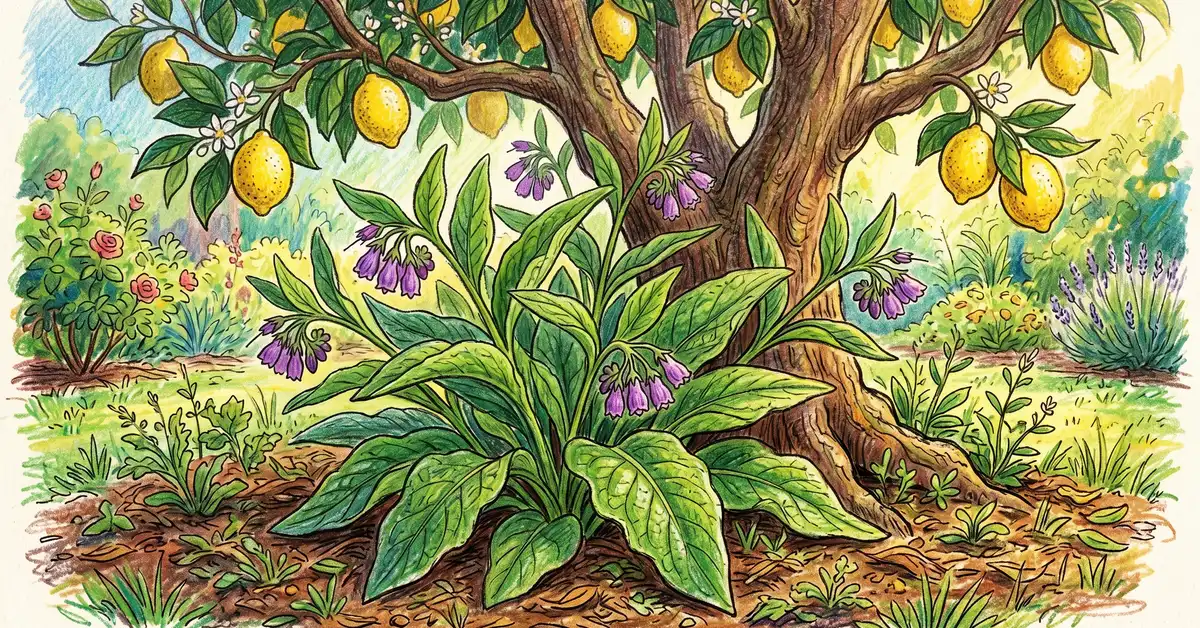
Comfrey (Symphytum officinale, Bocking 14 cultivar) as dynamic accumulator
Perennial with a deep taproot that mines potassium and trace minerals from subsoil and concentrates them in its leaves. Chop and drop the leaves 3 to 4 times per year as a green mulch right around the citrus drip line. Bocking 14 is sterile and will not become a weed problem. One comfrey plant per backyard citrus tree is the right ratio.
Sweet alyssum (Lobularia maritima) for beneficial insects
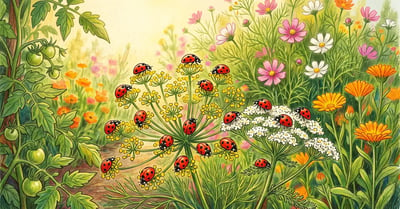
Low ground cover with masses of small white or purple flowers that attract hoverflies, parasitic wasps, and other beneficial insects that hunt aphids and scale. Plant a continuous ring at the drip line of the citrus. Self-seeds in zones 9 and warmer. Florida and California citrus growers have used alyssum interplanting for decades.
Five more useful citrus companions
Calendula (Calendula officinalis). Bright orange or yellow flowers that attract pollinators, repel some leaf-eating beetles, and provide edible petals. Annual in most zones, self-seeds reliably.
Garlic (Allium sativum) and chives (Allium schoenoprasum). Volatile sulfur compounds deter citrus leafminer moths and the ants that farm scale insects. Plant 3 to 5 cloves at the citrus drip line each fall. Leave them through the winter for spring leafminer pressure.
Marigold (Tagetes patula or T. erecta). French and African marigolds release alpha-terthienyl from their roots, which suppresses root-knot nematodes documented in Florida citrus soils by UF IFAS. Plant a perimeter ring.
Lupines (Lupinus spp.). Tall nitrogen-fixing legume with showy spires of flowers that draw bumblebees. Sow seed in fall in zones 8 to 9 for spring bloom. Cut and drop the spent plants at termination.
Basil (Ocimum basilicum). Aromatic annual that deters whitefly and some moth species, attracts pollinators during its flowering phase, and is one of the easiest summer companions for citrus across all four warm-climate regions.
Plants to AVOID near citrus
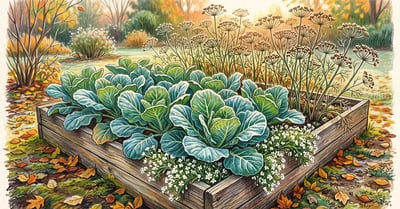
Brassicas (broccoli, cabbage, kale, Brussels sprouts, mustard). Heavy nitrogen feeders that compete directly with citrus for the same nutrient pool in the same root zone. Grow them in a separate bed.
Tall plants that shade citrus. Sunflowers, sweet corn, sorghum-sudangrass, and tall sun-loving annuals will shade citrus and reduce fruit production. Keep tall companions to the north side and at least 6 feet away.
Lawn grass directly under the canopy. Bermudagrass, St Augustine, and turfgrass species compete intensively for the same shallow soil moisture and nitrogen that citrus needs, and prevent mulch from reaching the soil. Replace lawn under the drip line with mulch or a clover ground cover.
Black walnut. The juglone allelopathy that kills tomatoes also affects most citrus. Keep citrus at least 80 feet from any mature Juglans nigra. Read more in our guide to allelopathy in the garden.
The citrus guild layout that works
| Position | Best plants | Function |
| Tree trunk to 6 inches | Bare soil with 2 to 4 inch wood chip mulch, kept 6 in clear of trunk to prevent collar rot | Moisture, soil biology, no root competition |
| Inner ring (1 to 3 ft from trunk) | White clover or sweet alyssum ground cover | Nitrogen fixation, pollinator support, weed suppression |
| Drip line ring (3 to 6 ft) | Borage, calendula, basil, garlic, chives, comfrey | Pollinator attraction, pest deterrence, dynamic accumulation |
| Outer ring (drip line plus 2 ft) | Nasturtium, marigold, lupines, salvia | Aphid trap, nematode suppression, beneficial insect harbor |
| North side, beyond outer ring | Taller pollinator plants (rosemary shrub, butterfly bush, native sage) | Windbreak, year-round pollinator forage, no shading |
| Within 50 feet | NEVER curry leaf plant or orange jessamine | Avoid Asian citrus psyllid + huanglongbing |
Source:, and Permaculture News citrus guild documentation.
Regional notes
California (zones 9 to 10). White clover ground cover works well in mild winters. Watch for citrus leafminer (most common citrus pest in California per UC IPM) and plant garlic perimeter. Asian citrus psyllid is now established statewide; avoid curry leaf.
Florida (zones 9 to 11). Huanglongbing has devastated commercial production and is now in backyard trees too. Marigold companion planting for nematode suppression is particularly valuable in Florida's sandy soils. Hurricane considerations favor low-growing companions over tall windbreaks near the trunk. UF IFAS data.
Arizona (zones 8b to 9). Hot summer (often above 110 F) makes living mulch and shade-providing alyssum especially useful for citrus root protection. White clover may struggle with heat; consider cowpea or buffalo grass alternatives.
Texas Gulf Coast (zones 8b to 10). Heavy rainfall periods need attention to drainage. Marigold and nasturtium do well; comfrey thrives. Asian citrus psyllid quarantines apply.
Get the Weekly Dig
One practical permaculture guide a week, written for gardeners who do this on weekends: food forest and guild designs that produce. Free, no spam, unsubscribe any time.
Join the newsletterFrequently asked questions
What are the best companion plants for citrus trees?
The five most reliable companions are white clover (nitrogen fixation and living mulch), borage (pollinator attraction), nasturtium (aphid trap), comfrey Bocking 14 (dynamic accumulator), and sweet alyssum (beneficial insect harbor). Add calendula, basil, garlic, chives, and marigold for additional pest control and pollinator support.
What can I plant under a lemon tree?
Plant low-growing companions that do not shade the canopy or disturb the shallow roots. White clover ground cover, sweet alyssum, calendula, borage, basil, garlic, chives, and comfrey are all backyard-tested choices. Avoid lawn grass directly under the canopy because it competes too aggressively for nitrogen and moisture.
Can I plant vegetables near my citrus tree?
Yes, with care. Low-growing herbs (basil, calendula, garlic, chives) and leafy greens that finish before summer heat (spring lettuce, spinach) are fine at the drip line. Avoid brassicas (broccoli, cabbage, kale, Brussels sprouts) which compete heavily for nitrogen. Avoid tall plants like sweet corn, sunflowers, or pole beans that would shade the tree.
Why should I not plant curry leaf near my citrus?
Curry leaf plant (Murraya koenigii) is a preferred host for the Asian citrus psyllid (Diaphorina citri), which vectors huanglongbing disease (HLB or citrus greening). HLB has destroyed roughly 80 percent of Florida's commercial citrus and is now present in California and Texas. UF IFAS and UC ANR both recommend not planting curry leaf within 50 feet of any citrus tree.
Will nasturtiums really keep aphids off my citrus?
Nasturtium acts as a trap crop rather than a repellent. Aphids prefer nasturtium foliage to citrus foliage when given the choice. The nasturtium concentrates the aphid pressure away from the tree. UC IPM documents the effect for California citrus. Pull and compost heavily infested nasturtium plants every 2 to 3 weeks during peak aphid season.
How much mulch should I put around my citrus tree?
Apply 2 to 4 inches of wood chip mulch (arborist chip is ideal) over the drip line area, but keep the mulch 6 inches clear of the trunk to prevent collar rot. Renew the mulch every spring as it breaks down. The mulch conserves moisture, regulates soil temperature, and feeds the soil microbiome that supports citrus roots.
Does comfrey really help citrus trees?
Comfrey (especially the sterile Bocking 14 cultivar) sends a deep taproot down to subsoil that contains potassium and trace minerals which citrus needs but cannot reach with its own shallow roots. The comfrey concentrates these nutrients in its leaves, which you cut and drop as mulch 3 to 4 times per year. One comfrey plant per backyard citrus tree is the standard ratio in permaculture guild design.
Can citrus tolerate full shade ground covers?
The ground covers under citrus should tolerate light shade but generally need some direct light to thrive. White clover, sweet alyssum, calendula, and most herbs accept the dappled light under a mature citrus canopy. Avoid full-shade plants like hostas because they suggest the wrong moisture regime for citrus root health.
Resources
- UC ANR Catalog: Citrus Production Information
- UF IFAS Extension Digital Information Source
- Texas A&M AgriLife Extension
- University of Arizona Cooperative Extension
- UC Statewide Integrated Pest Management Program
- Permaculture Research Institute (Geoff Lawton citrus guild)
- USDA APHIS Plant Health (Asian citrus psyllid quarantine maps)
- Citrus Research Board (California)