
The single most counterintuitive idea in syntropic agriculture is this: the harder and more often you prune, the more your system produces. Ernst Gotsch, the Swiss-Brazilian farmer who developed syntropic farming on degraded Atlantic rainforest pasture starting in 1984, demonstrated that heavy continuous pruning is the energy injection that drives the entire system forward. The pruned biomass becomes the soil. The act of cutting feeds the plants you keep. what that biomass does to soil carbon
For permaculture-curious US growers, this rewrites everything you have been told about gardening. The garden is not something you tend gently. It is a successional ecosystem you accelerate through intentional disturbance. This guide explains the science, the practice, and how to adapt it to a US backyard or homestead.
Sources:.
The origin: Ernst Gotsch and Olhos D'agua
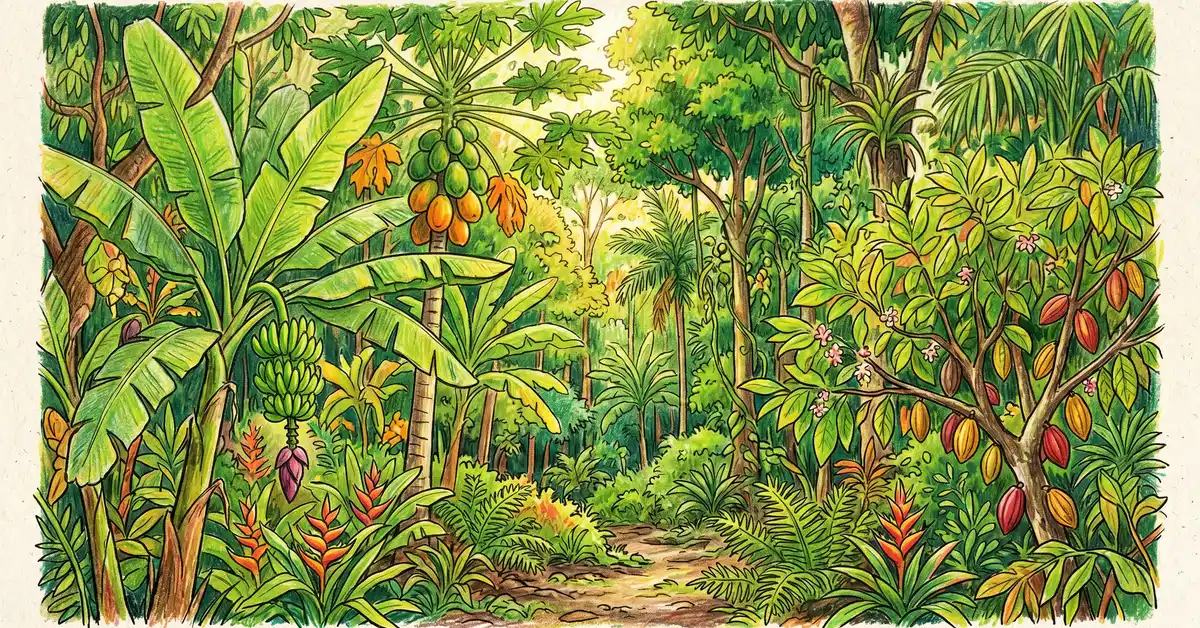
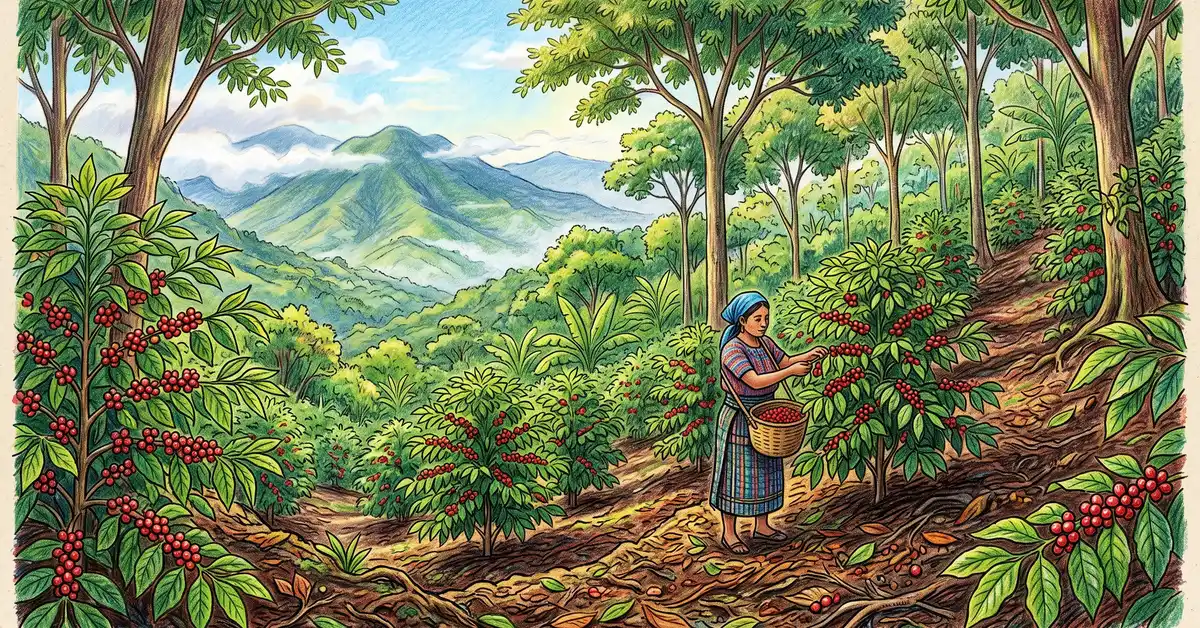
In 1984 Ernst Gotsch bought a degraded 1,200 acre (485 hectare) cattle ranch in Bahia, Brazil, called Olhos D'agua (Eyes of Water). The land had no springs, no topsoil, no birds. By 2014, after 30 years of syntropic management, the farm had 14 active springs, mature Atlantic rainforest canopy, productive cocoa and banana harvests, and biodiversity indices comparable to nearby protected forest.
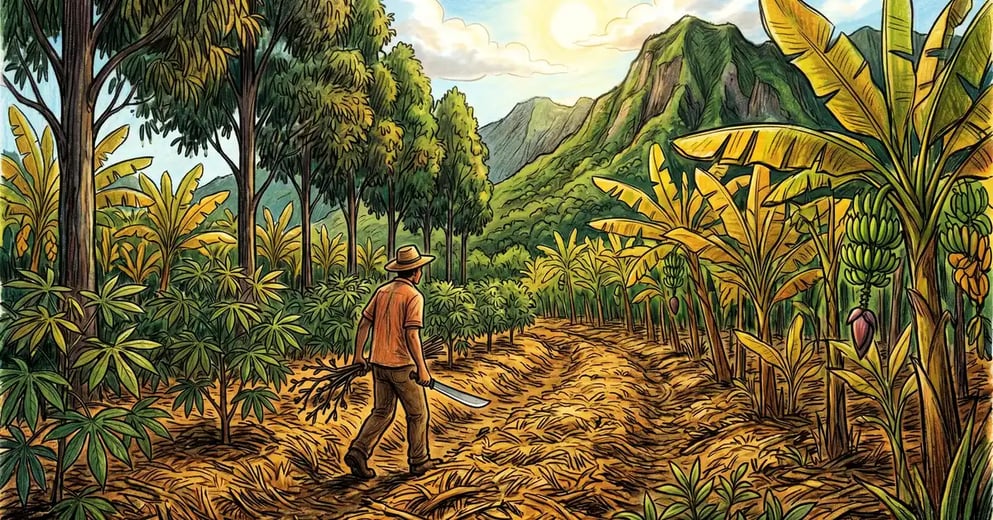
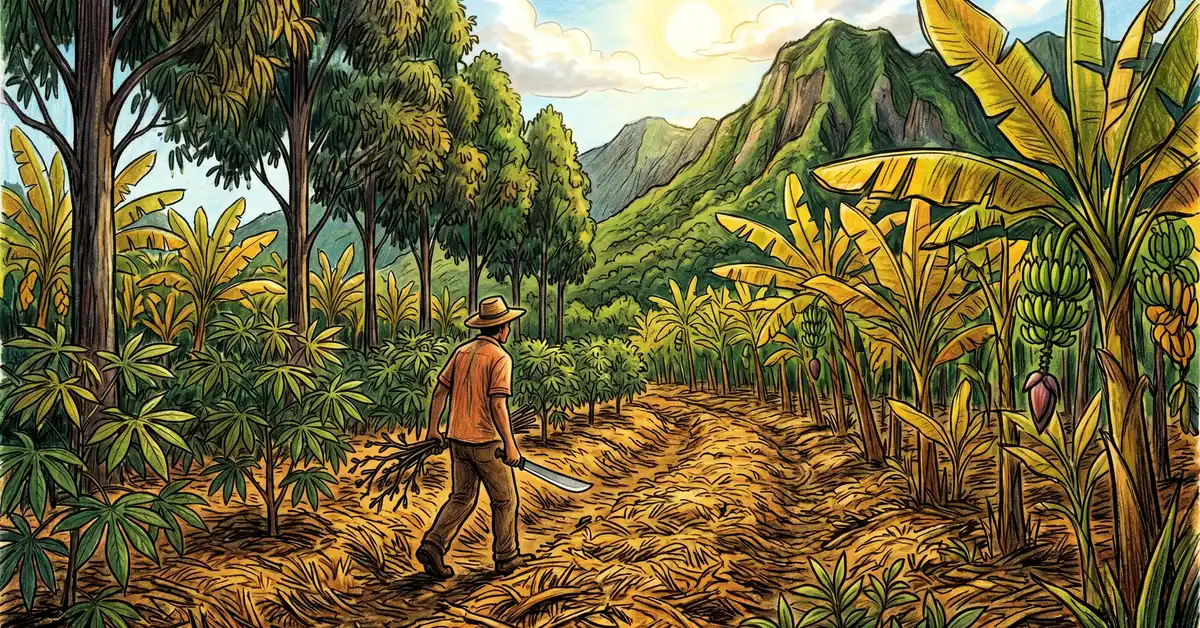
The mechanism: Gotsch planted dense polycultures, then aggressively pruned the pioneer biomass species every 2 to 3 months, dropping all material as mulch. The cuts triggered new growth, the biomass fed soil microbes, the microbes built A horizon, the topsoil held water, the water restarted the springs. Every pruning event accelerated the succession by years.
Why this works as permaculture
Syntropic agriculture inverts the conservation mindset. Where conventional permaculture says "minimize intervention", syntropic says "match the disturbance regime of mature forest". Storms, browsing, fire, and falling trees create gaps that accelerate forest succession. The pruning shears substitute for those natural disturbances in a managed system. The system moves forward faster than wild succession ever could.
Stratification: where biomass goes
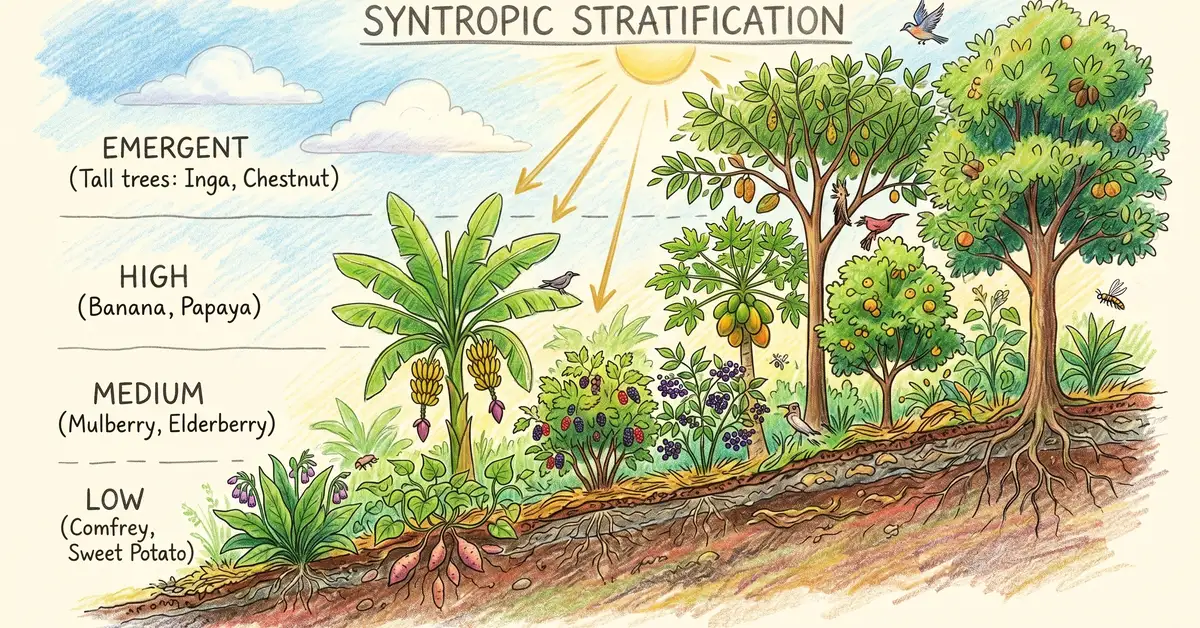
Syntropic systems organize plants into four occupation strata by their natural light requirements. Each stratum has its own pruning rhythm.
| Stratum | Light Needs | Examples (US Temperate) | Pruning Frequency |
| Emergent | Full sun (top) | Black walnut, sweet chestnut, hybrid poplar | Annual to biennial |
| High | Full sun | Mulberry, persimmon, apple, hazelnut | Every 6-12 months |
| Medium | Partial shade | Elderberry, currant, gooseberry, hazel coppice | Every 3-6 months |
| Low | Shade tolerant | Comfrey, mint, sweet potato, hostas, ginger | Every 1-3 months |
Source: adapted from Andrade et al., Sao Paulo State University research on syntropic systems, plus practitioner notes from US-based teachers.
The pruning pulse: timing matters
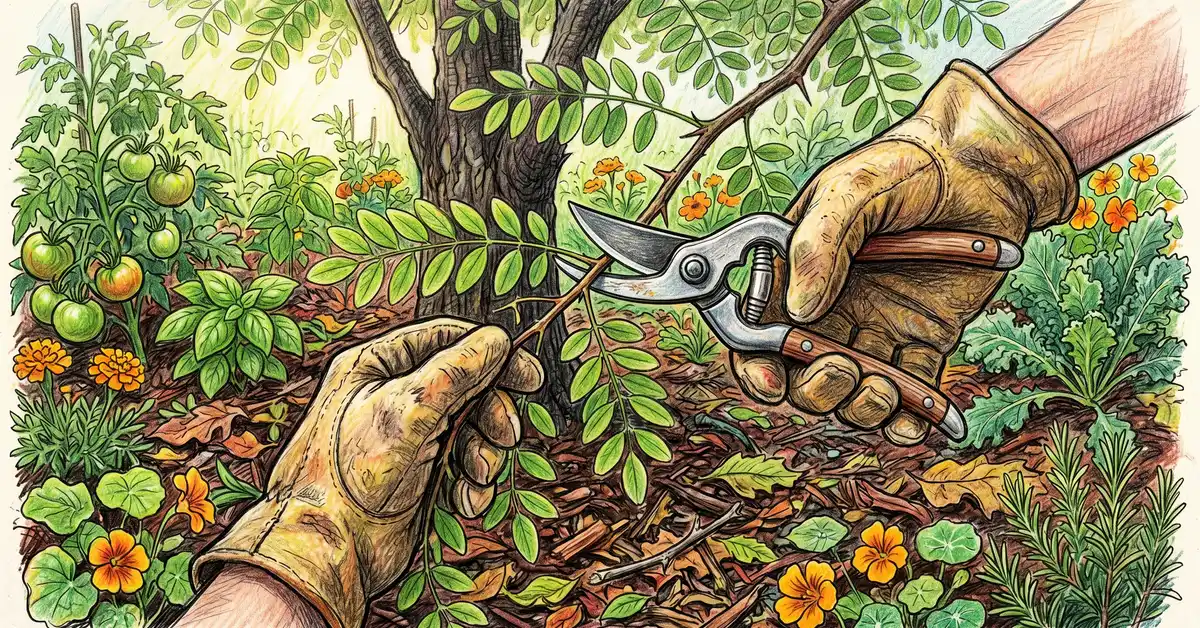
Syntropic farming defines the pruning pulse: a coordinated event where 20 to 50 percent of standing biomass is cut and redistributed as mulch. Timing matters more than gardeners trained in conventional pruning realize.
Prune at peak photosynthesis. Plants are loaded with sugars and active root exudates when the canopy is full and the day is long. Cutting at peak photosynthesis releases that energy into the soil through pruned biomass and through carbohydrate flush to the roots. The chop triggers new growth that produces even more biomass.
Avoid pruning at flowering or seeding. The plant's energy has shifted to reproduction. Cutting then loses the carbohydrate boost and the plant takes longer to recover. Wait until flowering finishes or prune just before bud break.
US temperate pulse: 2 to 4 pulses per year. Spring (April to May), early summer (June), late summer (August), and fall just before frost (September to October). In tropical Brazil, Gotsch runs pulses every 2 to 3 months year-round.
The 5-step pulse
Walk the system
Look at each stratum. Identify the most vigorous plants. Note which ones are shading something productive below. The most vigorous are also the best biomass producers.
Cut hard from the top down
Start with emergent and high strata. Cut 30 to 50 percent of the canopy. Use pruning shears, lopppers, or a pruning saw. Larger material (1 in / 2.5 cm and up) gets cut into 1 to 2 ft (30 to 60 cm) lengths.
Drop everything in place
Do not haul material to a compost pile. Lay branches and leaves directly on the soil surface as a mulch layer 2 to 6 in (5 to 15 cm) thick. This is the most important step.
Lay the larger material first
Branches and woody material go on the bottom. Green leafy material goes on top. The structure mimics forest floor leaf-fall, and the air pockets prevent matting and anaerobic decomposition.
Walk the bed afterward
Step on the mulch lightly to settle it. Check that nothing is touching crown stems of productive plants. Water lightly to start fungal colonization. New growth shows within 1 to 2 weeks.
US-adapted biomass species
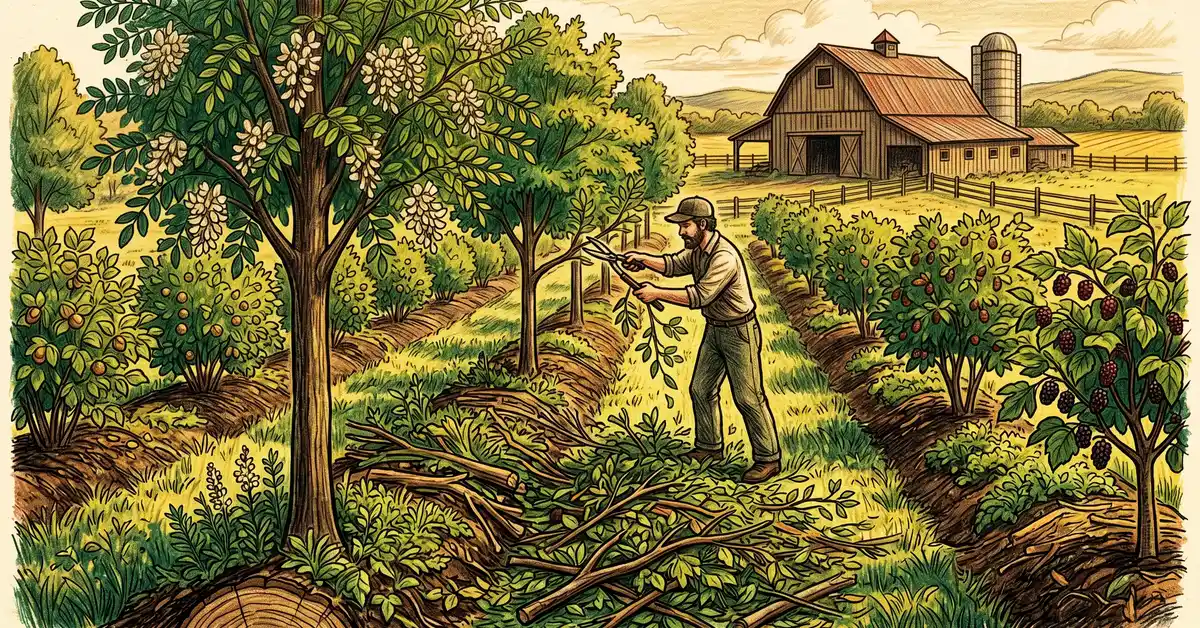
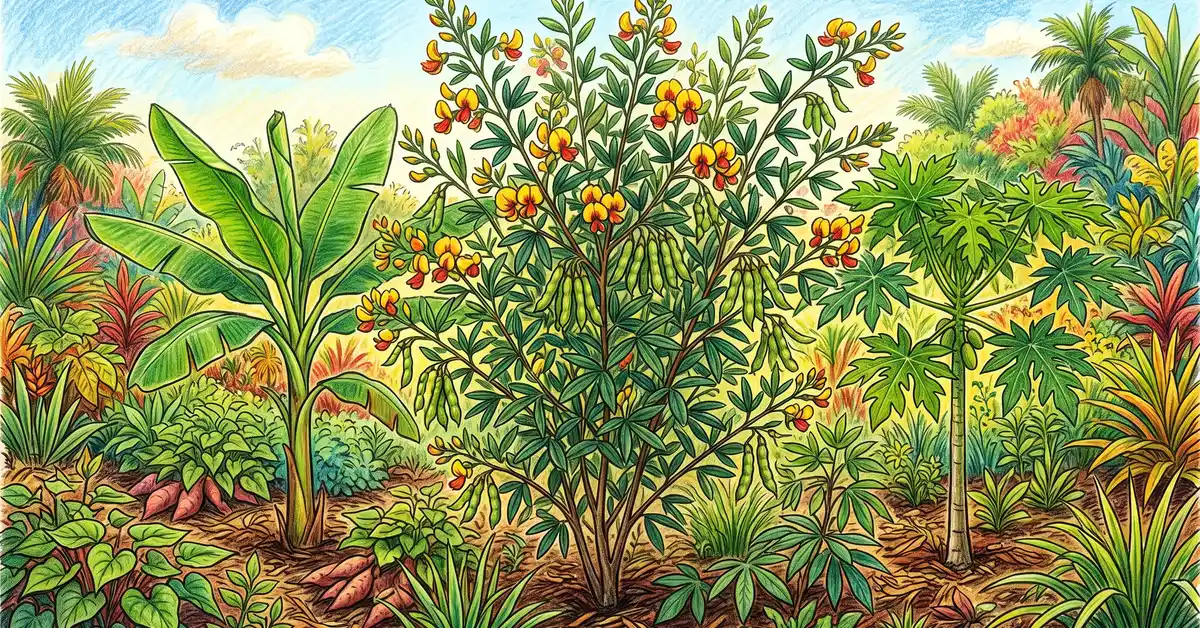
Brazilian syntropic systems lean on banana, papaya, inga (a nitrogen-fixing tree), and cassava as biomass workhorses. These do not work in most of the US. The US temperate adaptation uses different species selected for cold hardiness, fast coppice regrowth, and abundant leaf biomass.
Black locust (Robinia pseudoacacia). Nitrogen fixer, hardy to zone 4, coppices vigorously, produces 5 to 8 lb (2.3 to 3.6 kg) of leaf biomass per pruning event per 6 ft (1.8 m) shrub. The single best US biomass tree.
Mulberry (Morus alba x rubra). Coppices reliably, fast regrowth, edible fruit as a bonus, large leaves that decompose fast. Hardy to zone 4.
Willow (Salix species). Coppices aggressively, tolerates wet conditions where most species fail, produces dense soft biomass. Excellent for moist USDA zones 3 to 8.
Elderberry (Sambucus canadensis). Native US, coppices, edible berries, hardy to zone 3. Pair with American hazelnut and mulberry in cold-zone systems.
Comfrey 'Bocking 14' (Symphytum x uplandicum). The herbaceous workhorse. Dynamic accumulator, deep taproot, 4 to 6 cuts per year. Sterile cultivar so it does not self-seed.
Siberian pea shrub (Caragana arborescens). Nitrogen fixer, coppice friendly, hardy to zone 2. Often overlooked but extremely productive in the Upper Midwest and Great Plains.
Sea buckthorn (Hippophae rhamnoides). Nitrogen fixer, edible berries, hardy to zone 3.
The biomass myth: never bury, always layer
The single biggest mistake US gardeners make when adopting syntropic methods is treating biomass like compost. They haul it to a pile, let it rot, and then spread the finished compost.
This loses 50 to 70 percent of the carbon to atmospheric CO2 before it ever reaches the soil. Syntropic biomass management keeps the carbon in place by laying it directly on the soil surface where fungal mycelium can pull it down through the leaf litter layer over months. This is how a forest floor works. It is also how 30-50 metric tons of biomass per acre per year build 2 to 5 cm (1 to 2 in) of A horizon annually.
US practitioner anchors
Mark Shepard's New Forest Farm in Viola, Wisconsin runs the largest scale US syntropic-inspired keyline alley system, with mulberry, hazelnut, and apple in productive perennial rows interplanted with annual pasture and grazed livestock. Shepard's book Restoration Agriculture is the operational US reference.
Roger Gietzen at Cooperative Gardens Commission teaches syntropic methods adapted for the US South. Eric Toensmeier, author of The Carbon Farming Solution, ranks syntropic agriculture among the highest-carbon-sequestering land use methods documented. Andrew Millison at Oregon State University Permaculture Program produces excellent video documentation of syntropic systems in the US Pacific Northwest.
Get the Weekly Dig
One practical permaculture guide a week, written for gardeners who do this on weekends: food forest and guild designs that produce. Free, no spam, unsubscribe any time.
Join the Weekly DigFrequently asked questions
What is syntropic biomass management? The intentional, heavy, repeated pruning of biomass species in a syntropic agroforestry system to drive succession forward. Pruned material is left on the soil surface as mulch, where soil microbes and fungi pull the carbon down into the A horizon. Pioneered by Ernst Gotsch in Brazil starting in 1984.
What is chop and drop in gardening? Chop and drop is the foundational technique of syntropic biomass management: cut biomass species (comfrey, locust, mulberry, willow, etc.) and drop the material directly on the soil surface as mulch instead of removing it. It mimics forest leaf-fall and feeds soil organisms in place.
Can you chop and drop weeds? Yes, if the weeds have not set seed and are not invasive rhizome spreaders (bindweed, quack grass). Cut the green tops before flowering and lay them as mulch. Avoid chop and drop with seedy weeds because you re-seed the bed. Avoid with rhizome weeds because the cut pieces can re-root.
How often should you prune in a syntropic system? 2 to 6 pulses per year in US temperate zones. Tropical Brazilian systems run pulses every 2 to 3 months. Adapt to your growing season: 2 to 4 in cold zones 3 to 5, 4 to 6 in warm zones 7 to 10. Each pulse cuts 20 to 50 percent of standing biomass.
Is comfrey invasive? The sterile cultivar 'Bocking 14' does not set seed and stays where you plant it. It is the standard for permaculture and syntropic systems. Wild common comfrey (Symphytum officinale) and Russian comfrey (Symphytum x uplandicum) self-seed and can spread. Always check the cultivar before planting.
How to use comfrey leaves? Cut 4 to 6 times per year and lay directly as mulch around fruit trees and heavy feeders. Comfrey leaves are extremely high in potassium and provide deep-mined minerals as they decompose. They can also be fermented into a liquid fertilizer or layered into sheet mulches.
Who is Ernst Gotsch? A Swiss-Brazilian farmer who developed syntropic agriculture starting in 1984 at his Olhos D'agua farm in Bahia, Brazil. He restored 1,200 acres (485 hectares) of degraded cattle pasture into productive Atlantic rainforest food forest. His methods are documented in the Life in Syntropy film and at Agenda Gotsch.
Does syntropic farming work in the US? Yes, with temperate adaptations. The pulse frequency is longer (every 2 to 6 months instead of every 2 to 3 months) and species shift to cold-hardy coppice species (black locust, mulberry, willow, elderberry, comfrey). Mark Shepard's New Forest Farm in Wisconsin proves the model works at commercial scale in zone 4.
Resources
- Agenda Gotsch (Ernst Gotsch official site)
- Life in Syntropy documentary film
- Mark Shepard's New Forest Farm, Wisconsin
- Mark Shepard: Restoration Agriculture
- Eric Toensmeier: The Carbon Farming Solution
- Embrapa Brazil: Agroforestry Research
- Andrew Millison: OSU Permaculture Program
- Garden Organic: Bocking 14 Comfrey