
Ruth Stout's method is the most seductive idea in vegetable gardening: bury the whole garden in hay, never dig, never weed, barely water. She published it in 1955 and it has never gone out of circulation, because the core insight is right and the labour saving is real.
The part nobody tells you is that her signature 8-inch hay blanket sits well above what every US extension service now recommends, and that the hay itself carries a risk in 2026 that did not exist in 1955. Both problems are solvable. You just have to know about them first.
What you will learn:
- What Ruth Stout actually did, in her own terms
- Why 8 inches is too deep by modern guidance, and what depth to use instead
- The herbicide problem in hay, and the free test that catches it
- How much hay a bed actually needs, with the arithmetic
- Where deep mulch works brilliantly and where it will cost you a season
Key Takeaway
Keep Stout's principle, adjust her numbers. Permanent surface mulch, never bare soil, no tillage is well supported. Eight inches of fine hay on an annual vegetable bed is not, and untested hay is a genuine risk to your crops.
What Was the Ruth Stout Method?
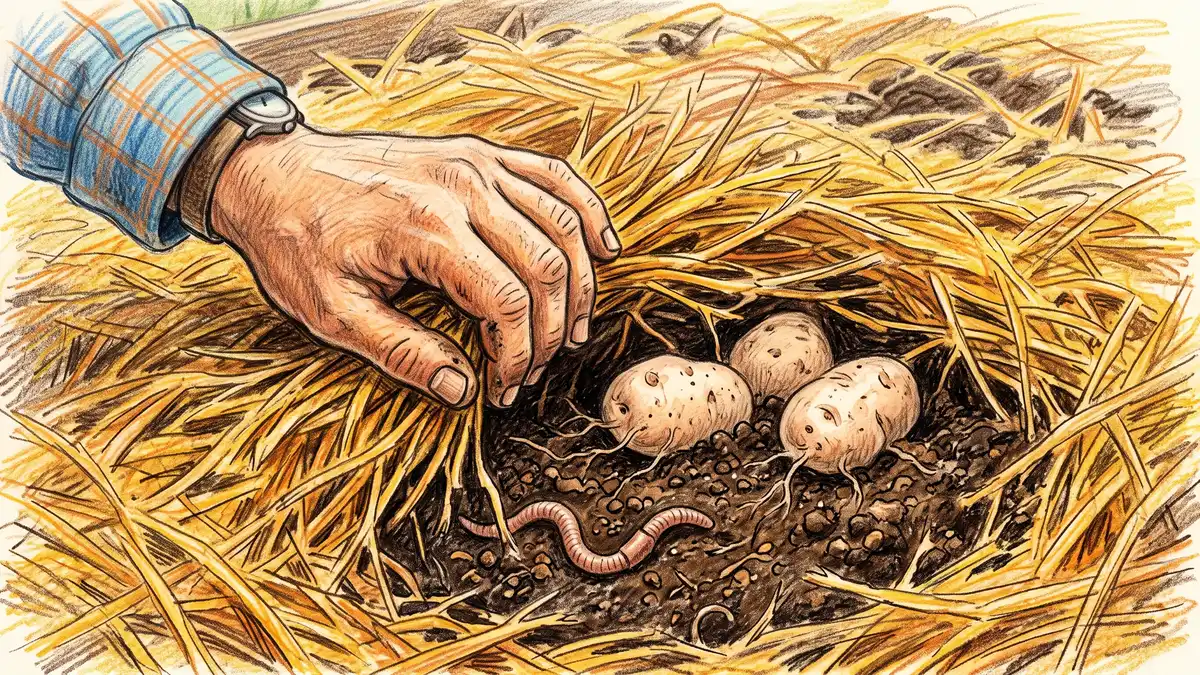
Permanent deep mulch, and nothing else. Stout published How to Have a Green Thumb Without an Aching Back in 1955 after years of conventional gardening that left her with crusted soil, drought-stressed plants and endless weeding. Her answer was to stop cultivating entirely and keep the ground permanently covered.
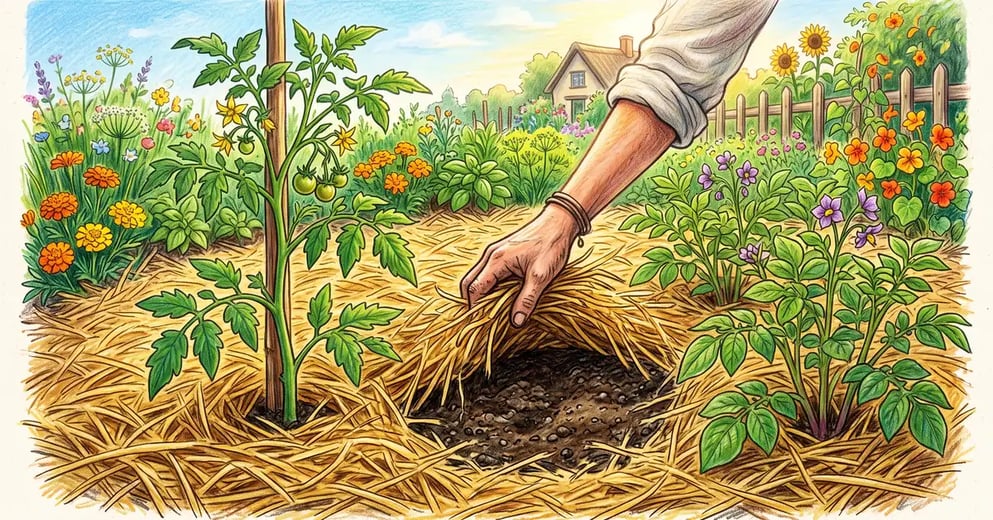
The system as she described it: lay roughly 8 inches (20 cm) of spoiled hay, leaves and kitchen scraps across the whole garden and keep it there year round. To plant, pull the mulch aside, sow, and let the mulch close back over as the crop grows. To fertilize, add more hay. Potatoes were laid on the soil surface and covered with hay rather than buried.
What made it work was eliminating bare soil. No bare soil means very few germinating weeds, far less evaporation, moderate soil temperature and a steady supply of decomposing organic matter feeding the surface. The same logic drives no-dig gardening and sheet mulching today.
Why This Works: Mimicking the Forest Floor
Stout was reproducing a woodland litter layer on a vegetable bed, and the measurements back her up. A study covered by Pacific Horticulture found forest leaf debris held daily soil temperature swings within 5°F, and wood chips within 9°F, while bare soil and turfgrass swung more than 21°F over the same day and night cycle. Stable temperature and moisture is the condition soil biology actually wants, and it is what mulch buys you.
Is 8 Inches of Mulch Too Much?
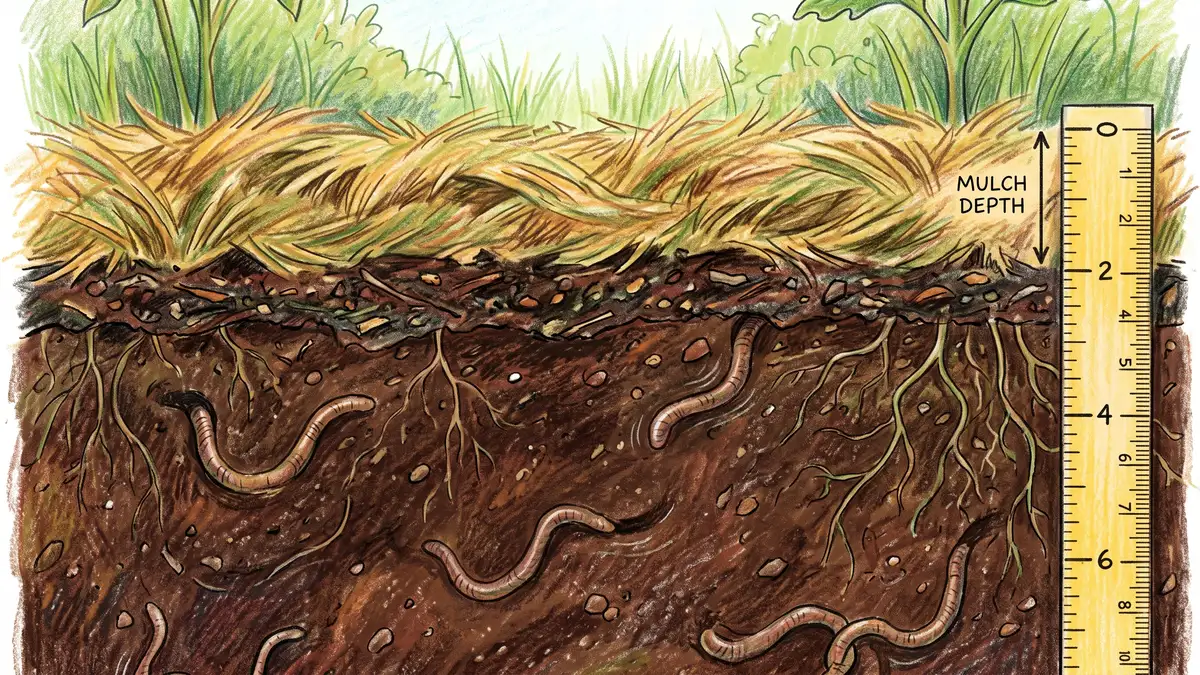
For fine material on an annual vegetable bed, yes. Every extension service that publishes a depth recommendation lands well below it, and they give the same reason: oxygen.
| Source | Recommended Depth | Context |
| Cornell Cooperative Extension | 1-2 in. (2.5-5 cm) | Perennials and vegetables; 1 in. fine for annuals |
| Penn State Extension | 3-4 in. (7.5-10 cm) maximum | Above this "may threaten plant vigor" through reduced oxygen and water |
| Oregon State Extension | 2-4 in. (5-10 cm) | Organic mulches around garden plants |
| USDA NRCS Standard 484 | 2 in. (5 cm) max for fine material | Fine mulches allow less oxygen penetration than coarse |
| Washington State (wood chips) | 4-6 in. (10-15 cm) | Coarse woody mulch only, ornamental sites |
Sources: Cornell Cooperative Extension, Mulches, Penn State Extension, Mulch: A Survey of Available Options, USDA NRCS Conservation Practice Standard 484
The distinction that matters is texture, not just depth. NRCS is explicit that fine-textured mulches allow less oxygen penetration than coarse ones and should not exceed 2 inches, while coarse wood chips can go far deeper because air moves freely between the pieces. Hay and straw sit at the fine, matting end. Eight inches of it packs down wet and seals the surface.
Practical translation: run 3 to 4 inches (7.5 to 10 cm) of loose hay or straw rather than 8, top it up two or three times a season as it settles, and you get almost all of Stout's benefit without suffocating the root zone. Our mulching guide covers depths by material.
The Hay Problem Ruth Stout Never Faced
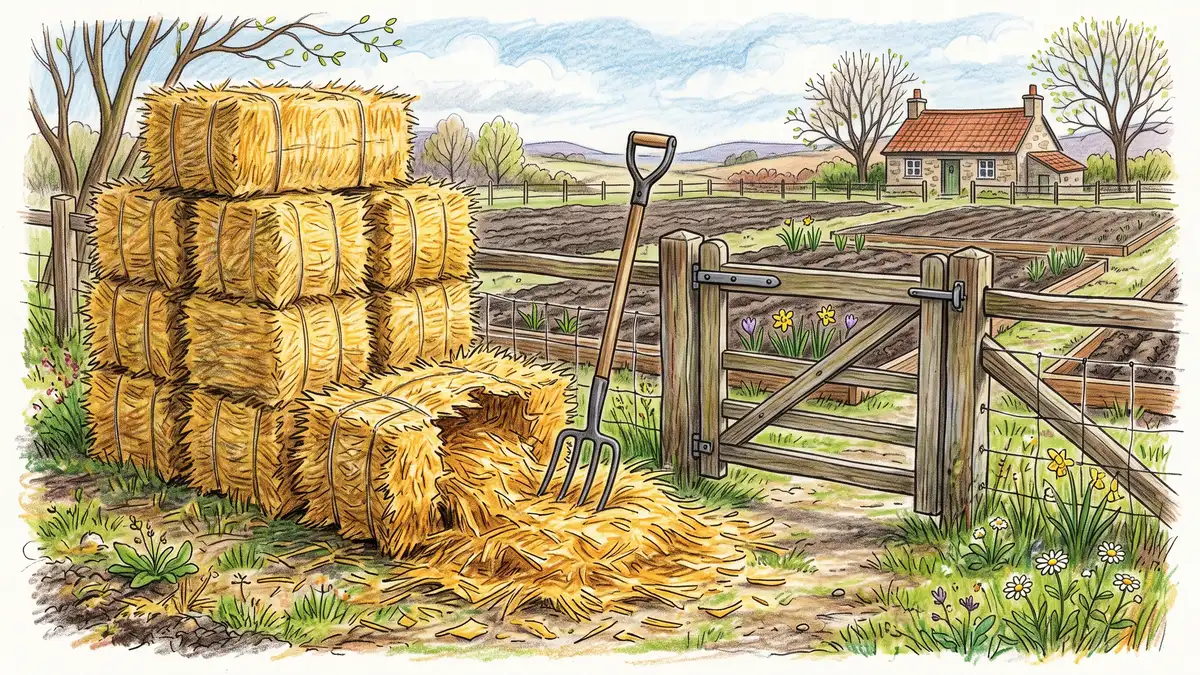
Persistent broadleaf herbicides. This is the single most important thing to know before you copy her method, and it did not exist as an issue when she wrote.
North Carolina State University Extension documents the problem in detail. Synthetic auxin herbicides used on pasture and hay fields, picloram, clopyralid and aminopyralid among them, survive the animal, the manure pile and the compost heap. NCSU reports hay retaining residual herbicide activity after three years of storage in a dry dark barn.
The crops on NCSU's sensitive list are exactly what you grow: beans, carrots, lettuce, legumes, grapes, and the whole Compositae family. Damage shows as cupped, twisted, fern-like new growth, and it can persist in a bed for more than one season.
Ask the supplier directly
Ask whether the field was treated with picloram, clopyralid, aminopyralid or aminocyclopyrachlor. A grower who does not know is a no. Hay from a field you can trace beats cheap hay every time.
Run the pot bioassay before you spread anything
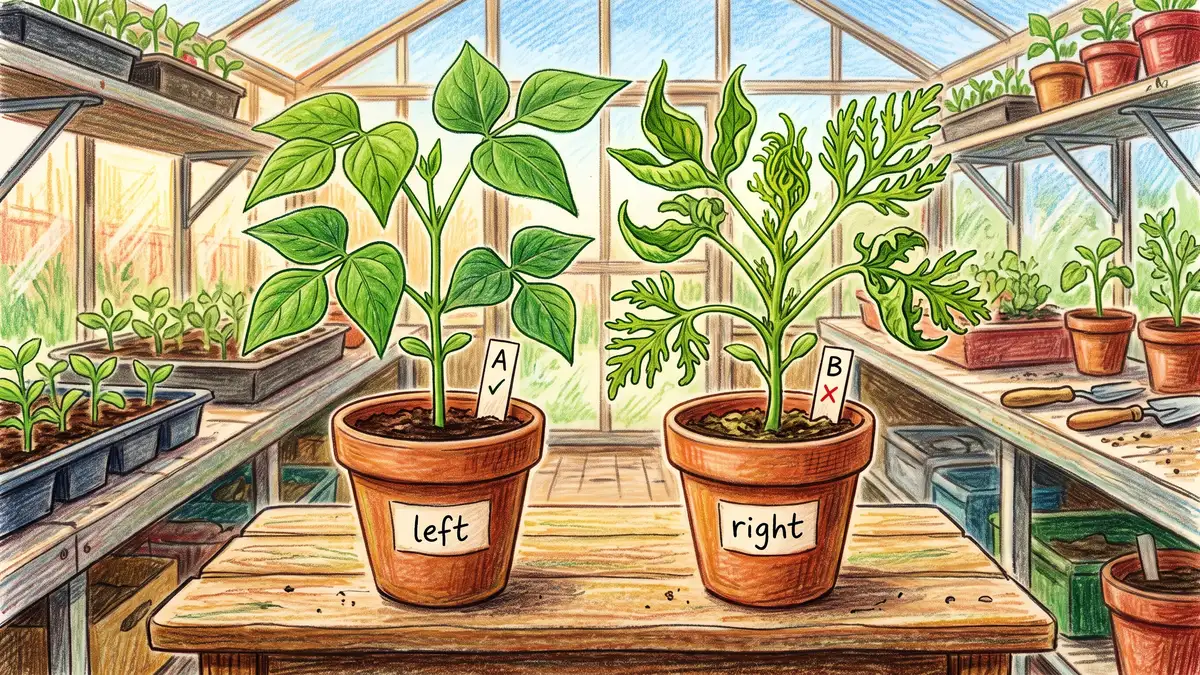
NCSU's home test: mix the suspect material with potting soil in one pot, use clean potting soil in a second as a control, and sow peas or beans in both. Grow them for two to three weeks side by side.
Read the leaves
Cupped, curled or fern-like distorted growth in the test pot and not the control means residue. Do not use that material. If the two look the same, you are clear.
Test the bed if you already spread it
NCSU also describes a field bioassay: sow peas or beans in short rows scattered across the area and watch for symptoms. If they appear, keep sensitive crops out until a later test comes back clean.
Straw Is Not Hay, and the Difference Matters
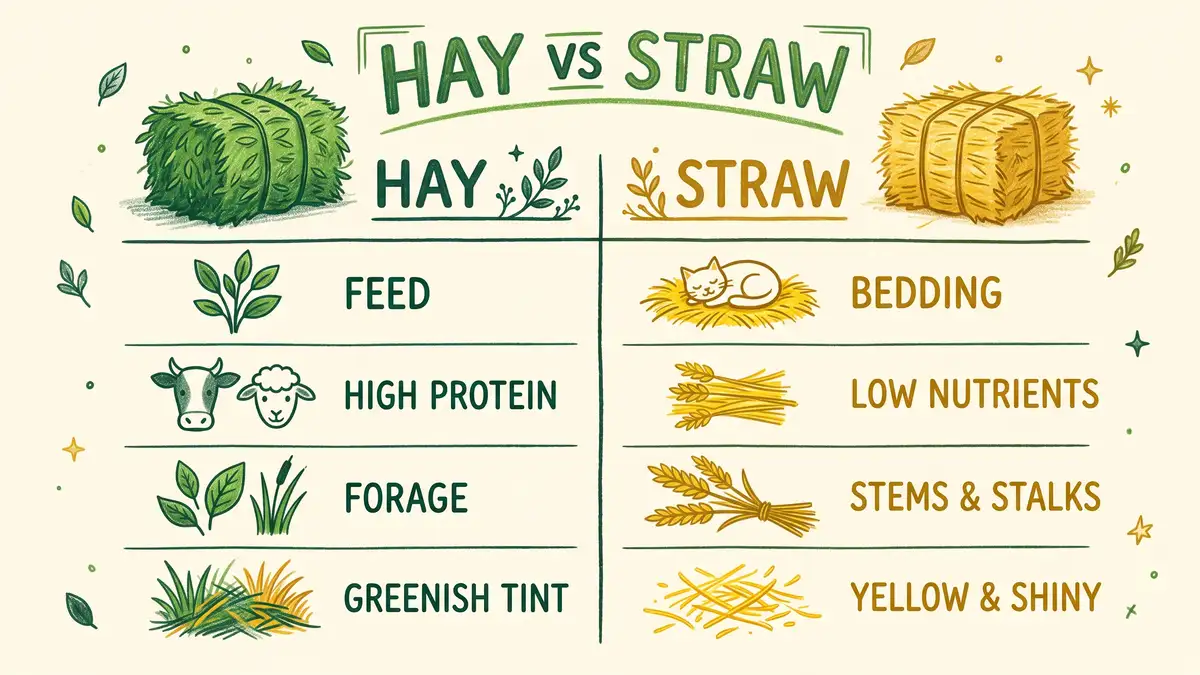
Michigan State University Extension calls straw an excellent choice for vegetable beds and cautions against hay because of its weed seed load. Straw is the hollow stalk left after grain harvest, so it carries far fewer viable seeds. It is also generally cheaper per bale to use as mulch. Our comparison of straw mulch versus hay mulch covers the trade-offs, but the short version for a Stout-style system is: use straw unless you have a hay source you can vouch for.
How Much Do You Actually Need, and What Does It Cost?
Less than you fear at 3 inches, a lot more than you expect at 8. The arithmetic is simple. A 100 square foot bed at 3 inches deep needs 25 cubic feet of loose material. The same bed at Stout's 8 inches needs about 67 cubic feet, nearly three times as much.
A standard small square bale flakes out to roughly 8 to 10 cubic feet loose, so that 100 square foot bed takes around 3 bales at 3 inches and 7 or 8 at 8 inches. Bale volume varies by press and moisture, so treat those counts as an estimate and buy one extra.
Add top-ups. Organic mulch at these depths settles and decomposes, so budget on roughly doubling your first-year volume over the following two seasons. The cost is genuinely low, and the labour saving against weekly weeding is where the method earns its reputation.
Key Takeaway
Plan on about 25 cubic feet, or 3 small bales, per 100 square feet at a 3-inch depth, plus top-ups. That is enough to suppress weeds and hold moisture without the oxygen problems that come with 8 inches of packed hay.
Where Does Deep Mulch Fail?
Cold wet springs, heavy clay, and slug country. These are the honest limits, and none of them appear in Stout's writing.
Mulch insulates in both directions. Oregon State notes that by insulating soil, mulch can delay spring warming and slow germination and early growth. On heavy clay in a northern garden that delay compounds, because clay already warms slowly and holds water. Pull the mulch off your early beds two to three weeks before sowing and rake it back once the soil has warmed.
Slugs are the other cost. University of Minnesota Extension notes that slugs overwinter as eggs under plant debris, mulch and boards, and that seedling damage is where they hurt most. Michigan State makes the same point about straw harbouring slugs and snails. Deep permanent mulch is excellent slug habitat, so keep it pulled back from young transplants.
Rodents complete the list. Penn State's vole guidance for orchards makes the mechanism clear: thick accumulated cover creates a thatch layer that shelters voles from predators. Keep mulch a few inches clear of stems, crowns and tree trunks and you remove most of the risk while keeping the coverage.
Frequently Asked Questions
Does the Ruth Stout method actually work?
The principle does, the specific depth needs adjusting. Permanent surface mulch genuinely suppresses weeds, conserves moisture and moderates soil temperature, and a study covered by Pacific Horticulture found leaf mulch holding daily soil temperature swings within 5°F against more than 21°F on bare soil. What has not aged well is the 8-inch figure on fine hay, which exceeds every current extension recommendation, and the assumption that any hay is safe to use. Run 3 to 4 inches of tested material and you get the method as intended.
How deep should mulch be in a vegetable garden?
Between 1 and 4 inches depending on the material. Cornell Cooperative Extension suggests 1 to 2 inches for vegetables and perennials. Penn State caps ornamental beds at 3 to 4 inches and warns that more than that can reduce oxygen and water reaching the plant. USDA NRCS caps fine-textured mulches at 2 inches specifically because they restrict oxygen. Coarse wood chips are the exception and can go deeper, but they belong on paths and around perennials rather than in annual vegetable beds.
Can I use hay as mulch in a vegetable garden?
Only if you can trace it. The risk is persistent broadleaf herbicides such as picloram, clopyralid and aminopyralid, which North Carolina State University Extension reports surviving in hay for years, with residual activity found after three years of dry storage. They damage beans, carrots, lettuce, grapes and many flowers. Ask the supplier what the field was sprayed with, and run NCSU's pot bioassay with peas or beans before spreading anything at scale. Straw is the lower-risk default.
Does deep mulch cause a nitrogen deficiency?
Not in the root zone, when it stays on the surface. Washington State University's wood chip research describes a thin nitrogen-depleted zone right at the mulch and soil interface, which is part of why mulch suppresses weed seed germination so well, while established plant roots below that interface are unaffected. The picture changes if you till high-carbon material into the soil, which does tie up nitrogen. Leave it on top and the effect works in your favour.
Is deep mulch better than no-dig gardening?
They are the same family, differing mainly in material. No-dig systems typically use finished compost as the surface layer, deep mulch uses hay or straw, and sheet mulching adds cardboard underneath to kill existing sod. Compost warms faster in spring and carries no herbicide risk, hay and straw are cheaper and better at holding moisture through a dry summer. Many gardens end up running both: compost on the early beds, straw on the summer crops. Our soil health guide covers how they fit together, and the wider design logic sits in our practical guide to permaculture.
Get the Weekly Dig
One practical permaculture guide a week, written for gardeners who do this on weekends: building living soil without buying it in bags. Free, no spam, unsubscribe any time.
Join the Weekly DigResources
- Ruth Stout, How to Have a Green Thumb Without an Aching Back (Internet Archive)
- Cornell Cooperative Extension, Mulches
- Penn State Extension, Mulch: A Survey of Available Options
- Oregon State University Extension, Gardening With Mulches
- USDA NRCS, Conservation Practice Standard 484 Mulching
- NC State Extension, Herbicide Carryover in Hay, Manure, Compost and Grass Clippings
- Michigan State University Extension, Select the Right Vegetable Garden Mulch
- University of Minnesota Extension, Slugs in Home Gardens
- Penn State Extension, Integrated Management of Voles
- Washington State University, Wood Chip Mulch Research Bulletin
- Pacific Horticulture, Benefits of Mulch in Regulating Soil Temperature
- Suppression of Weed and Insect Populations by Living and Straw Mulches (peer-reviewed)