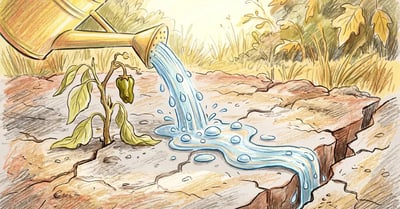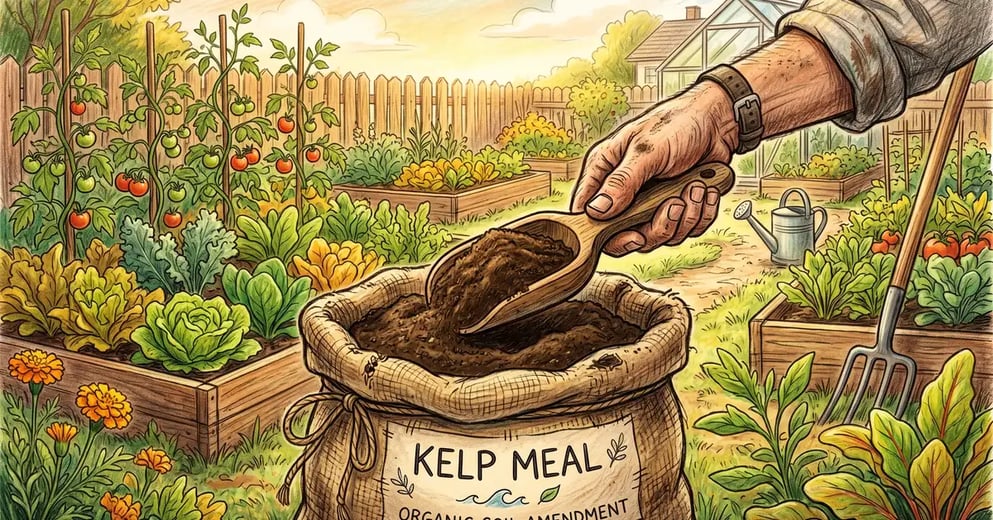

If your tomatoes are pale, your peppers stall mid-season, or your transplants take three weeks to settle in, your soil is probably short on trace minerals more than on nitrogen. A 5 lb bag of kelp meal mixed into your spring beds delivers 60+ micronutrients and natural plant hormones that turn around stuck growth in about two weeks. alfalfa meal application rates
What kelp meal actually is
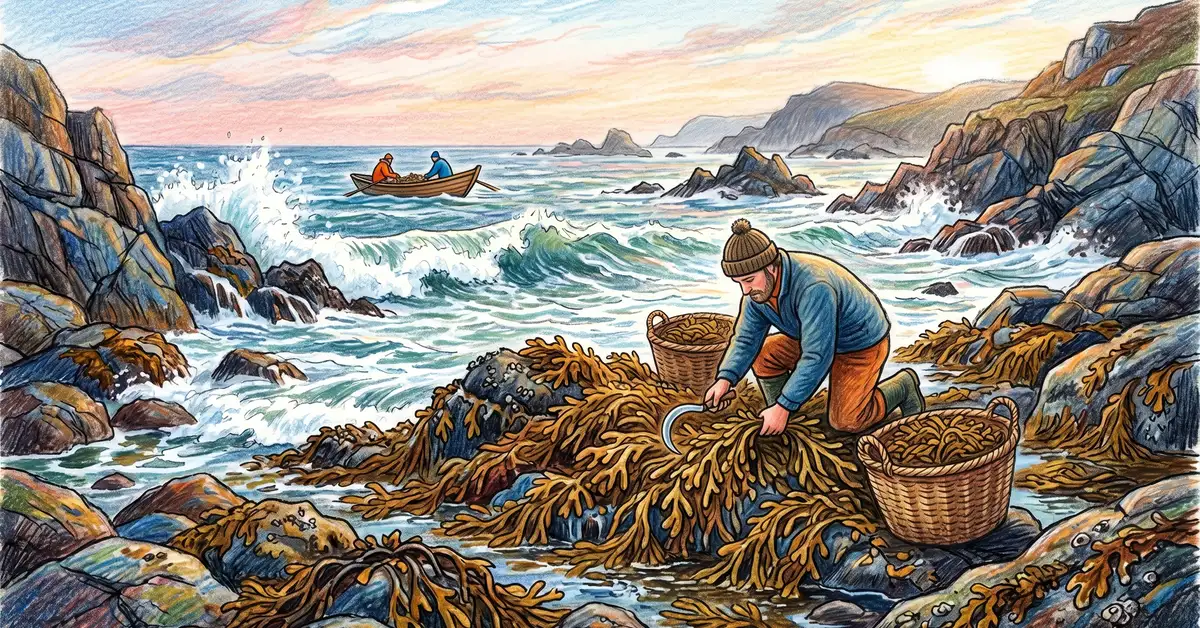
Kelp meal is dried, milled brown seaweed sold as a fine to coarse powder for soil application. The vast majority of commercially available kelp meal in the United States is Ascophyllum nodosum, a brown rockweed harvested along the cold North Atlantic coastlines of Maine, the Canadian Maritimes, Norway, Iceland, and the British Isles. Less commonly you will see Laminaria species (true kelps) from Pacific coasts. Both belong to the brown algae group Phaeophyceae and offer similar mineral profiles for garden use.
The processing matters. Quality kelp meal is dried below 100 F (38 C) to preserve the heat-sensitive plant hormones and enzymes that make it more than a fertilizer. According to the University of Maine Cooperative Extension, properly processed kelp retains its full mineral and hormone profile through milling. Cheap kelp meal that has been heat-dried at high temperatures loses much of its hormonal value and acts more like a slow nitrogen source than a biostimulant.
The harvest is regulated. The Maine Department of Marine Resources caps wild rockweed harvest at 17 percent of standing biomass per year and requires harvesters to leave at least 16 inches of frond from the holdfast so the plant can regrow. This regulated approach is one reason kelp meal is widely accepted as a sustainable organic amendment, including under the USDA National Organic Program.
What makes kelp meal different from any other organic fertilizer
Most organic amendments are scored on NPK. Kelp meal scores poorly there at roughly 1-0.5-2, which is why it is the wrong choice if you only need nitrogen. The reason gardeners use it is everything that does not show up in the NPK number: micronutrients, plant hormones, alginates, and a measurable effect on soil biology.
Why this works (the permaculture principle)
Permaculture treats soil as a living ecosystem, not a chemistry beaker. Trace minerals, hormones, and microbial food sources are what most synthetic fertilizers strip out of the soil over time. Kelp meal puts those back in a single application, mimicking the slow mineral accumulation that happens in healthy forest soils through leaf litter and decay. This is the same logic behind composting and no-dig gardening: feed the soil web, and the plants take care of themselves.
Micronutrients. Kelp meal contains 60+ trace minerals that vegetables cannot get in adequate amounts from most US backyard soils. Michigan State University Extension lists iron, manganese, zinc, copper, boron, molybdenum, and iodine as the most agriculturally significant. A single pound per 100 square feet supplies trace mineral levels comparable to a full compost application without the bulk.
Plant hormones. Brown seaweeds contain natural cytokinins, auxins, and gibberellins. These are the same hormones plants produce themselves to regulate root development, cell division, and stress response. Penn State Extension reviewed the research and concluded that the cytokinin content in kelp products is significant enough to act as a measurable growth stimulant, particularly for transplants and stressed plants.
Alginates and polysaccharides. The cell wall compounds in brown seaweeds (alginic acid, fucoidan, laminarin) trigger a low-level plant immune response when applied to soil or foliage. NC State Extension Gardener Handbook describes this as "induced systemic resistance" and notes that plants treated with kelp products show measurably better resistance to fungal disease and insect stress in trial conditions.
Soil biology. The complex carbohydrates in kelp meal feed soil bacteria and fungi. Cornell Cooperative Extension research summarized at the Cornell Soil Health Laboratory has documented measurable increases in beneficial microbial populations following kelp application, with particular benefit to mycorrhizal fungi that partner with plant roots.
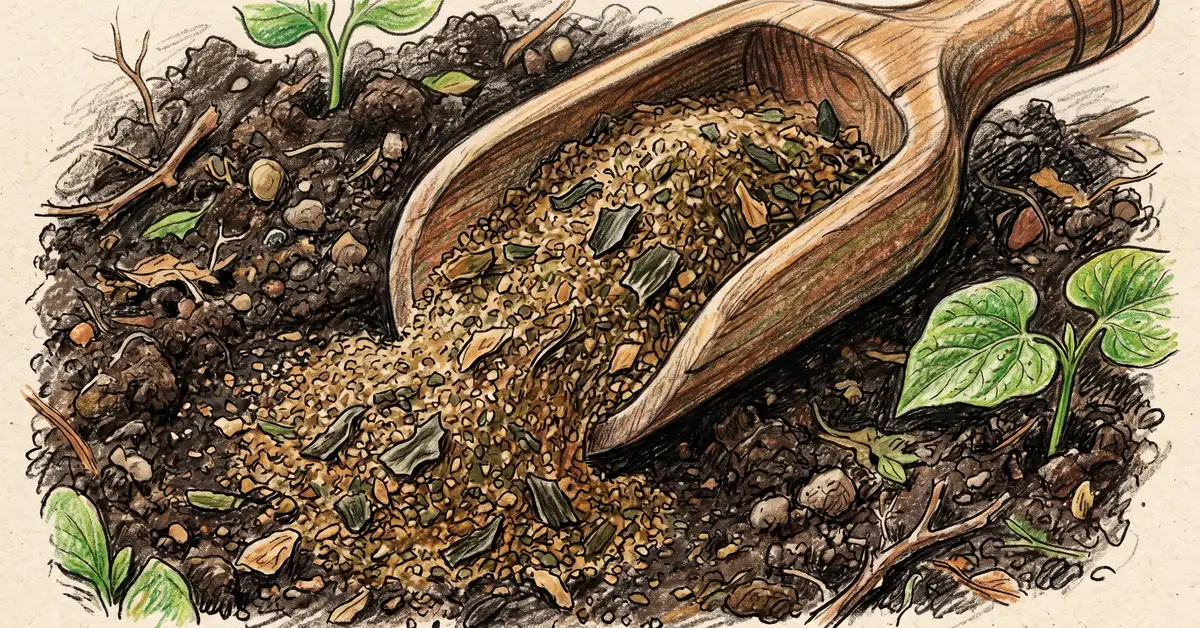
The 5-step application walkthrough
This sequence covers a spring application to a vegetable bed. Total hands-on time is about 15 to 20 minutes for a 100 sq ft bed. Cost is roughly $3 to $5 in kelp meal at backyard rates.
Calculate your rate at 1 lb per 100 sq ft
The standard backyard rate is 1 pound (about 2 cups) per 100 square feet (about 9.3 sq m). A typical 4 by 8 foot raised bed (32 sq ft) needs about 5 ounces (140 g, just under 3/4 cup). Weigh or measure rather than estimating. Kelp meal is slow-release so under-applying is fine but over-applying wastes money.
Broadcast on the bed and rake in
Sprinkle the powder evenly across the bed surface, then rake or hoe the top 2 to 3 inches (5 to 7.5 cm) of soil to incorporate it. There is no need to dig deep. Most root activity happens in the top 6 inches anyway, and the kelp will continue moving down with watering.
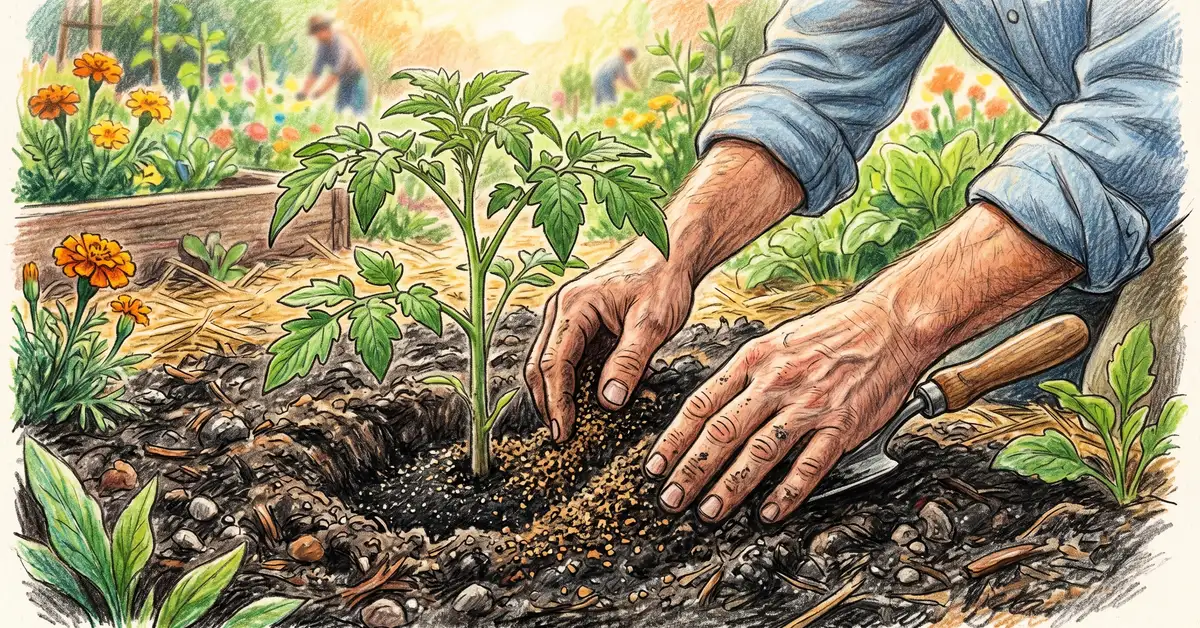
Or apply 1 to 2 tbsp per transplant hole
For individual transplants like tomatoes, peppers, or seedlings, drop 1 to 2 tablespoons of kelp meal into each planting hole, mix with the surrounding soil, then plant. NC State Extension recommends this method as the most efficient use of the amendment for high-value transplants.
Water in thoroughly
A good initial watering helps the kelp meal start the breakdown process and brings the soluble compounds into contact with roots quickly. Plant hormones in kelp begin acting on plant tissue within days; full mineral release takes 4 to 6 months.
Repeat annually in spring (or split spring and fall)
For most US backyards, one annual spring application is sufficient. For high-demand beds (continuous vegetable rotations, container plantings) a smaller fall application at 1/2 lb per 100 sq ft provides over-winter trace mineral availability for spring growth.
The seed-soak trick
One overlooked use of kelp products is seed treatment. Soaking seeds in a dilute kelp solution before sowing increases germination rates and produces stronger seedlings. Oregon State University Extension documents 10 to 30 percent germination improvements in vegetable seeds soaked in kelp solution for 6 to 12 hours before planting.
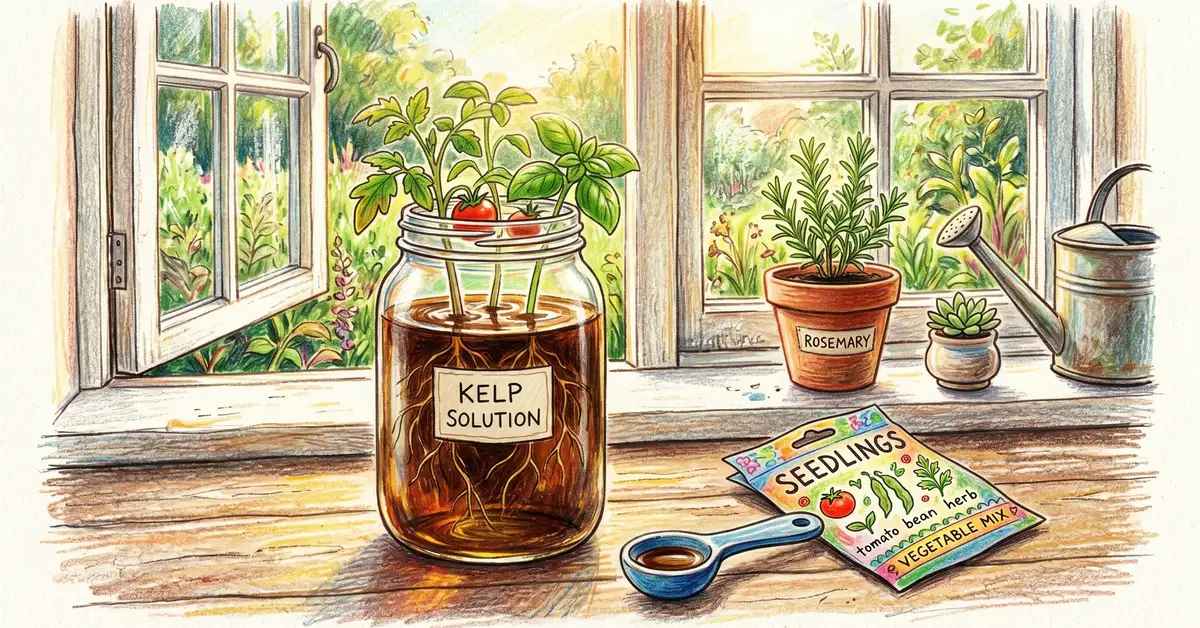
To make a soak solution from meal, steep 1 tablespoon of kelp meal in 1 gallon of warm water overnight, then strain through cheesecloth. Soak large seeds (squash, beans, peas, sunflowers) for 8 to 12 hours and small seeds for 4 to 6 hours. Plant immediately and water with the remaining liquid. The hormones and trace minerals accelerate germination and give seedlings a measurable head start.
This is the cheapest way to apply kelp benefit: a single tablespoon of meal in a jar treats hundreds of seeds.
Where kelp meal fits in a backyard rotation
| Plant or situation | Application | Notes |
| Tomatoes, peppers, eggplant | 1 to 2 tbsp per transplant hole | Reduces transplant shock, supports steady fruit set |
| Leafy greens (lettuce, kale, spinach) | 1 lb per 100 sq ft broadcast | Steady mineral availability for tender growth |
| Brassicas (broccoli, cabbage, brussels) | 1 lb per 100 sq ft broadcast | Boron content particularly useful for brassica heads |
| Fruit trees and berries | 1/4 to 1/2 cup per tree, top-dressed | Apply at drip line, work into mulch lightly |
| Roses and flowering perennials | 2 tbsp per plant in spring | Hormone content supports bloom set |
| Lawns (overseed or repair) | 5 lb per 1,000 sq ft | Apply with compost top-dressing |
| Compost pile | 1 cup per cubic yard | Accelerates breakdown, enriches finished compost |
| Mediterranean herbs (rosemary, lavender, sage) | Skip | These plants thrive on low-fertility soil; kelp can cause weak floppy growth |
Source: University of Maine Cooperative Extension Bulletin #2160 and Michigan State University Extension.
Kelp meal versus liquid kelp and kelp extract
Three kelp products exist on garden store shelves and they are not interchangeable.
Kelp meal (dry powder). Slow-release soil amendment. Apply once per year at 1 lb per 100 sq ft. Best for steady season-long mineral availability. Cost about $15 to $25 per 5 lb bag.
Liquid kelp (concentrate). Fast-acting foliar spray or root drench. Apply diluted (typically 1 tablespoon per gallon) every 2 to 4 weeks during the growing season. Best for stressed plants, transplant rescue, and rapid response to deficiencies. Cost about $25 to $40 per quart, treats up to 1,000 gallons.
Soluble kelp extract powder. Concentrated soluble powder, mixed with water for foliar or fertigation. Highest hormone concentration per dollar but most expensive per ounce. Best for serious vegetable growers or container gardeners using fertigation. Cost about $35 to $60 per pound.
For most backyards, meal is enough. Add a quart of liquid kelp once a year only if you do a lot of transplanting or have stressed plants to rescue.
What about pets, kids, and food safety?
Kelp meal is non-toxic to pets and children at any reasonable contact level. Dogs occasionally try to eat it because of the fishy smell; that is not dangerous in small amounts but can cause mild stomach upset. NIH Office of Dietary Supplements notes that the iodine content in kelp products can be high when consumed as food supplements, but the incidental exposure from gardening is far below any threshold of concern.
For food crops, kelp meal is approved under the USDA National Organic Program. Apply at any point in the growing season including immediately before harvest. There is no waiting period.
Get the Weekly Dig
One practical permaculture guide a week, written for gardeners who do this on weekends: building living soil without buying it in bags. Free, no spam, unsubscribe any time.
Join the Weekly DigFrequently asked questions
How much kelp meal should I add to soil?
The standard rate is 1 pound (about 2 cups) per 100 square feet (9.3 sq m). For individual transplants, use 1 to 2 tablespoons per planting hole. For fruit trees, use 1/4 to 1/2 cup per tree top-dressed at the drip line. Once per year is enough for most situations.
How do you use kelp meal fertilizer?
Broadcast the powder evenly over the soil surface, then rake or hoe the top 2 to 3 inches to incorporate it. Water in thoroughly. Apply in spring at planting time, or split between spring and fall for high-demand beds. For transplants, drop 1 to 2 tablespoons into each planting hole.
How do you make liquid kelp fertilizer from kelp meal?
Steep 1 tablespoon of kelp meal in 1 gallon of warm water overnight, then strain through cheesecloth. Use the strained liquid as a foliar spray or root drench. Use within 48 hours of brewing for best biostimulant activity.
Which plants don't like seaweed fertilizer?
Mediterranean herbs and other plants that thrive in low-fertility soil do not benefit from kelp meal and may produce weaker growth with it. Skip kelp meal for rosemary, lavender, sage, thyme, oregano, and most desert plants like cacti and succulents.
What is kelp extract?
Kelp extract is a concentrated soluble form of kelp products, sold either as a liquid concentrate or a soluble powder. It is more concentrated than kelp meal and acts faster as a foliar feed or drench. It is the same source material (usually Ascophyllum nodosum) processed differently for faster availability.
How much kelp meal per gallon of potting soil?
For container growing, mix 1 to 2 tablespoons of kelp meal per gallon of potting soil at the time of mixing. For established containers, top-dress with 1 teaspoon and water in. Container plants benefit from kelp because container mixes are typically depleted of trace minerals.
Where can I buy kelp meal?
Kelp meal is sold at organic garden centers, farm supply stores like Tractor Supply, and online from organic gardening suppliers. Look for product from named sources (Maine, Nova Scotia, Iceland, Norway) and confirm low-temperature drying. A 5 lb bag treats about 500 sq ft of garden.
Is kelp meal the same as kelp fertilizer?
Kelp meal is one form of kelp fertilizer (dry, slow-release). Kelp fertilizer is the broader category that also includes liquid kelp concentrate and soluble kelp extract powder. All three forms come from similar source seaweed but differ in processing, speed of action, and best use.
Resources
- University of Maine Cooperative Extension Bulletin #2160: Seaweed for Gardens
- Michigan State University Extension: Why Kelp Meal Belongs in Your Garden
- Penn State Extension: Seaweed Extracts as Biostimulants
- Oregon State University Extension: Seaweed Extracts in Organic Gardens
- NC State Extension Gardener Handbook: Soil and Plant Nutrients
- Cornell Soil Health Laboratory
- Maine Department of Marine Resources: Seaweed Fishery Regulations
- NIH Office of Dietary Supplements: Iodine