
What Is Iron Chlorosis, and Why Are the New Leaves Yellow?
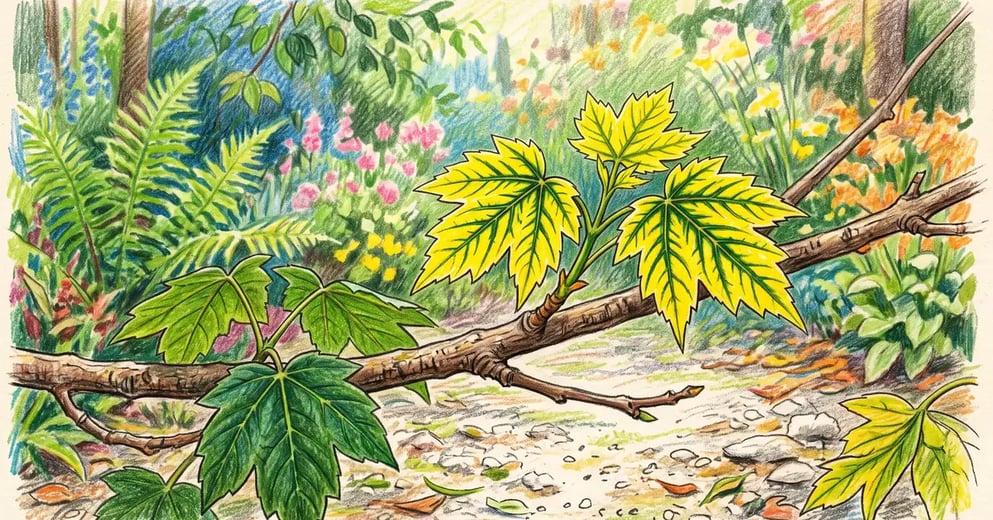
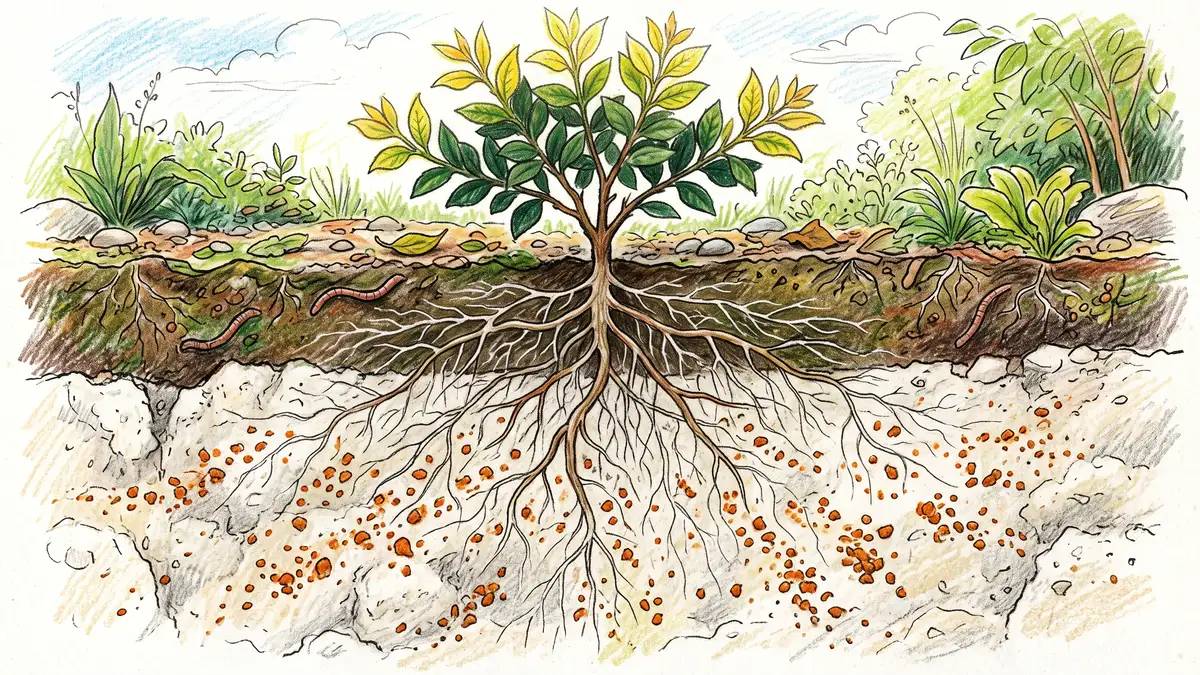
The newest leaves at the tips of your maple, blueberry or grape have gone bright yellow while the veins stay dark green, and the older leaves further down look fine. That pattern is iron chlorosis, and it almost never means your soil lacks iron. University of Arizona Cooperative Extension puts the paradox plainly: most soils contain abundant iron, but in alkaline conditions it forms compounds roots simply cannot absorb. planting on alkaline high desert soil
The iron is there. The chemistry is against you. That changes everything about the fix, because dumping iron sulphate on a limestone-rich bed wastes $30 and a Saturday. Below: how to confirm the diagnosis, which treatment works at your pH, what it costs, and how long it lasts. For your baseline, start with our soil health guide.
What you'll get:
- A quick diagnosis separating iron from nitrogen, magnesium and manganese
- Which chelate works at your pH, and why the cheap one fails
- Sulphur rates per 100 square feet, and when acidifying wastes money
- Cost and duration for every treatment option
- The long-term fixes that stop it returning each spring
Key Takeaway
Iron chlorosis is a solubility problem, not a supply problem. Above about pH 7.5, iron precipitates into forms roots cannot use. Fix the availability (chelate, organic matter, drainage) or change the plant. Adding plain iron to limestone soil rarely helps.
How Do You Confirm It Is Iron and Not Something Else?
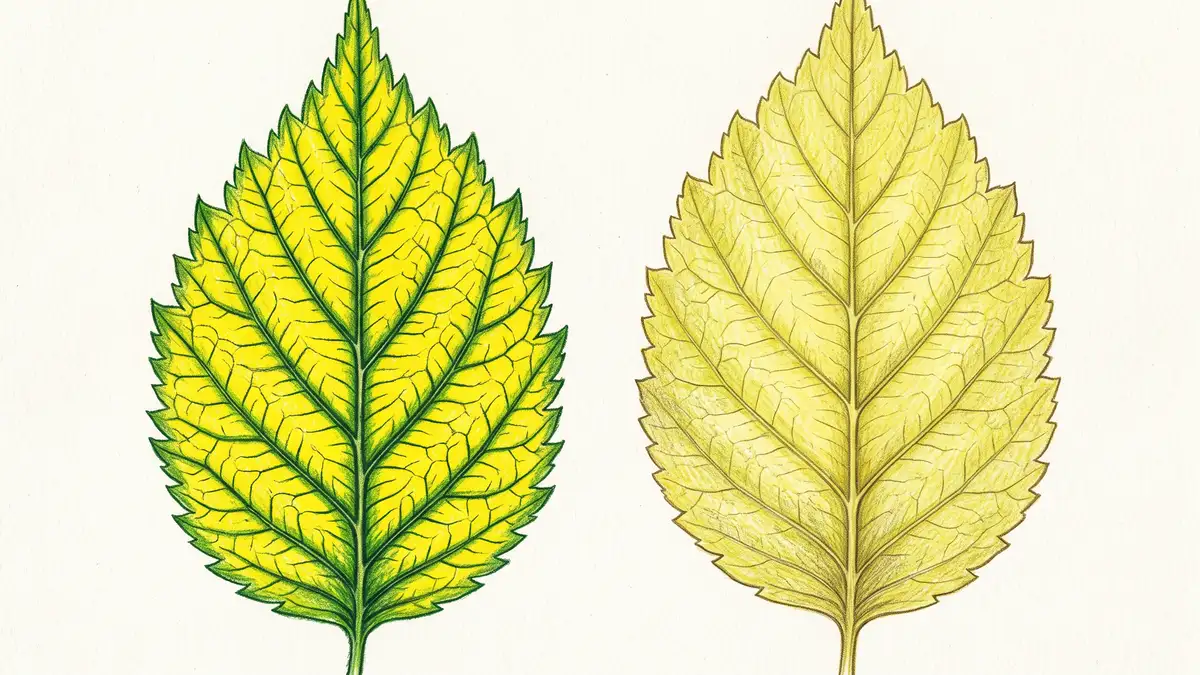
Leaf age is the fastest tell. Iron is immobile, so the plant cannot rob old leaves to feed new growth, and symptoms appear on the youngest leaves first. Nitrogen and magnesium are mobile, so they show on the oldest leaves first. That rule settles most garden diagnoses in seconds.
Utah State University Extension describes the signature as leaves that are yellow, light green or white with distinct green veins, turning entirely white in severe cases. Iowa State adds that pin oak chlorosis runs yellow to white to brown with curled leaf margins, and after several years shoot growth drops and dieback begins.
| Nutrient | Which Leaves | Pattern |
| Iron | Youngest, shoot tips | Bright yellow between green veins, whitening later |
| Manganese | Youngest | Finer netted chlorosis, veins less starkly green |
| Nitrogen | Oldest, lower canopy | Uniform pale yellow, veins fade too |
| Magnesium | Oldest | Mottled interveinal yellowing, often reddish tints |
| Sulphur | Youngest | Uniformly pale, no vein contrast |
Sources: Purdue University Extension BP-27-W, Iowa State University Extension, University of Minnesota Extension
Iron and manganese look close enough that Purdue Extension publishes a branch test. Mix separate 5 percent solutions of iron, magnesium, manganese and zinc sulphate, about 1.5 to 2 tablespoons per quart of distilled water, and spray each on a different branch. Whichever greens up names your deficiency, for a few dollars and a week or two of waiting.
Then run a basic soil test for pH, plus a vinegar fizz test: drop household vinegar on dry soil, and if it foams you have free lime and a hard road on acidification.
At What Soil pH Does Iron Stop Being Available?
The collapse starts around pH 7.0 and turns chronic above 7.5. Kansas State University Extension states iron is readily available between pH 5.0 and 6.5 and converts to insoluble forms at 7.0 and above. Purdue puts the practical line at 6.5 for sensitive trees and shrubs.
University of Arizona Cooperative Extension reports chlorosis is frequent in soils with pH above 7.5 and plentiful lime. Utah State reports typical Utah soils run pH 7.2 to 8.3 with calcium carbonate through most of the profile, and names lime as the single most important predisposing factor.
Two drivers compound it. Bicarbonate in irrigation water raises pH and precipitates iron; Texas A&M's guide notes the bicarbonate ion harms plant mineral nutrition, and high potassium can trigger both magnesium deficiency and iron chlorosis. Water management matters more still: Utah State calls irrigation probably the most important consideration on alkaline soil, because waterlogged roots cannot take up iron whatever you apply.
Common Mistake to Avoid
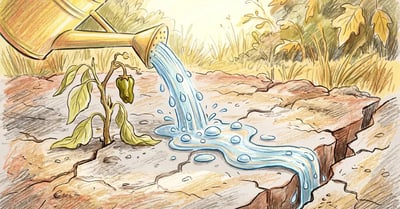
Watering a chlorotic plant more because it looks stressed. On heavy clay or compacted ground, over-irrigation is the cause, not the cure. Wet the root zone, then wait until the soil dries down. Compaction worsens it by cutting off air to roots.
Which Iron Treatment Actually Works at High pH?
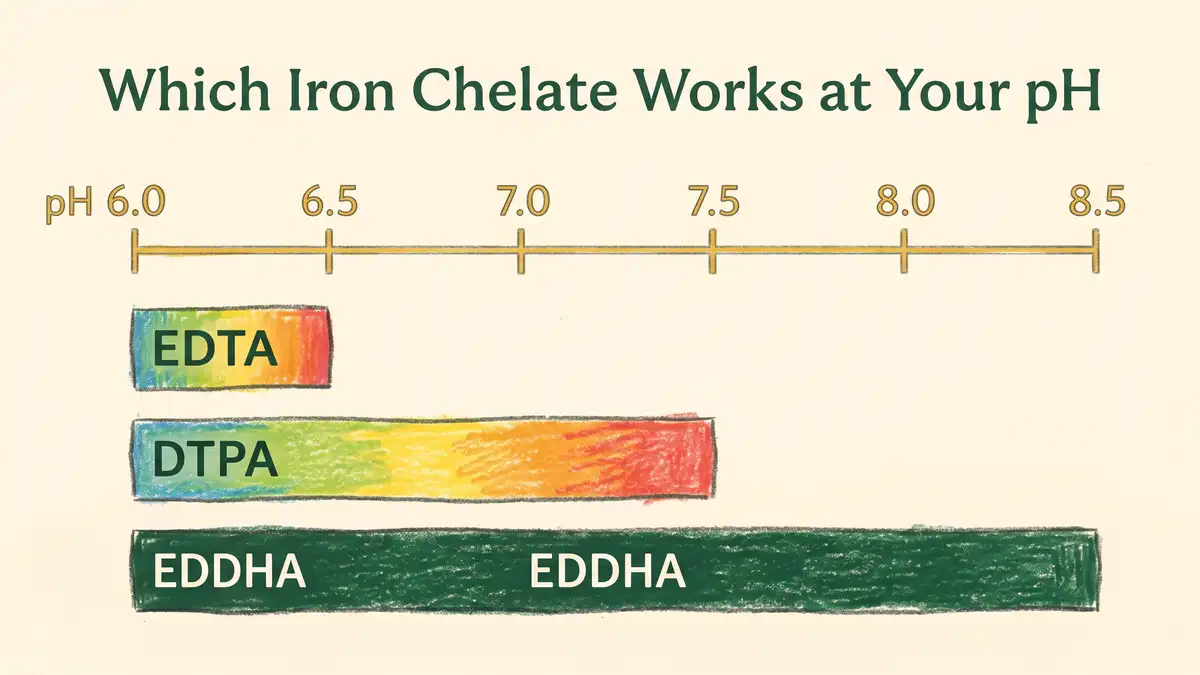
This is where most money gets wasted. Chelates hold iron in solution so roots can reach it, but each has a pH ceiling. USDA ARS research notes EDTA forms a stable iron complex only across a pH range of about 4.0 to 6.3. Above that the chelate lets go and the iron precipitates, so EDTA on pH 8 soil is watered-in dust.
DTPA holds to roughly pH 7.5. EDDHA (sold as FeEDDHA or Sequestrene 138) stays stable in calcareous soil, which is why extension services across the alkaline West point to it. It costs several times more per pound, and it is the only soil chelate that reliably works there.
| Treatment | Works at pH 8? | Typical Cost | How Long It Lasts |
| Foliar iron sulphate spray | Yes, on leaves only | $10 to $20 | Weeks; new growth stays yellow |
| Soil EDTA chelate | No | $15 to $25 | Ineffective above pH 6.3 |
| Soil DTPA chelate | Marginal | $25 to $40 | One season at best |
| Soil EDDHA chelate | Yes | $40 to $90 | One to two seasons |
| Elemental sulphur | Only on low-lime soil | $15 to $30 | Months to years, often reverses |
| Trunk injection | Yes | $75 to $250 per tree | Two to four years, wounds trunk |
Sources: USDA ARS (Albano and Miller, 2001), Utah State University Extension, North Dakota State University Extension. Costs are US retail estimates for a home-garden quantity.
Foliar sprays green the leaves they touch within a week or two, but iron does not travel from a sprayed leaf into new growth, so next month's leaves emerge yellow again. Ferrous sulphate also stains concrete and siding rust-orange permanently. Treat foliar as first aid, not a cure.
Can You Just Acidify the Soil With Sulphur?
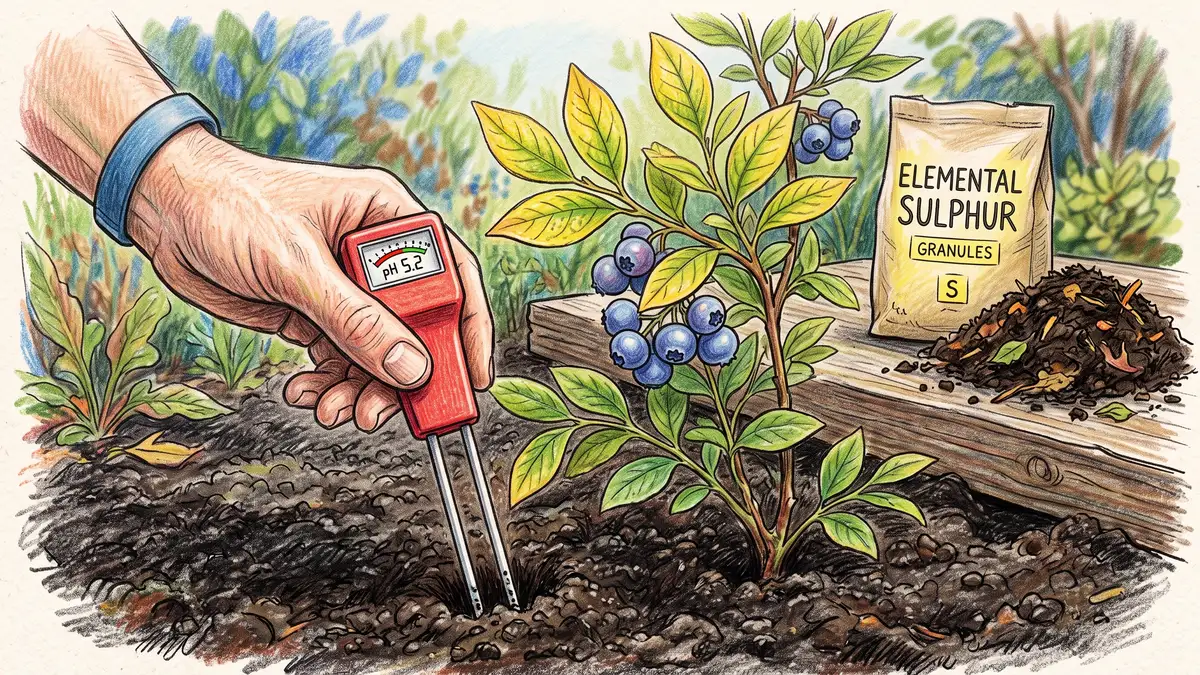
Sometimes, and only if your soil is not calcareous. Michigan State Extension's table shows dropping loam from pH 6.5 to 4.5 takes roughly 2,020 pounds of elemental sulphur per acre, about 4.6 pounds per 1,000 square feet, or half a pound per 100 square feet. Clay and high organic matter need more.
Purdue caps single applications at 20 pounds per 1,000 square feet and says retest before reapplying. Sulphur also works slowly, since soil bacteria must oxidise it, which stalls in cold soil.
The catch is free lime. PlantTalk Colorado states that lowering pH with sulphur is less feasible when alkaline soils are high in lime, and above pH 7.5 the better control is avoiding sensitive trees. Carbonate buffers the soil back toward alkaline, so you pay to fight chemistry that resets each season. If your vinegar test fizzed hard, spend on plant selection or EDDHA. Our soil pH guide covers beds where acidifying does make sense.
What Does Not Work, and Why
Three popular remedies fail for the same reason: they never address solubility. Rusty nails add iron oxide, the exact insoluble form your soil is already full of. Epsom salt is magnesium sulphate and supplies no iron at all, as our piece on whether Epsom salt works explains. General-purpose fertiliser often makes things worse: Texas A&M turfgrass guidance notes high phosphorus and high bicarbonate irrigation water both interfere with iron uptake. Utah State is blunt about the ceiling: where chlorosis recurs despite repeated treatment, replacing the plant is the honest answer.
How Do You Fix It for Good?
Five steps, ordered by return per hour. The first two cost almost nothing and solve a surprising share of cases on their own.
Fix the water before the chemistry
Cut irrigation frequency, water deeply and let the top 4 inches (10 cm) dry between waterings. Improve drainage if water stands after rain.
Test pH and check for free lime
Test pH, plus a vinegar fizz test for carbonate. Strong fizz means acidification will not hold, so plan around EDDHA and species choice.
Build organic matter every season
Apply 1 to 2 inches (2.5 to 5 cm) of compost and keep 3 inches (7.5 cm) of mulch. The cheapest durable gain in iron availability you can make.
Apply EDDHA chelate if pH is above 7.5
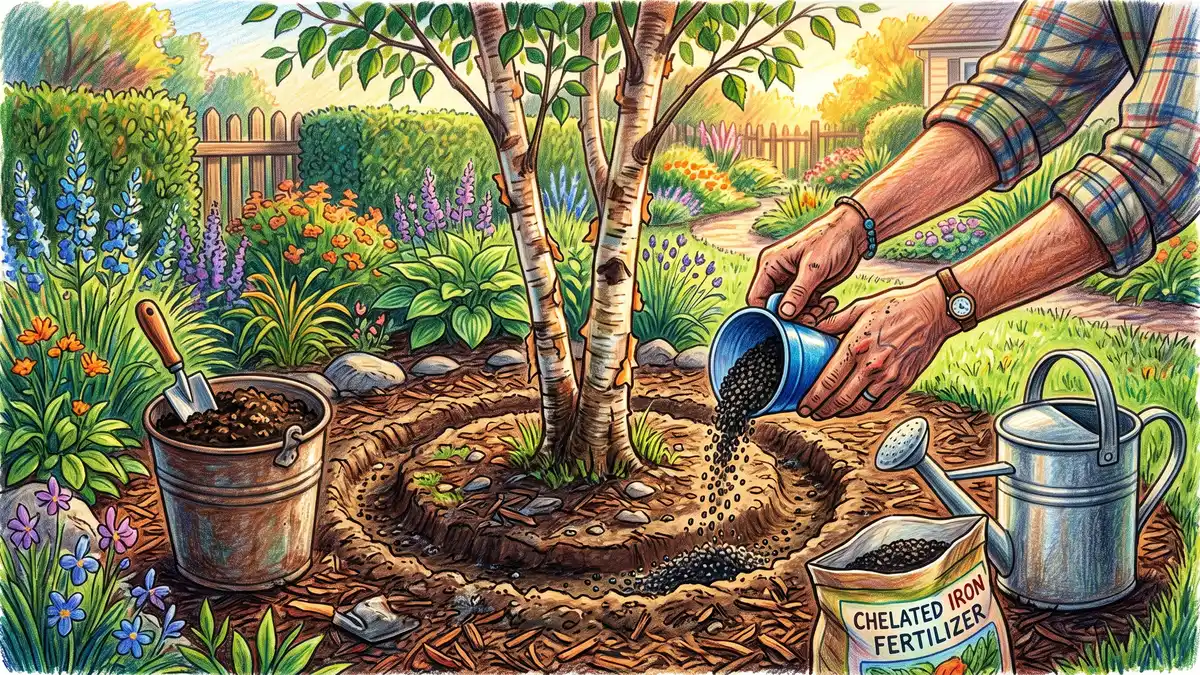
Work it into a shallow ring trench at the drip line in early spring, before new growth, and water in. Follow the label rate for trunk diameter or bed area.
Replace chronic offenders
If a pin oak or silver maple has been yellow three straight seasons, swap it for an alkaline-tolerant species. Treatment costs will exceed the tree's value.
Why This Works: Living Soil as a Chelate Factory
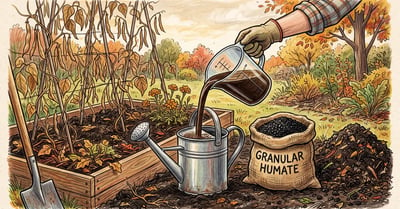
Step 3 is not filler. Zanin and colleagues found humic substances form stable iron complexes across roughly pH 5 to 9, keeping iron soluble exactly where mineral iron precipitates. Decomposing organic matter manufactures natural chelates continuously, for free. Same job as EDDHA, done by the soil food web instead of a bag.
Why This Works: Plants Have Their Own Strategies
University of Minnesota Extension notes Type I plants including soybean, azaleas and blueberries excrete acids and reductants from their roots to pull iron in. Grasses use a second strategy, releasing phytosiderophores that grab iron directly. Choosing plants whose strategy suits your soil is the permaculture version of "right plant, right place", and it beats fighting the soil every season.
Key Takeaway
Water management and organic matter come first, chelates second, plant replacement third. Use EDDHA above pH 7.5, skip EDTA on alkaline soil, and treat foliar sprays as a stopgap.
Frequently Asked Questions
How do you fix iron deficiency in plants?
Match the fix to your soil pH. Below 6.5, almost any iron product works, including cheap EDTA chelate or iron sulphate. Above 7.5, apply an EDDHA chelate to the soil in early spring, because other chelates release their iron before roots reach it. Alongside that, water less often, improve drainage, and add compost and mulch each season. Foliar sprays green existing leaves but do nothing for later growth.
What causes iron deficiency in plants?
High soil pH is the main driver. Kansas State Extension notes iron is readily available between pH 5.0 and 6.5 but converts to insoluble forms at 7.0 and above. Free lime holds pH high and buffers against correction, and bicarbonate in irrigation water pushes it higher. Waterlogging, compaction and heavy phosphorus all worsen uptake. Total soil iron is almost never the issue.
How do you treat iron chlorosis in maple trees?
For silver and red maples, apply an EDDHA chelate into a shallow ring trench at the drip line in early spring and water it in. Expect one to two seasons per application. For high-value mature trees, trunk injection lasts two to four years but wounds the trunk and costs $75 to $250. Reduce irrigation frequency at the same time. After three consecutive chlorotic seasons on calcareous soil, replacement is usually the cheaper decision.
How do you fix yellow blueberry leaves?
Blueberries want pH 4.5 to 5.5, so yellowing on alkaline soil is a site mismatch more than a fixable deficiency. On non-calcareous ground, elemental sulphur can bring pH down; budget roughly half a pound per 100 square feet per pH unit on loam, applied gradually and retested. On limestone soil, use containers or a raised bed of acidic mix. Our guide to blueberry companion plants covers acid-loving neighbours.
How do you give iron to plants naturally?
Build organic matter. Humic substances from compost form iron complexes that stay soluble from about pH 5 to 9, exactly where mineral iron drops out of solution. Apply 1 to 2 inches of compost annually and keep a mulch layer of about 3 inches, and avoid heavy phosphorus. This will not rescue a pin oak on limestone in one season, but on marginally alkaline soil it narrows the gap and cuts how often you buy chelate.
Get the Weekly Dig
One practical permaculture guide a week, written for gardeners who do this on weekends: building living soil without buying it in bags. Free, no spam, unsubscribe any time.
Join the Weekly DigResources
- Utah State University Extension: Iron Chlorosis
- Purdue University Extension: Iron Chlorosis of Trees and Shrubs (BP-27-W)
- University of Arizona Cooperative Extension: Iron Deficiency (2024)
- Kansas State University Extension: Iron Chlorosis
- Iowa State University Extension: Pin Oak Chlorosis
- PlantTalk Colorado: Iron Chlorosis in Trees
- North Dakota State University Extension: Iron Chlorosis in Trees
- USDA ARS: FeEDTA Chemistry and Stability (Albano and Miller)
- Zanin et al. (2019): Humic Substances Contribute to Plant Iron Nutrition
- Michigan State University Extension: Lowering Soil pH With Sulfur