
Planting a cover crop is the easy part. Terminating it at the right moment, with the right tool, decides whether you get a 10x soil-building windfall or a year of fighting volunteer regrowth. The four backyard methods (chop and drop, crimping, tarping, and incorporation) each have a different sweet spot. Get the timing right and the next crop plants directly into a living mulch bed with no tilling and almost no weeds. returning nitrogen to the soil sowing cover crops in fall
Why timing is the whole game
Two failures account for nearly every cover crop problem in a backyard. The first is terminating too early, before the plant has put on enough biomass to be worth the bed-occupation time. The second is terminating too late, after the cover crop sets viable seed and turns into a multi-year weed in the same bed.
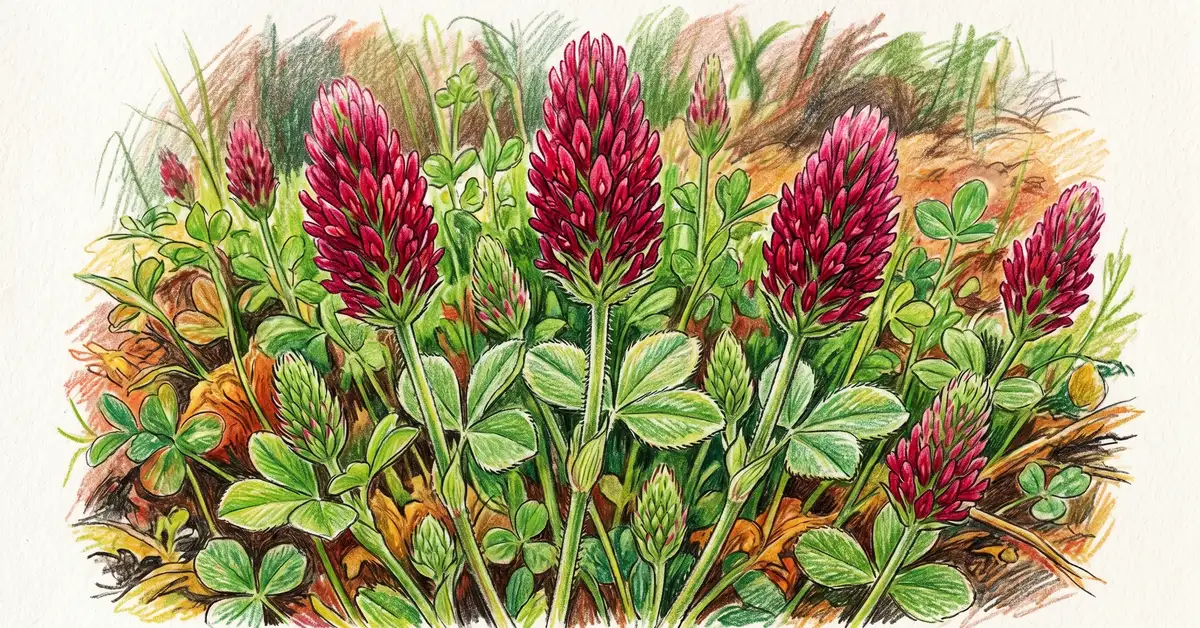
The universal cue across cover crop species is the 50 percent bloom mark. At that stage the plant has reached maximum biomass and maximum nutrient concentration. SARE's Managing Cover Crops Profitably identifies this window as the optimum for both biomass and nutrient cycling. Rodale Institute roller-crimper research shows kill rates above 90 percent when winter rye is crimped at full anthesis (pollen-shedding stage), versus less than 60 percent at boot stage two weeks earlier.
Each species has its own bloom timing within the broad rule. Penn State Extension documents the practical numbers most US backyard gardeners encounter:
- Crimson clover: terminate at 50 percent bloom (mid to late May in zones 6-7).
- Winter rye: terminate at full anthesis (when pollen sheds, late May to early June).
- Hairy vetch: terminate at 50 percent bloom plus 7 days for maximum nitrogen release.
- Buckwheat: terminate 7 to 10 days after first flowers open, before any seed sets.
- Oats and field peas: terminate at flowering, before seed milk stage.
The 4 termination methods, each in detail
Chop and drop (mow and mulch)
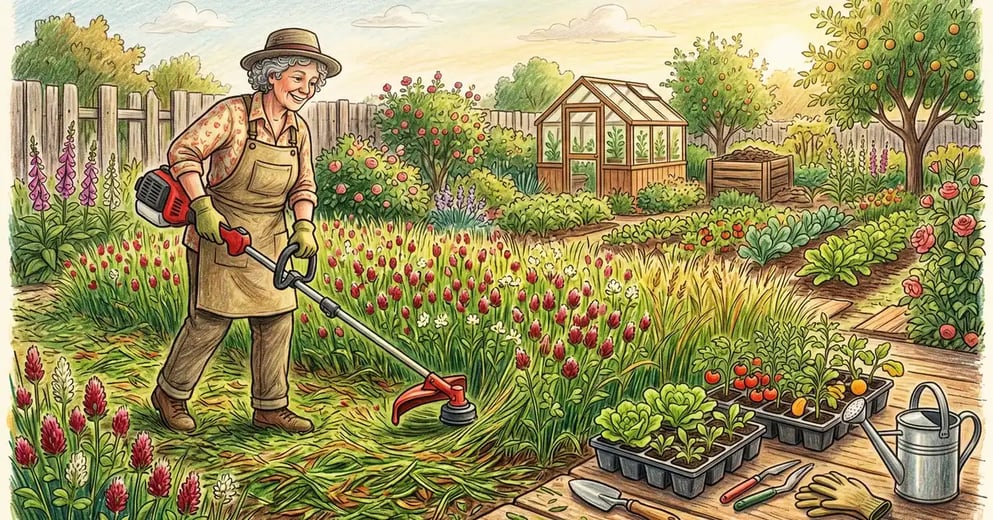
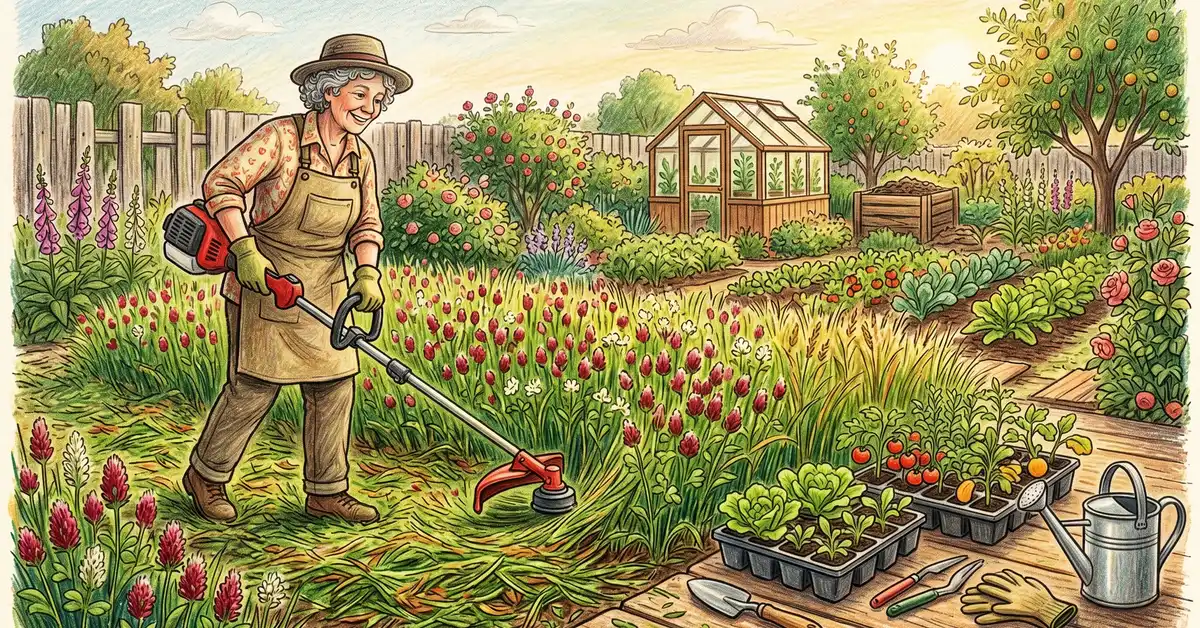
The default permaculture method. Mow the cover crop at the soil line with a string trimmer, scythe, push mower, or sharp hoe. Leave the cut residue in place as a thick mulch. Plant the next crop 1 to 2 weeks later by pushing transplants through the mulch or raking residue aside for direct seeding. Best for crimson clover, buckwheat, oats, peas, and any species being terminated at 50 percent bloom. Cost: zero if you own a string trimmer. Skill: anyone. Drawback: not effective on mature winter rye, which can regrow from cut stubble.
Crimping (mechanical or board)
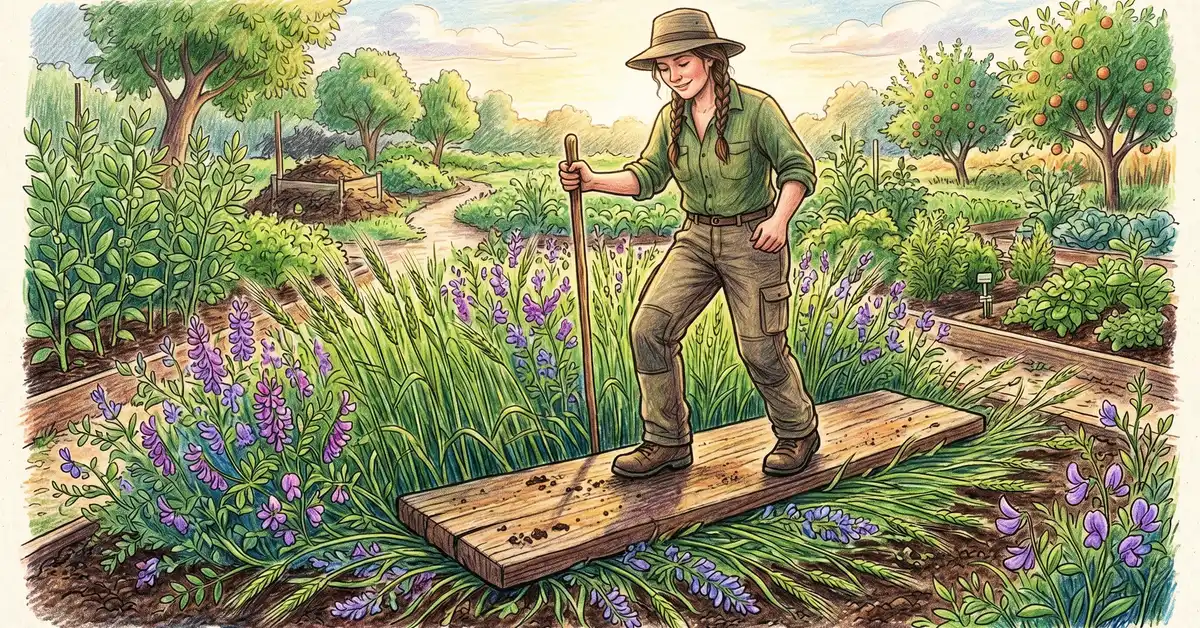
Developed at the Rodale Institute by Jeff Moyer in the 1990s for organic no-till. Mechanically crush the plant stems without cutting. The plant dies in place over 2 to 3 weeks and forms a dense mat that suppresses weeds for the entire growing season. The commercial tool is a roller-crimper. Backyard equivalent: lay a 2x4 board or wide plank across the patch and walk on it, moving it forward one board-width at a time. Works on winter rye, mature small grains, hairy vetch (when crimped after 50 percent bloom). Cost: a $5 plank. Skill: requires correct timing. Drawback: not effective before anthesis or on species that easily resprout.
Tarping (occultation)
Cover the cover crop bed with a black silage tarp or 6-mil black plastic for 2 to 4 weeks. Heat and darkness kill everything underneath, including stubborn perennial regrowth. Popularized by Conor Crickmore of Neversink Farm and Andrew Mefferd in The Organic No-Till Farming Revolution. Best for late-stage termination of mature rye, for killing perennial weeds that infiltrated the cover crop, or as a recovery method when you missed the chop-and-drop window. Cost: about $50 to $80 for a 10 by 15 foot silage tarp (reusable for years). Skill: anyone. Drawback: requires 2 to 4 week occupation of the bed.
Incorporation (turn in with a fork)
The traditional green-manure method. Cut the cover crop, then use a digging fork or broadfork to turn the residue into the top 4 to 6 inches of soil. Residue decomposes in 2 to 4 weeks and releases nutrients quickly. Best when you need a clean fine seedbed within 10 days for direct-seeding small crops (lettuce, carrots, radishes). Cost: zero. Skill: physical labor. Drawback: disturbs soil structure and breaks the no-till advantage of cover crops.
Matching method to species
Why this works (the permaculture principle)
Permaculture's "use small and slow solutions" principle applies directly to termination. A roller-crimper that costs $5,000 is the agricultural-scale answer. The backyard answer is a wooden board you walk on. Both produce the same outcome at the right scale. The deeper principle behind chop and drop, named by Bill Mollison in the 1980s, is that the energy that built the cover crop biomass should stay in the bed where it grew, feeding the next plant. This is the same logic behind no-dig gardening and chop-and-drop mulching in syntropic agriculture.
| Cover crop | Best method | Termination cue | Plant next crop |
| Crimson clover | Chop and drop | 50% bloom | 1 to 2 weeks later |
| Hairy vetch | Crimp or chop and drop | 50% bloom + 7 days | 2 weeks later (high N release) |
| Winter rye | Crimp or tarp | Full anthesis (pollen shed) | 2 to 3 weeks later |
| Oats | Chop and drop (winter-kills naturally in zones 5 and colder) | Flowering or first hard frost | 1 to 2 weeks later |
| Buckwheat | Chop and drop | 7 to 10 days after first bloom | 1 to 2 weeks later |
| Field peas | Chop and drop or incorporate | Flowering | 1 to 2 weeks later |
| Sorghum-sudangrass | Mow at knee height + chop and drop (or tarp) | Pre-anthesis or first frost | 2 weeks later |
| Tillage radish | Frost-kills naturally | First hard frost | Spring planting directly into residue |
Source:, and Penn State Extension.
The C:N ratio question
The carbon-to-nitrogen ratio of the residue decides how fast the nutrients become available to the next crop. Michigan State University Extension documents the practical thresholds. Residue with a C:N ratio below 25:1 releases nitrogen quickly (within 2 to 4 weeks). Above 30:1, the residue actually ties up soil nitrogen for several weeks as microbes decompose the carbon, a process called immobilization.
Low C:N (fast release). Crimson clover at bloom, vetch at bloom, young oats, young rye, peas. These residues feed the next crop almost immediately.
High C:N (slow release). Mature winter rye at anthesis, mature small grains, sorghum-sudangrass. Wait 2 to 3 weeks after termination before planting nitrogen-hungry crops like brassicas or sweet corn, or you will see a temporary nitrogen deficiency.
For mixed cover crops (the common rye-vetch combo, for example), the C:N ratio sits in the middle and behavior is intermediate. This is one of the reasons multi-species mixes are popular: they buffer the nutrient release curve.
The allelopathy warning
What to plant after termination
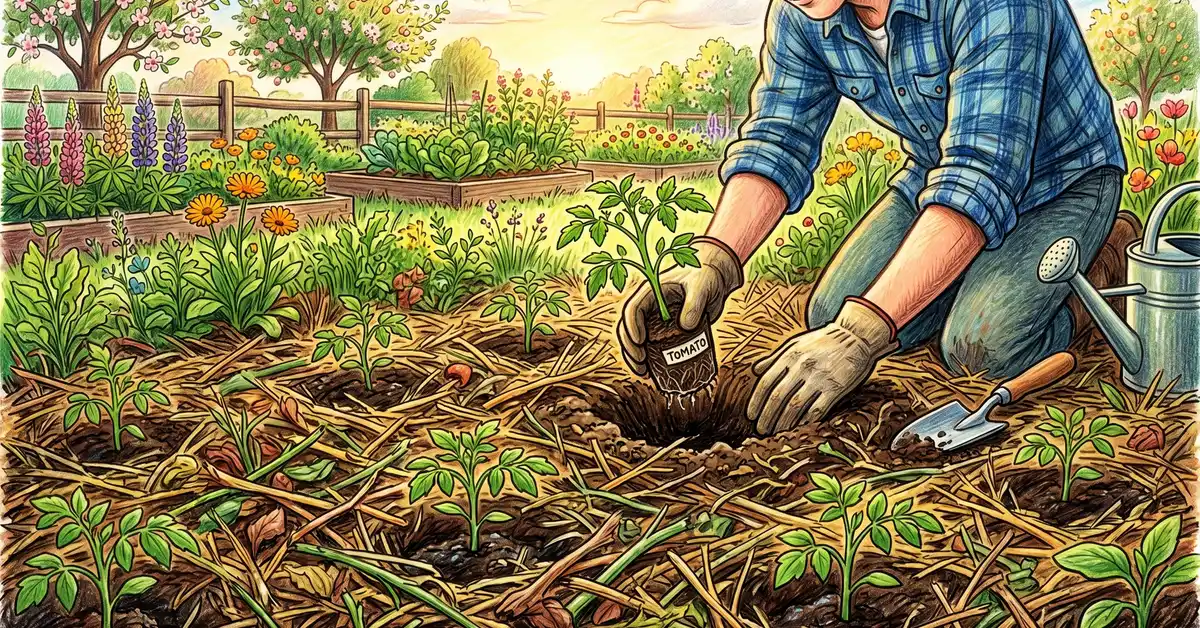
Match the next crop to the cover crop you just terminated. A nitrogen-fixing legume cover crop (crimson clover, vetch, peas) feeds heavy nitrogen consumers: tomatoes, peppers, sweet corn, brassicas. A high-carbon grass cover crop (rye, oats) preceded by a legume mix is ideal for fruiting vegetables and reduces splash-borne disease pressure because the residue mulch covers the soil through the whole season.
Avoid following any cover crop with the same plant family unless you wait at least 2 years. Crimson clover is in Fabaceae and so are peas and beans. Buckwheat is in Polygonaceae and so are sorrel and rhubarb. Winter rye is in Poaceae and so are corn, wheat, and sweet sorghum. Rotation across families is one of the easiest ways to keep diseases and pest cycles from building up.
When to use tarping (occultation)
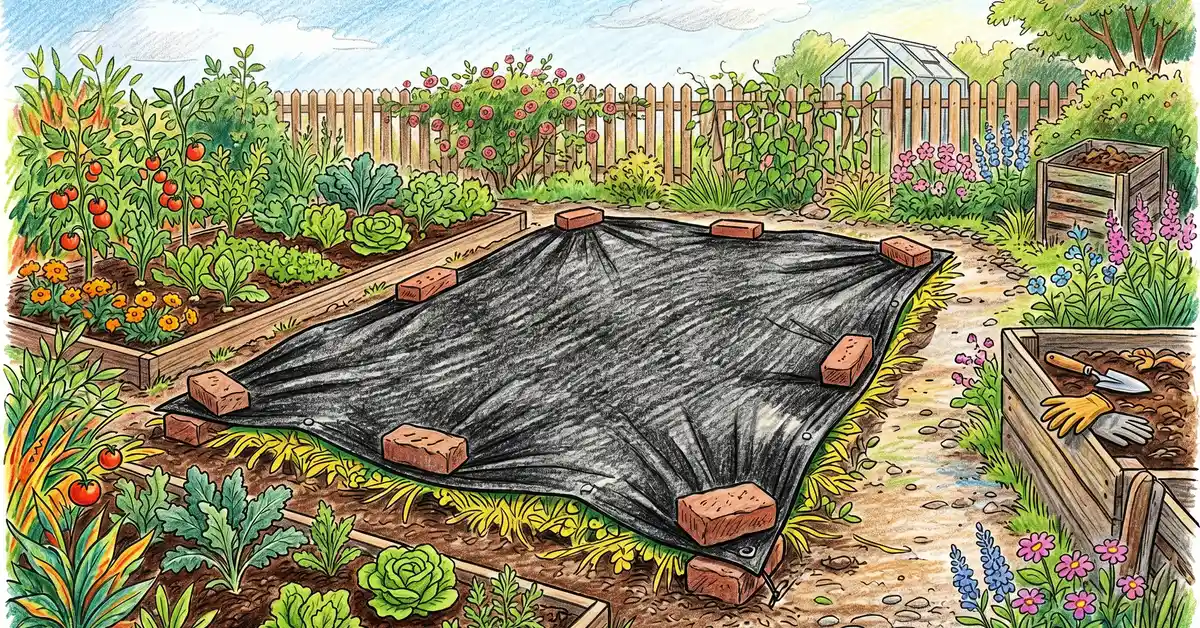
Tarping handles three scenarios that other methods do not:
Missed the window. If your crimson clover already set viable seed and you cannot mow it without spreading seed, tarp it for 4 weeks. The seed germinates under the tarp, then the seedlings die from heat and darkness. The bed comes out clean.
Perennial weed infiltration. Quackgrass, bindweed, or thistles in a cover crop patch will not be killed by chop and drop. A 6-week tarp kills both the cover crop and the perennial weeds.
Hard-to-kill species. Mature winter rye can resprout from cut stubble. A 3-week tarp after chop-and-drop or crimping guarantees the kill.
Black silage tarps (sold by Farmer's Friend, Berry Hill, and other market garden suppliers) cost about $0.50 to $1 per square foot and last 5 to 10 years. Weighted with bricks, sandbags, or rocks at the perimeter, they are reusable across seasons and beds.
The Rodale roller-crimper backyard equivalent
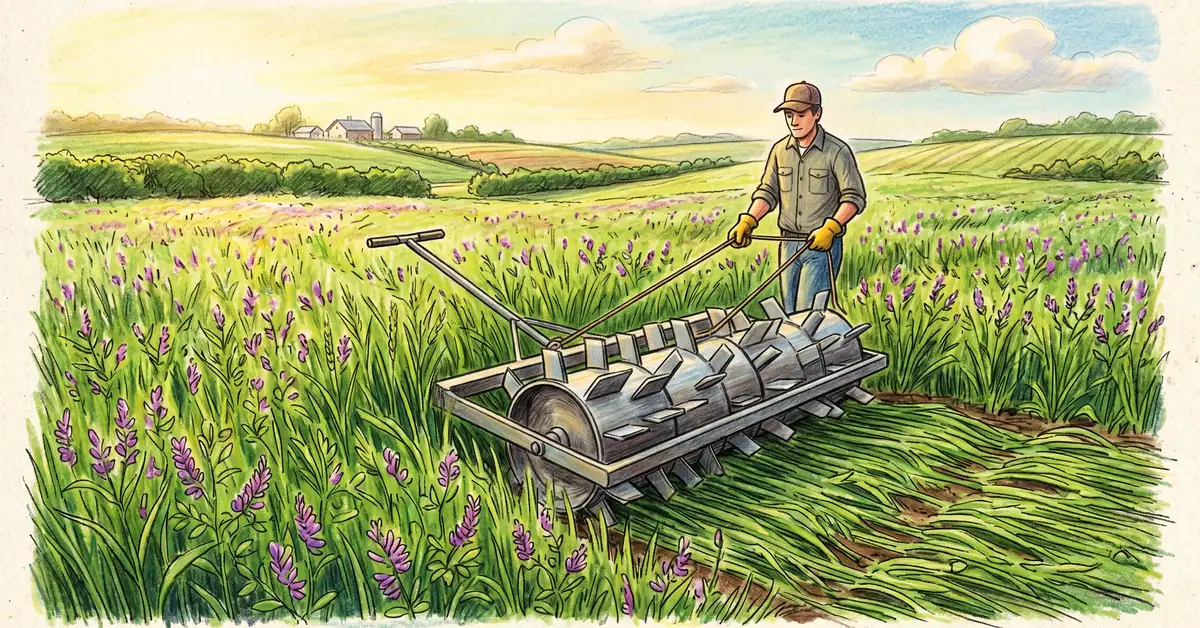
The commercial roller-crimper developed by the Rodale Institute is a heavy steel drum with chevron-pattern blades, pulled by a tractor, that flattens cover crops in a single pass. It costs $4,000 to $8,000 and is overkill for any backyard.
The backyard equivalent is a board. Lay a 2x6 or 2x8 (about 8 feet long) across the patch and walk on it, moving it forward one board-width at a time. The stems crimp where you stepped, killing the plant without cutting. The technique works on winter rye, hairy vetch, oats, and field peas when crimped at the right stage. A second pass at right angles ensures complete coverage. Total time for a 100 square foot bed is about 10 minutes.
For small handheld scale, Andrew Mefferd's The Organic No-Till Farming Revolution documents a method called the "lawn-tractor crimper" that bolts a length of angle iron to a lawn tractor weight bar. Skip the tools and use the board for backyard.
Common termination failures and how to fix them
Cover crop regrew after mowing. Cause: mowed before the plant reached its termination stage. Fix: wait until 50 percent bloom (most species) or anthesis (rye), or tarp the regrowth for 3 weeks.
Next crop yellowed after planting into rye residue. Cause: high-C:N rye is tying up nitrogen temporarily. Fix: wait 2 to 3 weeks after termination before planting, or side-dress with a fast nitrogen source (compost tea, liquid fish emulsion).
Volunteer cover crop seedlings everywhere. Cause: terminated after seed set. Fix: hand-pull or hoe the volunteers, mulch heavily, terminate next year before flowers turn brown.
Direct-seeded lettuce or carrots failed in rye residue. Cause: allelopathy. Fix: wait 3 weeks after rye termination, or use transplants instead of direct seed.
Get the Weekly Dig
One practical permaculture guide a week, written for gardeners who do this on weekends: building living soil without buying it in bags. Free, no spam, unsubscribe any time.
Join the newsletterFrequently asked questions
How do I terminate a clover cover crop?
Wait until 50 percent of flowers are open. Mow at the soil line with a string trimmer or push mower. Leave the residue in place as mulch. Plant the next crop 1 to 2 weeks later directly through the mulch. Crimson clover is one of the easiest species to terminate by chop and drop.
How do you make a crimper roller for no-till?
For backyard scale, you do not need a roller at all. Lay a 2x6 or 2x8 wooden board across the cover crop bed and walk on it, moving forward one board-width at a time. This crimps the stems without cutting them. The plant dies in place over 2 to 3 weeks. Works on winter rye, hairy vetch, oats, and field peas when crimped at full anthesis or 50 percent bloom plus 7 days for vetch.
When should I terminate winter rye?
Terminate winter rye at full anthesis, when the plant is shedding pollen. This is typically late May to early June in zones 5 to 7. At this stage rye stops regrowing and crimping or mowing achieves 90 percent or better kill rates. Termination before anthesis often results in regrowth.
What is the difference between chop-and-drop and incorporation?
Chop and drop leaves cut residue on the soil surface as mulch (no-till). Incorporation turns the residue into the top 4 to 6 inches of soil with a digging fork or broadfork. broadforks for working in residue Chop and drop preserves soil structure and weed suppression. Incorporation releases nutrients faster and produces a finer seedbed for direct-seeded small crops within 10 days.
How long does cover crop residue take to break down?
Surface residue from chop and drop or crimping breaks down in 2 to 8 weeks depending on species and weather. Low C:N legumes (clover, vetch, peas) break down in 2 to 4 weeks. High C:N grasses (rye, oats at maturity) take 4 to 8 weeks. Incorporated residue breaks down about twice as fast as surface residue.
Can I plant directly into cover crop residue?
Yes. Transplants of tomatoes, peppers, brassicas, and most vegetables go directly through the residue with no preparation. For direct seeding, rake the residue aside in narrow strips, sow the seed, then push the residue back around the seedlings as they emerge. Avoid direct seeding small crops into winter rye residue for 2 to 3 weeks due to allelopathy.
Do I need a roller-crimper for a backyard?
No. A wooden board you walk on does the same job at backyard scale. Commercial roller-crimpers are designed for tractor-pulled use across acres, not for 100 square foot beds.
How do tarps kill cover crops?
Black silage tarps block all light and trap heat underneath. Plants cannot photosynthesize and the soil temperature underneath rises into the 90s Fahrenheit (above 32 Celsius) in summer. Most cover crops die within 2 to 4 weeks. Tougher species like mature winter rye or perennial weeds may need 5 to 6 weeks.
Resources
- SARE: Managing Cover Crops Profitably
- Rodale Institute: Roller-Crimper Research
- Penn State Extension: Cover Crop Termination
- Michigan State University Extension: C:N Ratio of Cover Crop Residues
- NC State Extension: Cover Crops
- USDA NRCS: Cover Crop Conservation Practice Standard 340
- ATTRA NCAT Sustainable Agriculture
- University of Vermont Extension