
Can You Really Grow a Food Forest on a Balcony?
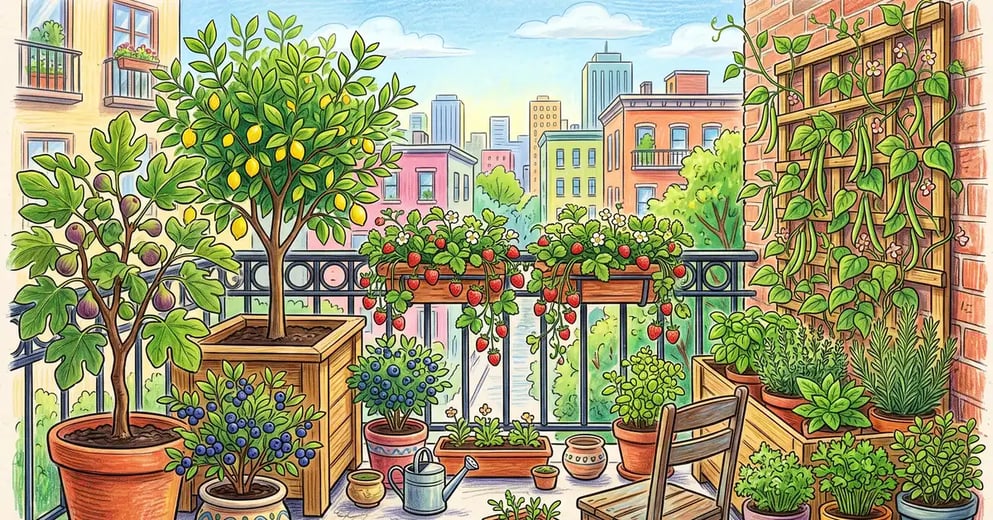
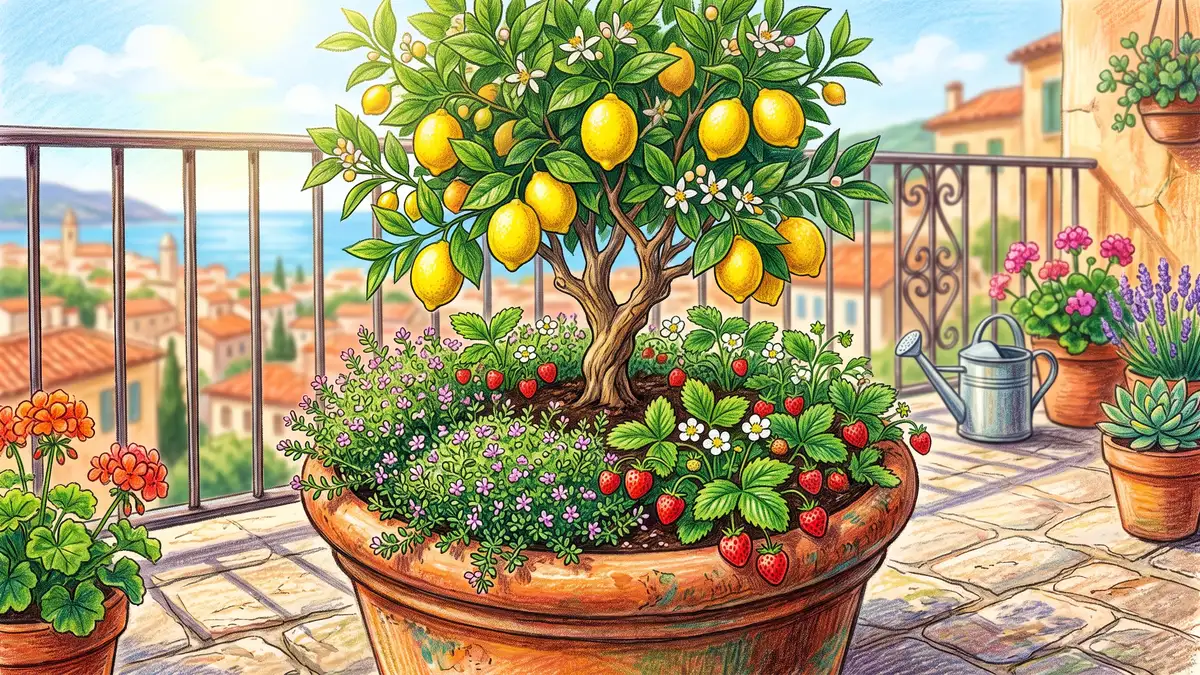
Yes, you can, and it is more possible than most apartment dwellers believe. A food forest is just a garden built in layers, stacking fruit, shrubs, herbs, and groundcovers so they share sun and space the way a real woodland does. Shrink those layers into pots and a sunny 6-by-8-foot balcony becomes a working edible ecosystem: a dwarf fig overhead, blueberries at the rail, strawberries trailing over the pot edge, and herbs filling every gap. window box planting the right growing medium for containers
You will not feed your family for a year off it. But you will pull real harvests of figs, lemons, berries, and greens from a paved square that used to grow nothing. The art, and the fun, is choosing the right dwarf plants and giving each one a pot big enough to thrive. Let's design one.
Here's what this guide covers:
- How to compress the classic 7 food-forest layers into containers
- The best dwarf fruit trees and berries for pots, with real pot sizes
- Which plants fruit on their own, so a single balcony still yields
- Sun, water, soil, and weight numbers so nothing dies (or falls)
Key Takeaway
A balcony food forest miniaturizes a woodland's layers into pots. Use one or two large containers for dwarf trees, medium pots for berries, and small pots for herbs and greens, then stack the vertical space with trellises and rail planters. Size the pots right and the whole thing thrives.
How Do the 7 Layers Fit in Pots?
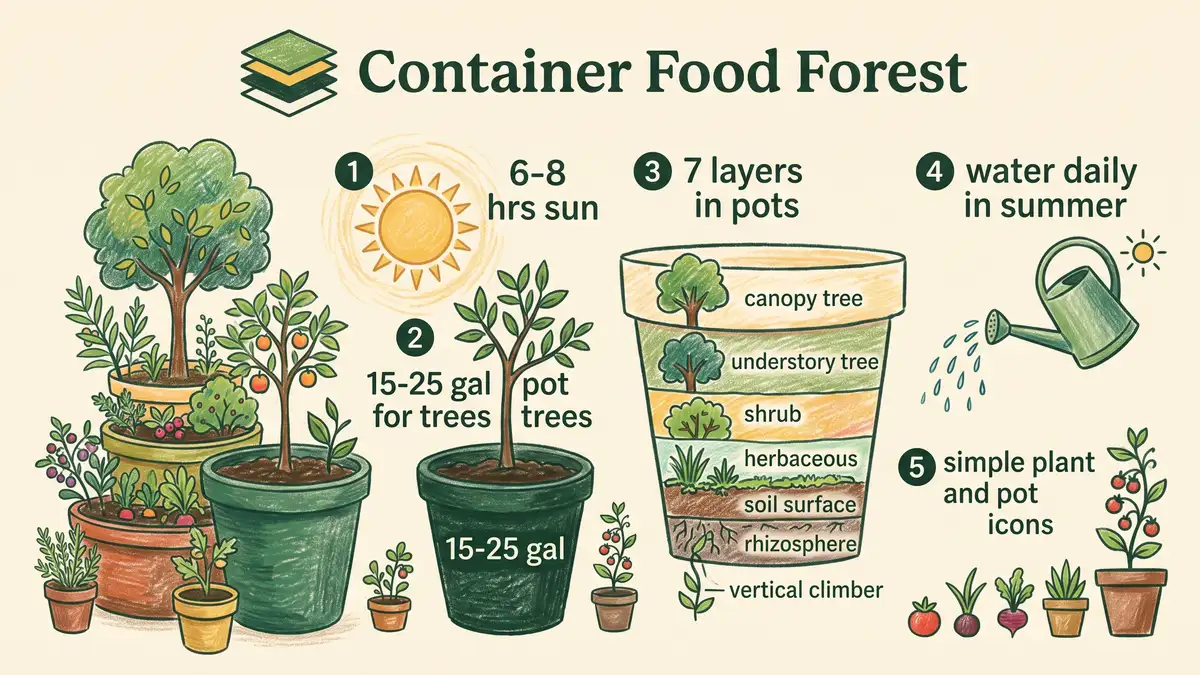
A classic food forest has seven layers, and you can echo every one of them on a balcony. The model comes from forest-garden pioneers Robert Hart and Toby Hemenway, and our guide to the 7 layers breaks it down in full. In containers, you simply swap full-size trees for dwarfs and let structures stand in for tall canopy.
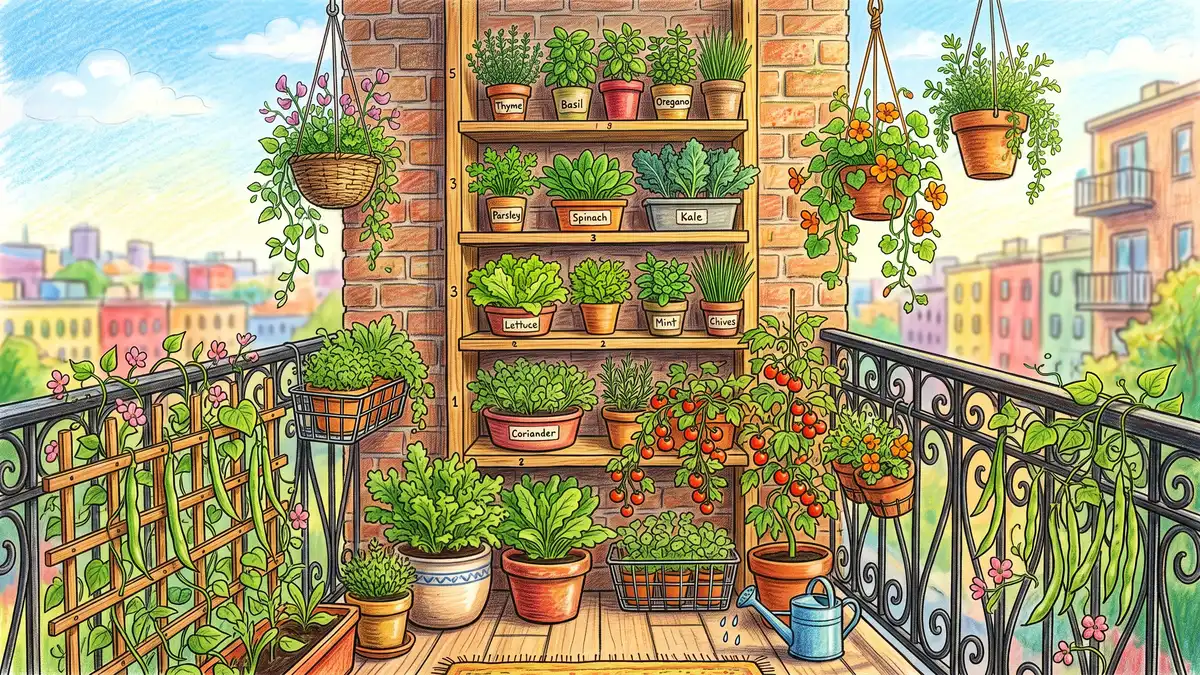
Here is the compression: a dwarf fig or columnar apple plays the canopy and understory; blueberries or currants form the shrub layer; perennial herbs and leafy greens fill the herbaceous layer; strawberries and creeping thyme spill over pot edges as groundcover; radishes and short carrots in deep pots handle the root layer; and beans or peas climb a rail trellis as the vine layer. Several layers can even share one big pot, a dwarf tree above with herbs and a trailing groundcover below, which is exactly what makes it a container guild.
Why This Works: Stacking Functions
Permaculture calls this stacking functions and stacking layers: getting many yields from one footprint by using vertical space and pairing plants that occupy different niches. A woodland does it naturally, catching light at every height. On a balcony, where floor space is your scarcest resource, thinking in layers instead of rows is what turns a few square feet into a productive permaculture system.
Which Fruit Trees and Berries Work in Containers?
Choose naturally small plants and dwarf rootstocks, then match each to a big enough pot. University of Maryland Extension gives concrete sizes, and the numbers below come straight from extension guidance.
| Plant | Pot size | Note |
| Columnar apple | ~21 in / 20 gal | Needs a second variety to pollinate |
| Fig | ~18 in / 15 gal | Self-fertile; easy to overwinter |
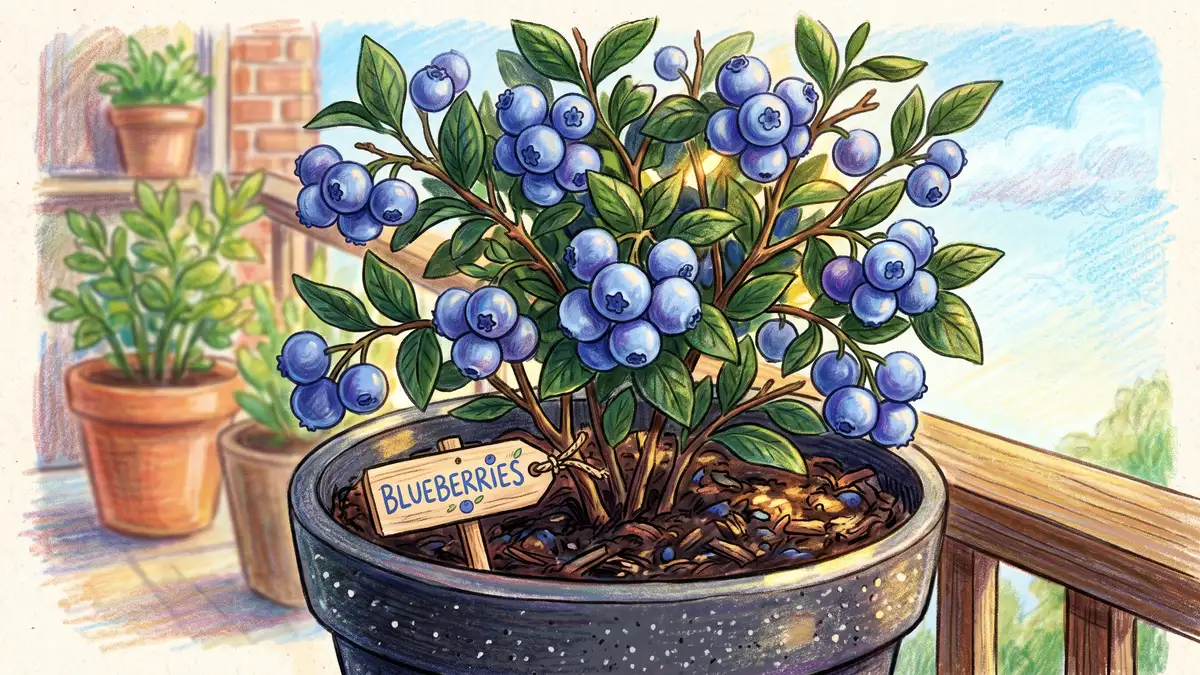
| Blueberry | ~18 in / 15 gal, wide | Acidic mix (pH 4.5-5.5); 1-2 lb/yr |
| Dwarf citrus (Meyer lemon) | Large, movable | Self-fertile; bring indoors in winter |
| Strawberry | Rail planter / pot edge | Up to 1 quart per plant per season |
| Herbs, green onions | ~10 in | Tolerate part shade |
Sources: University of Maryland Extension, NC State Extension, Oregon State University Extension.
Blueberries are the standout balcony crop because they actually prefer a pot: they need acidic, airy soil that is hard to create in the ground but easy in a container. University of Florida IFAS recommends wide, shallow containers with lots of drainage and a peat-and-perlite mix over 30 percent air space. Figs are the easiest tree: University of New Hampshire Extension notes they fruit on their own and can be wheeled to a sheltered spot for winter.
Check Your Balcony's Weight Limit
A single 20-gallon pot filled with moist soil and a tree can top 100 pounds (45 kg). Residential balconies are typically rated for 40 to 60 pounds per square foot, so a heavy container garden adds up fast. Spread large pots out, keep them near the building wall, and if you are planning several big containers, confirm your balcony's load limit before you buy.
How Do You Set It Up and Keep It Alive?
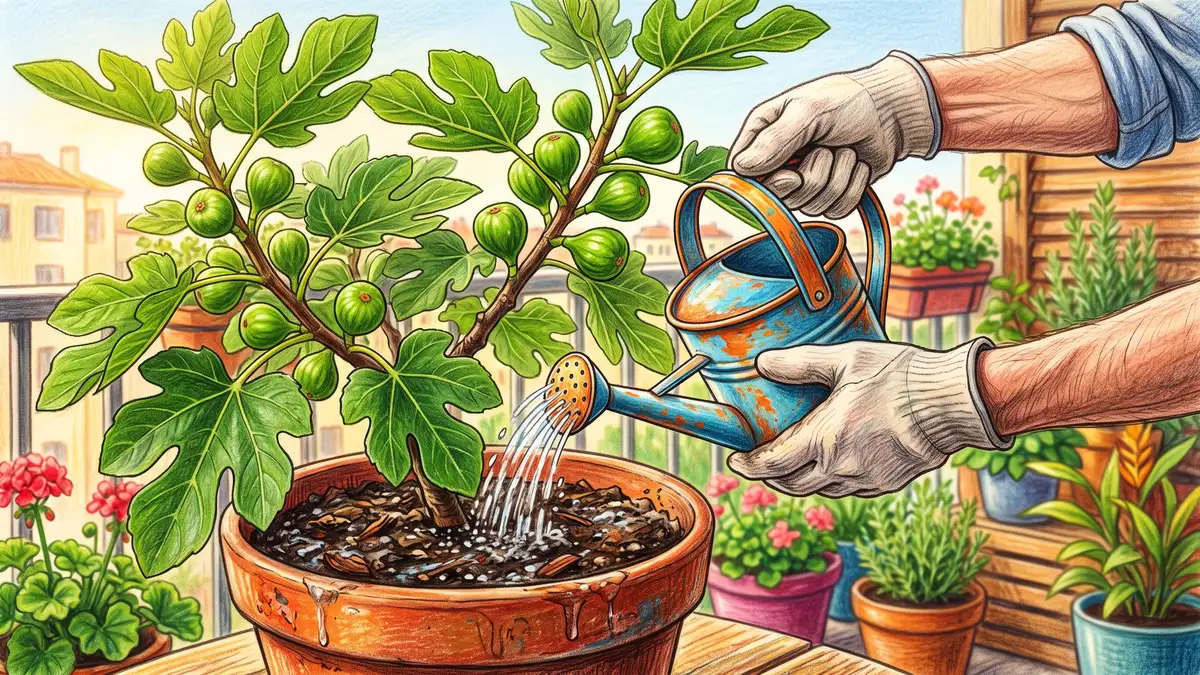
Containers live or die on soil, sun, and water, so get those three right first. Never fill pots with garden soil; it compacts and drowns roots. Use a lightweight soilless potting mix with compost. And skip the old myth of gravel in the bottom: Utah State University Extension puts it perfectly, "layering is desirable in cakes but not in planters." It just traps water. Rely on drainage holes instead.
Map your sun
Put fruiting plants where they get 6 to 8 hours of direct sun, and tuck lettuce, greens, and shade-tolerant herbs into the dimmer corners. Watch your balcony for a day before you commit.
Pot the big players first
Set your dwarf tree in its 15 to 20 gallon pot on a wheeled stand so you can move it for sun or winter. Leave a 1 to 2 inch (2.5 to 5 cm) watering lip below the rim.
Fill the layers around it
Add blueberry and herb pots, plant strawberries at the tree's base as groundcover, and run a trellis or rail planter up the vertical space for climbing beans.
Water deep, feed often
Check daily in summer; water when the top 2 inches (5 cm) are dry, until it runs from the drainage holes. Because nutrients leach from pots, feed regularly through the season.
Frequently Asked Questions
What fruit trees grow best in containers?
Naturally small, self-fertile trees do best. Figs top the list because they fruit on their own, tolerate pruning, and can be wheeled to shelter for winter. Dwarf citrus like Meyer lemon and calamondin also fruit from a single plant and move indoors when it gets cold. Columnar apples work but usually need a second variety nearby to pollinate, and they must sit on very dwarfing rootstocks. Avoid full-size trees entirely; even dwarf apples need a 15 to 20 gallon container and become extremely heavy. Match the tree to your climate and your ability to lift or wheel the pot.
What size pot do I need for a fruit tree?
Bigger than you think. University of Maryland Extension recommends roughly an 18-inch, 15-gallon container for blueberries, currants, and figs, and a 21-inch, 20-gallon pot for small trees like columnar apples. Washington State specialists suggest nothing smaller than a half-whisky barrel for dwarf apples, plus staking, because dwarfing rootstocks are weak. Wider-than-tall pots suit shallow-rooted plants like blueberries and resist tipping in wind. Whatever you choose, make sure it has good drainage holes and enough volume that it will not dry out within hours on a hot, exposed balcony.
How much sun does a balcony food forest need?
It depends on the layer. Fruiting plants, including tomatoes, peppers, and fruit trees, want 6 to 8 hours of direct sun a day, according to USDA and Oregon State Extension. Leafy greens like lettuce and spinach, plus many herbs, are happy with less and can go in shadier corners. Utah State Extension defines full sun as 6 to 8 hours and part sun as 4 to 6. Watch your balcony across a full day and note where the light actually lands, since nearby buildings and railings cast shade that changes with the season. Place your sun-lovers in the brightest spots and let the shade-tolerant layers fill the rest.
Can you grow blueberries in a pot?
Blueberries are one of the best container fruits, partly because they are fussy about soil in a way that suits pots. They need acidic soil, a pH between about 4.5 and 5.5, which is hard to maintain in the ground but easy to mix in a container using peat moss and perlite. University of Florida IFAS recommends wide, well-draining pots with high air space to protect the shallow roots. Many varieties fruit better with a second cultivar nearby for cross-pollination, so if you have room, grow two that bloom at the same time. A healthy bush can produce 1 to 2 pounds of berries a year.
How often do I water container plants?
More often than in-ground plants, because pots dry out fast. In summer heat, Utah State Extension notes that containers in full sun may need water once or even twice a day. The reliable test is to feel the soil: water when the top 2 inches are dry, and keep going until water runs out the drainage holes. For potted figs and other woody plants, University of New Hampshire Extension gives the same rule but warns against overwatering in winter dormancy, which causes root rot. Because frequent watering flushes out nutrients, plan to feed container plants regularly through the growing season.
Get the Weekly Dig
One practical permaculture guide a week, written for gardeners who do this on weekends: food forest and guild designs that produce. Free, no spam, unsubscribe any time.
Join the newsletterResources
- University of Maryland Extension — Starting a Home Fruit Garden
- University of Florida IFAS — Southern Highbush Blueberry in Containers
- Oregon State University Extension — Container Gardening
- University of New Hampshire Extension — Growing an Edible Fig in a Container
- NC State Extension — Easy Fruits to Grow
- Washington State University Extension — Apple Trees in Containers
- USDA People's Garden — Container Gardening
- University of Maryland Extension — Container Food Gardening