
Somebody told you a food forest pays for itself, and you nodded along without ever seeing the math. The permaculture world is generous with inspiration and stingy with spreadsheets. So let's fix that. This article puts real numbers on what a backyard food forest returns each year, and shows you how to run the calculation on your own yard.
This is the return side only. For the spending side, see what to budget for year 1 through year 5. The question here is narrower: once the trees are in and the system is running, what is the thing actually worth?
Here is what you'll walk away with:
- The measured dollar-per-square-foot range for US home food production
- Documented annual yields for the trees and shrubs that carry most food forests
- A four-step method for valuing your own garden with a kitchen scale
- The value that never shows up in a harvest basket
- The honest places where food forest economics fall apart
Key Takeaway
A mature quarter-acre food forest realistically returns somewhere between several hundred and a few thousand dollars per year in produce, plus roughly $100 per mature tree annually in benefits you never harvest. The catch is time: most of that value arrives in years 8 through 15, not year 2.
What Is a Food Forest Actually Worth Per Year?
The most reliable US benchmark comes from annual vegetable gardens, and it is smaller than the internet suggests. An Oregon State University study summarized by the University of Missouri found the mean value of a home vegetable garden was $0.74 per square foot of garden area in the first year, counting both costs and returns. Gail Langellotto's 2014 meta-analysis in the Journal of Extension pooled multiple studies and found home vegetable gardens produced about $677 in produce against $238 in materials, with labor excluded.
The National Gardening Association's 2009 white paper lands in the same neighborhood: a 600 square foot (56 sq m) garden yields around 300 pounds (136 kg) of produce worth roughly $600 on an average $70 investment. About a dollar per square foot, gross.
Intensively managed plots do considerably better. Farming Concrete's harvest measurement across 67 New York City community gardens recorded 110 gardeners growing 87,700 pounds of produce worth more than $200,000 on 1.7 acres, averaging $1,818 per gardener. That works out near $2.70 per square foot, which tells you management intensity matters more than system type.
| Source | System | Value per sq ft/yr | Basis |
| Oregon State (via Univ. of Missouri, 2012) | Home vegetable garden | $0.74 net | Measured, first year |
| National Gardening Association (2009) | 600 sq ft home garden | ~$1.00 gross | Estimate at $2.00/lb |
| Farming Concrete (2010) | NYC community gardens | ~$2.70 gross | Measured harvest weights |
| Agroforestry Research Trust (2021) | Forest garden, 0.2 acre | Not priced | 1,540-2,760 lb/yr recorded |
Sources: University of Missouri IPM, National Gardening Association, Cornell Garden-Based Learning, Agroforestry Research Trust
That last row is the one worth staring at. Graham Bell's forest garden, one of the very few with annual records kept over decades, produced 1,540 to 2,760 pounds (700 to 1,250 kg) of food per year on roughly 8,600 square feet (0.08 hectares). Priced at even $1.50 per pound, that is $2,300 to $4,100 a year from a fifth of an acre.
What Do Mature Trees and Shrubs Actually Yield?
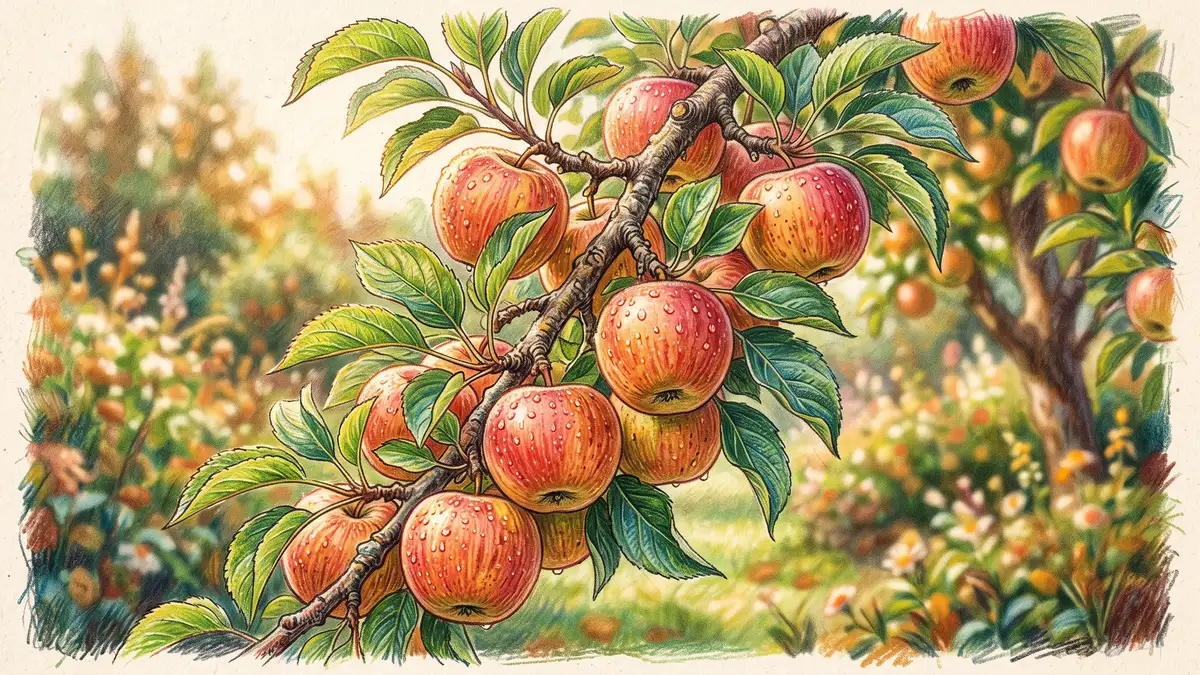
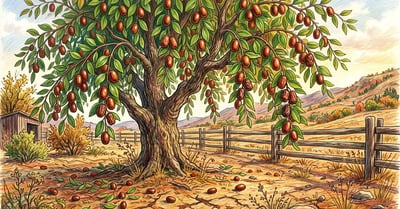
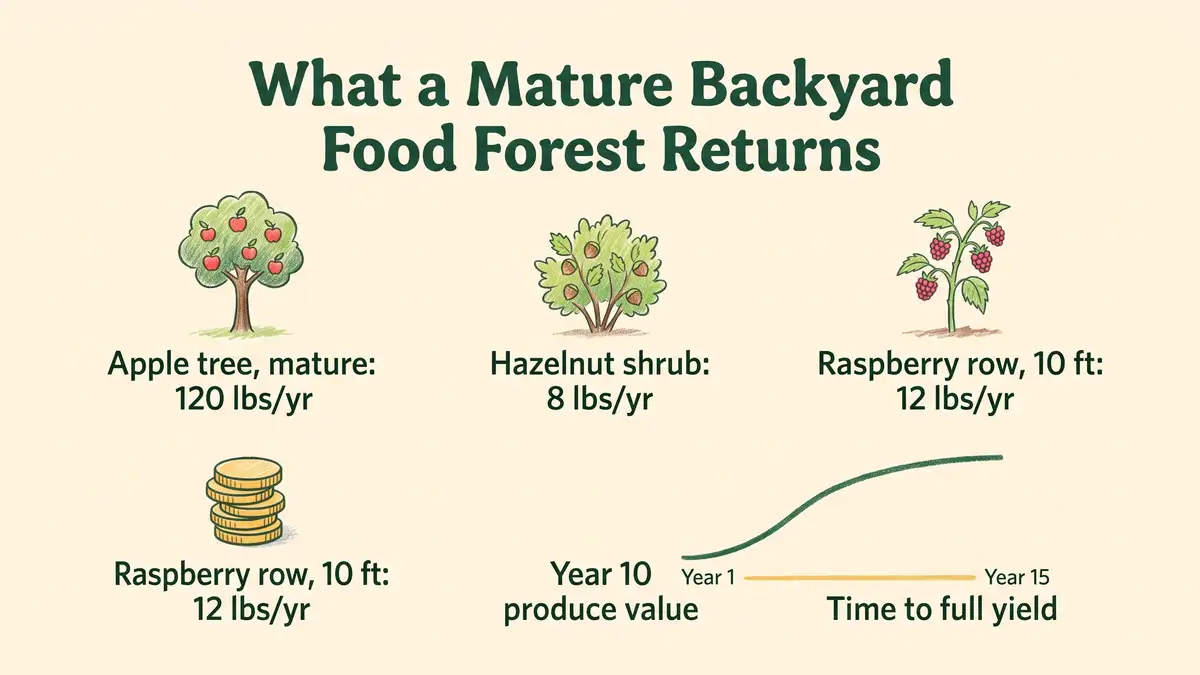
Per-tree yield data is where food forest economics stops being vague. Oregon State Extension's home orchard guidance gives apple yields by rootstock class: a standard tree produces roughly 300 to 400 pounds (136 to 181 kg) a year once mature, a semi-dwarf 180 to 300 pounds (82 to 136 kg), and a dwarf 50 to 150 pounds (23 to 68 kg). Bearing starts at 3 to 5 years for dwarfs and 7 to 10 for standards, which is the single most important sentence in this article.
USDA's National Agricultural Statistics Service reported an average grower price of $1.86 per pound across noncitrus fruit in 2024. That is farm-gate, so treat it as a floor. Retail organic runs considerably higher.
| Plant | Mature annual yield | Years to bear | Source |
| Apple, semi-dwarf | 180-300 lb (82-136 kg) | 5-7 | Oregon State Extension |
| Apple, dwarf | 50-150 lb (23-68 kg) | 3-5 | Oregon State Extension |
| Pawpaw, grafted | 50-75 lb (23-34 kg) | 6 | Kentucky State University |
| Chestnut, Chinese | ~81 lb (37 kg) avg per tree | 7-10 | University of Missouri |
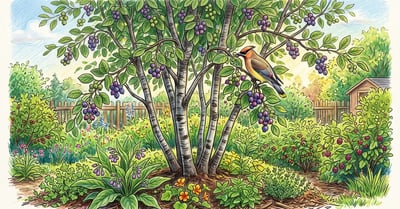
| Blueberry, highbush | 10-20 lb (4.5-9 kg) per bush | 4-6 | NC State Extension |
| Blackcurrant | 5-10 lb (2.3-4.5 kg) per bush | 3-4 | UW-Madison Extension |
| Raspberry, 25 ft row | 15-20 lb (7-9 kg) | 2-3 | Colorado State Extension |
Sources: Oregon State Extension EC 819, Kentucky State University, University of Missouri G739, NC State Extension, UW-Madison Crops and Soils, Colorado State Extension
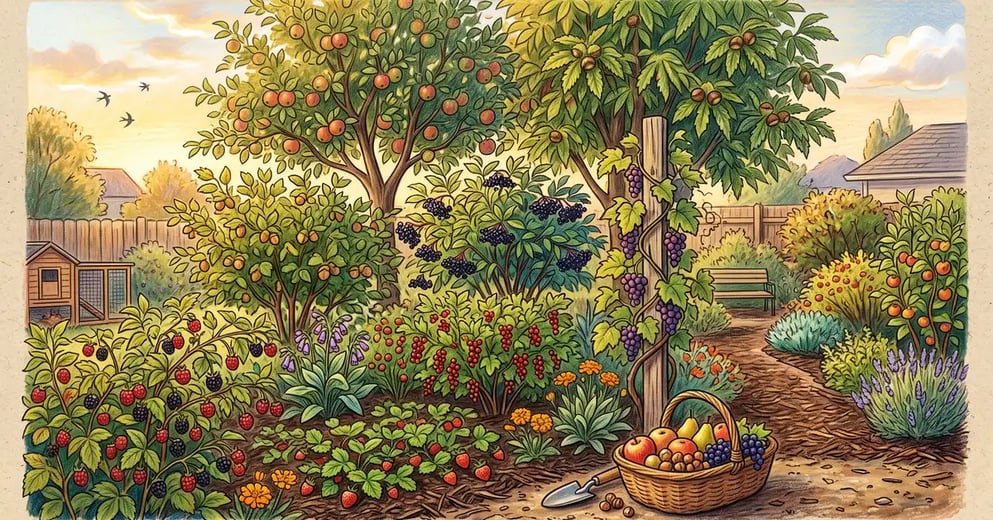
Run a modest quarter-acre planting through that table: two semi-dwarf apples, a pawpaw, two chestnuts, four blueberries, six blackcurrants and a 25-foot raspberry row. At maturity that is roughly 700 to 1,000 pounds (320 to 450 kg) a year, or $1,400 to $2,000 at a conservative $2.00 per pound. Add a persimmon and it climbs further.
Why This Works: Stacking in Three Dimensions
A conventional orchard sells you one crop per square foot. A food forest sells you four, because the canopy, shrub, herbaceous and ground layers each occupy different light and root zones. Research on temperate agroforestry systems has found up to 80% more productivity per acre than monocultures and roughly twice the return on labor. That is the economic case for the seven-layer structure stated in dollars rather than ecology.
How Do You Value Your Own Garden?
You can do this properly with a $12 kitchen scale and a notebook. The method takes one season and gives you a number you can actually defend, which beats any estimate we could hand you.
Weigh everything, once
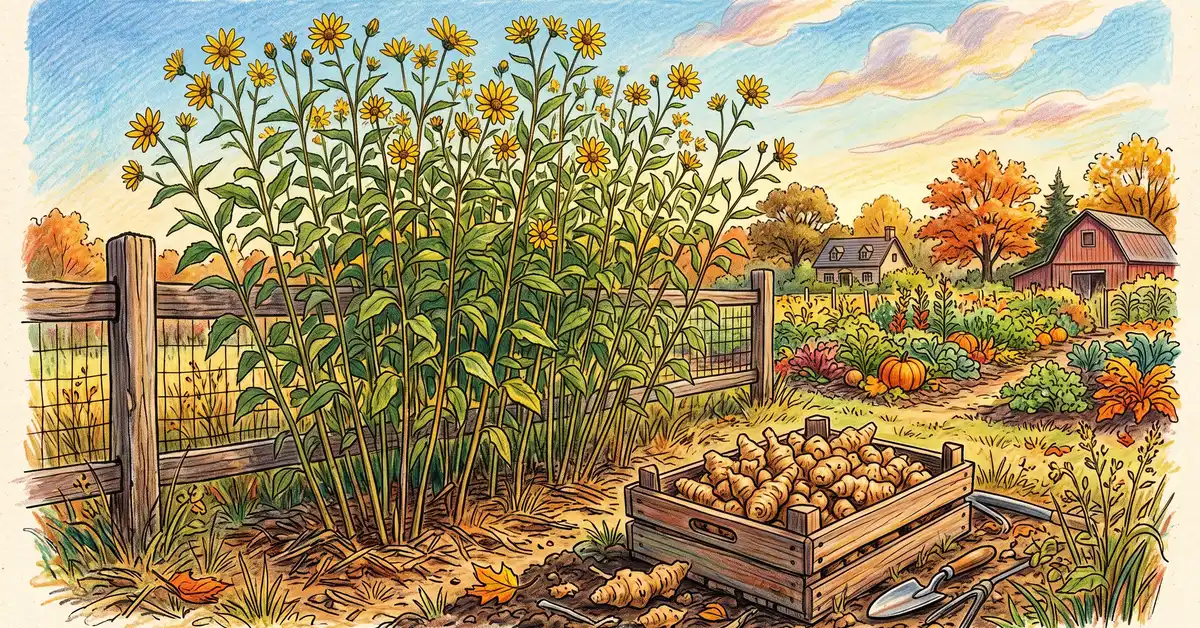
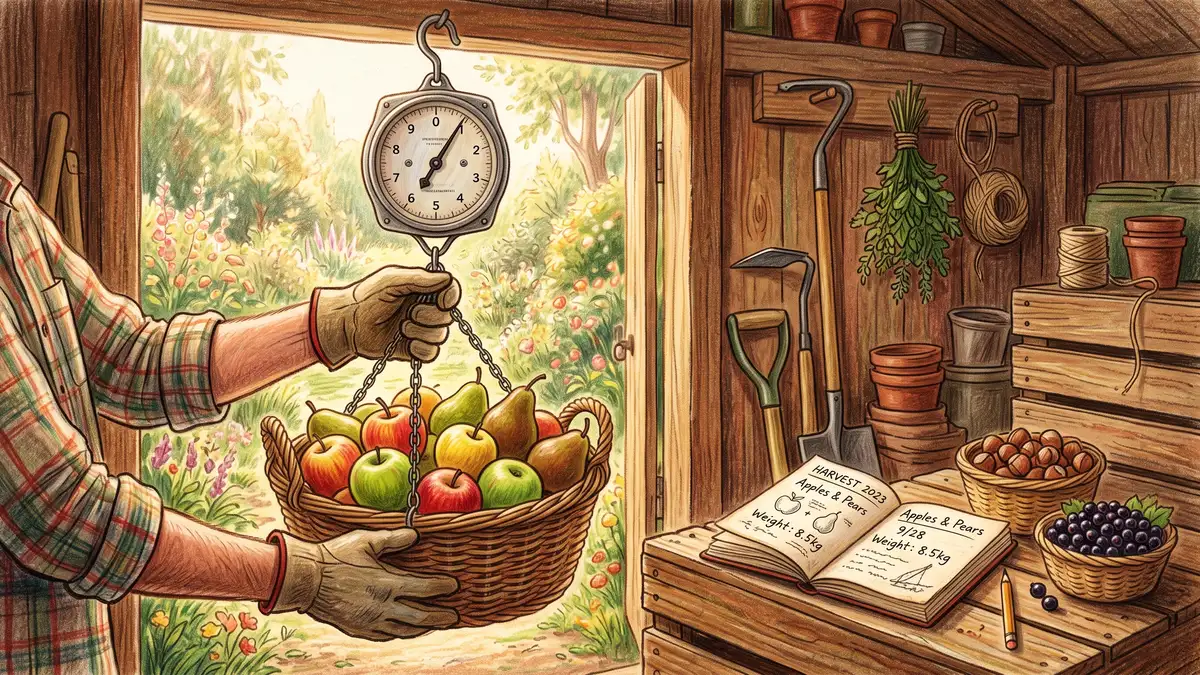
Keep a scale by the back door. Every harvest gets weighed and logged by crop before it goes inside. Five seconds per trip, one full season, and you never have to guess again.
Price at your replacement cost
Use what you would actually have paid at your store for the same thing, organic if that is what you would have bought. Check the USDA ERS Fruit and Vegetable Prices dataset for a national sanity check on your local prices.
Subtract real inputs, not sunk costs
Count this year's mulch, plants, water and amendments only. Do not amortize trees planted eight years ago, and do not count tools you already owned.
Divide by planted area, then track the curve
Divide by the square footage actually under production and compare against the $0.74 to $2.70 range above. The number that matters is the slope across five years, not year one.
What Value Never Shows Up in the Harvest Basket?
Roughly half the economic case sits outside the basket. The City of Saint Paul's urban forest assessment, built on the USDA Forest Service i-Tree model, calculated an average annual benefit of $108.11 per street tree from stormwater, energy savings, air quality and property value. Your fruit trees do the same work while also producing apples.
Property value is the biggest single line item. A classic study in Arboriculture and Urban Forestry found good tree cover added $2,686, about 6% of total property value, and later USDA Forest Service work attributed the largest urban tree benefits to property value enhancement, energy savings, avoided stormwater runoff and carbon removal.
There is also the value of not doing things. An established food forest needs a fraction of the annual labor a vegetable garden does: no tilling, no seed starting, no replanting. Mulch, prune, harvest. Even the mulch can be free if you source wood chips from local arborists, which quietly removes the largest recurring input cost. That differential compounds every year, and it is why so many raised-bed gardeners drift toward perennials, as our complete food forest guide lays out.
Where Do Food Forest Economics Break Down?
Three places, and none of them are talked about enough.
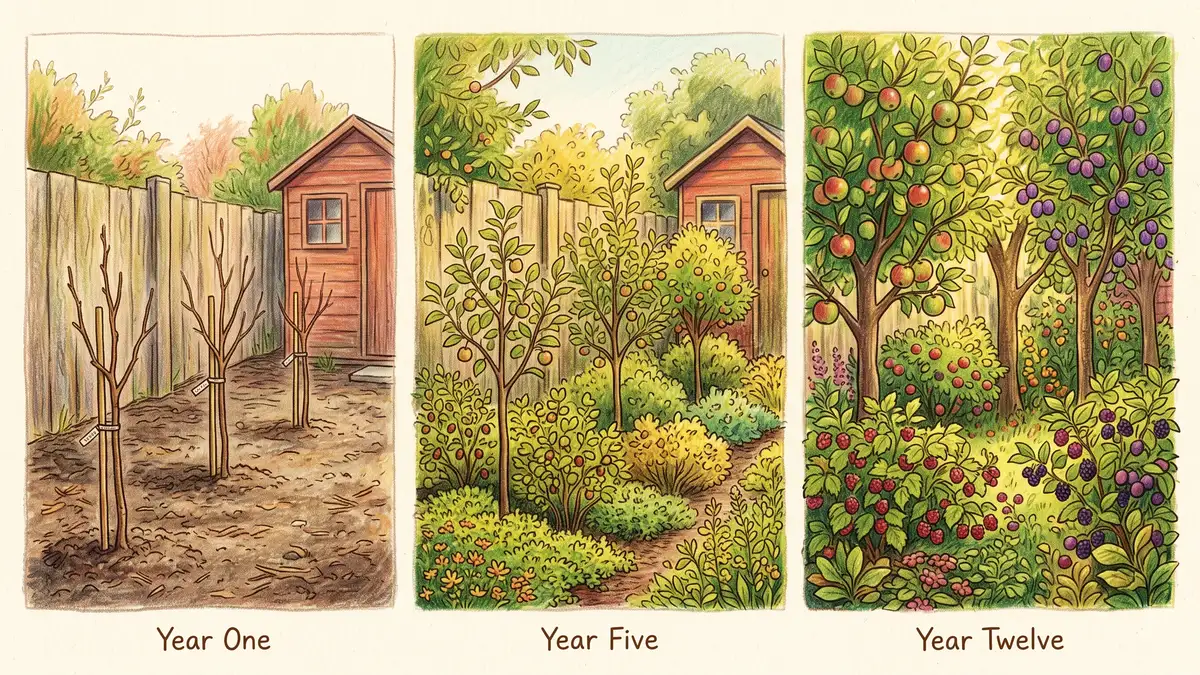
The first is the establishment gap. Years one through four produce almost nothing while consuming money, water and weekends. Every figure here describes a mature system. If you need the numbers to work inside three years, plant annuals instead, and read our piece on realistic production timelines.
The second is labor accounting. Langellotto was explicit: price gardening hours at market wage and most home gardens stop being profitable. They stay economically useful, since those hours also buy exercise and time outdoors, but you cannot claim both leisure and wage value for the same hour.
The third is waste. A mature apple tree delivers 250 pounds in a three-week window. Without a plan for preserving, sharing or trading, much of that paper value rots on the ground. Peer-reviewed work on home food production repeatedly flags gluts and marketing constraints as the gap between theoretical and realized value.
Common Mistake to Avoid
Do not value your harvest at premium farmers-market organic prices unless you would genuinely have bought at those prices. Valuing 200 pounds of apples at $4.00 per pound produces an impressive number and a false one. Use your actual replacement cost, which is usually closer to $1.50 to $2.50 per pound.
Key Takeaway
Judge a food forest on a fifteen-year horizon, not an annual one. The correct comparison is not "did it beat the grocery store this year" but "what does a compounding, low-labor asset in my yard produce over the next two decades". Framed that way, the economics are considerably better than most spreadsheets suggest.
Frequently Asked Questions
How much money can a backyard food forest actually save per year?
For a mature quarter-acre planting, a defensible range is $1,000 to $3,000 per year in produce value, based on documented per-tree yields from Oregon State, Kentucky State and NC State Extension priced at $1.50 to $2.50 per pound. Add roughly $100 per mature tree in non-food benefits. Years one through four typically return under $200 annually, so any average across the first decade looks weaker than the mature figure.
Is a food forest more valuable than a vegetable garden per square foot?
Not necessarily in gross dollars, and often not at all in the early years. Intensively managed annual vegetables can hit $2.70 per square foot. Where the food forest wins is labor: once established, it requires a fraction of the annual hours, so the value per hour worked is much higher. Temperate agroforestry research has found roughly twice the return on labor compared with monocultures. The practical answer is to run both, using annuals in the sunny gaps while the trees fill in.
How long before a food forest is worth anything?
Berries and canes pay first. Raspberries crop in year two or three, currants and blueberries by years three to five. Dwarf apples begin bearing at three to five years, semi-dwarfs at five to seven, and nut trees like chestnut generally take seven to ten. Meaningful total value usually appears around year six and approaches mature figures between years ten and fifteen. Precocious rootstocks and heavy berry planting in year one shorten that gap fastest.
Does a food forest increase my property value?
Mature, well-maintained trees generally do. Research in Arboriculture and Urban Forestry found good tree cover contributed about 6% of residential property value, and USDA Forest Service analysis lists property value enhancement as the largest single category of urban tree benefit. The qualifier is maintenance. An overgrown planting reads as neglect to a buyer, while a legible edible landscape reads as an asset. Design for clear pathways and visible order and the appraisal follows.
Can you make actual income from a backyard food forest?
Occasionally, but it is the wrong goal for most home-scale plantings. High-value niche crops like pawpaw sold for around $1 per fruit at farmers markets and up to $3 per pound in specialty groceries in Kentucky State University's market survey. Elderberry and unusual currants have similar niche demand. Still, at backyard scale the reliable return is displaced grocery spending, not revenue. Treat sales as a bonus and design for household consumption first.
Get the Weekly Dig
One practical permaculture guide a week, written for gardeners who do this on weekends: food forest and guild designs that produce. Free, no spam, unsubscribe any time.
Join the newsletterResources
- University of Missouri IPM: Gardening Makes Cents
- Langellotto (2014), Journal of Extension: home vegetable garden economics
- Oregon State Extension EC 819: Growing Tree Fruits and Nuts at Home
- Illinois Extension: fruit tree production by tree age
- Kentucky State University: Forest Production of Pawpaw
- University of Missouri: Chinese Chestnut Planning Budget
- USDA ERS: Fruit and Vegetable Prices data product
- City of Saint Paul: Urban Forest Benefits Report
- Agroforestry Research Trust: documented forest garden yields