
Spinach has one enemy: heat. As soon as soil temperatures cross 75 F, the plant flips to flowering mode, the leaves turn bitter, and your harvest is over. The right companion plants buy you weeks of extra harvest by shading the soil, deterring leafminers, and feeding the heavy nitrogen demand that keeps spinach leafy instead of stressed. cold frames for winter greens what to plant with arugula pairing collards in a fall bed
Why spinach needs help to thrive
Spinach is a cool-season crop with a narrow growing window. The seed germinates fastest at 50 to 70 F soil temperature. The plant produces best leaves at 50 to 70 F air. Above 75 F soil with day-lengths longer than 14 hours, the plant initiates flowering (bolting), the leaves turn bitter from increased oxalic acid, and the harvest ends. In most US zones this gives you a 6 to 8 week spring window and an 8 to 10 week fall window. Cornell Vegetable Program and UMD Extension both document this temperature and day-length sensitivity in detail.
A good spinach companion does at least one of four jobs:
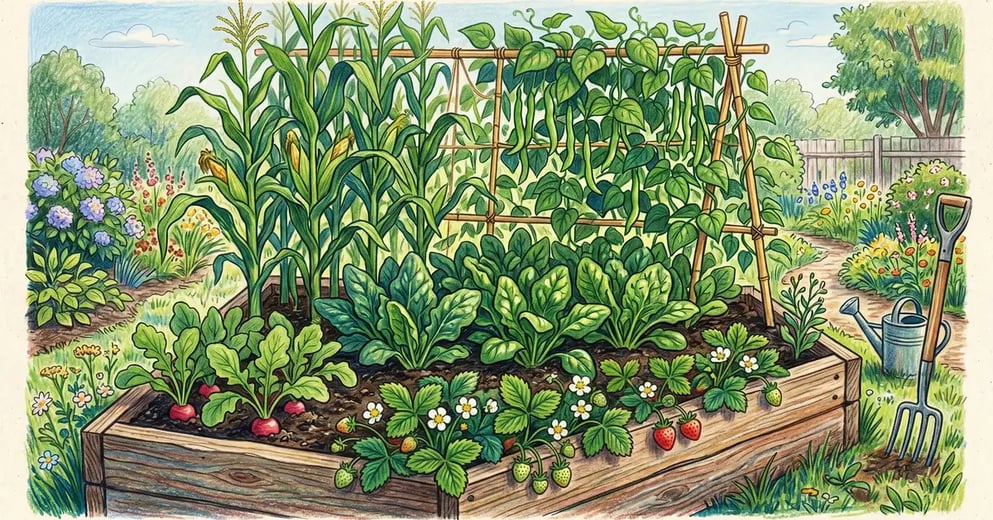
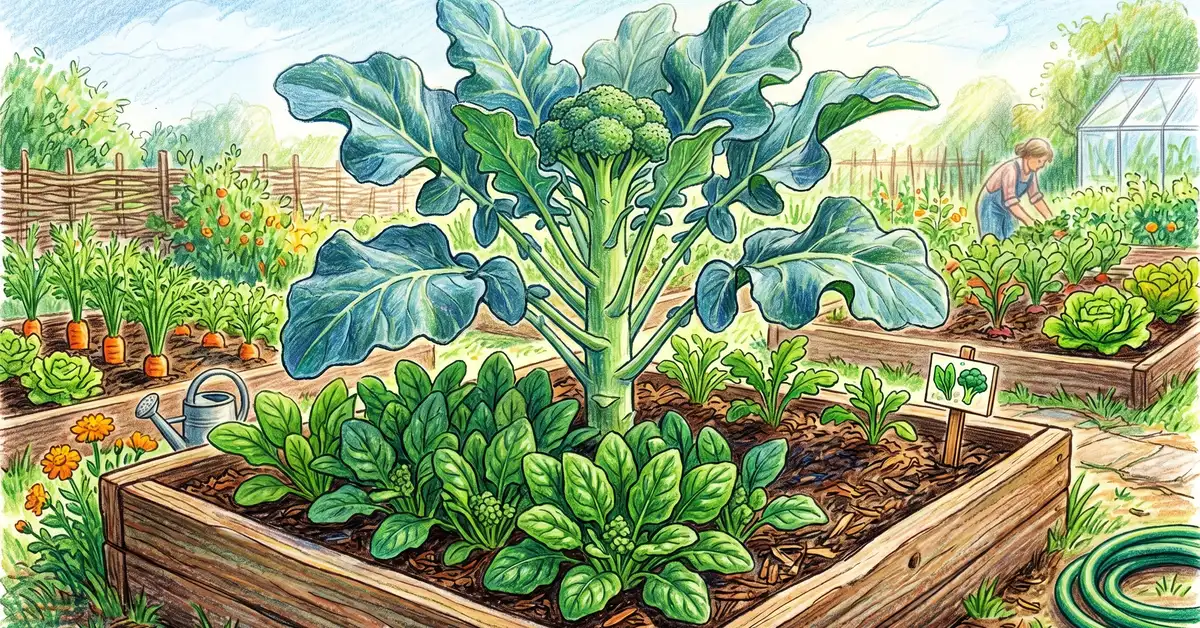
1. Provides shade. Spinach grows well in the dappled or partial shade of taller plants. Sweet corn, pole beans, trellised cucumbers, sunflowers, and tall brassicas (broccoli, cauliflower, Brussels sprouts, kale) act as living shade structures that lower the spinach root-zone temperature by 5 to 10 F during midday in late spring and early summer.
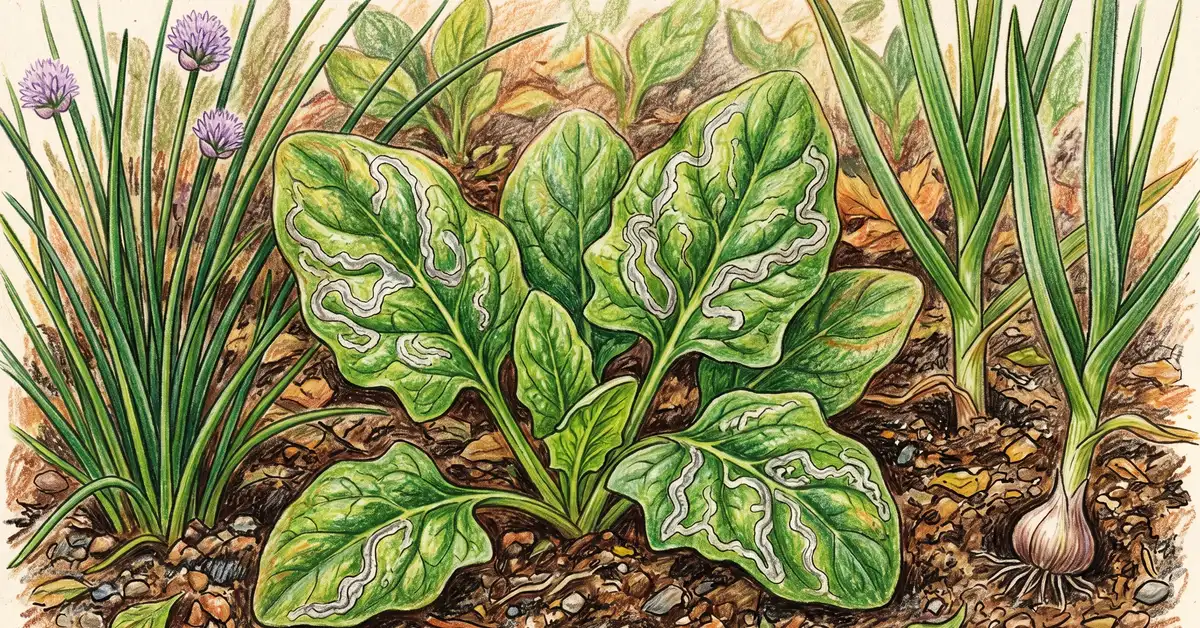
2. Deters pests. The two main spinach pests in US gardens are spinach leafminer (Pegomya hyoscyami) and aphids. Aromatic alliums (onion, garlic, chives, leeks) release sulfur volatiles that mask spinach foliage and disrupt egg-laying. Cilantro and dill attract hoverflies and lacewings that prey on aphids.
3. Fixes nitrogen. Spinach is a heavy nitrogen feeder requiring the equivalent of 100 to 150 lb N per acre commercial application. Backyard equivalent: roughly 0.25 lb actual N per 100 sq ft per season. Peas and beans fix atmospheric nitrogen through Rhizobium root nodules and release some of it to neighbouring plants, plus their residue after termination becomes spinach food the following season.
4. Shares the growing window without competing. Quick-cycle radishes mature in 25 to 30 days, well before spinach reaches harvest size. Carrots have a deeper taproot that does not compete in the top 12 in where spinach feeds. Lettuce grows in identical conditions and harvests as cut-and-come-again leaves in the same window.
The 5 best companions for spinach
Why this works (the permaculture principle)
Permaculture treats every plant as a function in a polyculture. Spinach asks for shade, nitrogen, and pest deterrence; its neighbours can each provide one. This is the same logic behind GrowPerma's broader companion planting framework: identify what the central crop needs, then assemble a guild around it. The result is more food per square foot than any monoculture row of spinach, and a longer harvest because each companion solves part of the stress that ends a spinach season.
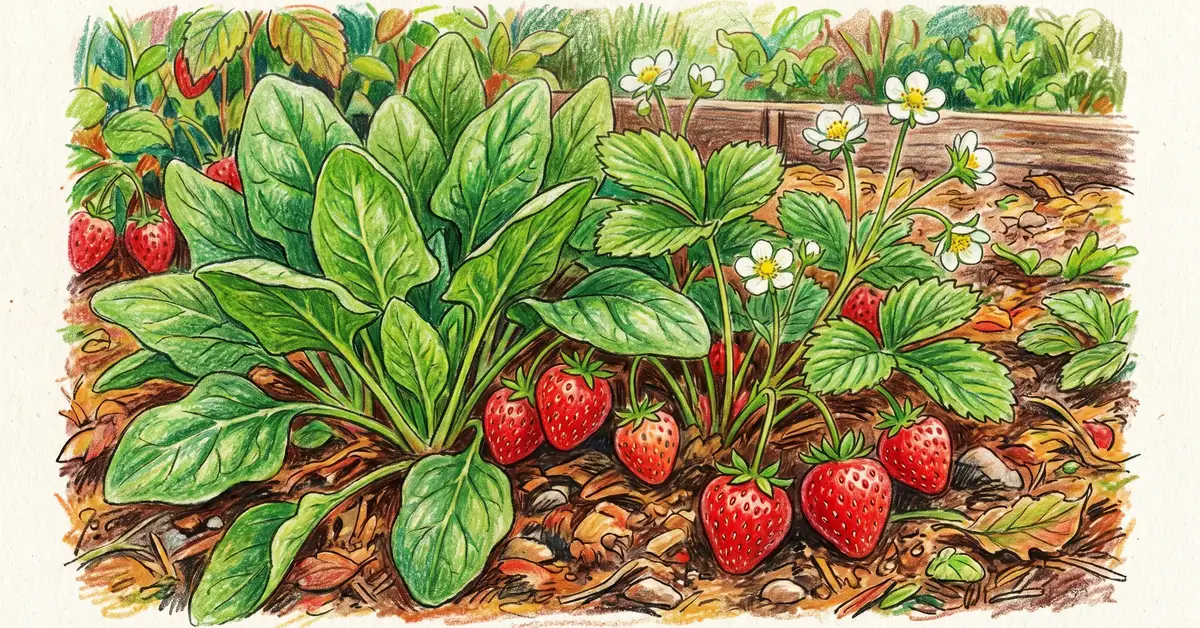
Strawberries (Fragaria x ananassa) for mutual benefit
The classic spinach pairing, documented in US extension publications since the 1950s. Spinach shades the strawberry root zone in spring; strawberries provide a low living mulch that helps spinach soil hold moisture. Both crops have the same cool-season preference, the same soil pH range (6.0 to 6.8), and similar irrigation needs. Plant spinach in the gaps between strawberry rows in early spring, harvest before strawberries hit peak bearing. Penn State Extension documents the pairing as one of the most reliable interplanting combinations.
Brassicas (broccoli, cauliflower, kale, kohlrabi) for living shade
Tall brassicas reach 18 to 36 in by late spring, casting partial shade exactly when spinach needs it most. The cool-soil preference and heavy nitrogen demand of both crops are well matched. Plant spinach 12 to 18 in from the base of broccoli or cauliflower in early spring. The brassica shades spinach as spring warms, extending the harvest by 2 to 3 weeks beyond the unsheltered crop. Oregon State Extension confirms the pairing across the Pacific Northwest.
Alliums (onion, garlic, chives, leek) for pest deterrence
Allium volatiles deter the spinach leafminer fly (Pegomya hyoscyami) and several aphid species documented as spinach pests. Plant garlic cloves, onion sets, or chive clumps every 12 to 18 in along the edges of spinach rows in early spring. The aromatic compounds mask the spinach foliage scent that leafminer adults use to locate egg-laying sites. Cornell IPM cites alliums as a documented cultural control for leafminer pressure.
Peas and beans for nitrogen
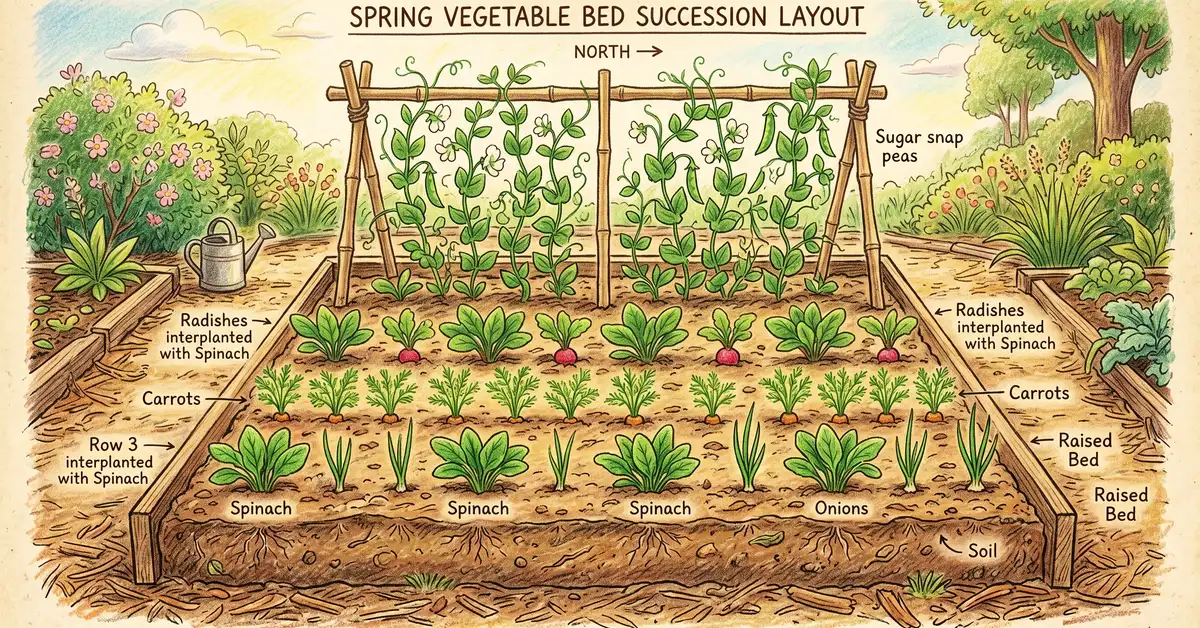
Garden peas (Pisum sativum) in spring and pole beans (Phaseolus vulgaris) by late spring fix atmospheric nitrogen through their root nodules. Sow peas at the north end of the spinach bed in early spring; the pea trellis throws light afternoon shade onto the spinach as the season warms. Pole beans planted in late April or May extend the shade canopy into summer. After termination, the legume residue feeds the following crop. University of Minnesota Extension documents the nitrogen contribution at 30 to 80 lb N per acre depending on legume species and growing conditions.
Radishes (Raphanus sativus) for soil loosening
Radishes mature in 25 to 30 days, harvested well before spinach reaches full leaf size. Their taproot loosens compacted soil to about 6 in depth, which spinach roots then exploit. Interplant radish seeds in the row with spinach seedlings; the radishes mark the row as they emerge first, then pull before they compete. Daikon and other longer radishes can also fracture deeper compaction layers.
Five more useful spinach companions
Carrots (Daucus carota). Same growing window, similar pH preference. The carrot taproot reaches 8 to 12 in deep, well below the shallow spinach root zone, so no competition. Spinach also lightly shades carrot seedlings as they emerge, improving germination during warm spells.
Lettuce (Lactuca sativa). Identical conditions, identical window. Lettuce and spinach work as cut-and-come-again leaf crops in the same bed. Choose loose-leaf or romaine over heading lettuce for the longest harvest period.
Cilantro (Coriandrum sativum) and dill (Anethum graveolens). Cool-season herbs that bolt at similar temperatures to spinach. Flowering cilantro and dill attract hoverflies and parasitic wasps that hunt spinach aphids. Plant a few stems at the corners of the spinach bed and let them go to flower.
Sweet corn (Zea mays) for late spring shade. Sown in May, sweet corn reaches 24 to 36 in by mid-June and shades the bed with its tall canopy. This is the third sister concept extended to spinach. Plant spinach at the base of the corn block in May for an early summer harvest 2 to 3 weeks longer than unsheltered spinach.
Trellised cucumbers and tomatoes on the south side. A south-side trellis throws afternoon shade onto a north-side spinach row, lowering the soil temperature into the 65 to 70 F range during late spring. Note: tomatoes are not a companion in the traditional sense (different season, different needs), but their afternoon shadow during May and June can extend a spinach harvest by a useful week.
Plants to AVOID near spinach
Other Amaranthaceae family members. Spinach belongs to the Amaranthaceae family alongside beets, chard, quinoa, and amaranth. Do not interplant or follow these in rotation because they share the same pests (especially leafminer) and several soil-borne diseases. Crop-rotate to a different family the following year.
Fennel (Foeniculum vulgare). Fennel is allelopathic to most garden vegetables, releasing anethole and other terpenes that inhibit seedling growth. Read more in our guide to allelopathy in the garden.
Sunflowers planted too close. Sunflowers can shade spinach helpfully, but they also release mild allelochemicals through root exudates and seed hulls. Keep a 3 to 4 ft buffer.
The spinach guild layout that works
| Position | Best plants | Function |
| North end of bed | Trellised peas or pole beans, or a row of broccoli or cauliflower | Nitrogen, late-day shade, vertical structure |
| Bed edges (every 12 to 18 in) | Onion sets, garlic cloves, or chive clumps | Leafminer and aphid deterrence via allium volatiles |
| Within the spinach row | Radish seeds (every 6 to 12 in) | Row markers, soil loosening, quick first harvest |
| Adjacent rows | Carrots, lettuce, cilantro, dill | Shared conditions, beneficial insect harbor |
| Strawberry bed gaps | Spinach as understory ground cover in spring | Mutual cool-soil benefit, shared pH range |
| Anywhere in the bed | NEVER potatoes, fennel, or other Amaranthaceae (beets, chard, quinoa) | Avoid pest sharing and crop-rotation violations |
Source:.
Extending the spinach season into summer
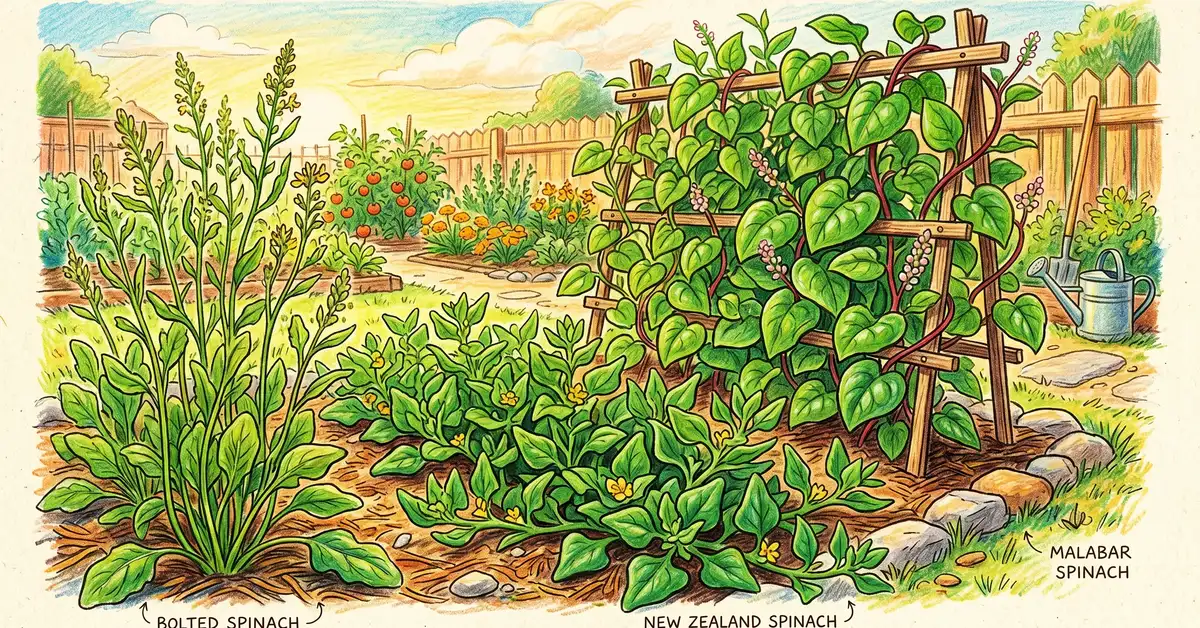
When real spinach bolts in mid-June, two heat-tolerant substitutes carry the spinach flavour into July, August, and September:
New Zealand spinach (Tetragonia tetragonioides). Not a true spinach but a sprawling annual in the Aizoaceae family with thick succulent leaves that taste close to spinach when steamed or sauteed. Thrives at 75 to 90 F. Sow after the last frost. Pinch tips for branching. One plant can supply a family from June through frost.
Malabar spinach (Basella alba). A heat-loving vine in the Basellaceae family that climbs a trellis to 6 to 10 ft. Glossy heart-shaped leaves used in Asian cuisine. Needs 70 F+ soil and full sun. Plant 1 to 2 plants per family for a continuous summer harvest. Bolt-proof through the hottest US summer.
Get the Weekly Dig
One practical permaculture guide a week, written for gardeners who do this on weekends: companion pairings that hold up under scrutiny, and the ones that do not. Free, no spam, unsubscribe any time.
Join the newsletterFrequently asked questions
What is the best companion plant for spinach?
The five most reliable companions are strawberries (mutual cool-soil benefit), brassicas like broccoli and cauliflower (living shade that extends the harvest), alliums like onion and garlic (leafminer deterrence), peas and beans (nitrogen fixation and shade), and radishes (soil loosening and quick first harvest). Carrots, lettuce, cilantro, and dill are also strong choices.
Can you plant spinach and lettuce together?
Yes. Spinach and lettuce share identical conditions: cool-season preference, soil pH 6.0 to 6.8, consistent moisture, partial shade tolerance, and the same spring and fall growing windows. Plant them in alternating rows or as a mixed salad bed. Both work as cut-and-come-again leaf crops. Cornell, UMD, and Oregon State Extension all confirm the pairing.
What should you not plant with spinach?
Avoid potatoes (heavy competition for nitrogen and moisture, shared flea beetle pests), fennel (allelopathic to most vegetables), and other Amaranthaceae family members like beets, chard, quinoa, and amaranth (shared pests including leafminer, crop-rotation discipline). Also avoid tall plants that cast deep shade rather than dappled shade.
What to plant with spinach to keep bugs away?
Plant alliums (onion, garlic, chives, leeks) along the edges of the spinach bed to deter leafminer flies and aphids through allium sulfur volatiles. Add cilantro and dill that flower in spring to attract hoverflies and parasitic wasps that hunt aphids. Marigolds at the perimeter add another layer of insect deterrence.
Can you plant spinach with onions?
Yes, and the pairing is one of the most reliable for pest control. Onions, garlic, chives, and leeks release sulfur volatiles that mask spinach foliage scent from leafminer flies. Plant onion sets every 12 to 18 in along the edges of the spinach bed in early spring.
Can spinach and carrots grow together?
Yes. The carrot taproot reaches 8 to 12 in deep, well below the shallow spinach root zone, so the two crops do not compete for the same nutrients or moisture. Both share the same cool-season growing window. Spinach lightly shades carrot seedlings as they emerge, improving germination.
Can you plant spinach with tomatoes?
Not directly, because tomatoes are a warm-season crop that goes in the ground after spinach has already grown and harvested. However, a south-side tomato trellis can throw useful afternoon shade onto a north-side spinach row in May and June, extending the spinach harvest by a week or two before bolting.
How do I keep spinach from bolting?
Bolting is triggered by soil temperatures above 75 F combined with day-lengths above 14 hours. Mitigation strategies: choose bolt-resistant cultivars (Tyee, Olympia, Bloomsdale Long-Standing, Space, Corvair, Carmel), plant in the partial shade of taller companions, mulch the soil 2 to 3 in deep to keep root-zone temperatures cool, and switch to summer substitutes (New Zealand spinach, Malabar spinach) as soon as bolting begins.
Resources
- Cornell Vegetable Program: Spinach Production
- University of Maryland Extension: Home and Garden Information
- Oregon State Extension: Growing Spinach in the Garden
- University of Minnesota Extension
- Penn State Extension: Spinach in Home Gardens
- Cornell IPM: Spinach Leafminer Management
- Michigan State University Extension
- ATTRA NCAT: Sustainable Vegetable Production