
Oregano is the most undervalued plant on a US homestead. It is a perennial in zones 4 to 9, repels half a dozen common vegetable pests through its essential oils, forms a drought-tolerant ground cover, pulls bees and parasitoid wasps to your tomatoes and peppers, yields 1 to 3 lb (0.45 to 1.4 kg) of fresh herb per plant per season, and costs you maybe one hour of labour per year. Here is exactly what to plant it with, what to keep it away from, and how to use it as living mulch under your most valuable crops.
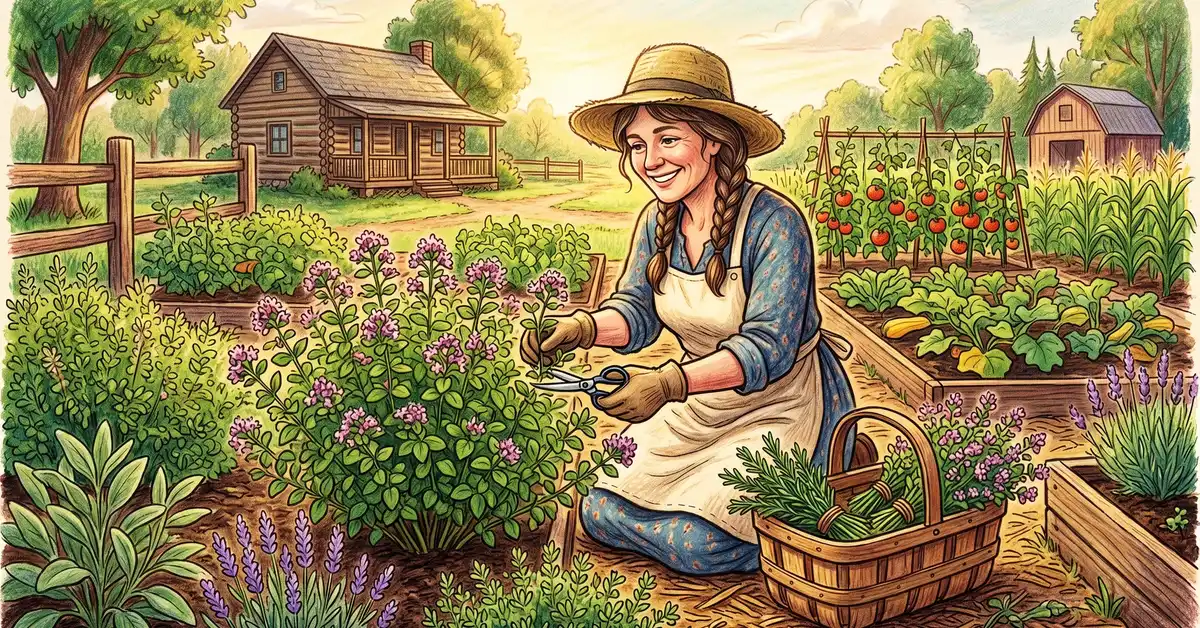
This piece skips the romance and gets straight to the yield math. Oregano (Origanum vulgare ssp. hirtum, the Greek culinary standard) is one of the few herbs where pest deterrent, pollinator value, ground cover, and kitchen output all stack on a single plant. The active compounds (carvacrol and thymol) have documented antimicrobial and insect-repellent activity. The flowers are top-tier bee forage. The mat-forming varieties spread to cover 2 sq ft (0.2 sq m) within a season.
What you will get below: the 8 vegetable and fruit companions oregano helps most, the short list of plants to keep it away from, two ground cover varieties to use as living mulch, harvest timing for peak flavour, drying for the pantry, and the specific spacing and sun requirements that matter on a US homestead.
Sources:; Penn State Extension herb production guides.
The 8 best vegetable and fruit companions for oregano
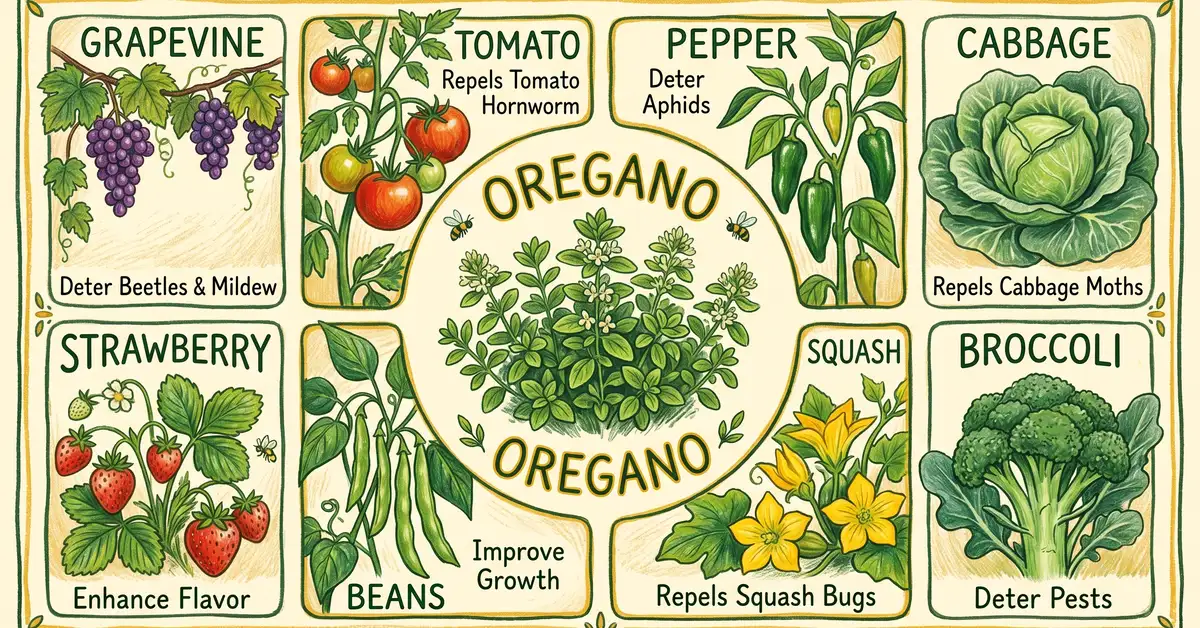
Tomatoes
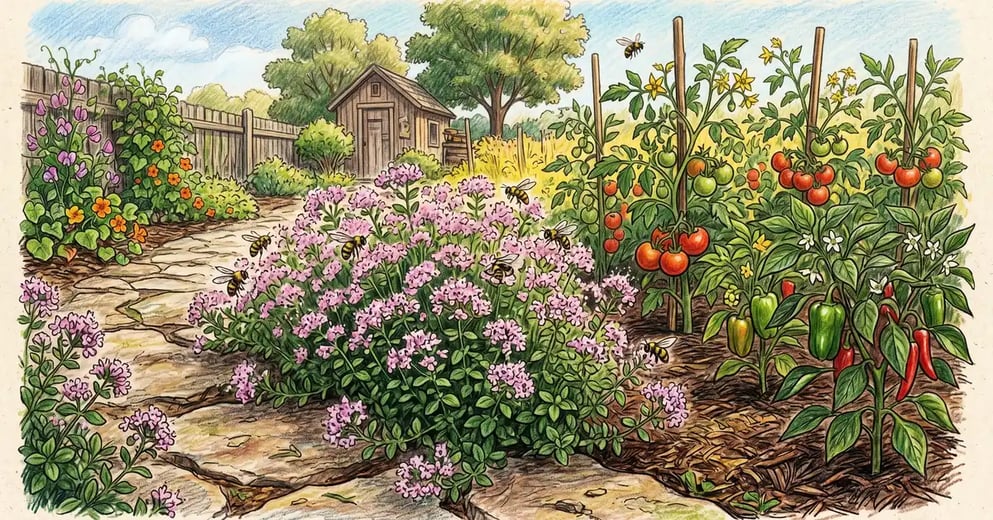
The classic Mediterranean pairing. Oregano planted within 2 ft (0.6 m) of tomatoes deters aphids and pulls parasitoid wasps that attack tomato hornworm caterpillars. Flowering oregano also brings hoverflies whose larvae eat aphids. Bonus: the flavour pairing in the kitchen comes from sharing the same essential oils.
Peppers (sweet and hot)
Same pest deterrent profile as tomatoes. Oregano's carvacrol and thymol oils deter aphids and reduce egg-laying by some flea beetles. Plant 12 to 18 inches (30 to 45 cm) from pepper plants on the sunny edge of the bed.
Squash and cucumbers
Oregano deters cucumber beetles (the vector for bacterial wilt) and squash bugs (Anasa tristis), two of the most damaging pests for cucurbits in the eastern US. University of Minnesota Extension's cucumber beetle guide documents the difficulty of managing these pests without chemicals. Companion oregano is one of the more reliable cultural controls.
Brassicas (cabbage, broccoli, kale, cauliflower, Brussels sprouts)
This is where oregano earns its keep on a serious homestead. The strong essential oils deter the cabbage white butterfly (Pieris rapae) from laying eggs on neighboring brassicas. Less egg-laying means fewer cabbage worms in your harvest. Plant a continuous border of oregano around brassica beds.
Beans (pole and bush)
Oregano deters bean beetles (Mexican bean beetle, Epilachna varivestis) and supports nitrogen fixation by attracting pollinators that work the bean flowers. Plant on the south or west edge of bean rows for sun exposure.
Strawberries
Use creeping oregano as ground cover between strawberry rows. The mat-forming habit holds moisture, suppresses weeds, and deters strawberry root weevil. Bonus pollinator value during strawberry bloom in May to June.
Grapevines
Traditional Mediterranean polyculture pairs grapevines with oregano at the base for living mulch. The oregano holds soil moisture, deters some grape pests, and provides pollinator forage that supports nearby fruit set. This pairing is documented in Greek and Italian terraced vineyards going back centuries.
Asparagus
Oregano at the edge of an asparagus bed deters asparagus beetle (Crioceris asparagi). Both plants are perennials so they share the same long-term bed, which simplifies management. Plant oregano on the south side so it does not shade the asparagus.
The pest deterrence is real (and the chemistry is documented)
The reason oregano works as a companion plant is not folklore. Carvacrol and thymol are phenolic monoterpenes that make up 60 to 80 percent of Greek oregano essential oil by weight. Both have documented antimicrobial, antifungal, and insect-repellent activity in peer reviewed studies.
A 2009 review in Industrial Crops and Products (Bakkali et al.) documented the broad spectrum activity of carvacrol against bacteria, fungi, and insects. Multiple Journal of Agricultural and Food Chemistry studies have shown direct insecticidal activity of oregano essential oil against stored product pests and some field insects. The mechanism is membrane disruption: the monoterpenes integrate into insect cuticle and cell membranes, causing the kind of damage that has no easy resistance pathway.
The practical takeaway is that you do not need to extract the oil or spray anything. A healthy oregano plant releases small amounts of these volatiles continuously, and the concentration is highest when the plant is brushed (foot traffic, harvest cuts, wind in the leaves). Within 2 ft (0.6 m) you get a measurable pest deterrent effect. Beyond that, the effect drops sharply.
Why this works for a homestead
Most chemical pesticide labels work for 24 to 72 hours after application. A living oregano plant releases its volatile oils every minute for the entire growing season, with peak intensity around flowering. You get a slow, continuous, low-dose pest deterrent that integrates into your soil biology rather than killing it. The same plant gives you 1 to 3 lb of culinary herb. The pollinator value is a bonus on top.
Plants to keep away from oregano
Mint (Mentha spp.). Both plants want the same Mediterranean niche. Mint is more aggressive and will spread by runners into the oregano patch. Keep them in separate beds at least 3 ft (1 m) apart.
Cilantro and water-loving herbs. Cilantro bolts in dry heat and wants consistent moisture. Watercress is even more water-dependent. The water schedule that keeps cilantro happy will rot oregano roots.
Celery and watercress. Same water issue as cilantro, but more extreme.
Very young seedlings. Some growers report that oregano essential oils can suppress germination of nearby seeds in the first 2 weeks. Plant seedlings at least 18 inches (45 cm) from an established oregano patch, or transplant in well-rooted, larger starts.
Using oregano as ground cover
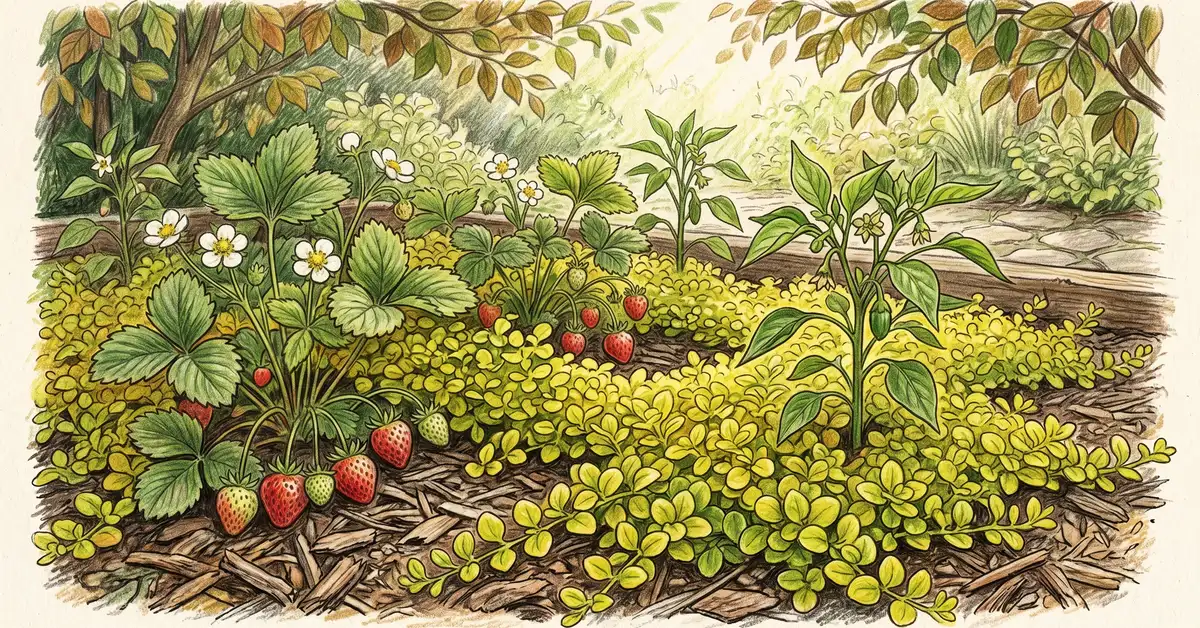
Three spreading varieties are workhorses for living mulch on a US homestead:
Origanum vulgare 'Aureum' (golden oregano): Bright golden-green foliage, mat-forming habit, spreads 18 to 24 inches (45 to 60 cm) per plant. Hardy zone 4 to 9. Use under strawberries and around grapevines.
Origanum vulgare (creeping wild oregano): Less flavour for culinary use but the most aggressive ground cover. Spreads via rhizomes. Good for filling gaps around peppers and brassicas where you want continuous coverage.
Origanum laevigatum 'Herrenhausen': Ornamental but functional, with dark purple flowering bracts that pull massive pollinator traffic. Hardy zone 5 to 9. Use as a border plant for both pest deterrent and bee forage.
For ground cover, plant 12 to 18 inches (30 to 45 cm) apart. The plants will fill in within one full growing season. Mulch lightly the first year with straw or wood chips, and the oregano takes over from there. Drought tolerant once established. Cut back hard in late winter to keep the patch productive.
Site requirements and planting
| Requirement | Specification | Why it matters |
| Sun | Full sun (6+ hr direct) | Essential oil concentration drops in shade |
| Soil | Well-drained, lean, pH 6.0 to 8.0 | Rich soil produces lush growth with weak flavour |
| Water | Drought tolerant once established | Overwatering causes root rot |
| Spacing | 12 to 18 in (30 to 45 cm) | Allows air flow, prevents fungal disease |
| Hardiness | USDA zone 4 to 9 (Greek oregano) | Mulch lightly in zone 4 for winter protection |
| Propagation | Cuttings, division, or seed | Seedlings are slow; cuttings root in 2 to 3 weeks |
Sources:.
Harvest, drying, and yield for the homestead pantry
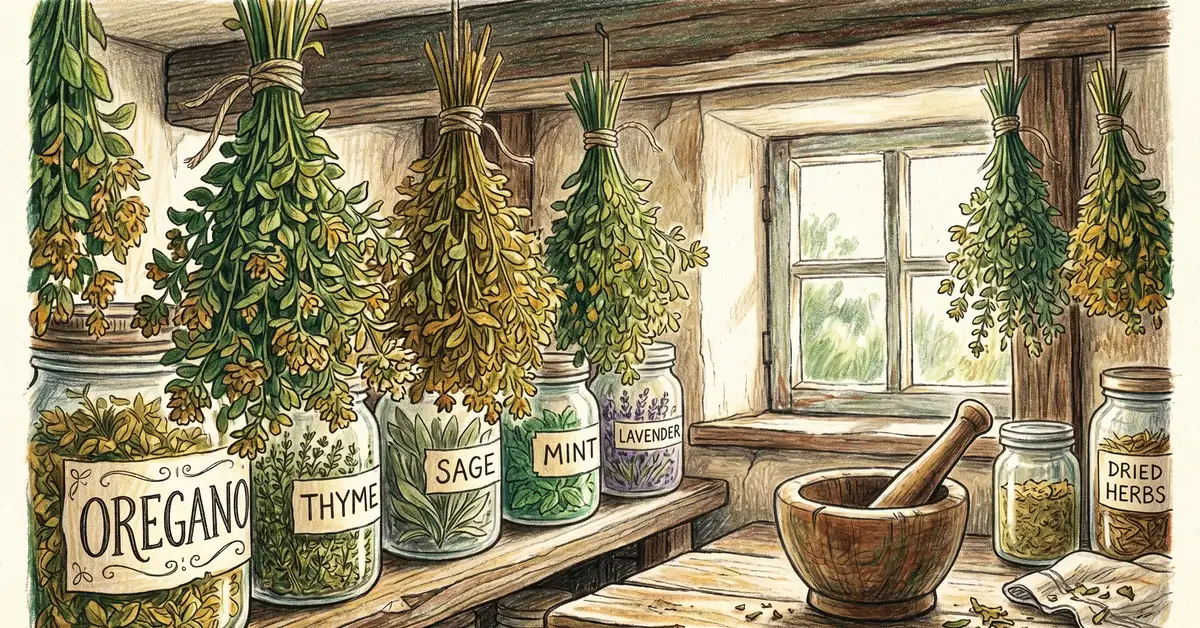
Peak essential oil content is just before flowering, typically June to early July in most US zones. Cut stems to about 4 inches (10 cm) above the ground, leaving the lowest set of leaves intact. The plant will regrow within 4 to 6 weeks for a second cut, then a third in early September. In zones 7 to 9 you can often squeeze a fourth harvest in October.
One mature plant typically yields 4 to 8 oz (110 to 225 g) of dried herb per harvest cycle, or 1 to 2 lb (0.45 to 0.9 kg) dried over a full season. That is enough to season 1 to 2 years of family cooking from a single plant, plus surplus for trade or gifts.
Drying protocol: bundle 5 to 10 stems together with twine, hang upside down in a dark airy spot for 1 to 2 weeks. The dark prevents UV degradation of the volatile oils. The air flow prevents mould. Once stems crack when bent (the standard dryness test), strip leaves from stems and store whole leaves in airtight glass jars away from light. Whole leaves hold flavour longer than crushed. Crush at the moment of use for maximum aroma. Properly dried, stored away from light, Greek oregano holds full flavour for 12 to 18 months. See our piece on companion planting herbs for the broader herb garden plan.
Get the Weekly Dig
One practical permaculture guide a week, written for gardeners who do this on weekends: companion pairings that hold up under scrutiny, and the ones that do not. Free, no spam, unsubscribe any time.
Join the Weekly DigPollinator value: the bonus most growers underestimate
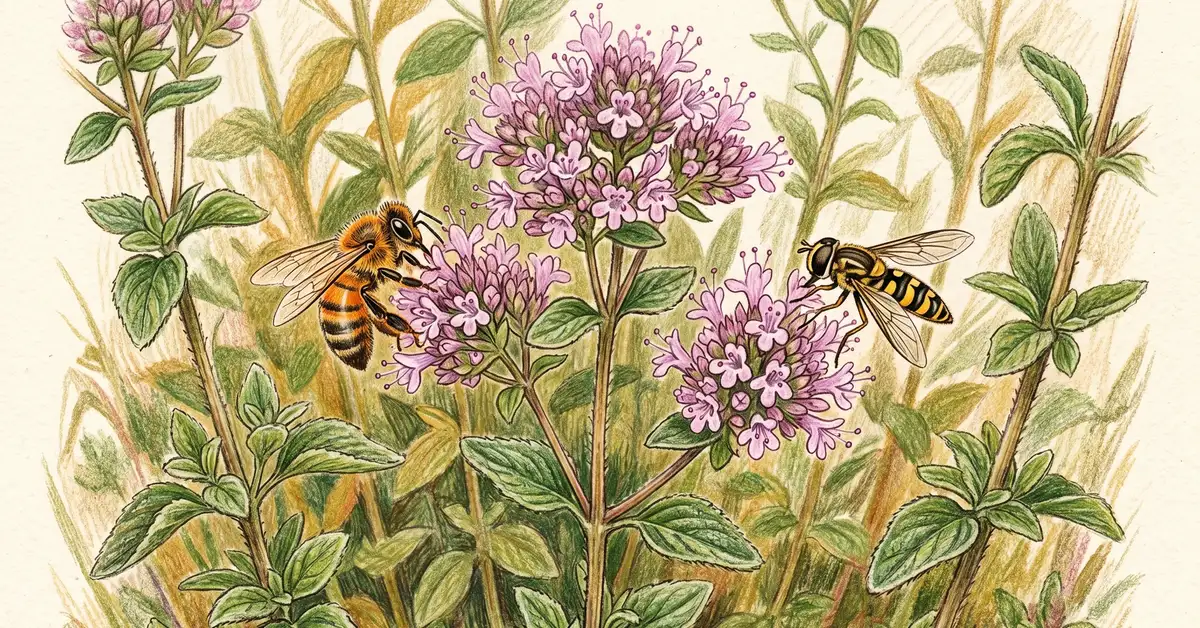
Oregano flowers are one of the highest-rated bee forage plants in the temperate herb garden. The Xerces Society plant lists for pollinator habitat include oregano on the herb-and-vegetable garden shortlist for honey bees, native bees, hoverflies, and parasitoid wasps. A mature plant in flower has 20 to 50 pollinator visits per hour on a warm sunny day.
This matters for two reasons on a homestead. First, the pollinator traffic lifts fruit set on nearby vegetables (squash, cucumbers, peppers, beans, tomatoes). Second, the parasitoid wasps that come for oregano nectar also lay eggs in caterpillars and aphids on your vegetables, providing free biological pest control. Penn State Extension's landscape pollinators guide covers the broader value of perennial herb flowers in the home garden.
The catch: you only get the pollinator and parasitoid value if you let some of the oregano flower. The trade-off is that flavour intensity drops once flowers open. Solution: rotate. Keep half your oregano patch in continuous harvest (cut before flowering for peak oil) and let the other half flower for the pollinators. Each year, swap which half flowers.
Frequently Asked Questions
What should I plant with oregano?
Tomatoes, peppers, squash, cucumbers, beans, brassicas (cabbage, broccoli, kale, cauliflower), strawberries, grapevines, and asparagus are all strong companions. Oregano deters their major pests and pulls in pollinators and parasitoid wasps.
Does oregano repel pests?
Yes. Carvacrol and thymol essential oils deter aphids, cabbage moth larvae, cucumber beetles, squash bugs, and some flea beetles. The effect is strongest within 2 ft (0.6 m) of the plant.
Can oregano be used as a ground cover?
Yes. Spreading varieties like Origanum vulgare 'Aureum' and creeping oregano form mats 4 to 8 inches (10 to 20 cm) tall and spread 18 to 24 inches (45 to 60 cm). Use as living mulch around strawberries, peppers, and grapevines.
What can you not plant with oregano?
Avoid mint (aggressive competitor), cilantro and watercress (different water needs), celery, and very young seedlings within 18 inches.
Is oregano good for tomatoes?
Yes. Oregano within 2 ft (0.6 m) of tomatoes deters aphids and pulls in parasitoid wasps that attack tomato hornworm. Many gardeners also report improved tomato flavour.
How much oregano does a plant produce?
1 to 3 lb (0.45 to 1.4 kg) fresh per plant per season in US zones 4 to 9. Harvest 3 to 4 times per year just before flowering.
Does oregano attract bees?
Yes. Oregano flowers are one of the top bee forage plants in the temperate herb garden. 20 to 50 pollinator visits per hour on a sunny day.
How do I dry oregano for the year?
Cut stems just before flowering, bundle with twine, hang upside down in a dark airy spot for 1 to 2 weeks, strip dried leaves, store in airtight glass jars away from light. Holds flavour 12 to 18 months.
Resources
- USDA Plants Database, Origanum vulgare profile
- Penn State Extension, Oregano production guide
- University of Connecticut Home and Garden Education Center, Oregano
- University of Minnesota Extension, Cucumber beetles
- Xerces Society plant lists for pollinator habitat
- Penn State Extension, Landscape pollinators guide
- Strictly Medicinal Seeds (heirloom Greek oregano)
- Mountain Rose Herbs (dried oregano and seed)
- Industrial Crops and Products journal (carvacrol research)