
Does Companion Planting Actually Work?
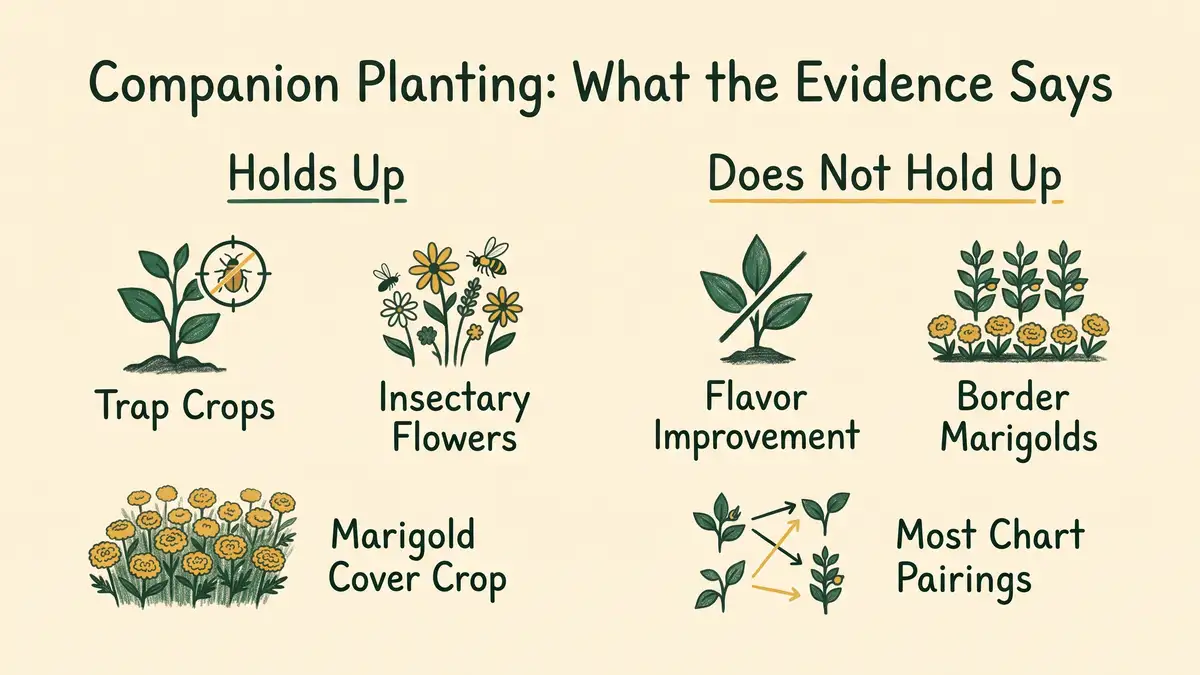
Some of it does. Most of the chart on your wall does not, and it is worth knowing which is which before you give up bed space to a plant that will not pay you back.
Washington State University horticulturist Linda Chalker-Scott put it about as bluntly as an extension publication ever gets. In her fact sheet "The Myth of Companion Plantings" she writes that there is no scientific basis for any of the several lists describing traditional companion plants, and that those charts have entertainment value, not scientific value. WSU's Thurston County Master Gardener newsletter was even shorter about it: "No, there is no science behind companion planting. Sorry to disappoint."
That is not the whole story though. A handful of intercropping practices have real trial data behind them, with measurable pest reduction and measurable yield effects. This is a sorting exercise, not a teardown.
Key Takeaway
The distinction that matters is mechanism. Pairings with a testable mechanism (a chemical, a trap, a habitat for a predator) generally hold up. Pairings justified by "these plants like each other" almost never do.
Where Did the Companion Planting Chart Come From?
Not from a university. The chart most gardeners recognize traces back to the biodynamic movement. The Biodynamics Journal holdings show that an article titled "Companion Plants" by Richard Gregg ran in the Summer 1943 issue, published by the Bio-Dynamic Farming and Gardening Association. It was built on qualitative observation and a spiritual framework, not on replicated trials.
Louise Riotte's 1975 book Carrots Love Tomatoes then packaged that lore into an accessible handbook, and gardening books and websites have been copying its pairings ever since. Trace almost any modern chart back through its citations and you land on Riotte, then on the 1943 biodynamic material.
The deeper problem is definitional. "Companion plant" was never defined precisely enough to test. Chalker-Scott makes the point that terms like intercropping and plant associations are more definable and more credible, because they describe specific arrangements of species that can be measured against yield and pest counts. Vague notions of plant friendship cannot be measured at all. Our companion planting chart guide is built around the pairings that have a mechanism behind them.

Do Marigolds Really Repel Pests?
Against nematodes, sometimes. Against insects, mostly no. This is the single most misunderstood claim in the whole field, and the gap between the real effect and the popular version is enormous.
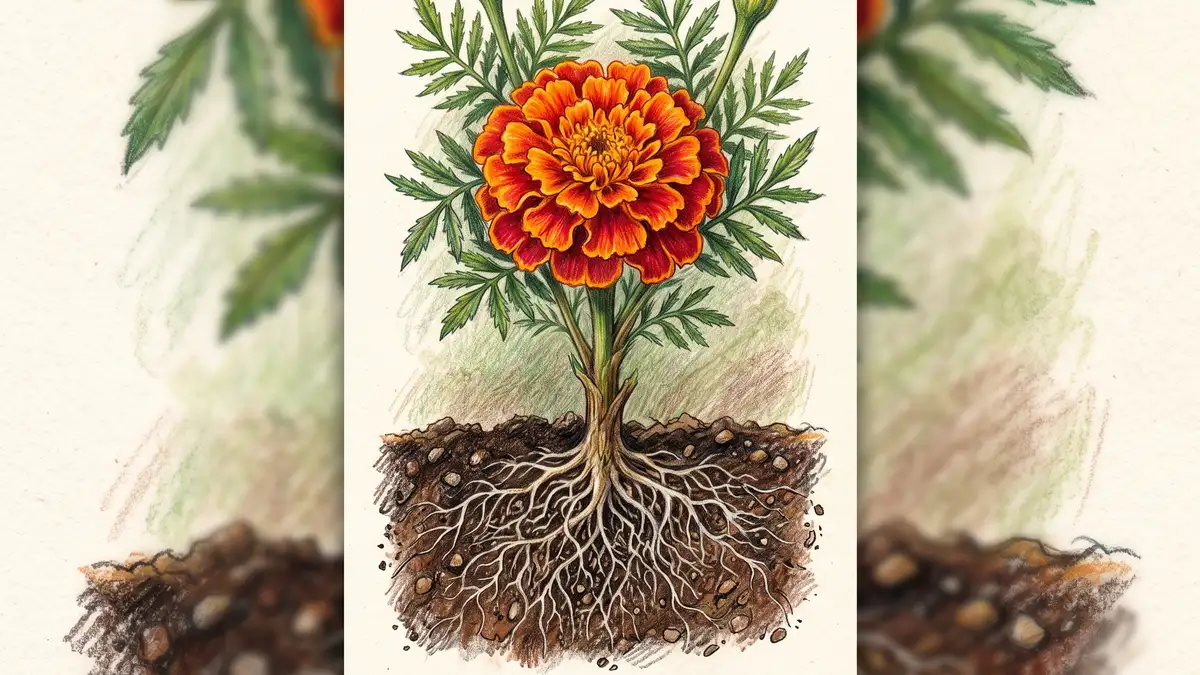
The real mechanism is chemical. Marigold roots release alpha-terthienyl, a thiophene compound that interferes with the hatching of nematode eggs, which is how populations of root-knot nematodes get knocked back. That part is genuine. But the conditions required are demanding. As the Piedmont Master Gardeners summarize it, marigolds must be planted at least two months before the vegetable crop and in the same location, otherwise no benefit is gained from the root exudates. And the payoff arrives the following year, not the current one.
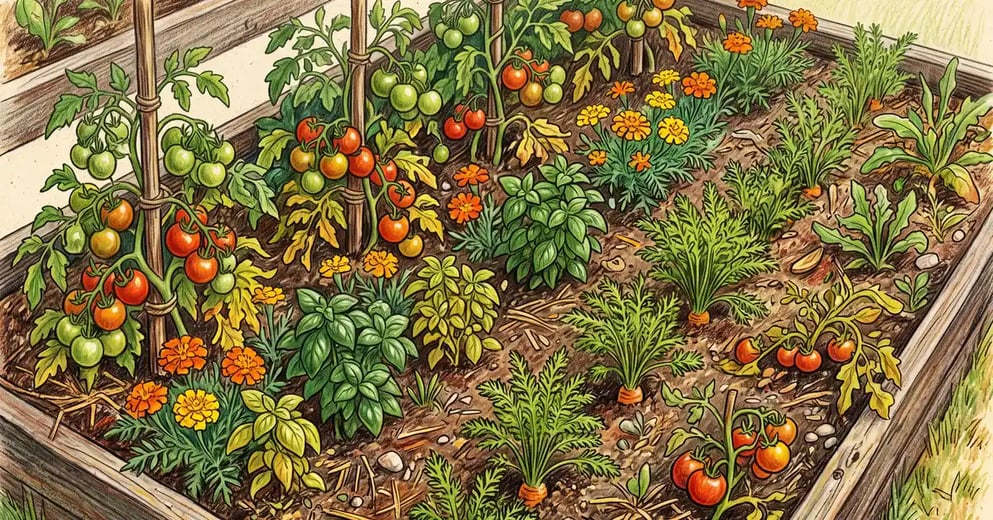
In practice that means a dense marigold cover crop occupying the bed for most of a season, then turned in. A ring of six marigolds around your tomatoes does not do it. The soil volume where your crop roots actually live never meets enough marigold root to matter.
Common Mistake to Avoid
Do not plant border marigolds and assume you have handled nematodes. If you have confirmed root-knot nematodes, you need a full-bed, full-season marigold cover crop in the affected bed, and you will see the benefit in next year's crop. Anything less is decoration.
On insects, the record is worse. That same review notes research at Rutgers University concluded marigolds failed to repel cabbage, carrot and onion pests, and that the USDA lists 15 pests that attack marigolds themselves, including aphids, Japanese beetles, snails and spider mites. University of Minnesota Extension is direct about the most repeated claim of all: many gardening articles mention marigolds as a deterrent for Colorado potato beetle, but multiple studies have shown this to be untrue.
There is one well-documented exception, and it is narrow. Conboy and colleagues (2019) intercropped French marigolds with glasshouse tomatoes and found whitefly settlement on marigold-intercropped tomatoes averaged 21.93%, driven by airborne limonene, which made up 24.01% of the volatiles released from marigold flowers and 21.04% from leaves. The catch: when marigolds were brought in as an emergency measure after infestation was already established, the effect largely vanished, and at day 22 adult settling was actually higher than in the controls. It works as a season-long strategy in a glasshouse, not as a rescue. Our deeper look at the science behind marigolds and pest control unpacks the trials.
Does Basil Make Tomatoes Taste Better?
No, and this one has actually been tested. Michael Bomford's 2004 graduate research at West Virginia University grew tomatoes in monoculture and intercropped with basil and Brussels sprouts, then ran double-blind taste tests across three growing seasons. The panels showed no consistent preference for tomatoes grown with companions over those grown alone.
There is no known mechanism for it either. Tomato flavor comes from sugars, acids and volatiles the tomato plant makes itself, shaped by genetics, weather, ripeness and soil nutrition. Basil does not pipe aroma compounds into the fruit next to it. The claim most likely survives because we like basil and tomato together on a plate and carry that association into the garden.
Basil's pest effects are more defensible but modest. Minnesota Extension notes a few studies showing basil and marigolds can reduce thrips populations on tomatoes in both field and greenhouse conditions. Worth knowing, given that UF/IFAS reports Thrips parvispinus completes a life cycle in 13 to 14 days under greenhouse conditions, so even modest suppression compounds over a season.
What Actually Works Instead?
Four practices with real mechanisms and real numbers. If you are allocating bed space for a return, allocate it here.
Trap cropping
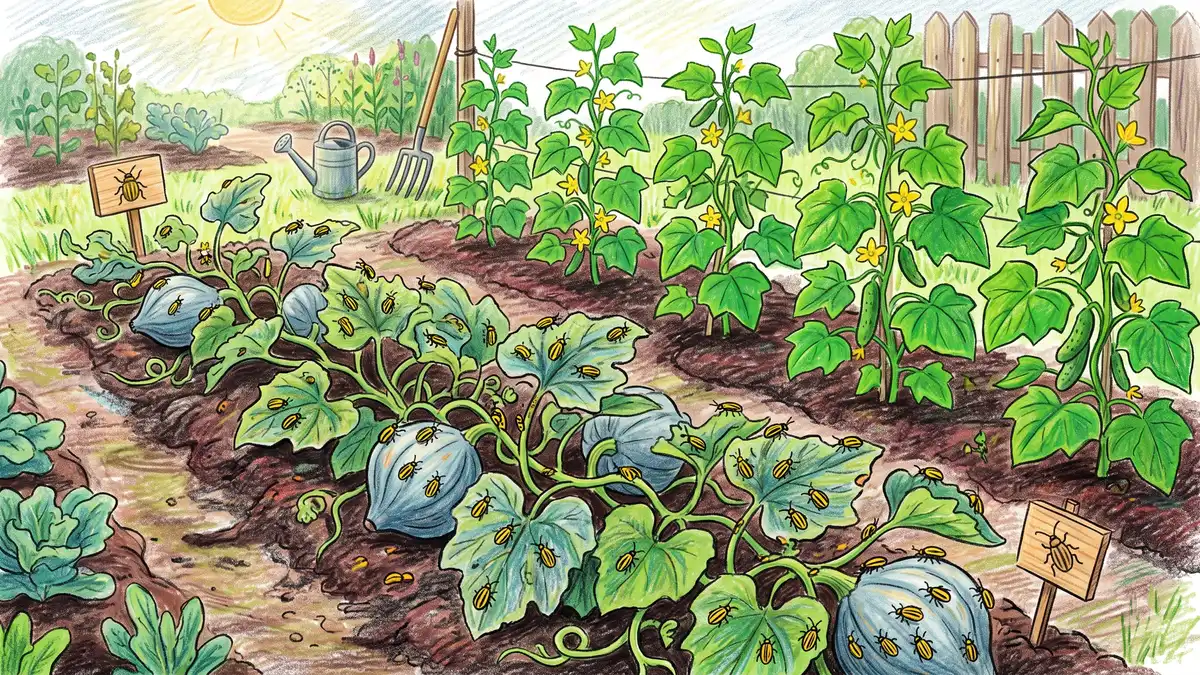
A sacrificial border row that pests reach first and prefer. Blue Hubbard squash on the windward edge of a cucumber or melon planting intercepts striped cucumber beetles. You are not repelling anything, you are giving the pest a better option and treating that one row.
Insectary plantings
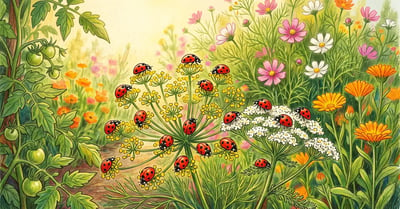
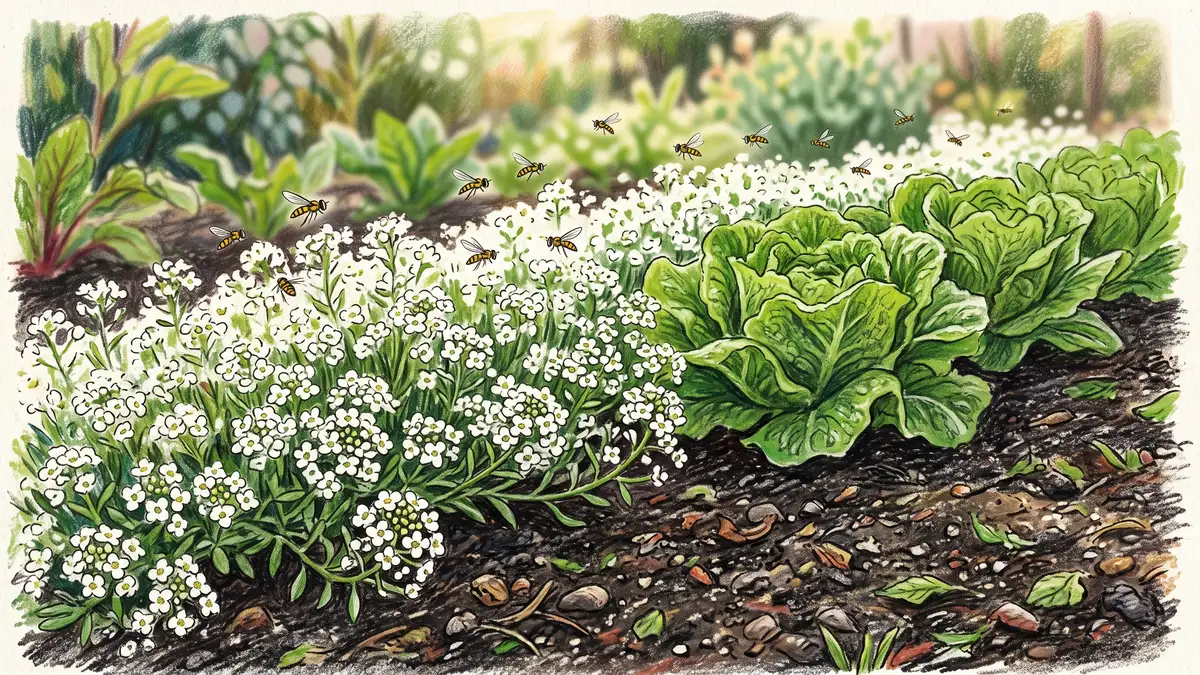
Small-flowered plants that feed adult predators and parasitoids. Sweet alyssum among lettuce supports hoverflies whose larvae eat aphids. The mechanism is habitat and nectar for beneficials, not repellence.
Marigold as a rotation cover crop
Full bed, full season, turned in, then plant the susceptible crop there the following year. Real nematode suppression, real time cost. Budget a bed for a year.
Structural intercropping
Species with complementary root depths, canopy heights and nutrient demands sharing ground. The three sisters is the familiar example: corn provides structure, beans fix nitrogen, squash shades out weeds.
Structural intercropping is also where you can see the real trade-off in numbers. A two-year field trial published in Frontiers in Plant Science (2024) compared oat and common vetch grown alone and intercropped across five sowing densities. Intercropping raised oat grain yield by 23.12% to 30.98% over monoculture, while common vetch yield dropped 1.51% to 13.77%. The system gained. One partner paid for it.
Why This Works: Stacking Functions
Every practice on that list works because the companion is doing a defined job, not because the plants get along. In permaculture terms this is stacking functions: the alyssum is a nectar source, a groundcover and a living mulch all at once. Ask what job a plant is doing before you give it space, and the useful pairings sort themselves out.
What About Allelopathy and "Plants That Hate Each Other"?
Allelopathy is real, but charts badly overuse it. Real allelopathy means one plant releasing chemicals that inhibit another. Charts use it as a catch-all for any pairing that underperforms, when the actual cause is usually competition for light, water and nutrients, or a shared pest.
Cereal rye shows how carefully the science actually reads. Iowa State University Extension notes that although rye produces allelochemicals, under most circumstances the rye biomass on the soil surface is what suppresses weeds, not the release of phytotoxic chemicals, and that corn's large seed and deeper planting depth minimize any chemical impact. Susceptibility is indirectly related to seed size: the smaller the seed, the more susceptible the plant. Their practical recommendation is to terminate rye 10 to 14 days before planting corn.
| Claim | Verdict | What the Evidence Shows |
| Marigolds suppress root-knot nematodes | Holds up, with conditions | Needs a dense cover crop, 2+ months ahead, same bed; benefit next season |
| Marigolds repel Colorado potato beetle | Disproven | Multiple studies show no effect (UMN Extension) |
| Marigolds repel cabbage, carrot, onion pests | Disproven | Rutgers trials found no repellence |
| Basil improves tomato flavor | Disproven | Three years of double-blind taste tests, no consistent preference |
| Basil reduces thrips on tomatoes | Some support | A few field and greenhouse studies show reductions |
| Trap crops divert pests | Holds up | Documented mechanism; pest prefers the sacrificial crop |
| Most chart pairings ("X loves Y") | Untested | Traces to 1943 biodynamic lore and 1975 folklore, not trials |
Sources: WSU Extension, University of Minnesota Extension, Piedmont Master Gardeners, Bomford, WVU 2004
Key Takeaway
The real cost of chart-following is not that the pairings fail, it is competition. Every companion you squeeze into a bed takes light, water and nutrients from the crop you actually want. If a companion has no documented job, it is just a competitor with good PR.
Frequently Asked Questions
What should you not plant with tomatoes?
The evidence-based answer is narrower than most charts suggest. Avoid crowding tomatoes with anything vigorous enough to compete for light and water, and avoid planting them alongside other nightshades like potatoes and eggplant, because shared pests and diseases (early blight, Colorado potato beetle) move easily between them. That is a real mechanism. Claims that tomatoes "hate" fennel, corn or brassicas for chemical reasons are largely untested. Our guide to companion planting combinations to avoid covers the pairings with an actual basis.
Is companion planting real, or is it a myth?
Both, depending on which claim you mean. Intercropping, trap cropping and insectary plantings are legitimate, well-studied agroecological practices with measurable effects. The traditional "friends and foes" chart is folklore that traces to a 1943 biodynamic pamphlet and a 1975 gardening book. Extension services distinguish between the two: WSU states plainly that the charts have entertainment value rather than scientific value, while also recognizing that plant associations produce documented physical, chemical and biological benefits.
Do marigolds keep bugs away from vegetables?
Not reliably. Rutgers research found marigolds failed to repel cabbage, carrot and onion pests, and multiple studies have disproven the Colorado potato beetle claim. The USDA lists 15 pests that attack marigolds themselves. The one solid exception is glasshouse whiteflies on tomatoes, where French marigolds slowed population growth through airborne limonene, but only when grown alongside the crop from the start rather than added after an outbreak.
How do you use marigolds for nematodes properly?
Grow them as a dense cover crop across the whole affected bed, planted at least two months before the vegetable crop and in the same location, then incorporate the residue. The active compound, alpha-terthienyl, is released from the roots and disrupts nematode egg hatching, so contact between marigold roots and the soil volume matters. Expect the benefit in the following season's crop rather than the current one.
Does interplanting reduce my main crop's yield?
It can, and this is the cost most charts never mention. In a two-year oat and common vetch trial, intercropping raised oat yield 23.12% to 30.98% while cutting vetch yield 1.51% to 13.77%. Total land productivity improved, but one crop clearly paid for the other's gain. In a small garden that trade-off is worth doing deliberately: decide which crop is the priority and give it the light and root room. For a more structured approach to this, see guild planting.
Get the Weekly Dig
One practical permaculture guide a week, written for gardeners who do this on weekends: companion pairings that hold up under scrutiny, and the ones that do not. Free, no spam, unsubscribe any time.
Join the Weekly DigResources
- WSU Extension — The Myth of Companion Plantings (Linda Chalker-Scott, PDF)
- University of Minnesota Extension — Companion Planting in Home Gardens
- Piedmont Master Gardeners — Magical Repelling Powers of Marigolds: Myth or Fact?
- Conboy et al. (2019) — French marigolds protect tomatoes from glasshouse whiteflies via limonene
- Bomford (2004), West Virginia University — Yield, pest density and tomato flavor effects of companion planting
- Iowa State University Extension — Cereal Rye Cover Crops, Allelopathy and Corn
- Frontiers in Plant Science (2024) — Grain yield and interspecific competition in oat-common vetch intercropping
- WSU Thurston County Extension — Grounded newsletter, June 2020 (PDF)