
What Are Heirloom Vegetables, and Why Do They Love Company?
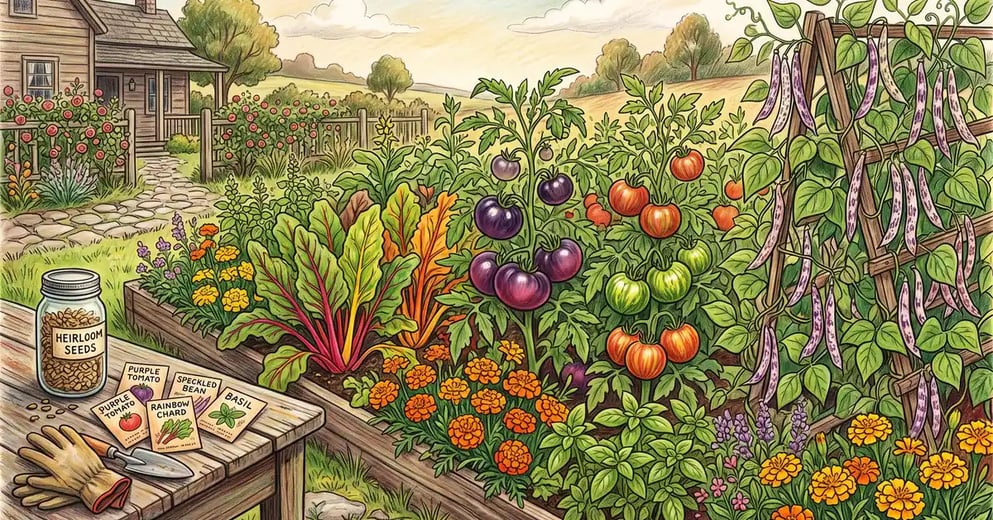
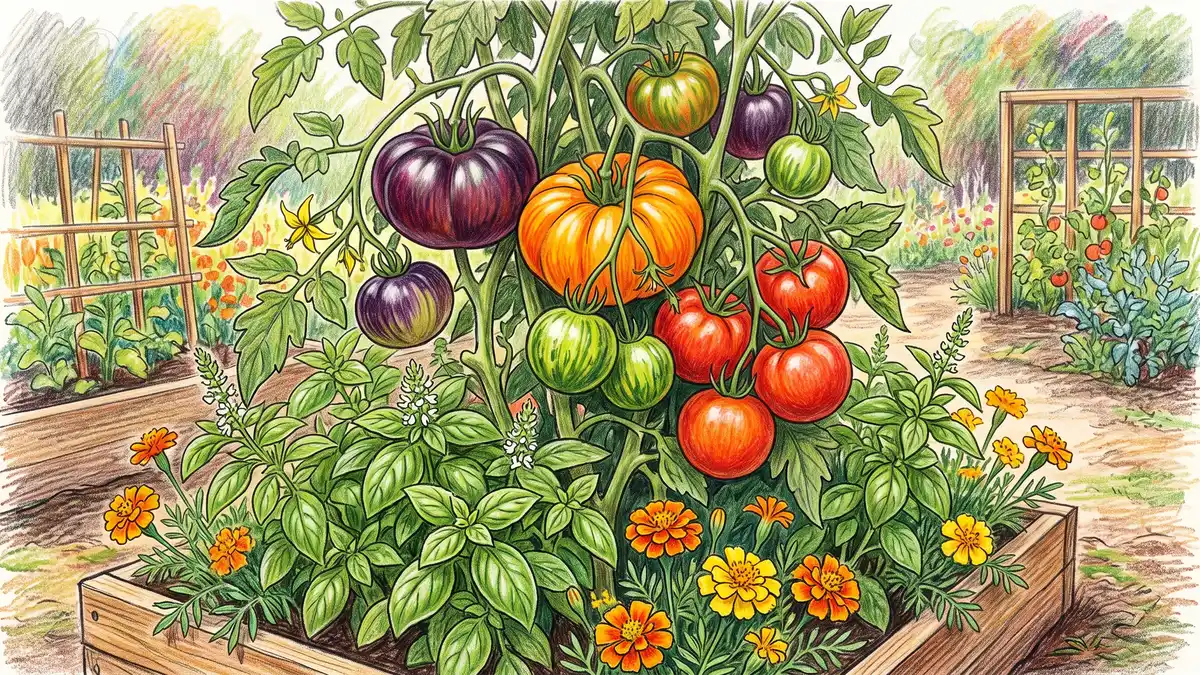
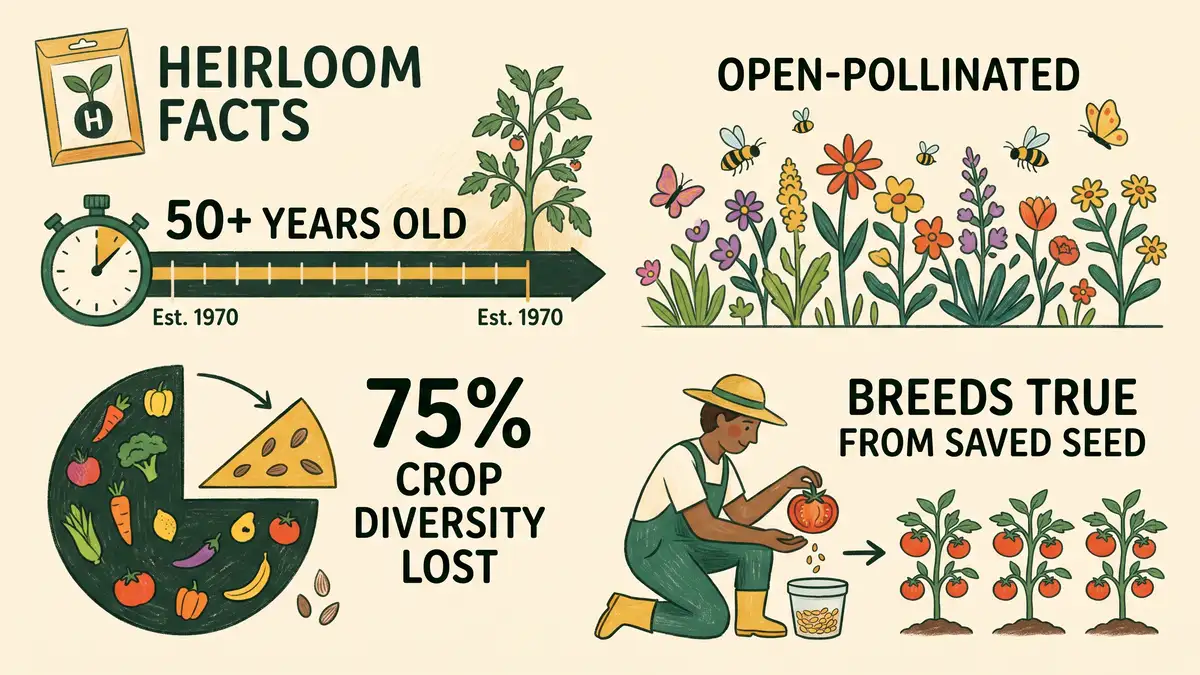
An heirloom is a vegetable variety old enough to have a story. Most extension sources, including Wisconsin Horticulture, define them as open-pollinated varieties, usually 50 or more years old, that have been passed down for generations and breed true from saved seed. Think Brandywine and Cherokee Purple tomatoes: unforgettable flavor, a tomato your grandparents might have grown.
The catch is that many heirlooms were selected for taste and local adaptation, not for the disease-resistance packages bred into modern hybrids. Wisconsin Horticulture notes bluntly that heirlooms often have a short shelf life and are "not resistant to diseases." That is exactly where the old wisdom of companion planting earns its keep: pairing heirlooms with the right neighbors gives them the pest protection and biodiversity that breeders left out. Old varieties and old planting methods were made for each other.
Here's what this guide covers:
- What separates an heirloom from a hybrid, in plain terms
- Why heirlooms matter for the world's shrinking crop diversity
- The companion pairings that actually protect flavor-first varieties
- How to save your own seed, including which crops are easy
Key Takeaway
Heirlooms trade built-in disease resistance for flavor, history, and the ability to save your own seed. Companion planting is how you cover that gap, using flowers, herbs, and traditional guilds to bring in beneficial insects and confuse pests the old-fashioned way.
Why Do Heirlooms Matter Beyond Flavor?
Every heirloom you grow is a living piece of a genetic library that is quietly disappearing. The UN Food and Agriculture Organization estimates that about 75 percent of the world's plant genetic diversity has been lost since 1900, as farmers replaced thousands of local varieties with a handful of uniform commercial ones. Today roughly 75 percent of our food comes from just 12 plant and 5 animal species, and three cereals, rice, corn, and wheat, supply nearly 60 percent of our plant-based calories.
Heirlooms are the survivors of that older, richer diversity, which is why organizations like Seed Savers Exchange, founded in 1975 in Decorah, Iowa, exist to keep them in gardens rather than freezers. When you grow and save an heirloom, you keep it evolving and adapting to your own backyard. That matters more than nostalgia: those old genes may carry traits, from drought tolerance to disease resistance, that modern breeders will need down the road. Growing a diverse, seed-saved garden is a small act of permaculture resilience.
How Did Old Gardeners Pair Their Crops?
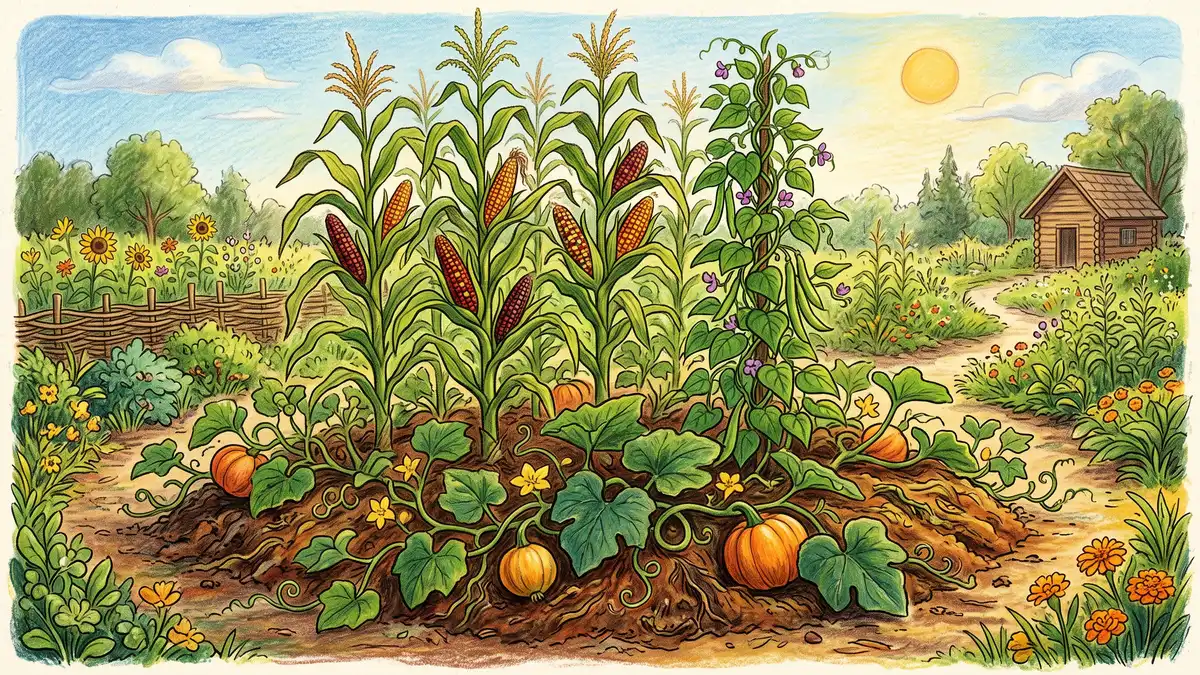
The best-documented companion system in the Americas is the Three Sisters, and it is heirloom gardening at its root. The USDA National Agricultural Library describes how Indigenous peoples planted corn, beans, and squash together in hills: the corn is a living trellis, the beans fix nitrogen to feed the soil, and the squash sprawls as a weed-smothering groundcover. Those crops were landraces, locally adapted seed saved over countless generations, the ancestors of what we now call heirlooms. Our full Three Sisters guide shows how to build one.
University of Illinois Extension calls the Three Sisters the best-known companion planting practice and frames the broader idea simply: grow diverse plants together to build a healthy, balanced garden. That is the thread connecting a 500-year-old cornfield to a modern raised bed. If you want the compact version, the same logic drives our guide to companion planting in raised bed squares.
Why This Works: Diversity Is Insurance
A monoculture of one heirloom tomato is a buffet for one disease. A polyculture, mixing varieties, herbs, and flowers, spreads that risk so no single pest or blight can take the whole bed. This is the permaculture principle of designing for resilience through diversity, and it is exactly what those old field systems did instinctively. Heirlooms, which lack modern resistance genes, need this buffer more than hybrids do.
Which Companions Actually Protect Heirlooms?
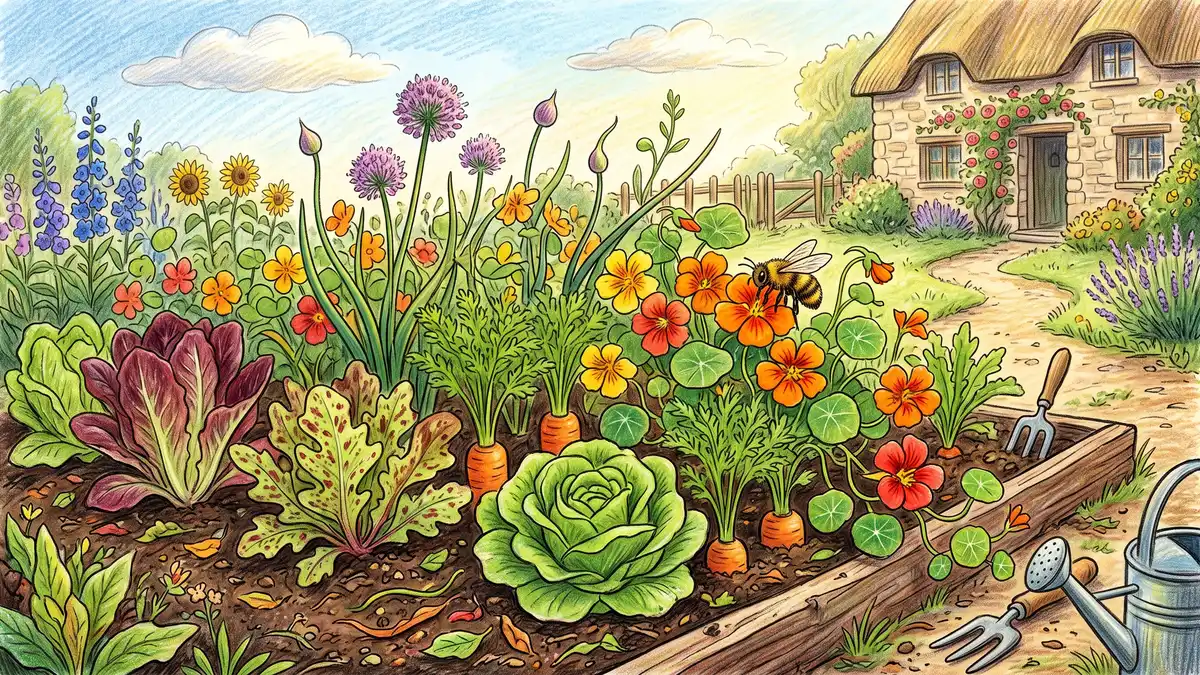
Because heirlooms carry less built-in defense, lean on companions with real research behind them. University of Minnesota Extension stresses focusing on proven mechanisms, not folklore charts. The strongest moves attract beneficial insects and pull pests away from your prized plants.
| Heirloom crop | Companion | What the evidence shows |
| Heirloom tomatoes | Marigolds (trap crop) | Reduced tomato fruit borer damage in trials |
| Sweet corn | Buckwheat, cowpea, sunn hemp | More predators of corn earworm (UMN) |
| Squash / cucumbers | Flowering herbs and nasturtium | Boost pollinators and natural enemies |
| Any heirloom bed | Diverse border flowers | Feed beneficial insects all season |
Sources: University of Minnesota Extension, Marigold Trap Crop Study (2007).
One important note for disease-prone heirloom tomatoes: do not pack companions so tightly that you choke off airflow. Penn State Extension warns that late blight thrives in cool, damp, crowded foliage, so keep lower-growing herbs and flowers at the bed edges and stake your tomatoes for good circulation. For the full pairing list, see our guide to what to plant with tomatoes.
Common Mistake to Avoid
Do not assume every heirloom is a disease magnet, and do not treat companion charts as gospel. Cornell University lists the heirloom "Matt's Wild Cherry" tomato as resistant to both early and late blight, proof that old varieties can carry real defenses. Pick heirlooms suited to your climate, then back them with companions and crop rotation rather than folklore alone.
How Do You Save Heirloom Seed?
The magic of heirlooms is that their seed breeds true, so you can grow next year's garden for free. The key is knowing which crops cross easily. Here is the beginner's path, drawn from Oregon State University Extension and Seed Savers Exchange.
Start with the easy self-pollinators
Tomatoes, beans, and peas mostly pollinate themselves before their flowers even open, so they rarely cross and need very little isolation, sometimes just 10 feet (3 m). Perfect for a first-time seed saver.
Be careful with cross-pollinators
Corn is wind-pollinated and crosses readily, so grow just one variety per season. Squash and cucumbers are insect-pollinated; Seed Savers recommends up to a half mile of isolation, or hand-pollinating, to keep a variety pure.
Select your best plants
Save seed only from your healthiest, best-tasting plants, or the lettuce that bolted last in the heat. Over a few seasons you breed a strain adapted to your own garden.
Dry, label, and store
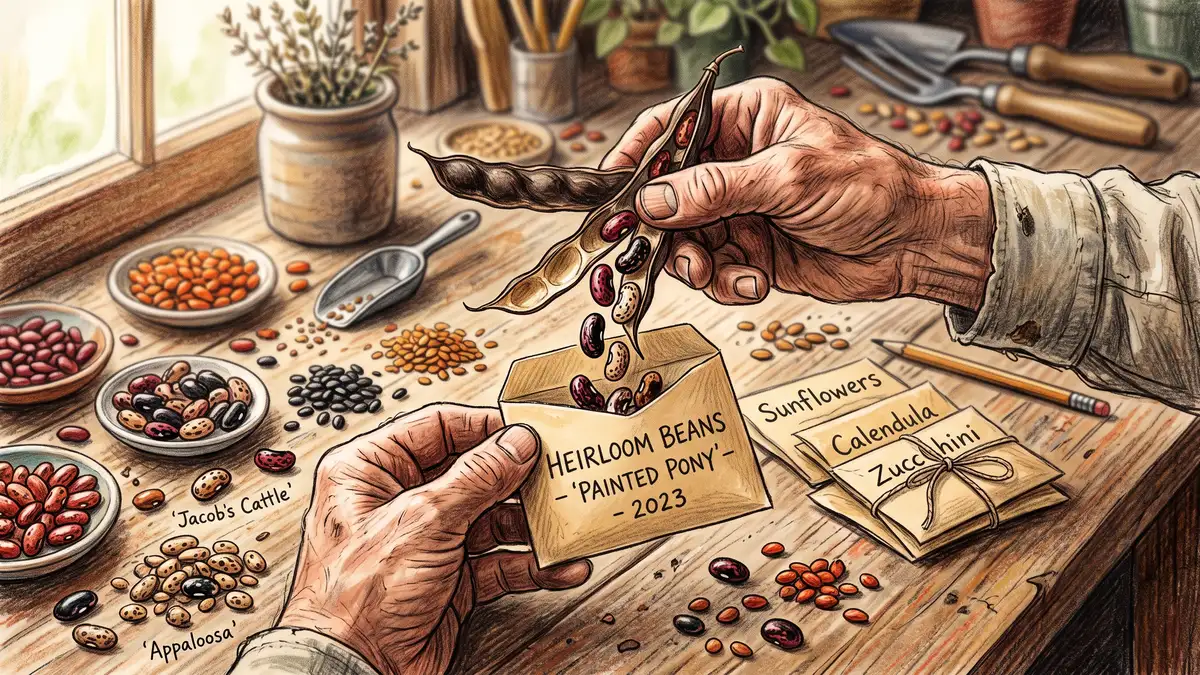
Let beans and peas dry on the plant until the pods rattle. Ferment tomato seeds briefly, then dry them. Store in labeled envelopes somewhere cool and dark, and plant pollinator-friendly flowers so your insect-pollinated crops set good seed.
Frequently Asked Questions
What are heirloom vegetables?
Heirloom vegetables are open-pollinated varieties, usually at least 50 years old, that have been passed down through generations and breed true from saved seed. Wisconsin Horticulture calls them "living history," valued for flavor, story, and genetic diversity. The key technical feature is that they are open-pollinated, meaning they pollinate naturally by wind, insects, or self-pollination and produce offspring that resemble the parent. That is different from a hybrid, which is a deliberate cross of two parents and will not breed true from saved seed. All heirlooms are open-pollinated, but not every open-pollinated variety is old enough to count as an heirloom.
Are heirloom seeds better than hybrids?
Neither is simply better; they are built for different goals. Heirlooms win on flavor, seed saving, and local adaptation, and they preserve genetic diversity that hybrids do not. Hybrids often win on disease resistance, uniformity, and shelf life, because breeders stack those traits in on purpose. For a home gardener who values taste and wants to save seed, heirlooms are a joy, but you should expect to manage disease more actively. Many gardeners grow both: a few reliable disease-resistant hybrids alongside beloved heirlooms, spreading their risk across the season.
Why don't heirlooms resist disease as well?
Most heirlooms were selected long ago for flavor, storage, and how well they grew in a particular place, not for resistance to specific diseases identified by modern science. Modern hybrid breeding, by contrast, deliberately stacks in resistance genes for problems like Fusarium wilt, Verticillium wilt, and late blight. That said, it is not a hard rule. Cornell University documents the heirloom "Matt's Wild Cherry" as resistant to both early and late blight. The practical answer is to choose heirlooms suited to your climate and support them with companion planting, crop rotation, good spacing, and sanitation.
What are the best companion plants for heirloom tomatoes?
Reach for flowers and herbs that bring in helpers. Marigolds worked as a trap crop that reduced tomato fruit borer damage in a peer-reviewed trial, and a diverse mix of flowering plants feeds the predatory and parasitic insects that keep aphids and caterpillars in check. Basil, when it flowers, adds nectar for those beneficials and uses space efficiently. The one caution is airflow: heirloom tomatoes are prone to late blight, so keep companions low and at the edges rather than crowding the plants, and stake or cage the tomatoes so air moves freely through the foliage.
Can I save seeds from heirloom vegetables?
Yes, and that is the whole point of heirlooms. Because they are open-pollinated, seeds you save grow into plants that resemble the parent. Start with self-pollinating crops like tomatoes, beans, and peas, which rarely cross and need almost no isolation. Be more careful with corn, squash, and cucumbers, which cross easily and need real separation or hand-pollination to stay pure. Save from your strongest, best-tasting plants, dry the seed well, and store it cool and dark. Over several seasons your saved seed slowly adapts to your specific soil and climate.
Get the Weekly Dig
One practical permaculture guide a week, written for gardeners who do this on weekends: companion pairings that hold up under scrutiny, and the ones that do not. Free, no spam, unsubscribe any time.
Join the newsletterResources
- University of Wisconsin Horticulture — Heirloom Vegetables
- FAO — What Is Happening to Agrobiodiversity?
- USDA National Agricultural Library — The Three Sisters
- University of Minnesota Extension — Companion Planting in Home Gardens
- Cornell University — Disease-Resistant Tomato Varieties
- Oregon State University Extension — Step-by-Step Guide to Saving Seeds
- Seed Savers Exchange — Isolation Methods
- Penn State Extension — Tomato-Potato Late Blight