
Can You Really Companion Plant in a Shady Garden?
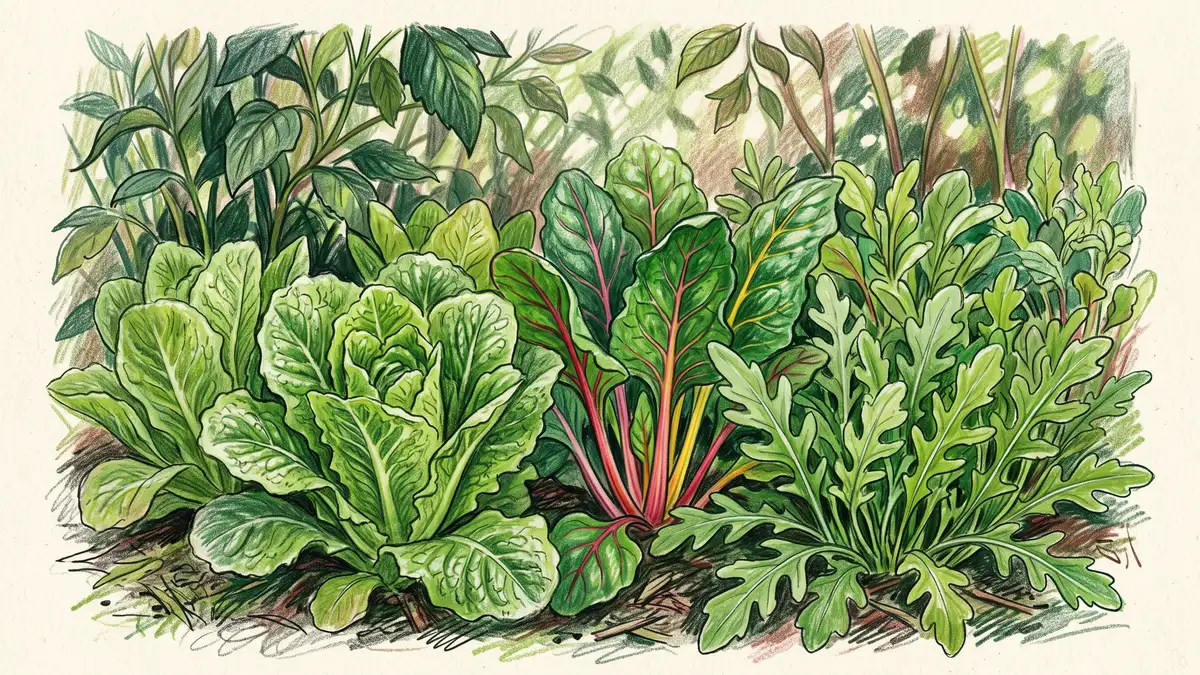
If half your yard sits in the shadow of a fence, a house, or a big maple, you have probably been told to give up on growing food there. That advice is mostly wrong. Plenty of edible crops not only tolerate shade, they actually taste better and last longer in it. The key is matching the right plants to the light you have, then using companion planting to build little communities that thrive together in lower light.
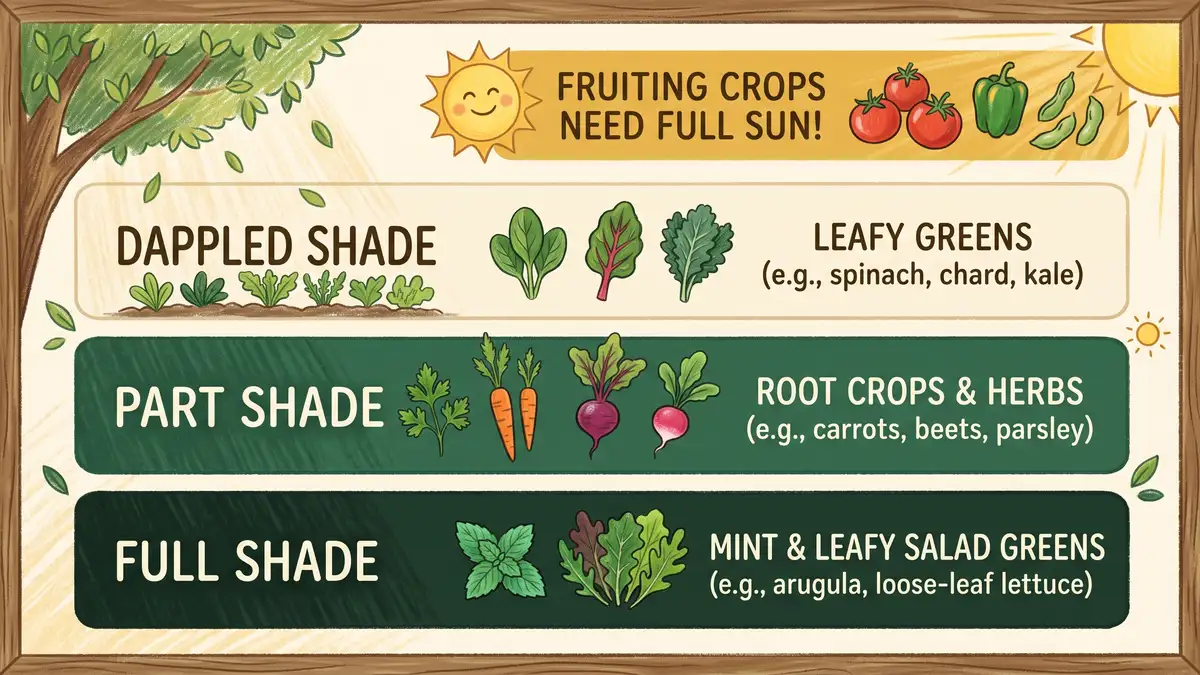
Here is the honest version: fruiting crops like tomatoes and peppers genuinely need full sun, and no amount of clever pairing changes that. But leafy greens, many brassicas, several herbs, and a few flowers do just fine in part shade. According to the University of California vegetable handbook, root and leafy crops "do okay in partial shade," while only fruit-bearing plants demand more than eight hours of sun. This guide shows you how to work with the shade you have.
Here's what this guide covers:
- What "part shade" and "full shade" actually mean in hours of sun
- Which crops produce in low light, and which never will
- How to use tall plants to shade and protect cool-season greens
- Shade-tolerant flowers that feed pollinators and fight slugs
Key Takeaway
Shade companion planting is about grouping plants that share the same light, moisture, and temperature needs. Grow leaves and roots in the shade, keep fruit in the sun, and use taller crops to shelter tender greens from summer heat.
How Much Sun Does "Shade" Actually Mean?
Before you plant a thing, spend a day watching where the light falls. Gardeners throw around "part shade" loosely, but extension services use fairly consistent hour thresholds. Watching your beds between 8 a.m. and 5 p.m. and noting when direct sun hits each one tells you far more than any plant tag.
| Light Level | Hours of Direct Sun | Best For |
| Full sun | 6-8+ hours | Tomatoes, peppers, squash, all fruiting crops |
| Part sun / part shade | 3-6 hours (morning best) | Lettuce, kale, chard, beets, radish, herbs |
| Dappled / filtered shade | Bright but little direct sun | Salad greens, mint, chervil, woodland flowers |
| Full shade | Under ~2-3 hours | Mostly ornamentals; a few very tolerant greens |
Sources: University of Florida IFAS Extension, UC ANR Vegetable Handbook.
One detail matters more than the raw hour count: morning sun beats afternoon sun for shade crops. Four hours of gentle morning light is kinder to lettuce than four hours of blistering 2 p.m. sun. It also helps to know your shade source. Building shade is predictable and competes little for water, while tree shade, the University of Missouri Extension notes, pairs low light with thirsty roots and dry soil, so only the toughest crops succeed under a mature canopy without extra water.
Which Crops Actually Grow in Shade?
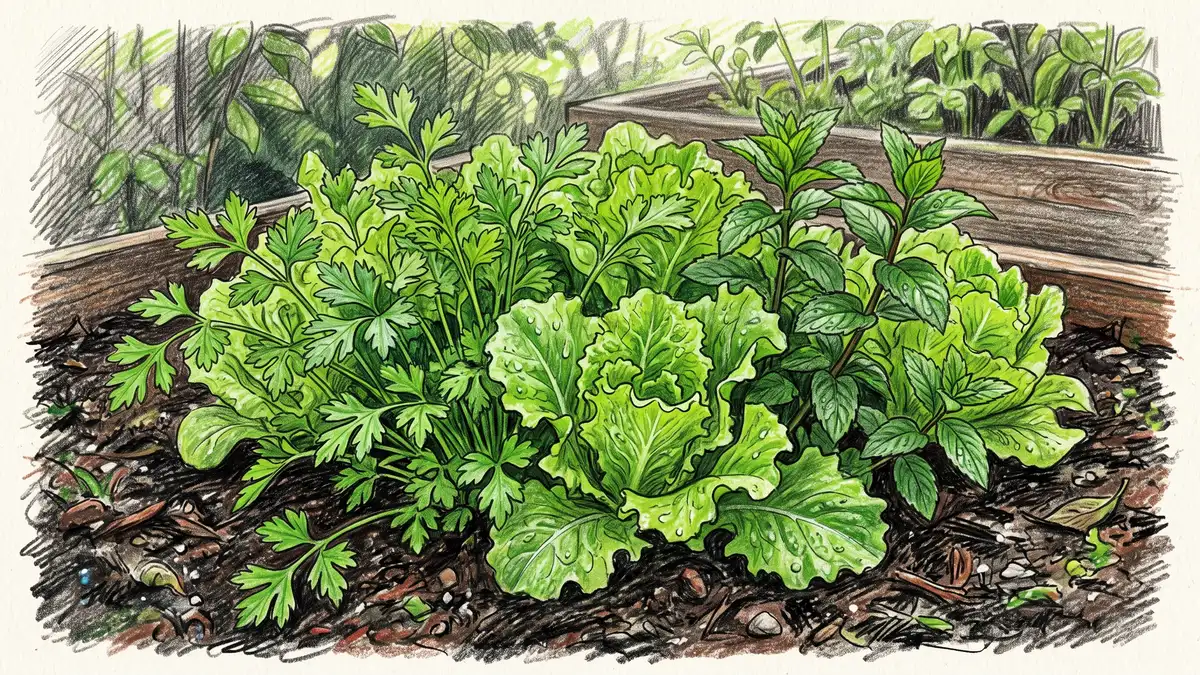
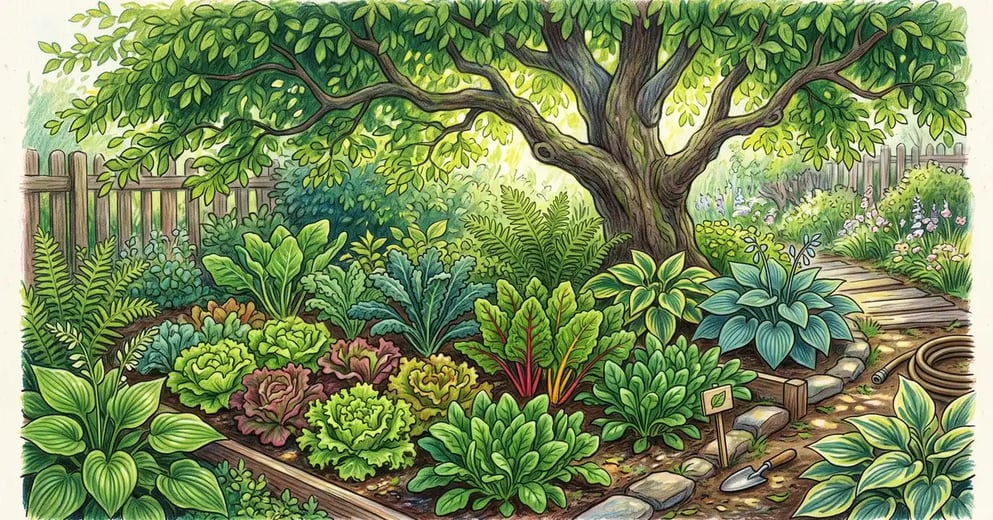
The rule of thumb is simple: if you eat the leaves, shade is fine; if you eat the fruit, you need sun. Leafy greens lead the list. Lettuce, spinach, arugula, kale, chard, mizuna, and mustard greens all produce respectable harvests in 3 to 6 hours of sun. The University of Missouri Extension even notes that lettuce, spinach, and radishes may benefit from light shade through the heat of summer, which protects them from scorching and bolting.
Brassicas come next. Broccoli, cabbage, kale, and kohlrabi are grown for leaves or immature flower buds, so they need less light than fruiting crops, though expect smaller heads and slower growth. Many herbs are happy too: mint, chervil, cilantro, parsley, and chives all tolerate shade, and the lower light actually slows some of them from bolting to seed. Our full companion planting chart shows which of these pair well together in a bed.
Root crops are the gray area. Radishes and small turnips handle part shade well, but carrots, beets, and potatoes will grow smaller and slower, so reserve them for your brighter edges. And some crops simply refuse: tomatoes need at least eight hours of direct sun, per Cornell's growing guides, and peppers, eggplant, squash, cucumbers, and melons join them in the full-sun-only club. Do not waste a shady bed on them.
How Do You Use Companion Plants to Make Shade Work?
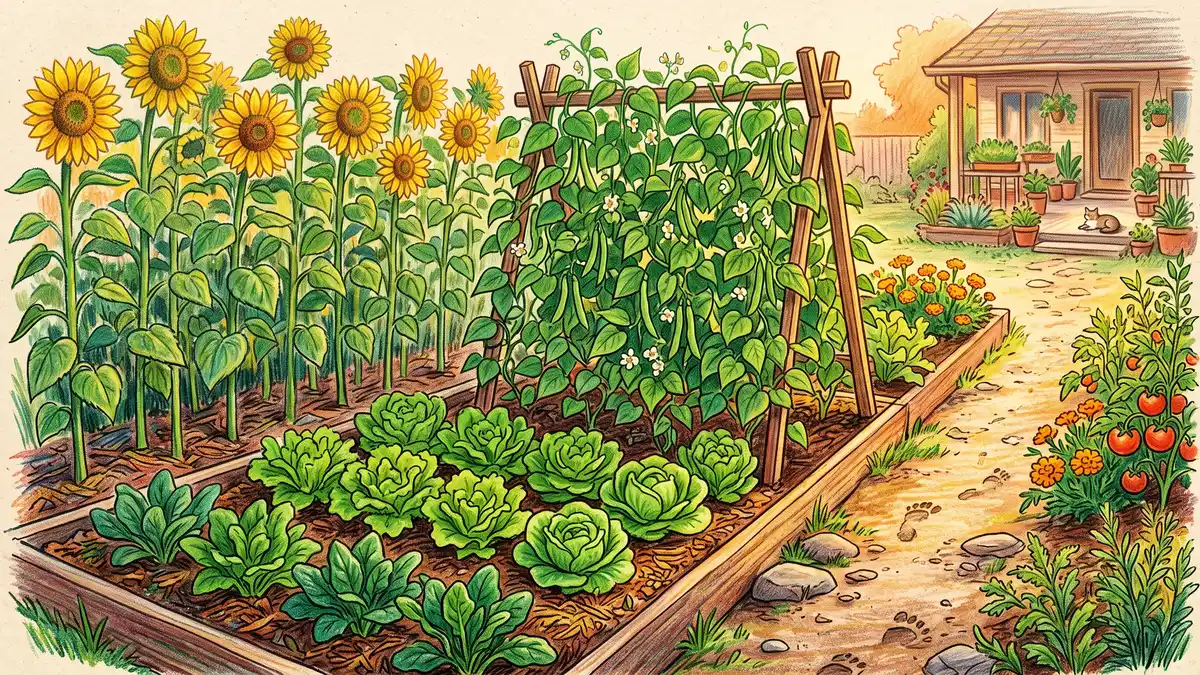
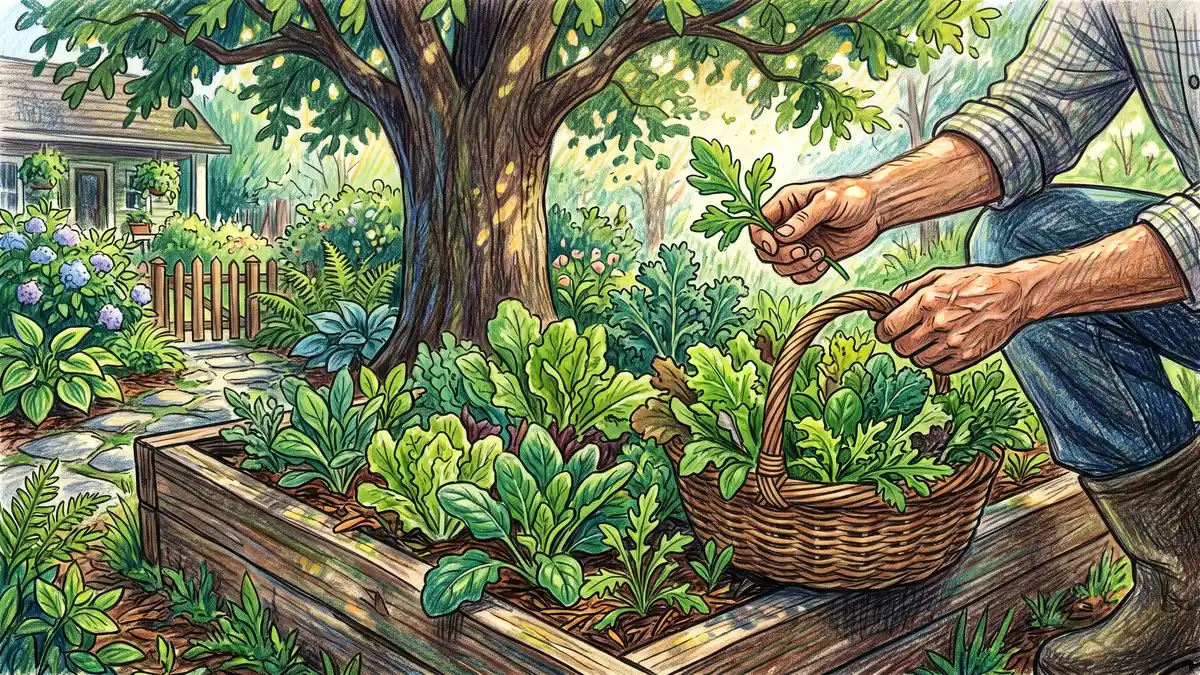
The clever move in a shade garden is to create your own shade on purpose. Instead of only working around existing shadows, you position taller crops to shelter tender greens during the hottest part of the day. This turns a companion pairing into a tiny climate-control system.
Penn State Extension recommends planting heat-sensitive fall seedlings, such as broccoli, cabbage, and cauliflower, in the shade of taller vegetables to protect them from hot afternoon sun. In practice, that means growing pole beans or sunflowers on the south or west side of a bed and tucking lettuce, spinach, and cilantro into the dappled shade they cast. The taller plants soak up the harsh midday light; the greens below stay cool, sweet, and slow to bolt. It is the same logic behind our cool-season shade partners for spinach.
Why This Works: Stacking in Layers
In permaculture, this is called stacking, or filling different vertical layers so every plant uses the light that suits it. A forest does exactly this: tall trees take full sun while shade-loving understory plants thrive beneath. By letting sun-lovers shelter your greens, you copy that structure in a single bed, getting two harvests from one patch of ground and turning shade from a problem into a resource.
Get Our Free Companion Planting Chart
Join 10,000+ gardeners getting weekly tips on companion planting, soil health, and permaculture techniques.
Send Me the ChartWhich Flowers Thrive in Shade and Support Pollinators?
A shady vegetable bed still needs pollinators and pest patrol, so shade-tolerant flowers earn their place. Sweet alyssum grows in full sun to partial shade, according to NC State Extension, and its tiny flowers draw hoverflies and other beneficial insects. Nasturtium tolerates part shade too, though Wisconsin Horticulture warns it blooms less freely in low light, so give it the brightest shady corner you have.
Violets, foamflower, and native woodland perennials add early-season nectar in dappled shade, and Cornell's pollinator gardening guide stresses building layers of plants so pollinators find food and shelter at every level. Edge your greens with these low, shade-friendly bloomers and you get pest control and pollination without stealing light from the vegetables. If flowers are your focus, our guide to companion planting flowers in the vegetable garden goes deeper.
How Do You Handle Slugs in a Damp Shade Garden?
The one real downside of shade is that cool, damp beds are slug and snail heaven. The UC Statewide IPM Program lists lettuce, cabbage, beans, and hostas among their favorite targets, all classic shade plants. The same guidance notes that slugs are less drawn to strongly scented foliage like lavender, rosemary, and sage, so tucking a few aromatic herbs into brighter pockets nearby can take some pressure off your greens.
Common Mistake to Avoid
Don't water shade beds in the evening. Damp overnight soil is exactly what slugs need to feed and breed. Water in the morning instead so the surface dries by nightfall, remove boards and debris where slugs hide by day, and hand-pick after dark. For a planting-based approach, pair vulnerable greens with our slug and snail deterrence guide.
Frequently Asked Questions
Can carrots grow in shade?
Carrots will grow in partial shade, but do not expect full-size roots. Like most root crops, carrots use sunlight to build the sugars stored in the root, so with fewer than about six hours of direct sun they tend to produce thinner, smaller, slower-maturing carrots. If your only option is part shade, choose a spot that gets bright morning sun, sow shorter or baby carrot varieties that mature faster, and keep the soil loose and evenly moist. For a full-size main crop, reserve your sunniest bed for carrots and use the shadier ground for leafy greens and herbs that genuinely thrive in lower light.
What vegetables grow in full shade?
True full shade, under two to three hours of direct sun, is the hardest condition to grow food in, but a few leafy crops manage. Mint, sorrel, some lettuces, and hardy salad greens like mizuna and mustard can produce cuttings in bright, sunless spots, especially if the shade is dappled rather than deep. Yields will be modest and growth slow. Most gardeners get better results by treating full-shade areas as harvest-a-few-leaves zones rather than main production beds, and focusing serious growing on any part-shade areas that catch three or more hours of morning sun.
Can you grow tomatoes in a shady garden?
Not successfully. Tomatoes are a fruiting crop and need at least eight hours of direct sun daily to flower, set fruit, and ripen, according to Cornell's vegetable guides. In shade they may grow leafy and tall but produce few tomatoes, ripen slowly, and suffer more disease in the damp, still air. If you are short on sun, grow tomatoes in containers you can move to the brightest spot, such as a south-facing wall or driveway edge, and give your shady beds to lettuce, kale, chard, and herbs instead. Fighting a fruiting crop's light needs almost never pays off.
How many hours of sun do leafy greens need?
Most leafy greens do well with three to six hours of direct sun, ideally in the morning. Lettuce, spinach, arugula, and Asian greens will keep producing usable leaves at the lower end of that range, and in hot climates a bit of afternoon shade actually helps by keeping them cool and slowing bolting. Below about three hours of sun, growth slows sharply and leaves become sparse. Aim for a bed with bright morning light and some afternoon shelter, keep the soil consistently moist, and harvest outer leaves regularly to encourage steady new growth.
Do herbs grow well in shade?
Several do. Mint, chervil, cilantro, parsley, and chives all tolerate partial shade, and the lower light can be an advantage because it slows heat-sensitive herbs like cilantro from bolting to seed so quickly. Mediterranean herbs are the exception: basil, rosemary, oregano, thyme, and sage prefer full sun and grow leggy and weak in shade. A good approach is to group the shade-tolerant leafy herbs with your salad greens in part-shade beds, and keep the sun-loving woody herbs in your brightest spots or in containers where they get the most light.
Ready to Grow Smarter?
Get our free 20-page beginner's guide to permaculture gardening. Practical tips on companion planting, soil building, and working with your yard's shade.
Read the Free GuideResources
- University of Missouri Extension — Gardening in the Shade (G06911)
- UC ANR — Vegetable Gardening Handbook for Beginners
- University of Florida IFAS Extension — Partial Shade vs Partial Sun
- Penn State Extension — Heat-Proofing Your Vegetable Garden
- Cornell University — Home Gardening Vegetable Growing Guides
- NC State Extension — Sweet Alyssum (Lobularia maritima)
- Wisconsin Horticulture — Nasturtium
- UC Statewide IPM Program — Snails and Slugs